
Genes are the functional biological units of any living cell. The picture below shows the gene as it is found under the microscope.
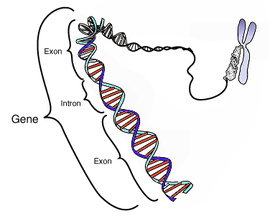
his stylistic
schematic diagram shows a gene in relation to the double helix
structure of DNA and to a chromosome (right).
Introns are regions
often found in eukaryote genes, which are removed, in the splicing
process: only the exons encode the protein. This diagram labels a
region of only 40 or so bases as a gene. In reality most genes are
hundreds of times larger.
A
gene is a locatable region of genomic sequence, corresponding to
a unit of inheritance, which is associated with regulatory
regions, transcribed regions and/or other functional sequence
regions. Genes interact with each other to influence physical
development and behavior. Genes consist of a long strand of DNA
(RNA in some viruses) that contains a promoter, which controls the
activity of a gene, and a coding sequence, which determines what
the gene produces. When a gene is active, the coding sequence is
copied in a process called transcription, producing an RNA copy of
the gene's information. This RNA can then direct the synthesis of
proteins via the genetic code. However, RNAs can also be used
directly, for example as part of the ribosome. These molecules
resulting from gene expression, whether RNA or protein, are known
as gene products.
Most genes contain non-coding regions that do not code for the
gene products, but regulate gene expression. The genes of
eukaryotic organisms can contain non-coding regions called introns
that are removed from the messenger RNA in a process known as
splicing. The regions that actually encode the gene product, which
can be much smaller than the introns, are known as exons. One
single gene can lead to the synthesis of multiple proteins through
the different arrangements of exons produced by alternative
splicings.
The segments of molecules, responsible for the transmission of all hereditary characteristics from one generation to another is called a gene.
The genes are present inside the chromosome in linear arrangement. The total number of human gonadal cells having haploid (unpaired) set of chromosomes may be any number between 1,00,000 to 10,00,000.
Types of Genes
Danish botanist Wilhelm Johannsen coined the word "gene" in 1909
to describe these fundamental physical and functional units of
heredity. The word was derived from Hugo De Vries' term pangen,
itself a derivative of the word pangenesis coined by Darwin
(1868). The word pangenesis is made from the Greek words pan (a
prefix meaning "whole", "encompassing") and genesis ("birth") or
genos ("origin"). Chemically genes are molecules of
Deoxyribonucleic Acid (DNA) and
Ribonucleic Acid (RNA). The vast
majority of living organisms encode their genes in long strands of
DNA. The expression of genes encoded in DNA begins by transcribing
the gene into RNA, a second type of nucleic acid that is very
similar to DNA, but whose monomers contain the sugar ribose rather
than deoxyribose.
Deoxyribonucleic Acid(DNA)
The following
picture shows the structure of a DNA:
The chemical structure of a four-base fragment of a DNA double
helix.
The vast majority of living organisms encode their genes in long
strands of DNA. DNA consists of a chain made from four types of
nucleotide subunits: adenosine, cytosine, guanosine, and thymidine.
Each nucleotide subunit consists of three components: a phosphate
group, a deoxyribose sugar ring, and a nucleobase. Thus,
nucleotides in DNA or RNA are typically called 'bases';
consequently they are commonly referred to simply by their purine
or pyrimidine original base components adenine, cytidine, guanine,
thymine. Adenine and guanine are purines and cytosine and thymine
are pyrimidines. The most common form of DNA in a cell is in a
double helix structure, in which two individual DNA strands twist
around each other in a right-handed spiral. In this structure, the
base pairing rules specify that guanine pairs with cytosine and
adenine pairs with thymine (each pair contains one purine and one
pyrimidine). The two strands in a double helix must therefore be
complementary, that is, their bases must align such that the
adenines of one strand are paired with the thymines of the other
strand, and so on.
Due to the
chemical composition of the pentose residues of the bases, DNA
strands have directionality. One end of a DNA polymer contains an
exposed hydroxyl group on the deoxyribose, this is known as the 3'
end of the molecule. The other end contains an exposed phosphate
group, this is the 5' end. The directionality of DNA is vitally
important to many cellular processes, since double helices are
necessarily directional (a strand running 5'-3' pairs with a
complementary strand running 3'-5') and processes such as DNA
replication occur in only one direction. All nucleic acid
synthesis in a cell occurs in the 5'-3' direction, because new
monomers are added via a dehydration reaction that uses the
exposed 3' hydroxyl as a nucleophile.
Ribonucleic Acid (RNA)
The following
picture shows the structure of a RNA:

The expression of genes encoded in DNA begins by transcribing the
gene into RNA, a second type of nucleic acid that is very similar
to DNA, but whose monomers contain the sugar ribose rather than
deoxyribose. RNA also contains the base uracil in place of
thymine. RNA molecules are less stable than DNA and are typically
single-stranded. Genes that encode proteins are composed of a
series of three-nucleotide sequences called codons, which serve as
the "words" in the genetic "language". The genetic code specifies
the correspondence during protein translation between codons and
amino acids. The genetic code is nearly the same for all known
organisms.
In most cases, RNA is an intermediate product in the process of manufacturing proteins from genes. However, for some gene sequences, the RNA molecules are the actual functional products. For example, RNAs known as ribozymes are capable of enzymatic function, and miRNAs have a regulatory role. The DNA sequences from which such RNAs are transcribed are known as non-coding DNA, or RNA genes.
Some viruses
store their entire genomes in the form of RNA, and contain no DNA
at all. Because they use RNA to store genes, their cellular hosts
may synthesize their proteins as soon as they are infected and
without the delay in waiting for transcription. On the other hand,
RNA retroviruses, such as HIV, require the reverse transcription
of their genome from RNA into DNA before their proteins can be
synthesized. In 2006, French researchers came across a puzzling
example of RNA-mediated inheritance in mouse. Mice with a
loss-of-function mutation in the gene Kit have white tails.
offspring of these mutants can have white tails despite having
only normal Kit genes. The research team traced this effect back
to mutated Kit RNA. While RNA is common as genetic storage
material in viruses, in mammals in particular RNA inheritance has
been observed very rarely.
The picture
below shows the relationship between a DNA and a RNA in a T7 RNA
Polymerase:
T7 RNA polymerase producing a mRNA (green) from a DNA template
(red and blue). The protein is shown as a purple ribbon
Genetic Engineering
An iconic image of genetic engineering; this "autoluminograph"
from 1986 of a glowing transgenic tobacco plant bearing the
luciferase gene, illustrating the possibilities of genetic
engineering.
The study of
genes have acquired gigantic importance in the present day
scenario. Different concepts have come up in the present
situation. One of them is Genetic Engineering. We find it mixed in
our food on the shelves in the supermarket--genetically engineered
soybeans and maize. We find it growing in a plot down the lane,
test field release sites with genetically engineered rapeseed,
sugar beet, wheat, potato, strawberries and more. There has been
no warning and no consultation.
It is variously known as genetic engineering, genetic modification or genetic manipulation. All three terms mean the same thing, the reshuffling of genes usually from one species to another; existing examples include: from fish to tomato or from human to pig. Genetic engineering (GE) comes under the broad heading of biotechnology.
But how does it work? If you want to understand genetic engineering it is best to start with some basic biology. What is a cell? A cell is the smallest living unit, the basic structural and functional unit of all living matter, whether that is a plant, an animal or a fungus. Some organisms such as amoebae, bacteria, some algae and fungi are single-celled - the entire organism is contained in just one cell. Humans are quite different and are made up of approximately 3 million cells -(3,000,000,000,000 cells). Cells can take many shapes depending on their function, but commonly they will look like a brick with rounded comers or an angular blob - a building block. Cells are stacked together to make up tissues, organs or structures (brain, liver, bones, skin, leaves, fruit etc.).
In an organism, cells depend on each other to perform various functions and tasks; some cells will produce enzymes, others will store sugars or fat; different cells again will build the skeleton or be in charge of communication like nerve cells; others are there for defence, such as white blood cells or stinging cells in jelly fish and plants. In order to be a fully functional part of the whole, most cells have got the same information and resources and the same basic equipment.
A cell belonging to higher organisms (e.g. plant or animal) is
composed of:
# a cell MEMBRANE enclosing the whole cell. (Plant cells have an
additional cell wall for structural reinforcement.)
# many ORGANELLES, which are functional components equivalent to
the organs in the body of an animal e.g. for digestion, storage,
excretion.
# a NUCLEUS, the command centre of the cell. It contains all the
vital information needed by the cell or the whole organism to
function, grow and reproduce. This information is stored in the
form of a genetic code on the chromosomes, which are situated
inside the nucleus.
Proteins are the basic building materials of a cell, made by the cell itself. Looking at them in close-up they consist of a chain of amino acids, small specific building blocks that easily link up. Though the basic structure of proteins is linear, they are usually folded and folded again into complex structures. Different proteins have different functions. They can be transport molecules (e.g. oxygen binding haemoglobin of the red blood cells); they can be antibodies, messengers, enzymes (e.g. digestion enzymes) or hormones (e.g. growth hormones or insulin). Another group is the structural proteins that form boundaries and provide movement, elasticity and the ability to contract. Muscle fibres, for example, are mainly made of proteins. Proteins are thus crucial in the formation of cells and in giving cells the capacity to function properly.
Chromosomes means "coloured bodies" (they can be seen under the light microscope, using a particular stain). They look like bundled up knots and loops of a long thin thread. Chromosomes are the storage place for all genetic - that is hereditary - information. This information is written along the thin thread, called DNA. "DNA" is an abbreviation for deoxyribo nucleic acid, a specific acidic material that can be found in the nucleus. The genetic information is written in the form of a code, almost like a music tape. To ensure the thread and the information are stable and safe, a twisted double stranded thread is used - the famous double helix. When a cell multiplies it will also copy the entire DNA and pass it on to the daughter cell.
The totality of the genetic information of an organism is called genome. Cells of humans, for example, possess two sets of 23 different chromosomes, one set from the mother and the other from -the father. The DNA of each human cell corresponds to 2 meters of DNA if it is stretched out and it is thus crucial to organise the DNA in chromosomes, so as to avoid knots, tangles and breakages. The length of DNA contained in the human body is approximately 60,000,000,000 kilometres. This is equivalent to the distance to the moon and back 8000 times!
The information contained on the chromo-somes in the DNA is written and coded in such a way that it can be understood by almost all living species on earth. It is thus termed the universal code of life. In this coding system, cells need only four symbols (called nucleotides) to spell out all the instructions of how to make any protein. Nucleotides are the units DNA is composed of and their individual names are commonly abbreviated to the letters A, C G and T These letters are arranged in 3-letter words which in turn code for a particular amino acid - as shown in the flow diagram 1. The information for how any cell is structured or how it functions is all encoded in single and distinct genes. A Gene is a certain segment (length) of DNA with specific instructions for the production of commonly one specific protein. The coding sequence of a gene is, on average about 1000 letters long. Genes code for example for insulin, digestive enzymes, blood clotting proteins, or pigments.
How does a cell know when to produce which protein and how much of it? In front of each gene there is a stretch of DNA that contains the regulatory elements for that specific gene, most of which is known as the promoter. It functions like a "control tower," constantly holding a "flag" up for the gene it controls. Take insulin production (which we produce to enable the burning of the blood sugar). When a message arrives in the form of a molecule that says, 'more insulin", the insulin control tower will signal the location of the insulin gene and say "over here". The message molecule will "dock in" and thus activate a "switch" to start the whole process of gene expression.
How does the information contained in the DNA get turned into a protein at the right time? As shown in picture 2, each gene consists of 3 main components: a "control tower" (promoter), an information block and a polyA signal element. If there is not enough of a specific protein present in the cell, a message will be sent into the nucleus to find the relevant gene. If the control tower recognises the message as valid it will open the "gate" to the information block. Immediately the information is copied - or transcribed - into a threadlike molecule, called RNA. RNA is very similar to DNA, except it is single stranded. After the copy is made, a string of up to 200 "A"-type nucleotides - a polyA tail - is added to its end (picture 2). This process is called poly-adenylation and is initiated by a polyA signal located towards the end of the gene. A polyA tail is thought to stabilise the RNA message against degradation for a limited time. Now the RNA copies of the gene leave the nucleus and get distributed within the cell to little work units that translate the information into proteins.
No cell will ever make use of all the information coded in its DNA. Cells divide the work up amongst one other - they specialise. Brain cells will not produce insulin, liver cells will not produce saliva, nor will skin cells start producing bone. If they did, our bodies could be chaos!
The same is true for plants: root cells will not produce the green chlorophyll, nor will the leaves produce pollen or nectar. Furthermore, expression is age dependent: young shoots will not express any genes to do with fruit ripening, while old people will not usually start developing another set of teeth (exceptions have been known).
All in all, gene regulation is very specific to the environment in which the cell finds itself and is also linked to the developmental stages of an organism. So if I want the leaves of poppy plants to produce the red colour of the flower petals I will not be able to do so by traditional breeding methods, despite the fact that leaf ells will have all the genetic information necessary.
The Human
Genome Project
Human genetic engineering deals with the controlled modification
of the human genome. The Human Genome Project (HGP) is a project
to de-code (i.e. sequence) more than 3 billion nucleotides
contained in a haploid reference human genome and to identify all
the genes present in it. The reference human genome sequence was
considered pragmatically 'complete' at 92% in 2005 in publications
by an international public HGP and somewhat independently by a
private company Celera Genomics. Recently, several groups have
announced efforts to extend this to diploid human genomes
including the International HapMap Project, Applied Biosystems,
Perlegen, Illumina, JCVI, Personal Genome Project, and Roche-454.
The "genome" of any given individual (except for identical twins
and cloned animals) is unique; mapping "the human genome" involves
sequencing multiple variations of each gene. The project did not
study all of the DNA found in human cells; some heterochromatic
areas (about 8% of the total) remain unsequenced.
Genetic recombination:
Recombination
involves the breakage and rejoining of two chromosomes (M and F)
to produce two re-arranged chromosomes (C1 and C2).
The above pictures represent the genetic recombination known as recombinant genetics. The first clinical trial of human gene therapy begins in 1990, but as of 2007(2006) gene therapy is still experimental. The Celera group used the technique denoted as the whole-genome shotgun technique. The shotgun technique breaks the DNA into fragments of various sizes, ranging from 2,000 to 300,000 base pairs in length, forming what is called a DNA "library". Using an automated DNA sequencer the DNA is read in 800bp lengths from both ends of each fragment. This method became a standard approach to the sequencing and assembly of bacterial genomes beginning in 1995, when the first bacterial genome, Haemophilus influenzae, was sequenced. Using a complex genome assembly algorithm and a supercomputer, the pieces are combined and the genome can be reconstructed from the millions of short, 800 base pair fragments.
In the international public-sector Human Genome Project (HGP), researchers collected blood (female) or sperm (male) samples from a large number of donors. Only a few of many collected samples were processed as DNA resources. Thus the donor identities were protected so neither donors nor scientists could know whose DNA was sequenced. DNA clones from many different libraries were used in the overall project, with most of those libraries being created by Dr. Pieter J. de Jong. It has been informally reported, and is well known in the genomics community, that much of the DNA for the public HGP came from a single anonymous male donor from Buffalo, New York (code name RP11).
HGP scientists used white cells from the blood of 2 male and 2 female donors (randomly selected from 20 of each) -- each donor yielding a separate DNA library. One of these libraries (RP11) was used considerably more than others, due to quality considerations. One minor technical issue is that male samples contain only half as much DNA from the X and Y chromosomes as from the other 22 chromosomes (the autosomes); this happens because each male cell contains only one X or one Y chromosome, but not both. (This is true for nearly all male cells not just sperm cells).
Although the main sequencing phase of the HGP has been completed, studies of DNA variation continue in the International HapMap Project, whose goal is to identify patterns of single nucleotide polymorphism (SNP) groups (called haplotypes, or haps). The DNA samples for the HapMap came from a total of 270 individuals: Yoruba people in Ibadan, Nigeria; Japanese people in Tokyo; Han Chinese in Beijing; and the French Centre d�Etude du Polymorphisme Humain (CEPH) resource, which consisted of residents of the United States having ancestry from Western and Northern Europe.
In the Celera Genomics private-sector project, DNA from five different individuals were used for sequencing. The lead scientist of Celera Genomics at that time, Craig Venter, later acknowledged (in a public letter to the journal Science) that his DNA was one of those in the pool.
Benefits
The work on interpretation of genome data is still in its initial
stages. It is anticipated that detailed knowledge of the human
genome will provide new avenues for advances in medicine and
biotechnology. Clear practical results of the project emerged even
before the work was finished. For example, a number of companies,
such as Myriad Genetics started offering easy ways to administer
genetic tests that can show predisposition to a variety of
illnesses, including breast cancer, disorders of hemostasis,
cystic fibrosis, liver diseases and many others. Also, the
etiologies for cancers, Alzheimer's disease and other areas of
clinical interest are considered likely to benefit from genome
information and possibly may lead in the long term to significant
advances in their management.
There are also many tangible benefits for biological scientists. For example, a researcher investigating a certain form of cancer may have narrowed down his/her search to a particular gene. By visiting the human genome database on the worldwide web, this researcher can examine what other scientists have written about this gene, including (potentially) the three-dimensional structure of its product, its function(s), its evolutionary relationships to other human genes, or to genes in mice or yeast or fruit flies, possible detrimental mutations, interactions with other genes, body tissues in which this gene is activated, diseases associated with this gene or other datatypes.
Further, deeper understanding of the disease processes at the level of molecular biology may determine new therapeutic procedures. Given the established importance of DNA in molecular biology and its central role in determining the fundamental operation of cellular processes, it is likely that expanded knowledge in this area will facilitate medical advances in numerous areas of clinical interest that may not have been possible without them.
The analysis of similarities between DNA sequences from different organisms is also opening new avenues in the study of the theory of evolution. In many cases, evolutionary questions can now be framed in terms of molecular biology; indeed, many major evolutionary milestones (the emergence of the ribosome and organelles, the development of embryos with body plans, the vertebrate immune system) can be related to the molecular level. Many questions about the similarities and differences between humans and our closest relatives (the primates, and indeed the other mammals) are expected to be illuminated by the data from this project.
The Human Genome Diversity Project, spinoff research aimed at mapping the DNA that varies between human ethnic groups, which was rumored to have been halted, actually did continue and to date has yielded new conclusions. In the future, HGDP could possibly expose new data in disease surveillance, human development and anthropology. HGDP could unlock secrets behind and create new strategies for managing the vulnerability of ethnic groups to certain diseases (see race in biomedicine). It could also show how human populations have adapted to these vulnerabilities.
Criticisms and
Controversies
The U.S. Department of Energy and the National Institute of Health
spent 3% to 5% of the Human Genome Project annual budget on
studying ethical, legal, and social issues surrounding the Human
Genome Project. This allocation made the U.S. bioethics program
the largest one around the world, setting an example to other
genetic researchers. The issues raised not only concerns the Human
Genome Project, but are often discussed alongside with any biotech
reforms. Several issues need to be considered:
1. The high cost and money is unjustified. Some people argued that spending research funding on such large-scale research project such as the Human Genome Project takes up scarce resources from researchers who studies special area of interests more efficiently. However, others argue that large-scale projects reduce possible duplicity of research and thus minimize waste of funding. There is also the question of whether we, as a society, should spend the time on finding the differences or teaching to accept these differences. For example, if homosexuality is found to be determined genetically, does it mean society should be more accepting of it? Why not be more accepting of it anyway even if it is purely a lifestyle choice?
2. The ability to diagnose a genetic disease only creates anxiety and frustration since there will be no treatment for the disease. The current method only allows us to predict a person�s chances of getting a genetic disease. Researchers might eventually develop some therapeutic treatments to genetic diseases, but until then, this criticism remains important.
3. Social and political mechanism to regulate the outcome of the research is insufficient. Due to genetic variation, there is not a definite gene sequence that defines normal. It will be hard to discuss public policy. Also, we do not know what it will do to the minority community and how it will change people�s perspective towards them.
4. Controlling the manipulation of the genetic material and information concerns the critics. Who should own and safeguard the genetic information is a unknown.
5. Ethical questions such as whether having the ability equals having to take action need to be considered. Should the scientist do this science just because they can? Some critics brought up the creation of atomic bomb, which caused more harm than good.
6. Fairness in
the use of the genetic information by insurers, employers, courts,
schools, adoption agencies, and the military, among others raises
questions. We do not know who should have access to personal
information and how it will be used.
The items listed above are only some of the major issues revolving
the Human Genome Project or the subject of New Genetics in
general. There are many more issues such as the adequacy of
physicians and healthcare providers and helpfulness to the public
regarding general genetic information. Also, how and where the
government should regulate is also very important. The U.S.
government, on one hand, is very encouraging of biotech research,
but on the other hand, needs to figure out a way to mitigate the
problems.
Claims And
Facts
The marketing of genetic engineering inspires visions of perfect
health, long life, and miracle foods. The reality is that these
claims are often completely unsubstantiated and sometimes simply
wrong.
Claim: Genetic engineering is necessary to feed the world.
Fact: Hunger in the world is caused by poverty, by the simple
inability to buy food, not by lack of supply.
Claim: Genetic engineering will help developing countries.
Fact: Biotech companies patent their seeds. To protect their investment, the farmers that use the seed sign a contract, which prohibits saving, reselling, or exchanging seed. The family farms of the poorer nations depend on saved seed for survival. Biotech companies also patent other people's seeds, like basmati rice, neem, and quinoa, taking advantage of indigenous knowledge and centuries of selective breeding by small farmers without giving anything in return. The same companies, backed by the U.S. government, proposed to protect their seed patents through the terminator technology. A terminator seed will grow, but the seeds it produces are sterile. Any nation that buys such seeds will swiftly lose any vestige of agricultural self-sufficiency. Furthermore, genetically engineered seeds are designed for agribusiness farming, not for the capabilities of the small family farms of the developing nations. How are they to buy and distribute the required chemical inputs?
Claim: Genetic engineering will reduce the use of herbicides.
Fact: Genetic engineering develops crops with resistance to
specific herbicides. For example, Roundup Ready(tm) crops survive
spraying with RoundUp(tm). On the one hand, this allows the farmer
to use more herbicide. On the other hand, this leads to
herbicide-resistant weeds.
Claim: Genetic engineering will reduce the use of pesticides.
Fact: This claim is based on the sowing of crops genetically
engineered to produce their own pesticides. Such crops produce the
pesticide continuously in every cell. Some of these crops (the Bt
potato, for example) are actually classified as pesticides by the
EPA. The net outcome of sowing pesticide-producing crops is a vast
increase in pesticides.
Claim: Genetic engineering is environmentally friendly.
Fact: The increased quantities of herbicides and pesticides noted
above is one strike against this claim. Pollen from genetically
engineered crops can be transferred to cultivated and wild
relatives over a mile away. This threatens the future of organic
crops. It can pass herbicide resistance genes from GE crops to
weedy relatives, necessitating the development of more herbicides.
Also, the huge areas of genetically identical crops will influence
the evolution of local pests and wildlife, and through the food
chain, the whole ecology.
Claim: Genetically engineered foods are just like natural foods.
Fact: There is no natural mechanism for getting insect DNA into
potatoes or flounder DNA into tomatoes. Genetically engineered
foods are engineered to be different from natural foods. Why else
all the patents? This claim is empty sales talk.
Claim: Genetic engineering is simply an extension of traditional
crossbreeding.
Fact: Crossbreeding cannot transfer genes across species barriers.
Genetic engineering transfers genes between species that could
never be crossbred. Also, crossbreeding lets nature manage the
delicate activity of combining the DNA of the parents to form the
DNA of the child. Genetic engineering shoots the new gene into the
host organism without reference to any holistic principle at all.
Claim: Genetic engineering is safe.
Fact: Safety comes from accumulated experience. In the case
of
genetic engineering, there has not been the time or the public
debate essential for accumulating sufficient experience to justify
any broad claim to safety.
There is a vast domain of ignorance at the root of the technology:
# The technique for inserting a DNA fragment is sloppy,
unpredictable and imprecise.
# The effect of the insertion on the biochemistry of the host
organism is unknown.
# The effect of the genetically engineered organism on the
environment is unknown.
# The effect of eating genetically engineered foods is unknown.
# There is no basis for meaningful risk assessment.
# There is no recovery plan in case of disaster.
# It is not even clear who, if anyone, will be legally liable for
negative consequences.
There is no consensus among scientists on the safety or on the risks associated with genetic engineering in agriculture. The international community is deeply divided on the issue. The claim to safety is a marketing slogan. It has no scientific basis.
The claims for genetic engineering are overblown and misleading. And the polls show that people are suspicious.
Gene Therapy
Directly related to genetic engineering is gene therapy.
Defintion (What It Actually Is)
Genes who are carried on chromosomes are the basic physical and
functional units of heredity. Genes are specific sequences of
bases that encode instruction on how to make proteins. Although
genes get a lot of attention, it is the proteins that performs
most of the life functions and even makes up the majority of
cellular structures. When genes are altered so that the encoded
proteins are unable to carry out their normal functions, genetic
disorder can result.
Gene therapy is technique for correcting defective genes
responsible for disease development. Researchers may use one of
the several approaches for correcting faulty genes:
a) A normal gene may be inserted into a nonspecific location
within the genome to replace a
nonfunctional gene. This approach is most common.
b) An abnormal gene could be swapped for a normal gene through
homologous recombination.
c) The abnormal gene could be repaired through selective reverse
mutation, which returns the
gene to its normal functions.
d) The regulation (the degree to which a gene is turned on or off)
of a particular gene could
be altered.
How Does It
Work
In most gene therapy studies, a �normal� gene is inserted into the
genome to replace an abnormal disease-causing gene. A carrier
molecule called a vector must be used to deliver the therapeutic
gene to the patient�s target cells. Currently, the most common
vector is a virus that has been genetically altered to carry
normal human DNA. Viruses have evolved a way of encapsulating and
delivering their genes to humans in a pathogenic manner.
Scientists have tried to take advantage of this capability and
manipulate the virus genome to remove disease-causing genes and
insert therapeutic genes.
Target Cells such as the patient�s liver or lung cells are
infected with the viral vector. The vector then unloads its
genetic material containing the therapeutic human gene into the
target cell.
Some Types
of Viruses Used In Gene Therapy
The generation of a functional protein product from its
therapeutic gene restores the target cell to a normal state.
Some of the different types of
viruses used as gene therapy vector
are as follows:
1) Retrovirus
It is a class of viruses that can create double stranded DNA
copies of their RNA genomes. These copies of genomes can be
integrated in to the chromosomes of host cells. Human Immune
deficiency Virus (HIV) is a retrovirus.
2)
Adenovirus
It is a class of virus with double stranded DNA genomes that cause
respiratory, intestinal and eye infections in human beings. The
virus that causes common cold is an adenovirus.
3) Adeno-
Associated Virus
It is a class of small, single - stranded DNA virus that can
insert their genetic material at a specific site on Chromosome 19.
4) Herpes
Simplex Virus
It is class of double stranded DNA virus that infects a particular
cell type, neurons. Herpes Simplex Virus Type 1 is a common human
pathogen that causes cold sores.
Current
Status of Gene Therapy Research
Food and drug Administration (FDA) has not yet approved any human
gene therapy product for sale. Current gene therapy is
experimental and has not proven very successful in clinical
trials. Little progress has been made since the first gene therapy
suffered a major setback in 1999 with the death of 18-year-old
Jesse Gelsinger.
Another major blow came in January 2003 when the FDA placed a temporary ban on all gene therapy trial using retroviral vector in blood stream cell. FDA took this action after it learned that a second child treated in French gene therapy trial had developed leukemia like condition. Both this child and another who had developed a similar condition in August 2002 had been successfully treated by gene therapy for X- linked severe combined.
The factors that have kept gene therapy from becoming an effective treatment for genetic diseases are the following:
A) Short - Lived Nature of Gene Therapy
Before gene therapy can become a permanent cure for any condition,
the therapeutic DNA introduced into target cell must remain
functional and the cells containing the therapeutic DNA must be
long-lived and stable. Problem with integrating therapeutic DNA
into the genome and the rapidly dividing nature of many cells
prevents gene therapy from long-term benefits. Patients will have
to undergo multiple rounds of gene therapy.
B)
Immune Response
Any time a foreign object is introduced into human tissue, the
immune system is designed to attack the invader. The risk of
stimulating the immunity system in a way that reduces gene therapy
effectiveness is always a potential risk. This makes it very
difficult for patients to accept gene therapy.
C) Multigene Disorders
Conditions or disorders that arises from mutation in a single gene
are the best candidates for gene therapy. Unfortunately some of
the most commonly occurring disorders such as the heart disease,
high blood pressure, arthritis, diabetes etc. are caused by the
combined effect of variation in many genes. Multigene or
multi-factorial disorder such as these would be especially
difficult to treat effectively using gene therapy.
These are some of the factors that are plaguing gene therapy and
its research. If there are more, then they are very welcome.
Some Recent
Developments In Gene Therapy Research
1)
University of California, Los Angeles, the research team gets
genes into the brain using liposome coated in a polymer cell
Polyethylene Glycol (PEG). The transfer of gene into the brain is
a significant achievement because viral vectors are too big to get
across the
blood- brain
barrier.
This method has a potential for treating Parkinson�s disease.
2) New Gene therapy approach repairs errors in messenger RNA derived from defective genes. Technique has potential to treat the blood disorders, thalassemia, cystic fibrosis and some cancers.
3) A British Hospital in London on the 3rd of May 2007 has made the world�s first attempt to treat blindness with revolutionary gene therapy. Surgeons at the Moorfields Eye hospital operated on Robert Johnson who was born with a rare sight disorder known as Leber�s congenital amaurosis (LCA) that deteriorates with age. The purpose of the Moorfields trial is to find out how safe and effective the intervention is for humans. It is hoped that the replacement genes will enable the retina to detect light and eventually restore Johnson�s sight.
4) Cancer is diagnosed in almost 1.5 million people annually. Cystic fibrosis is an inherited, fatal disease occurring once in every 2,500 Caucasian births and once in every 17,000 African American births. Genetic research has failed, so far, to solve many genetic-based cancers, but it has identified the gene and its location (on chromosome 7) responsible for cystic fibrosis (Encarta �98 Cancer (medicine), Cystic fibrosis). Many researchers and lay people object to genetic research and its application, genetic engineering, fearing a genetic accident comparable to the killer bee incident in South America. The promise of genetic research in the form of gene therapy is, however, overwhelmingly beneficial to people with genetically passed diseases, like cystic fibrosis. Research and testing for gene therapy must be funded and continued. One common form of gene therapy is recombinant DNA. Recombinant DNA is defined as a novel DNA sequence produced by artificially joining pieces of DNA from different organisms together in the laboratory. Therefore, recombinant DNA is DNA that could cure a host body when it is combined with the DNA of a pathogen. The recombined pathogen is reinserted into the host where the genetically improved DNA is absorbed by the host. The hope is for successful treatment of the malady.
5) In Japan
generic drugs have been made more accessible for the aging
population rather than branded drugs.
Like the examples cited above there may be further developments
that we are not aware of. If such developments are brought forth
they will shed interesting light upon gene therapy and its
expanding research.
Some
Considerations
There are however some considerations that need to be taken care
of before the nascent growth of gene therapy becomes gigantic.
They are the following:
Ethical
We could choose to have changes made to us, but we might also be
making the choice for our children if the changes carried through
to the germ line. Do we have that right, and how far should we
take our ability?
Social
What place would genetically engineered human and regular humans
have in society? Could unequal access to genetic engineering lock
in or exaggerate current class division?
Metaphysical
The metaphysical or spiritual implications of genetically
engineered people/ human are vast in scope. For example, we are
individually shown and personally shown to be exclusively the
result of genetic information acted upon by the environment, the
concept of human soul and free will could be proven specious.
The Legal Aspect
The following legal aspects have been discussed as is relevant to
genetic engineering and gene therapy:
UNESCO Bioethics Committee and International Regulation of Gene
Therapy
The UNESCO International Bioethics Committee had their meeting
with more than 50 members selected from 35 countries. The
committee is drafting general guidelines and an international
declaration on the human genome and human genetics, that it is
hoped will be approved by the United Nations General Assembly in
1998, the 50th anniversary of the Declaration of Human Rights.
The committee was founded one year ago, and in its first year considered three major themes, genetic screening, population genetics, and gene therapy.
The report on gene therapy has some interesting features [Nature
(29 Sept. 1994) 371: 369]. The key points can be summarized as:
# Somatic cell gene therapy - encouraged for any disease
# Somatic cell gene enhancement - not to be illegal
# Germ-line gene therapy - not to be illegal
# Germ-line gene enhancement - should not be done
The conclusions are more liberal than some national guidelines [e.g. French law discussed in August issue, p. 22-3], and the Council of Europe Bioethics Convention [Sept./Oct. issue, p. 22-3]. They reflect the logic of obtaining international support and being independent of time. If we assume that the safety of gene therapy will improve, then logically inheritable, or germ-line, therapy could be acceptable. We can think of cases where it may be more logical than somatic cell therapy, in the time frame of implementation of international declarations and conventions (e.g. up to ten years from now).
Enhancement, for example of immune system or avoiding memory loss, could also be accepted, but because of ethical concerns about germ-line enhancement, the committee recommends to draw the line at somatic cell therapy. It recognises that already some enhancement is accepted, whether it be vaccination, vitamins, or make-up. Nevertheless there are more concerns over enhancement by the public, and also fears of a slippery slope, so we should wait until we reach a wide consensus before germ-line enhancement [e.g. Fukui Statement on International Bioethics, Fukui, Japan, 1993]. A few writers have supported the concept of enhancement in the academic journals [Miller HI: Gene therapy for enhancement. The Lancet (1994) 344: 316-7]. But most think that germ-line enhancement should not be contemplated for a long time, at least our children or grandchildren should decide whether to use it, not us.
The Legal
Commission within the committee also tabled the first draft
Declaration on Protection of the Human Genome. Several points are
of relevance:
6. No research on or modification of the human genome, whether the
modification has therapeutic or diagnostic aims, can be undertaken
without the free and informed consent of the person concerned. In
the case of minors and others legally incapacitated, parents or
guardians should give such consent.
8. Everyone has the right to obtain compensation for any damages that they have suffered due to research on, or modifications of their genome.
It should be stressed that the first reports and first draft are likely to be modified, but they present some basic points that are likely to be reflected in the international declaration. Some members debated point 8 about compensation, e.g. who is liable and how much.
2. Are
international guidelines justified?
There is a large debate over whether national or international
guidelines are appropriate [Debated in a forum in: Politics and
the Life Sciences (August 1994)]. UNESCO intends countries to
implement more specific national laws, if they wish, in addition
to a basic international framework. The call for international
approaches is based on several arguments, including shared
biological heritage, and the precedents for international law to
protect common interests of humanity. Those calling for national
guidelines argue that each culture should make their own standards
because of national autonomy and because people in each country
have different attitudes.
In 1993 the International Bioethics Survey was conducted in Australia, Hong Kong, India, Israel, Japan, New Zealand, The Philippines, Russia, Singapore and Thailand. The results were compared to North America and Europe. The survey included 150 questions with 35 open questions, and some questions on genetic screening, and gene therapy. The full results are in a book [D. Macer, Bioethics for the People by the People, Eubios Ethics Institute 1994, from: P.O. Box 125, Tsukuba Science City, 305, JAPAN].
About 70-80% in all countries were willing to undergo therapy themselves, and 80+% willing for their children to undergo gene therapy to cure a usually fatal disease. The major reasons expressed in open questions ("Why?") were to save life and increase the quality of life. About 5-7% rejected gene therapy considering it to be playing God, or unnatural. There was very little concern about eugenics (0.5-2%), and actually more people gave supportive reasons like "improving genes", especially in Thailand and India. The open comments suggest eugenic thinking is found in most countries.
Another set of questions on gene therapy to treat different conditions found people do have significant discretion, supporting somatic cell gene therapy (e.g. curing cancer) and germ-line (e.g. preventing children from inheriting a usually non-fatal disease, such as diabetes), but rejecting enhancement gene therapy (e.g. improving the physical characteristics that children inherit). There must still be some debate over enhancement, as in India and Thailand, more than 50% of the 900+ respondents in each country supported enhancement of physical characters, intelligence, or making people more ethical. A 1994 Gallup poll in the UK also reports up to 20% of people accepting enhancement gene therapy, which is much higher than 1993 [Nature (1994) 371: 193].
There is support in all countries that have been surveyed in the world for gene therapy, and genetic screening. Similar results exist for the USA from an office of Technology survey in 1987 and a March of Dimes survey in 1992. A review of international studies on public opinion in general is B. Zechendorf, "What the public thinks about biotechnology", Biotechnology (Sept. 1994) 12: 870-5. In fact, he refers to an earlier 1991 survey I conducted in Japan, and mistakenly says Japanese do not approve of gene therapy, when they do. However, in the 1993 survey there was a 15% jump in acceptance over my 1991 survey data, while genetic screening approval was unchanged, suggesting positive media influence has increased acceptance.
The diversity of views of people in countries around the world is generally similar within each country, which I have called universal bioethics. We need to recognise that people in all countries are mixed in their opinions, this diversity is universal. The types of reasons given are generally similar. This data supports the concept of international guidelines. Such guidelines could provide a minimum standard for ethical protection of users and to enable availability of service. From past experience we cannot expect many countries to go the extra step and implement national laws. We could say universal access to health care and these new techniques was desirable also, but that is something we must continue to work on.
Conclusion
From all appearances Dolly looks like a very ordinary lamb. Yet
the extraordinary way she was born has not only has made her the
most famous sheep on the planet, but has ignited widespread
curiosity, amazement and debate over cloning and genetic
technology.
On February 27, 1997, the world learned that Dolly was a clone. Guided by Ian Wilmut and colleagues from the Roslin Institute in Scotland, they announced that they had succeeded in giving birth to a sheep that had originated from a cell taken from an adult sheep. This made her the identical twin of a sheep that was six years older! Just as amazing is the fact that she has no father. Although there were some who doubted that the procedure had been reported accurately, subsequent cloning successes with other animals (i.e. cattle, mice) have proven the power of the technology.
Genetic engineering is a laboratory technique used by scientists to change the DNA of living organisms. DNA is the blueprint for the individuality of an organism. The organism relies upon the information stored in its DNA for the management of every biochemical process. The life, growth and unique features of the organism depend on its DNA. The segments of DNA which have been associated with specific features or functions of an organism are called genes. The truth is that some scientists are wholeheartedly against genetic engineering and some are wholeheartedly for it. In this situation the only scientific solution is to foster public scientific debate and to delay application until all fundamental questions are resolved. Corporations, however, have a vested interest in speedy application. They are not willing to wait and are attempting to gather the support of the public through extensive marketing campaigns. But there is a vast discrepancy between biotech claims and the simple facts.
Biology once was regarded as a languid, largely descriptive discipline, a passive science that was content, for much of its history, merely to observe the natural world rather than change it. No longer. Today biology, armed with the power of genetics, has replaced physics as the activist Science of the Century and it stands poised to assume godlike powers of creation, calling forth artificial forms of life rather than undiscovered elements and sub-atomic particles. The initial steps toward this new Genesis have been widely touted in the press. It wasn't so long ago that Scottish scientists stunned the world with Dolly, the fatherless sheep cloned directly from her mother's cells: these techniques have now been applied, unsuccessfully, to human cells. ANDi, a photogenic rhesus monkey, recently was born carrying the gene of a luminescent jellyfish. Pigs now carry a gene for bovine growth hormone and show significant improvement in weight gain, feed efficiency, and reduced fat. Most soybean plants grown in the United States have been genetically engineered to survive the application of powerful herbicides. Corn plants now contain a bacterial gene that produces an insecticidal protein rendering them poisonous to earworms.
Our leading scientists and scientific entrepreneurs (two labels that are increasingly interchangeable) assure us that these feats of technological prowess, though marvelous and complex, are nonetheless safe and reliable. We are told that everything is under control. Conveniently ignored, forgotten, or in some instances simply suppressed are the caveats, the fine print, the flaws and spontaneous abortions. Most clones exhibit developmental failure before or soon after birth, and even apparently normal clones often suffer from kidney or brain malformations. ANDi, perversely, has failed to glow like a jellyfish. Genetically modified pigs have a high incidence of gastric ulcers, arthritis, cardiomegaly (enlarged heart), dermatitis, and renal disease. Despite the biotechnology industry's assurances that genetically engineered soybeans have been altered only by the presence of the alien gene, as a matter of fact the plant's own genetic system has been unwittingly altered as well, with potentially dangerous consequences. The list of malfunctions gets little notice; biotechnology companies are not in the habit of publicizing studies that question the efficacy of their miraculous products or suggest the presence of a serpent in the biotech garden.
Various patent laws especially of Japan in the years of 1975 and 2002 ruled out further research on gene therapy and genetic engineering. However the process is being carried forward and these technologies are related to treatment of AIDS and various types of Cancer. The new patent laws however do not permit any further research. In India however one hospital in Noida tried to use gene therapy but it was not very successful. Efforts are continuing.
All said and done, I as an author would like to enquire about the necessity of the whole concept of genes and genetic engineering and gene therapy. It is definitely a revolutionary way to cure incurable diseases. However, should we as human beings need to do further research that raise various questions? Are we greedy to gain immortal lives? Are we distorting nature or are we not? I hope my readers will be able to solve this unsolvable question?
Author�s
Note:
I have tried to put forward my humble effort in dealing with the
particular concept of Gene therapy and genetic engineering. If I
have committed any mistakes , I beg to be forgiven as it is only
an endeavour. I am indebted to the various authors from the
Internet from whom I have taken the various concepts and
references, a list of which is given below in the footnote. I am
also indebted to Sri Ashis Mallick, Teacher- in -Charge , and all
the Professors of Sarsuna Law College ( Professors Kana Mukherjee,
Anindita Adhikari, Sumana Roychowdhury, Atashi Roy Khaskhel,
Ishtiaque Ahmed , Surekha Somabalan and Rituparna Sengupta) for
helping and encouraging me in writing this article.
I am grateful to all for their special help in writing this
particular work. I am especially grateful to my guide Professor Atashi Roy Khaskhel for her very special help in this paper. I am
also profoundly grateful to the following list of websites in the
Internet. I am equally grateful to my College librarians as well
as my friends and seniors without whose help this article could
not be written at all.
End-Notes
1. Wikipedia, the free encyclopedia
2. Journal: Gene Therapy Newsletter 4 (1994), 4-5. Author: Darryl
R. J. Macer
3. The Times of India, Kolkata dated Monday 23rd of April 2007.
4. The Telegraph, Kolkata dated Thursday 3rd May 2007.
5. Mothers for Natural Law.
6. American College term papers.
7. Magazines for reference.
8. Articles for reference.
9. Science Magazines.
 Related Articles
Law And Medicine With Special Reference To
Genetic Engineering And Gene Therapy
Rights of Victims under Criminal Justice System
Anti-terrorism laws in India & The need of POTA
Justice Delayed- Justice Denied
Article 21 of The Constitution of India
Law and Morality
Arbitration and elements of Natural Justice
Judge's burden in Trial at Indian Courts
How To Submit Your Article:
Follow the Procedure Below To Submit Your Articles

Submit your Article by using our online form
Click here
Note* we only accept Original Articles, we will not accept
Articles Already Published in other websites.
For Further Details Contact:
[email protected]
 Right Away Call us at Ph no: 9650499965
File Your Copyright - Right Now!
 Online Copyright Registration in India Call us at: 9891244487 / or email at: [email protected] |
Lawyers in India - Search By City |
|||
|
Delhi Chandigarh Allahabad Lucknow Noida Gurgaon Faridabad Jalandhar Vapi |
Mumbai Pune Nagpur Nashik Ahmedabad Surat Indore Agra Jalgaon |
Kolkata Siliguri Durgapur Janjgir Jaipur Ludhiana Dimapur Guwahati Amritsar |
Chennai Jamshedpur Hyderabad Coimbatore Eluru Belgaum Cochin Rajkot Jodhpur |