
The Leopold And Loeb Trial
Few trial transcripts are as likely to bring tears to the eyes as that of the 1924 murder trial of Richard Loeb and Nathan Leopold. Decades after Clarence Darrow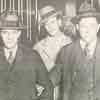 delivered his twelve-hour long plea to save his young
clients' lives, his moving summation stands as the most eloquent attack on
the death penalty ever delivered in an American courtroom. Mixing poetry
and prose, science and emotion, a world-weary cynicism and a dedication to
his cause, hatred of bloodlust and love of man, Darrow takes his audience
on an oratorical ride that would be unimaginable in a criminal trial
today. Even without Darrow in his prime, the Leopold and Loeb trial has
the elements to justify its billing as the first "trial of the century."
It is not surprising that the public responded to a trial that involved
the kidnapping and murder of a fourteen-year old boy from one of Chicago's
most prominent families, a bizarre relationship between two promising
scholars-turned-murderers, what the prosecutor called an "act of
Providence" leading to the apprehension of the teenage defendants, dueling
psychiatrists, and an experienced and sharp-tongued state's attorney bent
on hanging the confessed killers in spite of their relative youth.
delivered his twelve-hour long plea to save his young
clients' lives, his moving summation stands as the most eloquent attack on
the death penalty ever delivered in an American courtroom. Mixing poetry
and prose, science and emotion, a world-weary cynicism and a dedication to
his cause, hatred of bloodlust and love of man, Darrow takes his audience
on an oratorical ride that would be unimaginable in a criminal trial
today. Even without Darrow in his prime, the Leopold and Loeb trial has
the elements to justify its billing as the first "trial of the century."
It is not surprising that the public responded to a trial that involved
the kidnapping and murder of a fourteen-year old boy from one of Chicago's
most prominent families, a bizarre relationship between two promising
scholars-turned-murderers, what the prosecutor called an "act of
Providence" leading to the apprehension of the teenage defendants, dueling
psychiatrists, and an experienced and sharp-tongued state's attorney bent
on hanging the confessed killers in spite of their relative youth.The crime that captured national attention in 1924 began as a fantasy in the mind of eighteen-year old Richard Loeb, the handsome and privileged son of a retired Sears Roebuck vice president. Loeb was obsessed with crime. Despite his high intelligence and standing as the youngest graduate ever of the University of Michigan, Loeb read mostly detective stories. He read about crime, he planned crimes, and he committed crimes, although none until 1924 were crimes involving physical harm to a person. ( Darrow and Leopold later saw Loeb's fascination with crime as form of rebellion against the well-meaning, but strict and controlling, governess who raised him.) For Loeb, crime became a sort of game; he wanted to commit the perfect crime just to prove that it could be done.
Loeb's nineteen-year old partner in crime, Nathan Leopold, was interested in ornithology, philosophy, and especially, Richard Loeb. Like Loeb, Leopold was a child of wealth and opportunity, the son of a millionaire box manufacturer. At the time of their crime, the brilliant Leopold was a law student at the University of Chicago and was planning to begin studies at Harvard Law School after a family trip to Europe in the summer. Leopold already had achieved recognition as the nation's leading authority on the Kirtland warbler, an endangered songbird, and frequently lectured on the subjects of his ornithological passion. As a student of philosophy, Leopold was attracted to Friedrich Nietzsche. Nietzsche's influence on early twentieth century academics was powerful, and the merits of ideas contained in books like his Beyond Good and Evil were fiercely debated in centers of learning like the University of Chicago. Leopold agreed with Nietzsche's criticism of moral codes, and believed that legal obligations did not apply to those who approached "the superman." Leopold's idea of the superman was his friend and lover, Richard Loeb.
Loeb and Leopold had an intense and stormy relationship. At one time Leopold contemplated killing Loeb over a perceived breach of confidentiality. This relationship, described by Darrow as "weird and almost impossible," led the two boys to do together what they almost certainly would never have done apart: commit murder. Motives are often unclear, and they are in this trial. Neither the defense's theory that the murder was an effort by both to deepen their relationship nor the prosecution's theory that money to pay off gambling debts and a desire by Loeb to "have something" on Leopold in order to counter Leopold's unwanted demands for sex, are likely accurate. What is clearest about the motives is that Leopold's attraction to Loeb was his primary reason for participating in the crime. Leopold later wrote that "Loeb's friendship was necessary to me-- terribly necessary" and that his motive, "to the extent that I had one, was to please Dick." For Loeb, the crime was more an escape from the ordinary; an interesting intellectual exercise.
Murder was a necessary element in their plan to commit the perfect crime. The two teenagers spent hours discussing and refining a plan that included kidnapping the child of a wealthy parents, demanding a ransom, and collecting the ransom after it was thrown off a moving train as it passed a designated point. Neither Loeb nor Leopold relished the idea of murdering their kidnap victim, but they thought it critical to minimizing their likelihood of being identified as the kidnappers. Their victim turned out to be an acquaintance of the two boys, Bobby Franks.
Franks was simply in the wrong place at the wrong time. On May 21, 1924 at about five o'clock in the afternoon, Bobby Franks was walking home from school when a gray Winton automobile pulled up near him. Loeb asked Franks to come over to the car, asked him to get in the car to discuss a tennis racquet, then killed him with a chisel as the two drove off. (Though most evidence points to Loeb as the actual killer, there is some dispute about this, as there is over the time of the killing. Some have suggested that Franks was sexually molested, then killed later.) Leopold and Loeb drove their rented car to a marshland near the Indiana line, where they stripped Franks naked, poured hydrochloric acid over his body to make identification more difficult, then stuffed the body in a concrete drainage culvert. The boys returned to the Loeb home where they burned Franks' clothing in a basement fire. That evening Mrs. Franks received a phone call from Leopold, who identified himself as "George Johnson." Leopold told Franks that her boy had been kidnapped, but was unharmed, and that she should expect a ransom note soon. The next morning the Franks family received a special delivery letter asking that they immediately secure $10,000 in old, unmarked bills and telling them to expect further instructions that afternoon. Leopold ("George Johnson") called Jacob Franks, Bobby's father, at three o'clock to tell him a taxi cab was about to arrive at his home and that he should take it to a specified drugstore in South Chicago. Just as Franks headed out to the Yellow Cab, a second call came, this one from the police, spoiling hope that the perfect crime would be executed. The body of Bobby Franks had been identified; a laborer happened to see a flash of what turned out to be a foot through the the shrubbery covering the open culvert where the body had been placed.
There would have been no arrests and no trial but for what the prosecutor called "the hand of God at work in this case." A pair of horn-rimmed glasses were discovered with the body of Bobby Franks. The glasses, belonging to Nathan Leopold, had slipped out of his pocket as he struggled to hide the body. They had an unusual hinge and could be traced to a single Chicago optometrist, who had written only three such prescriptions, including the one to Leopold. When questioned about the glasses, Leopold said that he must have lost them on one of his frequent birding expeditions. He was asked by an investigator to demonstrate how the glasses might have fallen out of his pockets, but failed after a series of purposeful trips to dislodge the glasses from his coat. Questioning became more intense. Leopold said that he spent the twenty-first of May picking up girls in his car with Loeb and driving out to Lincoln Park. Loeb, when questioned separately, confirmed Leopold's alibi. Prosecutor's were on the verge of releasing the two suspects when two additional pieces of evidence surfaced. First, typewritten notes taken from a member of Leopold's law school study group were found to match the the type from the ransom note, despite the fact that an earlier search of the Leopold home turned up a typewriter with unmatching type. Then came a statement from the Leopold family chauffeur, made in the hope of establishing Nathan's innocence, that spelled his doom. He said he was certain that the Leopold car had not left the garage on the day of the murder.
Loeb confessed first, then Leopold. Their confessions differed only on the point of who did the actual killing, with each pointing the finger at the other. Leopold later pleaded with Loeb to admit to killing Franks but, according to Leopold, Loeb said, "Mompsie feels less terrible than she might, thinking you did it and I'm not going to take that shred of comfort away from her."
The Loeb and Leopold families hired Clarence Darrow and Benjamin Bachrach to represent the two boys. Nathan said his first impression of Darrow was one of "horror", unimpressed as he was by Darrow's unruly hair, rumpled jacket, egg-splattered shirt, suspenders, and askew tie. His opinion of Darrow would soon change. He later described his attorney as a great, simple, unaffected man, with a "deep-seated, all-embracing kindliness." In his book Life Plus Ninety-Nine Years, Leopold wrote that if asked to name the two men who "came closest to preaching the pure essence of love" he would say Jesus and Clarence Darrow.
It was Darrow's decision to change the boys' initial pleas to the charges of murder and kidnapping from "not guilty" (suggesting a traditional insanity defense) to "guilty." The decision was made primarily to prevent the state from getting two opportunities to get a death sentence. With "not guilty" pleas, the state had planned to try the boys first on one of the two charges, both of which carried the death penalty in Illinois, and if it failed to win a hanging on the first charge, try again on the second. The guilty plea also meant that the sentencing decision would be made by a judge, not by a jury. Darrow's decision to plead the boys guilty undoubtedly was based in part on his belief that the judge who would hear their case, John R. Caverly, was a "kindly and discerning" man. With the public seemingly unanimous in calling for death, Darrow did not want to face a jury. In his summation Darrow noted, "where responsibility is divided by twelve, it is easy to say ‘away with him'; but, your honor, if these boys are to hang, you must do it--...it must be by your cool, premeditated act, without a chance to shift responsibility."
The defense hoped to build its case against death around the testimony of four psychiatrists, called "alienists" at the time. The best talent psychiatric talent 1924 had to offer was sought out by both sides to examine the defendants. Even Sigmund Freud was asked to come to Chicago for the trial, but his poor health at the time prevented the visit. The prosecution argued that psychiatric testimony was only admissible if the defendants claimed insanity, while the defense argued strenuously that evidence of mental disease should be considered as a mitigating factor in consideration of the sentence. In the most critical ruling of the trial, Judge Caverly decided against the state's objection, and allowed the psychiatric evidence to be introduced.
The trial (technically a hearing, rather than a trial, because of the entry of guilty pleas) of Leopold and Loeb lasted just over one month. The state presented over a hundred witnesses proving-- needlessly, in the opinion of many-- every element of the crime. The defense presented extensive psychiatric evidence describing the defendants' emotional immaturity, obsessions with crime and Nietzschean philosophy, alcohol abuse, glandular abnormalities, and sexual longings and insecurities. Lay witnesses, classmates and associates of Loeb, were offered to prove his belligerence, inappropriate laughter, lack of judgment, and childishness. Other lay witness testified as to Leopold's egocentricity and argumentative nature. The state offered in rebuttal psychiatrists who saw normal emotional responses in the boys and no physical basis for a finding of mental abnormality.
On August 22, 1924, Clarence Darrow began his summation for the defense in a "courtroom jammed to suffocation, with hundreds of men and women rioting in the corridors outside." As a newspaper reporter observed, the setting underscored Darrow's argument "that the court was the only thing standing between the boys and a bloodthirsty mob." For over twelve hours Darrow reminded Judge Caverly of the defendants' youth, genetic inheritance, surging sexual impulses, and the many external influences that had led them to the commission of their crime. Never before or since the Leopold and Loeb trial has the deterministic universe, this life of "a series of infinite chances", been so clearly made the basis of a criminal defense. In pleading for Loeb's life Darrow argued, " Nature is strong and she is pitiless. She works in mysterious ways, and we are her victims. We have not much to do with it ourselves. Nature takes this job in hand, and we only play our parts. In the words of old Omar Khayyam, we are only Impotent pieces in the game He plays Upon this checkerboard of nights and days, Hither and thither moves, and checks, and slays, And one by one back in the closet lays. What had this boy had to do with it? He was not his own father; he was not his own mother....All of this was handed to him. He did not surround himself with governesses and wealth. He did not make himself. And yet he is to be compelled to pay." In pleading that Leopold be spared , Darrow said, "Tell me that you can visit the wrath of fate and chance and life and eternity upon a nineteen- year-old boy!"
Darrow attacked the death penalty as atavistic, saying it "roots back to the beast and the jungle." Time and time again Darrow challenged the notion of "an eye for an eye": "If the state in which I live is not kinder, more humane, and more considerate than the mad act of these two boys, I am sorry I have lived so long." Darrow told Judge Caverly that a life sentence was punishment severe enough for the crime. He reminded the judge how little Leopold and Loeb would have to look forward to in the long days, months, and years ahead: "In all the endless road you tread there's nothing but the night." When Darrow finally ended his appeal, tears were streaming down the face of Judge Caverly and many other courtroom spectators. One reporter wrote, "There was scarcely any telling where his voice had finished and where silence had begun. It lasted for a minute, two minutes."
State's Attorney Robert Crowe closed for the prosecution. He sarcastically attacked the arguments of "the distinguished gentlemen whose profession it is to protect murder in Cook County, and concerning whose health thieves inquire before they go out and commit a crime." Addressing Leopold, Crowe said, "I wonder now, Nathan, whether you think there is a God or not. I wonder whether you think it is pure accident that this disciple of Nietzsche's philosophy dropped his glasses or whether it was an act of Divine Providence to visit upon your miserable carcasses the wrath of God." (Leopold, much later, said he wondered the same thing.) He heaped ridicule on Darrow's attempt to blame the crime on anyone and anything but the defendants: "My God, if one of them had a harelip I suppose Darrow would want me to apologize for having them indicted." Crowe called the defense psychiatrists "The Three Wise Men from the East" and accused one of them of being "in his second childhood" and "prostituting his profession." He reserved his strongest language for the two defendants, who he referred to as "cowardly perverts", "snakes", "atheists", "spoiled smart alecs", and "mad dogs." For Crowe, this was a premeditated crime committed by two remorseless defendants, and the appropriate punishment was obvious. The "real defense" in the case, according to Crowe, was "Clarence Darrow and his peculiar philosophy of life." It ought not be a defense, suggested Crowe, who closed by asking Judge Caverly to "execute justice and righteousness in the land."
Two weeks later Caverly announced his decision. He called the murder "a crime of singular atrocity." Caverly said that his "judgment cannot be affected" by the causes of crime and that it was "beyond the province of this court" to "predicate ultimate responsibility for human acts." Nonetheless, Caverly said that "the consideration of the age of the defendants" and the possible benefits to criminology that might come from future study of them persuaded him that life in prison, not death, was the better punishment. He said that he was doing them no favor: "To the offenders, particularly of the type they are, the prolonged years of confinement may well be the severest form of retribution and expiation."
Richard Loeb and Nathan Leopold were moved to the Joliet penitentiary. In 1936, Loeb was slashed and killed with a razor in a showroom fight with James Day, another inmate. Leopold rushed to the prison hospital to be at his old friend's bedside as he died. Day claimed that he was resisting Loeb's sexual advances, while prison officials called it a deliberate and unprovoked attack. Day was acquitted by a jury. Leopold managed to keep intellectually active in prison. He taught in the prison school, mastered twenty-seven foreign languages, worked as an x-ray technician in the prison hospital, reorganized the prison library, volunteered to be tested with an experimental malaria vaccine, and designed a new system of prison education. In the 1950's, an elderly and now retired Robert Crowe reportedly offered to write a letter to the Illinois Parole Board urging his release. In 1958, after thirty-four years of confinement, Leopold was released from prison. To escape the publicity accompanying the release of Compulsion, a movie based on the 1924 crime (and which Leopold and his lawyer, Elmer Gertz, challenged in a lawsuit as an invasion of privacy), Leopold migrated to Puerto Rico. He earned a master's degree, taught mathematics, and worked in hospitals and church missions. He wrote a book entitled The Birds of Puerto Rico. Despite saying in a 1960 interview that he was still deeply in love with Richard Loeb, he married. Leopold said he often found himself wondering during his years in Puerto Rico at what point the thirty-four dark years in prison became balanced by the subsequent sunshine of freedom. Leopold died following ten days of hospitalization on August 30, 1971. The next morning his corneas were removed. One was given to a man, the other to a woman.
Big Bill
"War" is not too strong of a term to describe the state of affairs existing between the Western Federation of Miners and the Western Mine Owners' Association at the turn of the twentieth century. When the state
of Idaho prosecuted William "Big Bill" Haywood in 1907 for ordering the
assassination of former governor Frank Steunenberg, fifteen years of union
bombings and murders, fifteen years of mine owner intimidation and greed,
and fifteen years of government abuse of process and denials of liberties
spilled into the national headlines. Featuring James McParland, America's
most famous detective; Harry Orchard, America's most notorious mass
murderer turned state's witness; Big Bill Haywood, America's most radical
labor leader; and Clarence Darrow, America's most reknown defense
attorney, the Haywood trial ranks as one of the most fascinating criminal
trials in history.
at the turn of the twentieth century. When the state
of Idaho prosecuted William "Big Bill" Haywood in 1907 for ordering the
assassination of former governor Frank Steunenberg, fifteen years of union
bombings and murders, fifteen years of mine owner intimidation and greed,
and fifteen years of government abuse of process and denials of liberties
spilled into the national headlines. Featuring James McParland, America's
most famous detective; Harry Orchard, America's most notorious mass
murderer turned state's witness; Big Bill Haywood, America's most radical
labor leader; and Clarence Darrow, America's most reknown defense
attorney, the Haywood trial ranks as one of the most fascinating criminal
trials in history."War" is not too strong of a term to describe the state of affairs existing between the Western Federation of Miners and the Western Mine Owners' Association at the turn of the twentieth century. When the state of Idaho prosecuted William "Big Bill" Haywood in 1907 for ordering the assassination of former governor Frank Steunenberg, fifteen years of union bombings and murders, fifteen years of mine owner intimidation and greed, and fifteen years of government abuse of process and denials of liberties spilled into the national headlines. Featuring James McParland, America's most famous detective; Harry Orchard, America's most notorious mass murderer turned state's witness; Big Bill Haywood, America's most radical labor leader; and Clarence Darrow, America's most renown defense attorney, the Haywood trial ranks as one of the most fascinating criminal trials in history.
In the early evening of December 30, 1905, Frank Steunenberg, returning from a walk in eight inches of freshly fallen snow, opened an in-swinging gate leading to the porch of his Caldwell, Idaho home, and was blown ten feet into the air by an explosion that "shook the earth and could be heard for miles around." Within an hour, Steunenberg, the former governor of Idaho, was dead. Speculation began immediately that Steunenberg's assassination was the work of the Western Federation of Miners (WFM), whose enmity Steunenberg had earned by his aggressive efforts, including the requesting of federal troops, to suppress labor unrest in the Couer d'Alene mining region of northern Idaho.
The 1890's had been a time of unprecedented violence in Idaho's silver mines. Federal troops were called to Idaho three separate times to combat union-sponsored terrorism that had resulted in many deaths and extensive property damage to mining company property, the last time being an eighteen-month occupation from May, 1898 to November, 1899 undertaken at the urging of Governor Frank Steunenberg. Steunenberg asked President McKinley to send troops after union miners hijacked a train and planted sixty boxes of dynamite beneath the world's largest concentrator, owned by the Bunker Hill Mining Company of Wardner, Idaho, blowing it and several nearby buildings to smithereens. Federal troops responded by arresting every male-- even doctors and preachers-- in union-controlled towns, loading them into boxcars, and herding them into an old barn where the over 1,000 men were held captive without trial. In declaring martial law, Steunenberg said, "We have taken the monster by the throat and we are going to choke the life out of it. No halfway measures will be adopted. It is a plain case of the state or the union winning, and we do not propose that the state shall be defeated." Steunenberg's tough anti-union stance infuriated leaders of the Western Federation of Miners, all the more so because he was a Democrat who miners helped elect.
Steunenberg's assassination
The day after Steunenberg's assassination, a waitress at the Saratoga Hotel in Caldwell reported that a guest, calling himself Thomas Hogan, had "trembling hands" and "downcast eyes" when she waited on him shortly after the explosion. A search of Hogan's hotel room turned up traces of plaster of paris, the substance used to hold pieces of the bomb together, in his chamber pot. Hogan was questioned about the bombing and, the next day (New Year's Day, 1906) arrested while having a drink in the hotel bar and charged with the first degree murder of Frank Steunenberg. Interrogated repeatedly in a Caldwell jail, Hogan disclosed that his name was Harry Orchard, and that he knew leaders of the WFM, though he continued to deny both his own guilt and any recent contact with Federation insiders.No one in Idaho believed that Steunenberg's assassination was the work of just one man. The Governor of Idaho contacted the The Pinkerton Detective Agency for help in coordinating the murder investigation. The Pinkertons sent to Boise to head the effort their most famous employee and America's premier detective, James McParland. McParland had made his reputation some thirty years earlier, working undercover in Pennsylvania's anthracite coal mining region to expose and convict a secret gang of Irish thugs, the Molly Maguires. McParland's fame was great enough to attract the interest of the author Sir Arthur Conan Doyle, who invented a meeting of Sherlock Holmes and McParland in The Valley of Fear, an unprecedented honor for a real detective.
McParland, visiting Orchard in the state penitentiary near Boise, suggested to the suspected killer that he was likely to receive more lenient treatment if he was willing to become a witness for the state and help convict WFM leaders, who were the target of the state's real anger. Within days, Orchard, after breaking down and crying several times, offered one of the most amazing confessions in the annals of American justice. In his 64-page confession, Orchard admitted both to the Steunenberg bombing and seventeen other killings all, he said, ordered by the inner circle of the WFM. WFM Secretary-Treasurer William Haywood, President Charles Moyer, and close advisor George Pettibone were all specifically accused of ordering the Steunenberg assassination. Orchard also identified three other WFM miners who he said had been his accomplices in various acts of union terrorism.
With Orchard's confession in hand, McParland proceeded to devise a plan to arrest the three members of the WFM inner circle, all living in the WFM's headquarters city of Denver, and transport them to Idaho for trial. McParland wanted the arrest and trip north to be so surreptitious and swift that the men would have no opportunity to obtain the assistance of lawyers who might prepare legal challenges to extradition. In effect, what McParland proposed was a kidnapping under the barest color of state law. McParland and Idaho state officials succeeded in convincing the governor of Colorado to issue warrants for the arrest of the the three men (codenamed Copperhead, Viper, and Rattler) on February 15, 1906, though both the warrants and the planned arrests remained a closely guarded secret until the night of February 17, when the three were rounded up (Moyer was arrested after boarding "the Deadwood Sleeper" which was to take him to South Dakota on the first leg of a probable planned escape to Canada; Haywood was arrested while having sex with his sister-in-law). Haywood, Moyer, and Pettibone were placed for a few hours in the city jail, denied permission to call family or lawyers, before being hustled in the early hours of the morning to the Denver depot and placed on a special train with orders not to stop until it crossed the Idaho border.
Not long after the special train departed the Denver station, Edmund Richardson, the longtime attorney for the WFM, boarded another train to Idaho and began the legal battle to free the three leaders. Richardson filed petitions for habeas corpus, arguing that their forcible removal from Colorado without an opportunity to legally challenge their arrest and extradition in Colorado courts violated the Constitution. The prisoners' arguments lost both in the Idaho courts and the United States Supreme Court, which in December of 1906 in the case of Pettibone v. Nichols, ruled that a prisoner was "not excused from answering to the state whose laws he has violated because violence has been done to him in bringing him within the state." Justice McKenna was the sole dissenter, writing: "Kidnapping is a crime, pure and simple. All of the officers of the state are supposed to be on guard against it. But how is it when the law becomes a kidnapper? When the officers of the law, using it forms, and exerting its power, become abductors?"
Haywood, Moyer, and Pettibone took their fates differently. Moyer was frequently observed crying or walking nervously around his cell. Haywood used his time in jail to design new WFM posters, take a correspondence course in law, read books such as Upton Sinclair's The Jungle, and run on the Socialist ticket for governor of Colorado (he received 16,000 votes). Pettibone took his incarceration on death row almost cheerfully, shouting "There's luck in odd numbers, said Barney McGraw!" Over the months of their detention, tensions grew between the radical and defiant Haywood and the more cautious Moyer. Soon they were no longer on speaking terms and McParland began efforts, ultimately unsuccessful, to convince Moyer to testify against the other two defendants.
Meanwhile, McParland continue to hunt down other witnesses who could strengthen the prosecution's case. A miner named Steve Adams, implicated by Orchard in the bombing of a Colorado train depot that killed thirteen non-union miners and the killing of two claim jumpers in northern Idaho, was arrested. Threats of hanging and promises of immunity finally induced Adams to confess.
In December of 1906, after the Supreme Court's ruling in the Pettibone case, Clarence Darrow, famed Chicago defense attorney, was hired to work with Richardson in preparing the case for the defense of Bill Haywood, the first of the three prisoners who would face trial. Darrow's first priority, after arriving in Idaho, was to convince Adams to withdraw his confession and thus make the state's case against Haywood stand on the uncorroborated testimony of Harry Orchard. Denied personal access to the closely held Adams, Darrow was able to convey, through an uncle of Adams, assurances of free counsel (and perhaps other financial rewards as well) should he repudiate his confession. Much to McParland's chagrin, Adams did repudiate his confession and was as a result shipped to Wallace, Idaho to face old murder charges. Darrow defended Adams in a February, 1907 trial that ended in a hung jury.
The prosecution was assembling its own star-studded line-up for the Haywood trial. One of the two lead prosecutors was William Borah (who, later as member of the United States Senate would be a leading voice for the Progressive Republicans). Borah, known for his shrewd strategizing and forceful oratory, had the biggest and most profitable legal practice in the state. Borah was joined by James Hawley, a stereotypical western lawyer, renowned for his rapport with Idaho juries and the state's most experienced trial attorney.
The Trial
On May 9, 1907 the case of State of Idaho versus William D. Haywood was called for trial in Judge Fremont Wood's third-floor courtroom of the Ada County Courthouse. Press reports that day from Boise announced that "the eyes of the civilized world are on these great proceedings," which was described as a "determined struggle between labor unions and capital." One reporter called the Haywod trial "the greatest trial of modern time," while another described it as "one of the great court cases in the annals of the American judiciary." In a front row bench, much like an old-fashioned church pew, sat Haywood's wife, daughters, and mother, all of whom had been asked by Darrow to attend the trial so as to help create sympathy for his client.
Jury selection proved a difficult and time-consuming task, with 249 potential jurors questioned over more than six weeks to arrive at the final panel of twelve. Both sides understood the importance of having a favorable jury in a case with the political implications of the Haywood trial. Each side had invested great resources in compiling intelligence on members of the local jury pool. Men were sent out into Boise and the surrounding countryside posing as encyclopedia and insurance salesman, with the purpose of investigating the affiliations, politics, and preferences of any who might be called for jury duty. The Pinkertons managed to place a spy, Operative 21, as a jury canvasser for the defense with the instruction to provide Darrow and the defense team with erroneous reports of the preferences of potential jurors. (Only late in the jury selection game did the defense uncover the spy in their midst.) Many potential jurors resisted serving on a jury for $3 a day for what promised to be a long and controversial trial, and some ran from the sheriff as he tried to round up potential jurors. Some took off for the hills, while others were found hiding in cellars and haystacks.
Once in court, potential jurors were asked about what they thought of labor unions, what church they belonged to, and whether they heard a speech recently delivered in Boise by Secretary Howard Taft. Both sides weighed the answers of potential jurors and exercised peremptory challenges or challenges for cause against those they saw as unsuitable jurors. Bill Haywood huddled with his lawyers, seemingly taking an active role in the jury selection process. Finally, jury selection was completed with the addition to the jury of a rancher named O. V. Sebern. Of the twelve jurors, nine were ranchers or farmers, one was a real estate agent, one a construction foreman, and one a building contractor. Eleven of the twelve were men over fifty.
James Hawley gave the prosecution's opening statement. Hawley's attempts to describe Steunenberg's murder and the confession of Orchard were repeatedly objected to by Darrow, who called his statements argument rather than an outline of the proposed evidence as the rules for opening statements call for. Darrow's interruptions and frequent sarcastic editorializing seemed to fluster Hawley, and most reporters rated the opening statement weak. Darrow opted to postpone his own opening statement until the close of the prosecution case.
The first set of witnesses called by the state described events in Caldwell on December 30, 1905. The group included a neighbor of Steunenberg who heard the explosion, a doctor who attended Stuenenberg at his deathbed, a Caldwell resident who witnessed Orchard observing the Steunenberg residence with binoculars, another resident who observed Orchard leaving the Saratoga Hotel shortly before the explosion and, finally, Steunenberg's son Julian, who once had a conversation with Orchard during which he was said to have asked about the possibility of buying sheep from his father. Then the state called the witness everyone was waiting to hear.
"Call Harry Orchard." The prosecution considered it something of a victory to present a live Harry Orchard, after months of rumors that the WFM was planning to poison him in jail or shoot him on the way to the courthouse. The rumors were taken seriously. Hawley sent word to the defense that "the second man shot will be Darrow." Orchard took the stand, wearing a tweed suit and a neat mustache, he was described by one reporter as "looking like a Sunday school superintendent."
Before Orchard could begin to tell his remarkable tale of his career as a union terrorist, Hawley had some preliminary questions:
"Is Harry Orchard your real name?"
"No, sir."
"How long have you used the name of Harry Orchard?"
"About eleven years."
"What is your real name?"
"Albert E. Horsley."
With a strong, steady delivery, Orchard told his story to a packed courtroom (with hundreds of spectators unable to find seats milling around on the courthouse lawn). Orchard said he was born in Ontario, Canada forty years earlier, left for the U.S. at age thirty, eventually finding work as a mucker in a Burke, Idaho silver mine, where he joined the WFM. On April 29, 1898, Orchard was, he said, one of the thousand or so miners who hijacked a Northern Pacific train, diverted it to Wardner, then blew up the Bunker Hill concentrator, killing two men:
"Who lit the fuse?"
"I lit one of them. I don't know who lit the rest."
Orchard testified that he evaded arrest by hiding out in the hills above Burke, then making his way to Butte, Montana which was then the headquarters of the WFM. His career as a union killer began in 1903 when he blew up the Vindicator mine in Colorado for $500, killing two. In 1904, he dynamited the train depot in Independence, Colorado, killing thirteen non-union miners. Later, under orders of Haywood and Pettibone, Orchard said that he attempted assassinations of the governor of Colorado, two Colorado Supreme Court justices, and the president of a mining company. The attempts all failed, although one bomb intended for a justice killed an innocent bystander instead. Orchard testified that he was the fifth man hired by Haywood, Moyer, and Pettibone to assassinate Steunenberg. He testified that when he was hired Haywood said to him, "Steunenberg has lived seven years too long." His reward for a successful job was to be several hundred dollars and a ranch. The purpose of the Steunenberg assassination, according to Orchard, was to strike fear in any politician who might consider actions that would frustrate WFM goals. (LINK to reports by Oscar Davis on Orchard's Testimony)
Edmund Richardson cross-examined Orchard for the defense, after winning a battle with Darrow for the honor. For twenty-six hours, Richardson subjected Orchard to a threatening, loud, and insulting attack covering every detail of his confession. The cross-examination succeeded only in emphasizing his testimony through repetition. Richardson attempted to damage Orchard's credibility by showing him to be a womanizer, a man who deserted his family, a bigamist, a heavy drinker, a gambler, and a cheat. He was drilled about his indifference to the damage and destruction he inflicted. Through it all, Orchard stood up well. Richardson suggested that Orchard took the stand only to save his own life:
"So you thought you could make your peace with the future by having someone else hanged, did you?"
"No, sir. No, sir. [Orchard was sobbing at this point.] I had no thought of getting out of it, by laying it on anybody else. I began to think about my own life and the unnatural monster I had been."
When Orchard finally left the stand, the reporter for Collier's called him "the most remarkable witness that ever appeared in an American court of justice."
The state concluded its case by introducing articles from a WFM publication, Miner's Magazine, that revealed a deep hatred of Steunenberg and sardonic pleasure over his passing, some letters received by Orchard, and presenting an African-American witness who claimed to have seen Orchard and Haywood together in a buggy. The defense asked for a directed verdict when the prosecution rested, but Judge Wood ruled that he was "thoroughly satisfied that the case should be submitted to a jury."
The defense called nearly a hundred witnesses to refute various points of Orchard's confession or cast doubt on his motives. Among those called was Morris Friedman, Pinkerton Detective James McParland's private stenographer and author of a book, Pinkerton Labor Spy. Friedman described dirty tricks used by the Pinkertons to subvert the WFM, including the use of undercover operatives within the WFM who padded bills to drain the Federation treasury and reduced payments to miners to build dissatisfaction with Haywood. The purpose of the testimony was to suggest to jurors that Pinkerton infiltrators may have committed some of the crimes Orchard attributed to the WFM in order to bring the labor organization into disrepute. Charles Moyer and George Pettibone also testified and denied many of Orchard's specific allegations about their complicity in crimes.
On July 11, 1907, Darrow called William Haywood. Spectators fanned themselves with palm-leaf fans in ninety-five degree heat as Haywood, in a mild-mannered, soft-spoken, conversational tone, denied charge after charge that had been leveled against him by Harry Orchard. He denied ordering Orchard to blow up any mine or assassinate Steunenberg or any other public official. One reporter, no fan of Haywood, wrote in admiration of Haywood's "manly assertion of his principles." Senator Borah cross-examined Haywood for the prosecution. As Borah stood to begin his questioning, Haywood fixed his single eye (the other had been lost in a childhood accident) on the prosecutor. Borah was to say later that Haywood's glare "doubled me up like a jack-knife." For five hours, Borah tried and failed to crack the imposing defendant.
J. Anthony Lukas, Pulitzer Prize winning author of the magnificent book about the Haywood case, Big Trouble, wrote that "rarely in the nation's first century and a quarter had a courtroom harbored four attorneys of such distinction as Hawley, Borah, Richardson, and Darrow." There summations were, at a time when courtroom theater was a popular form of entertainment, greatly anticipated, and their performances did not disappoint.
Hawley summed up first for the prosecution, chatting with the jury in the informal way for which he was famous. Hawley said the prosecution asked only for justice, then reminded them of that December day when Steunenberg was "sent to face his God without a moment's warning and within sight of his wife and children." In Orchards's confession, Hawley saw "divine grace working upon his soul and through him to bring justice to one of the worst criminal bands that ever operated in this country."
Richardson went next, offering the defense's first summation. In a nine-hour address full of theatrics and flourishes, Richardson asked jurors to determine Haywood's guilt "under the high dome of heaven." He reminded juror's of Steunenberg's 1899 crackdown on northern Idaho miners and the resulting incarceration of miners in "bullpens" by federal "colored troops:"
"They threw them in the dirty, vile-kept bullpens and they were subjected to all sorts of indignities and insults at the hands of those negro soldiers. If you had been there...gentleman of the jury, it is certain that you would have attained in your breast a righteous hatred for every person who had anything to do with causing your humiliation and suffering."
Richardson argued that the angry words about Steunenberg in Miner's Magazine were understandable given the events of seven years earlier. Blame for Steunenberg's murder, however, Richardson laid on Orchard and the Pinkertons. Richardson suggested it was odd that an assassin like Orchard would make himself known around Caldwell, fail to destroy incriminating evidence, and be called "Harry" by prosecutors. The murder, he suggested, was a frame-up planned by the Pinkertons to discredit and ultimately destroy the leadership of the WFM.
As impressive as the first two summations were, Hawley and Richardson were, in the words of Anthony Lukas, "a bit like vaudeville artists who warmed up the crowd for the top bananas," Darrow and Borah. Darrow closed for the defense with an eleven-hour speech that at times, had Haywood's wife and mother and many of the women in the courtroom sobbing.
Darrow pitilessly attacked Orchard, who he called "the biggest liar that this generation has known." Any juror "who would take away the life of a human being upon testimony like that [of Orchard's] would place a stain upon the state of his nativity...that all the waters of the great seas could never wash away." In a move much criticized in the press, Darrow both admitted and excused much of the violence attributed to the WFM:
"I don't mean to tell this jury that labor organizations do no wrong. I know them too well for that. They do wrong often, and sometimes brutally; they are sometimes cruel; they are often unjust; they are frequently corrupt. . .But I am here to say that in a great cause these labor organizations, despised and weak and outlawed as they generally are, have stood for the poor, they have stood for the weak, they have stood for every human law that was ever placed upon the statute books. They stood for human life, they stood for the father who was bound down by his task, they stood for the wife, threatened to be taken from the home to work by his side, and they have stood for the little child who was also taken to work in their places--that the rich could grow richer still, and they have fought for the right of the little one, to give him a little of life, a little comfort while he is young. I don't care how many wrongs they committed, I don't care how many crimes these weak, rough, rugged, unlettered men who often know no other power but the brute force of their strong right arm, who find themselves bound and confined and impaired whichever way they turn, who look up and worship the god of might as the only god that they know--I don't care how often they fail, how many brutalities they are guilty of. I know their cause is just."
Darrow offered a different motive for Orchard's murder than the one suggested by his co-counsel. He argued (unconvincingly, as far as the press was concerned) that Orchard bore a personal grudge against Steunenberg because the governor's intervention in northern Idaho resulting in him losing a share of a silver mine. Finally, Darrow launched into a powerful conclusion that ranks among the best of his long career:
I have known Haywood. I have known him well and I believe in him. I do believe in him. God knows it would be a sore day to me if he should ascend the scaffold; the sun would not shine or the birds would not sing on that day for me. It would be a sad day indeed if any calamity should befall him. I would think of him, I would think of his mother, I would think of his babes, I would think of the great cause that he represents. It would be a sore day for me.
But, gentlemen, he and his mother, his wife and his children are not my chief concern in this case. If you should decree that he must die, ten thousand men will work down in the mines to send a portion of the proceeds of their labor to take care of that widow and those orphan children, and a million people throughout the length and the breadth of the civilized world will send their messages of kindness and good cheer to comfort them in their bereavement. It is not for them I plead.
Other men have died, other men have died in the same cause in which Bill Haywood has risked his life, men strong with devotion, men who love liberty, men who love their fellow men have raised their voices in defense of the poor, in defense of justice, have made their good fight and have met death on the scaffold, on the rack, in the flame and they will meet it again until the world grows old and gray. Bill Haywood is no better than the rest. He can die if die he needs, he can die if this jury decrees it; but, oh, gentlemen, don't think for a moment that if you hang him you will crucify the labor movement of the world.
Don't think that you will kill the hopes and the aspirations and the desires of the weak and the poor, you men, unless you people who are anxious for this blood--are you so blind as to believe that liberty will die when he is dead? Do you think there are no brave hearts and no other strong arms, no other devoted souls who will risk their life in that great cause which has demanded martyrs in every age of this world? There are others, and these others will come to take his place, will come to carry the banner where he could not carry it.
Gentlemen, it is not for him alone that I speak. I speak for the poor, for the weak, for the weary, for that long line of men who in darkness and despair have borne the labors of the human race. The eyes of the world are upon you, upon you twelve men of Idaho tonight. Wherever the English language is spoken, or wherever any foreign tongue known to the civilized world is spoken, men are talking and wondering and dreaming about the verdict of these twelve men that I see before me now. If you kill him your act will be applauded by many. If you should decree Bill Haywood's death, in the great railroad offices of our great cities men will applaud your names. If you decree his death, amongst the spiders of Wall Street will go up paeans of praise for those twelve good men and true who killed Bill Haywood . In every bank in the world, where men hate Haywood because he fights for the poor and against the accursed system upon which the favored live and grow rich and fat--from all those you will receive blessings and unstinted praise.
But if your verdict should be "Not Guilty," there are still those who will reverently bow their heads and thank these twelve men for the life and the character they have saved. Out on the broad prairies where men toil with their hands, out on the wide ocean where men are are tossed and buffeted on the waves, through our mills and factories, and down deep under the earth, thousands of men and of women and children, men who labor, men to suffer, women and children weary with care and toil, these men and these women and these children will kneel tonight and ask their God to guide your judgment. These men and these women and these little children, the poor, the weak, and the suffering of the world will stretch out their hands to this jury, and implore you to save Haywood's life. (LINK TO DARROW'S SUMMATION.)
The final words belonged to the prosecution and Senator Borah. Borah told the jury that this "is simply a trial for murder," not an attack on organized labor. He asked the jury to consider Orchard's actions, not just his words, especially his frequent trips to Denver: "Why? Why always back to Denver? Unless it was to find there the protection and pay of his employers." Borah closed by reminding jurors of their solemn duty:
"I remembered again the awful thing of December 30, 1905, a night which has taken ten years to the life of some who are in this courtroom now. I felt again its cold and icy chill, faced the drifting snow and peered at last into the darkness for the sacred spot where last lay the body of my dead friend, and saw true, only too true, the stain of his life's blood upon the whitened earth. I saw Idaho dishonored and disgraced. I saw murder--no, not murder, a thousand times worse than murder--I saw anarchy wave its first bloody triumph in Idaho. And as I thought again I said, ‘Thou living God, can the talents or the arts of counsel unteach the lessons of that hour?' No, no. Let us be brave, let us be faithful in this supreme test of trial and duty...If the defendant is entitled to his liberty, let him have it. But, on the other hand, if the evidence in this case discloses the author of this crime, then there is no higher duty to be imposed upon citizens than the faithful discharge of that particular duty. Some of you men have stood the test and trial in the protection of the American flag. But you never had a duty imposed upon you which required more intelligence, more manhood, more courage than that which the people of Idaho assign to you this night in the final discharge of your duty." (LINK TO PROSECUTION'S SUMMATION.)
Judge Wood gave the jury their instructions. He told them the defendant was presumed innocent, that proof of guilt must be established beyond a reasonable doubt, and that the jury could not convict without corroborated evidence that connected Haywood with the Steunenberg assassination. At 11:04 am on Saturday, July 28, 1907, the twelve jurors began their deliberations.
As deliberations continued through the night, rumors of the jury's thinking began to swirl around Boise. Most rumors had it that the jury was 11 to 1 or 10 to 2 or 9 to 3 for conviction. Darrow seemed to be pinning his hope on a hung jury. After deliberating through the night, the jury at 6:40 am on Sunday morning reported that they had reached a verdict.
As the jury filed into Judge Wood's courtroom, Darrow put an arm around his client and said, " Bill, old man, you'd better prepare for the worst. I'm afraid it's against us, so keep up your nerve." Haywood replied, "Yes, I will." The clerk of court, Otto Peterson, announced the verdict: "We the jury in the above entitled cause find the defendant, William D. Haywood, not guilty." Haywood jumped up, laughing and crying, bear hugged friends, then rushed to the jury to shake hands with as many members of it as he could.
Epilogue
Interviews with jurors after the trial hint at several reasons for their surprising verdict, which was reached six ballots after an initial vote of 8 for acquittal, 2 for conviction, and 2 abstentions. Some jurors suggested that Judge Wood's instructions requiring corroboration of Orchard's testimony dictated the result. If so, the defense's success in persuading Steve Adams, by bribe or threat or whatever, to withdraw his confession was the key to victory. Other jurors expressed their positive impression of Haywood on the witness stand. Still others credited Darrow's moving summation. Members of the press offered other speculations as well, suggesting that fear of reprisals by the WFM may have persuaded some jurors to vote for acquittal. At least one Pinkerton detective offered an even darker explanation: that at least one of the jurors was bought.
George Pettibone was next up for trial. Harry Orchard was the state's star witness. This time his cross-examination was handled by Darrow who according to one observer, caused the jury to turn from Orchard as they would "from the carcass of a dead animal." The Pettibone jury acquitted him in much less time than it took the Haywood jury to reach its verdict. Charges against Charles Moyer were dropped after the Pettibone trial.
Bill Haywood became the leader of the Industrial Workers of the World (the "Wobblies"). In 1918, Haywood was tried under an espionage and sedition act for urging a strike in a war-sensitive industry, was convicted and sentenced to thirty years in prison. In 1921, while out on bond pending appeal, Haywood jumped bond and fled to the Soviet Union, where he was to become a confidant of the Bolsheviks and a friend to John Reed. Haywood died in Moscow in 1928. Half of his ashes were buried in the Kremlin near those of Reed, and the other half were shipped to Chicago for burial near a monument to the Haymarket rioters whose actions in 1886 inspired Haywood's life of radicalism.
Harry Orchard was tried and convicted of the murder of Frank Steunenberg. He was sentenced to death, but his sentence was later commuted to life in prison. He remained in the Idaho state penitentiary near Boise, raising chickens and growing strawberries as a prison trusty, until his death in 1954.
The trials of Haywood and Pettibone roughly marked the end of the fifteen year labor war in the western mines, a period which approached nearer than any other in American history to open class warfare. Anthony Lukas wrote in Big Trouble:
Finally, the opposing camps in this nasty class war sputtering along the icy ridges of the Rocky Mountains had just about canceled each other out. Operative for operative, hired gun for hired gun, bought juror for bought juror, perjured witness for perjured witness, conniving lawyer for conniving lawyer, partisan reporter for partisan reporter, these cockeyed armies had fought each other to an exhausted standoff.
(Anthony Lukas was himself left physically and emotionally spent after seven years of work on Big Trouble. On June 5, 1997, after discussing final revisions on the book with his editor, Lukas hanged himself.)
The Haywood Trial offers a fascinating window upon a time of economic conflict and change. Although called by one reviewer of Big.
How To Submit Your Article:
Follow the Procedure Below To Submit Your Articles

Submit your Article by using our online form
Click here
Note* we only accept Original Articles, we will not accept
Articles Already Published in other websites.
For Further Details Contact:
[email protected]
 Right Away Call us at Ph no: 9650499965
Articles of Yesteryears
Click on the link Below to check articles submitted in previous years:Latest Articles - Law Articles 2017 - Law Articles 2016 - Law Articles 2015 - Law Articles 2014 - Law Articles 2013 - Law Articles 2012 - Law Articles 2011 - Law Articles 2010 - Law Articles 2009 - Law Articles 2008 - Articles 2007 - Law Articles 2006 - Law Articles 2000-05 - Archive
File Your Copyright - Right Now!
 Online Copyright Registration in India Call us at: 9891244487 / or email at: [email protected] |
Lawyers in India - Search By City |
|||
|
Delhi Chandigarh Allahabad Lucknow Noida Gurgaon Faridabad Jalandhar Vapi |
Mumbai Pune Nagpur Nashik Ahmedabad Surat Indore Agra Jalgaon |
Kolkata Siliguri Durgapur Janjgir Jaipur Ludhiana Dimapur Guwahati Amritsar |
Chennai Jamshedpur Hyderabad Coimbatore Eluru Belgaum Cochin Rajkot Jodhpur |