





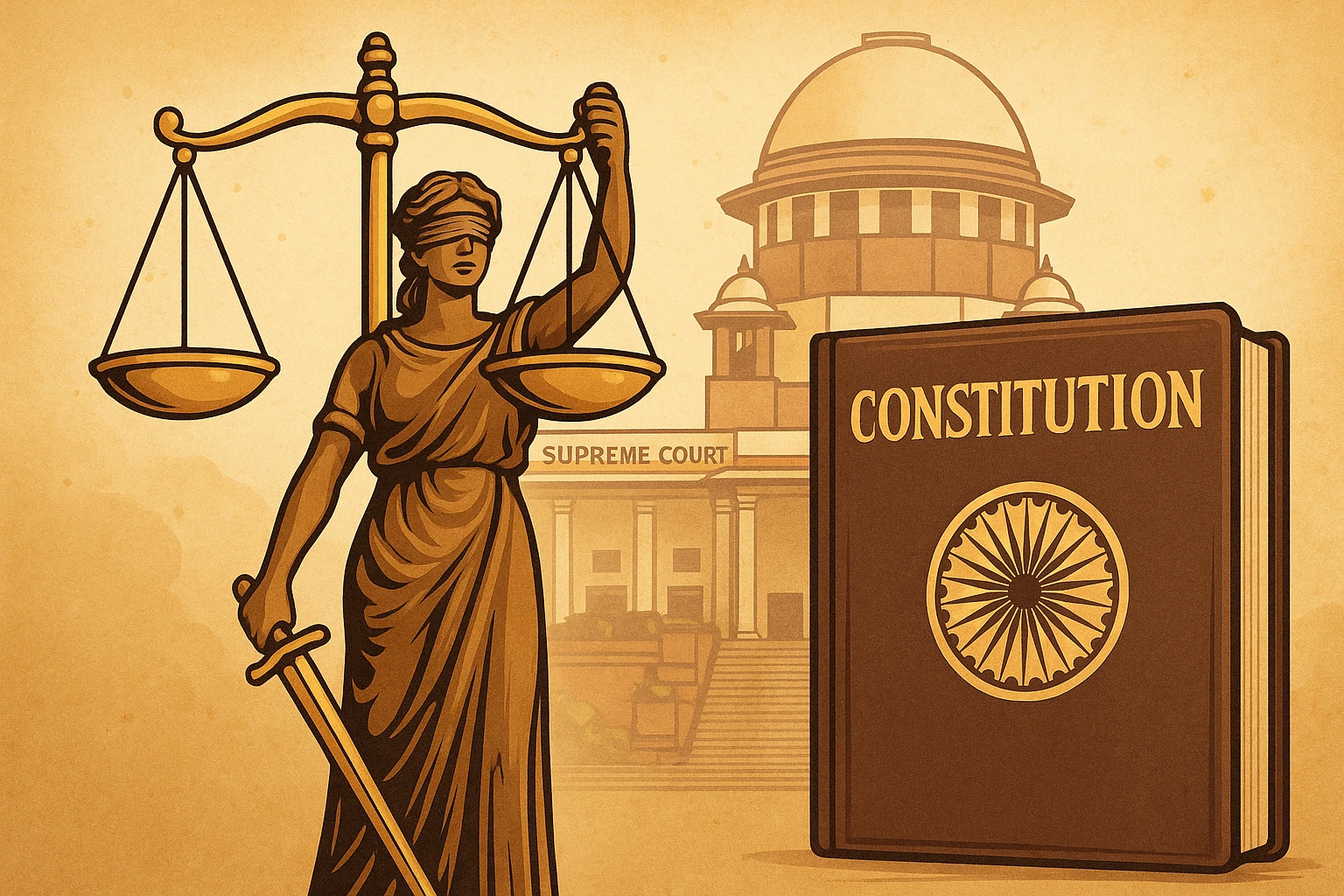
Access to Justice in India: A Struggle for the Common Citizen
Justice delayed is justice denied—a phrase that resonates deeply in India, where the promise of equal access to the judiciary often remains unfulfilled for ordinary citizens. While India’s Constitution guarantees the right to equality before law and equal protection of laws, the practical reality of accessing the judicial system presents formidable challenges that disproportionately affect the lesser privileged, marginalized, and vulnerable sections of society.
The Scale of the Problem: Pendency Crisis
The most visible symptom of India’s access to justice problem is the staggering backlog of cases. As of recent estimates, over 50 million cases are pending across various levels of the Indian judiciary—from the Supreme Court to district and subordinate courts. The High Courts alone carry a burden of approximately 6 million pending cases, while district and subordinate courts account for the vast majority of the backlog.
The average time taken to resolve a case in India stretches into years, often decades. Civil cases routinely take 5–10 years or more for resolution, while criminal cases can extend beyond 15 years. This glacial pace of justice transforms the judicial process from a remedy into a punishment, where the process itself becomes the penalty. For a common person seeking justice, this delay often means financial ruin, emotional exhaustion, and loss of faith in the system.
Financial Barriers: Justice at a Price
For most Indians, pursuing justice is prohibitively expensive. Court fees, while seemingly nominal, can be substantial for those living on the margins. However, the real financial burden lies elsewhere—in lawyer fees, documentation costs, travel expenses, and the opportunity cost of repeated court appearances.
Legal representation is expensive and often beyond the reach of ordinary citizens. While senior advocates in metropolitan courts charge lakhs of rupees per appearance, even junior lawyers in lower courts demand fees that strain middle-class budgets and are simply unaffordable for the lesser Privilege. The absence of a robust public defender system comparable to those in many developed nations means that those who cannot afford lawyers must either navigate the complex legal system alone or forgo justice altogether.
- Lawyer fees and documentation expenses
- Repeated travel to courts
- Loss of daily wages due to adjournments
The cost extends beyond direct expenses. Court dates are often postponed multiple times, requiring repeated travel and loss of daily wages—particularly devastating for daily wage laborers, farmers, and small business owners. A person from a village traveling to a district court may spend an entire day for a hearing that lasts minutes, losing a day’s income and incurring travel costs, only to find the case adjourned to another date months away.
Geographic and Physical Access
The distribution of courts across India creates significant geographic barriers. While urban areas may have adequate court infrastructure, rural and remote regions often have limited access to judicial forums. A person from a remote village may need to travel hundreds of kilometers to reach the nearest district court, making regular appearances practically impossible.
Court infrastructure itself is often inadequate. Many courts lack basic amenities—proper seating, drinking water, functional toilets, waiting areas, or protection from weather. For elderly litigants, differently-abled persons, or those with health conditions, physically accessing courtrooms and navigating court premises presents additional challenges. The lack of accessibility provisions for people with disabilities effectively excludes them from meaningful participation in judicial proceedings.
Complexity and Legal Literacy
The Indian legal system’s complexity creates an impenetrable barrier for the common person. Legal procedures, documentation requirements, and court processes are shrouded in technical language and archaic practices that are incomprehensible to those without legal training. Court proceedings are often conducted in English or technical legal language, alienating those who speak only regional languages or are illiterate.
The requirement to file properly drafted petitions, affidavits, and other legal documents necessitates professional help. A simple error in drafting or procedure can result in case dismissal, forcing litigants to start the process over. The average citizen cannot navigate this labyrinth without expensive professional assistance, yet cannot afford such assistance.
Legal literacy remains abysmally low in India. Most citizens are unaware of their legal rights, the remedies available to them, or how to access the judicial system. This ignorance makes them vulnerable to exploitation and prevents them from seeking timely legal intervention when their rights are violated.
The Language Barrier
Language poses a significant obstacle to justice in India’s multilingual society. While the Supreme Court and High Courts primarily function in English, lower courts theoretically use regional languages. However, legal documents, judgments, and procedures often involve English terminology and concepts. For the millions who are not educated in English, understanding their own cases becomes impossible without translation and interpretation.
The lack of adequate translation facilities in courts means that litigants often cannot follow proceedings in their own cases. They depend entirely on their lawyers to understand what is happening, creating information asymmetry and dependence that can be exploited. Court orders and judgments in English remain incomprehensible documents that must be explained by intermediaries.
Corruption and Exploitation
Corruption within the judicial ecosystem, while not universal, creates additional barriers and costs. Touts and middlemen who congregate around court premises prey on vulnerable litigants, promising quick resolution in exchange for bribes. Clerks and court staff sometimes demand unofficial payments for filing documents, providing case status information, or scheduling hearings.
Some lawyers exploit their clients’ ignorance, unnecessarily prolonging cases to extract more fees, or providing lesser Privilege representation while charging exorbitant amounts. The absence of transparent information about case status and procedures creates opportunities for such exploitation.
Inadequate Legal Aid
While India has a legal aid system in place through the Legal Services Authorities Act of 1987, its implementation remains inadequate. The National Legal Services Authority (NALSA) and State Legal Services Authorities provide free legal aid to eligible persons—those below the poverty line, women, children, persons with disabilities, members of Scheduled Castes and Scheduled Tribes, and others.
However, the legal aid system faces multiple challenges. The quality of legal representation provided is often substandard, with many legal aid lawyers lacking experience, dedication, or adequate compensation. Legal aid services are improperly publicized, leaving many eligible persons unaware of their entitlement. The bureaucratic process for establishing eligibility can itself be daunting. Moreover, legal aid typically covers only lawyer fees, not the other costs associated with pursuing a case.
Gender and Social Barriers
Women face specific obstacles in accessing justice beyond those faced by men. Social norms in many communities discourage women from appearing in courts or pursuing litigation. Safety concerns, lack of separate facilities for women in court premises, and fear of social stigma deter women from seeking legal remedies, particularly in matters of domestic violence, property rights, or family law.
Members of marginalized communities—Scheduled Castes, Scheduled Tribes, religious minorities, and other vulnerable groups—face discrimination and bias within the justice system. Economic disadvantage compounds social marginalization, making justice doubly inaccessible. The absence of adequate representation from these communities within the legal profession and judiciary itself raises concerns about cultural competence and implicit bias.
Alternative Dispute Resolution: Promise and Reality
Recognizing the limitations of traditional litigation, India has promoted Alternative Dispute Resolution (ADR) mechanisms like mediation, arbitration, and conciliation. The Lok Adalats (people’s courts) system has been particularly successful in resolving certain types of cases quickly and without cost.
However, ADR has limitations. It works best for disputes where parties have relatively equal bargaining power. In cases involving significant power imbalances—employer-employee, landlord-tenant, corporation-consumer—ADR can result in the weaker party being pressured into unfavorable settlements. Moreover, awareness of ADR mechanisms remains low, and their availability varies greatly across regions.
Digital Divide in the Digital Age
The COVID-19 pandemic accelerated the adoption of virtual courts and e-filing systems in India. While digital infrastructure promises to improve access by reducing physical appearances and streamlining procedures, it has also created new barriers. Many litigants, particularly in rural areas and among older populations, lack access to computers, smartphones, or reliable internet connectivity.
The digital divide means that technology, rather than democratizing access to justice, risks creating a two-tier system—one for the digitally connected and another for the rest. E-filing and virtual hearings require digital literacy that many lack. The inability to have face-to-face interaction with judges may disadvantage those who rely on oral communication traditions.
Lack of Information and Transparency
Information about one’s own case remains surprisingly difficult to access for ordinary litigants. While court websites now display case status, navigating these systems requires technological access and literacy. Understanding legal terminology in case listings is another challenge. Many litigants remain dependent on their lawyers for basic information about their cases—when the next hearing is, what happened in the last hearing, what documents are needed.
The opacity of judicial procedures, the absence of clear timelines, and the unpredictability of court functioning create anxiety and helplessness. A common person has no way of knowing why their case takes years while others are resolved quickly, or what they can do to expedite the process.
Judicial Vacancies and Infrastructure Deficit
The chronic shortage of judges exacerbates delays and access problems. Indian courts function with substantial vacancies—sometimes 30–40% of sanctioned judicial positions remain unfilled. The judge-to-population ratio in India is among the lowest globally, with approximately 20 judges per million people compared to 50–150 in many developed nations.
Physical infrastructure is equally inadequate. Many courts lack basic facilities, sufficient courtrooms, or modern case management systems. The absence of adequate support staff means judges spend time on administrative tasks rather than adjudication. Libraries, research facilities, and technological tools that could improve efficiency are often lacking, particularly in lower courts.
Intimidation and Power Dynamics
For common people facing powerful adversaries—corporations, politically connected individuals, or government departments—the justice system can feel rigged. The ability of wealthy litigants to hire expensive lawyers, file multiple petitions, and use procedural delays as a strategy creates an uneven playing field. A corporation can afford to have cases drag on indefinitely; a small farmer cannot.
Intimidation tactics, threats of counter-litigation, and the sheer exhaustion of repeated court appearances force many to abandon legitimate claims. The justice system’s failure to penalize frivolous litigation or deliberate delaying tactics means that these strategies remain viable for those with resources.
Impact on Rights and Democracy
The inaccessibility of the judiciary has profound implications for democracy and rights protection. When justice is available only to those who can afford it or endure prolonged battles, constitutional rights become theoretical rather than practical. The lesser Privilege, who are most likely to face rights violations, are least able to seek judicial remedies.
This access gap perpetuates inequality and undermines the rule of law. When people lose faith in formal justice systems, they may turn to informal, extrajudicial means of resolving disputes—village councils, self-help, or even violence. The credibility of legal institutions erodes when they are seen as serving only the privileged.
Reform Efforts and the Way Forward
Various reform initiatives have been proposed and partially implemented. The e-Courts project aims to digitize court functioning and improve transparency. The National Judicial Data Grid provides information on pending cases. Fast-track courts have been established for certain categories of cases. The Commercial Courts Act created specialized forums for commercial disputes.
However, comprehensive reform requires more. Judicial appointments must be accelerated to fill vacancies. Judicial infrastructure must be modernized and expanded. Court procedures need simplification and standardization. Legal education must be reformed to produce more practice-ready lawyers who can serve diverse clients.
The legal aid system requires substantial strengthening—better funding, trained and motivated lawyers, simplified eligibility criteria, and effective outreach. Paralegals and community legal educators can play vital roles in bridging the information gap and empowering people to navigate the system.
Alternative dispute resolution mechanisms should be expanded and strengthened while ensuring they do not disadvantage vulnerable parties. Legal literacy programs must reach rural and marginalized communities. Information technology should be deployed in ways that expand rather than restrict access, with attention to the digital divide.
Case management reforms can reduce delays—limiting adjournments, imposing time limits for different stages of proceedings, and using technology for scheduling and tracking. The practice of granting automatic adjournments should end. Judges need adequate support staff and resources to focus on adjudication.
Legislative reforms should address procedural complexities, reduce the grounds for appeal, and create clearer timelines for case resolution. The adversarial nature of the system itself might benefit from incorporating more inquisitorial elements in certain contexts.
Conclusion
Access to justice in India remains aspirational rather than actual for vast sections of the population. The promise of the Constitution that all citizens shall have equal access to justice is belied by the practical realities of cost, delay, complexity, and systemic inadequacies. The judicial system, designed to protect rights and resolve disputes, often becomes a source of harassment and financial ruin for ordinary citizens.
The crisis of access to justice is not merely a technical or administrative problem—it is a fundamental challenge to India’s democratic character and constitutional promises. When justice is accessible only to those with resources, patience, and knowledge, the legal system reinforces rather than remedies inequality.
Reform is not optional; it is imperative. Every day of delay, every case abandoned due to cost, every person who cannot understand proceedings in their own case represents a failure of the justice system and a violation of democratic principles. India’s judiciary has produced remarkable jurisprudence on rights and freedoms, but these achievements ring hollow if ordinary citizens cannot access courts to claim those very rights.
Creating a justice system that is truly accessible to all will require sustained commitment, substantial resources, and fundamental reforms in how justice is administered. It demands political will, judicial leadership, and social pressure for change. Most importantly, it requires recognizing that access to justice is not a privilege to be earned or purchased, but a fundamental right that must be guaranteed to every citizen, regardless of wealth, education, location, or social status. Until this vision is realized, India’s promise of justice for all remains tragically incomplete.

