





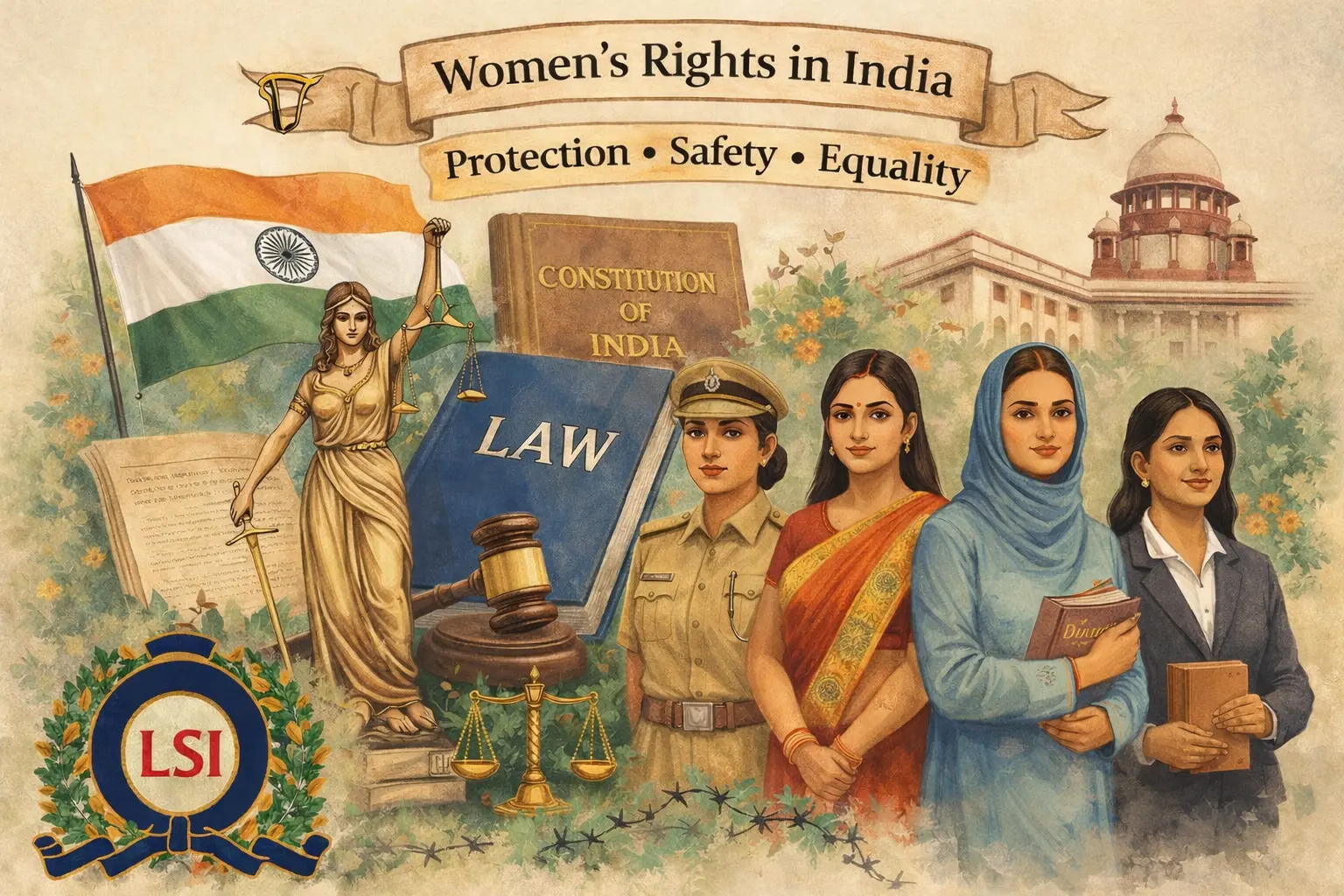
India has established a comprehensive legal framework to protect women’s rights and ensure their safety, dignity, and equality. These laws address various forms of discrimination, violence, and exploitation that women face in society. Understanding these rights empowers women to seek justice and protection when needed.
Constitutional Protections
The Indian Constitution provides fundamental safeguards for women. Article 14 guarantees equality before the law, while Article 15 specifically prohibits discrimination based on sex. Article 21, which protects the right to life and personal liberty, has been interpreted by courts to include the right to live with dignity, free from violence and exploitation. Article 23 prohibits trafficking in human beings and forced labor, offering crucial protection against exploitation.
Protection Against Violence
Indian law recognizes multiple forms of violence against women and provides specific remedies. The Protection of Women from Domestic Violence Act, 2005, offers comprehensive protection to women experiencing abuse within households. This law covers not just physical violence but also emotional, sexual, and economic abuse. Women can obtain protection orders, residence orders, and monetary relief through this Act.
Sexual harassment in the workplace is addressed through the Sexual Harassment of Women at Workplace (Prevention, Prohibition and Redressal) Act, 2013. This landmark legislation mandates that every workplace must have an Internal Complaints Committee to address harassment complaints. It defines sexual harassment broadly to include unwelcome physical contact, demands for sexual favors, sexually colored remarks, and showing pornography.
The Criminal Law (Amendment) Act, 2013, significantly strengthened laws against sexual violence following widespread public outcry. It expanded the definition of rape, introduced new offenses like stalking and voyeurism, and enhanced punishments for sexual offenses. Acid attack was recognized as a specific crime with stringent penalties.
Rights in Marriage and Family
Women have substantial rights within marriage and family structures. The Prohibition of Child Marriage Act, 2006, declares marriages of girls below 18 years as voidable at the option of the girl. The Dowry Prohibition Act, 1961, makes giving, taking, or demanding dowry a criminal offense, recognizing the social evil of dowry-related harassment and violence.
Section 498A of the Indian Penal Code specifically criminalizes cruelty by husbands and their relatives, providing protection against harassment for dowry or other reasons. Women also have equal rights in adoption under the Hindu Adoption and Maintenance Act, 1956, allowing single women and widows to adopt children.
Upon divorce or separation, women have the right to maintenance under various personal laws and the Criminal Procedure Code. The Hindu Succession (Amendment) Act, 2005, granted daughters equal coparcenary rights in Hindu joint family property, ensuring equal inheritance rights with sons.
Workplace Rights and Economic Empowerment
The Equal Remuneration Act, 1976, mandates equal pay for equal work regardless of gender, prohibiting discrimination in recruitment and service conditions. The Maternity Benefit Act, 1961 (amended in 2017), provides 26 weeks of paid maternity leave for women employees and prohibits dismissal during pregnancy and maternity leave.
Various labor laws protect women workers by regulating working hours, prohibiting night shifts in certain industries (though this is changing with modern amendments), and ensuring safe working conditions. Women also have equal rights to property, both ancestral and self-acquired, with laws increasingly recognizing their economic autonomy.
Protection Against Exploitation
The Immoral Traffic (Prevention) Act, 1956, targets trafficking for commercial sexual exploitation and provides for rescue and rehabilitation of victims. The Indecent Representation of Women (Prohibition) Act, 1986, prohibits indecent representation of women through advertisements, publications, or other media.
The Pre-Conception and Pre-Natal Diagnostic Techniques Act, 1994, bans sex determination tests and sex-selective abortion, addressing the serious issue of female feticide. This Act recognizes the right to life of female children even before birth.
Political and Social Rights
Women have equal political rights, including the right to vote and contest elections. The 73rd and 74th Constitutional Amendments reserved one-third of seats for women in Panchayati Raj institutions and urban local bodies, ensuring their participation in grassroots governance.
Women have the right to education on equal terms with men, and various schemes promote female education. They also have equal rights to freedom of movement, speech, and association, though social practices may sometimes restrict these freedoms.
Access to Justice
Several legal aid schemes ensure that women, particularly those from economically weaker sections, have access to legal representation. Fast-track courts have been established to expedite cases of sexual assault and violence against women. Women can file complaints at any police station regardless of jurisdiction in cases of sexual offenses.
The National Commission for Women and State Women’s Commissions work to investigate violations of women’s rights and recommend legal measures. Women can approach these bodies for redressal of grievances.
Emerging Protections
Recent developments include criminalization of marital rape in certain circumstances, though complete criminalization remains debated. Triple talaq (instant divorce in Muslim personal law) was criminalized in 2019, protecting Muslim women from arbitrary divorce. Online harassment and cyber crimes against women are increasingly being recognized and addressed through Information Technology Act provisions.
Conclusion
India’s legal framework for women’s protection is extensive and continues to evolve. However, the gap between law and implementation remains a challenge. Women must be aware of their rights and the remedies available to them. Effective implementation, coupled with social awareness and women’s empowerment, can ensure that these legal protections translate into real safety and equality for women across the country. Legal literacy and accessible justice mechanisms are essential to making these rights meaningful in women’s daily lives.
Also Read: Can America Reform the Supreme Court? Latest 5–4 Ruling Reignites Term Limits Debate

