





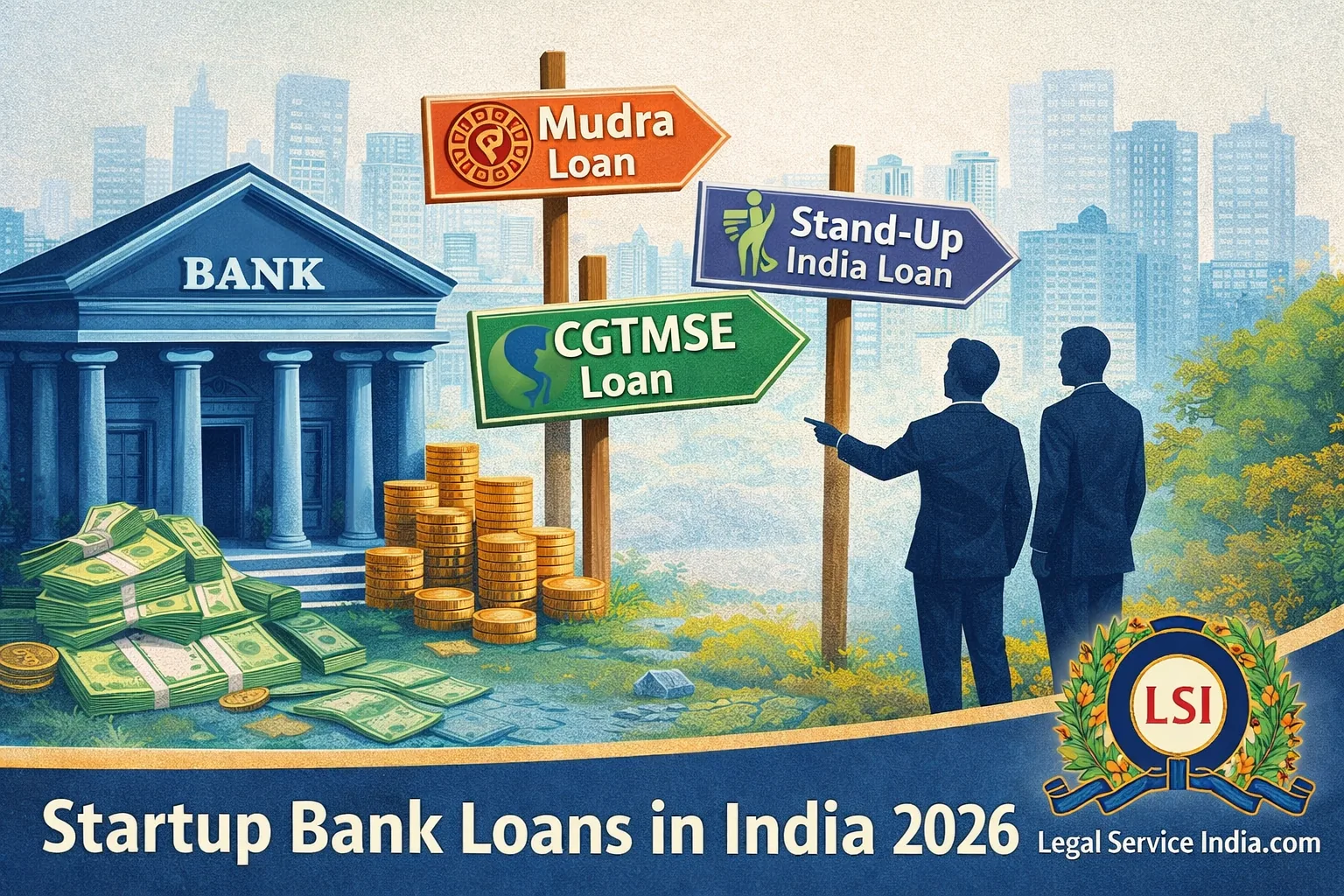
Startup Bank Loans in India (2026): Complete Financing Guide
Startups often require external capital to grow, develop products, and scale operations. In India, several bank loan schemes and government-linked financing options are available in 2026 that are tailored to help new and early-stage businesses access affordable credit.
This comprehensive guide explains all major loan options, eligibility, interest rates, features, application steps, and comparison to help founders choose the best financing option.
Why Bank Loans Matter for Startups
Bank loans provide:
- Working capital
- Funds for equipment and technology
- Expansion capital
- Cash flow management support
Unlike equity funding, bank loans allow founders to retain full ownership of their company (if repayment terms are met).
Major Bank Loan Schemes for Startups in 2026
| Scheme Name | Loan Range | Eligibility Focus | Collateral | Interest Type |
|---|---|---|---|---|
| PM Mudra Loan | Up to ₹10 lakh | All small businesses | No | Floating |
| Stand-Up India | ₹10 lakh – ₹1 crore | Women/SC/ST | No | Bank rate + margin |
| CGTMSE | Up to ₹2 crore | MSMEs/Startups | No credit guarantee | Bank’s lending rate |
| Bank Startup Loan | ₹10 lakh – ₹5 crore | Registered startups | May vary | Bank rate |
| PSL Small Enterprise Loan | ₹10 lakh – ₹2 crore | Small businesses | No (under PSL) | Bank’s rate |
| Credit-Linked Capital Support | Varies | Tech/Manufacturing | Depends | Subsidized support |
PM Mudra Loan – Seed & Small Business Credit
The Pradhan Mantri Mudra Yojana provides collateral-free loans through partner banks and NBFCs.
Loan Categories
- Shishu: Up to ₹50,000
- Kishore: ₹50,001 to ₹5 lakh
- Tarun: ₹5 lakh to ₹10 lakh
Eligibility
- Indian citizen
- Business entity (non-farm, non-corporate)
- Age 18–65 years
Key Features
- No collateral
- Quick processing in many banks
- Flexible usage: working capital or business purposes
Stand-Up India Loan – Women & SC/ST Focus
The Stand-Up India Scheme helps women and SC/ST entrepreneurs start greenfield enterprises.
Loan Details
- Loan Amount: ₹10 lakh – ₹1 crore
- Purpose: Manufacturing, services, trading, agriculture-related
Eligibility
- Woman or SC/ST entrepreneur
- New business (greenfield)
- First-time borrower
Benefits
- Credit guarantee cover
- Long repayment tenure (up to 7 years)
- 10–18 months moratorium
CGTMSE-Backed Loans – Credit Guarantee Support
The Credit Guarantee Fund Trust for Micro and Small Enterprises enables collateral-free loans by providing credit guarantee coverage to banks.
Features
- Loan Limit: Up to ₹2 crore
- No collateral required
- Suitable for startups and MSMEs with business plans
Benefits
- Banks take less credit risk
- Easier approval for startups with limited assets
Bank Startup Loan – Standard Bank Financing
Most public and private banks offer startup-friendly business loans personalized for new companies.
Typical Features
- Loan Range: ₹10 lakh – ₹5 crore
- Loan Purpose: Machinery, technology, office setup
- Sometimes collateral may be required for higher amounts
Eligibility
- Registered company or Limited Liability Partnership (LLP)
- Business plan and financial projection
- Good promoter track record
Interest Rates
Floating, linked to MCLR/Repo + Bank’s spread
Priority Sector Lending (PSL) Startup Loans
Under the Reserve Bank of India’s Priority Sector Lending norms, banks are required to lend a portion of credits to small businesses including startups.
Key Aspects
- No special collateral up to certain limits
- Preferred pricing in some banks
- Includes working capital and term loans
Advantage
- Encourages banks to support SMEs and startups
- Broad eligibility if the business meets small enterprise criteria
Credit Linked Capital Support (CLCS) & Other Linked Support
Various banks and financing partners link government-subsidized support with bank loans (especially for technology or manufacturing startups).
Example: Subsidy support under technology missions or industry associations that reduce effective cost of borrowing.
Detailed Features Comparison
| Aspect | PM Mudra | Stand-Up India | CGTMSE | Bank Startup Loan |
|---|---|---|---|---|
| Collateral Required | No | No | No (guarantee cover) | Possibly for larger loans |
| Loan Size | Up to ₹10L | ₹10L–₹1Cr | Up to ₹2Cr | ₹10L–₹5Cr |
| Target Segment | Small businesses | Women/SC/ST | MSMEs/Startups | Registered startups |
| Interest Rate | Bank/NBFC determined | Bank determined | Bank determined | Bank determined |
| Repayment Period | Up to 5 yrs | Up to 7 yrs | Bank terms | Varies |
Eligibility – Startup Requirements (General)
Most bank loans require:
- Company registration – Private Ltd, LLP, or partnership
- PAN & GST registration
- Business plan & projections
- Bank statements (if existing business)
- Promoter identity docs
Some require:
- Collateral (for higher limits)
- Personal guarantors
Interest Rates (Indicative For 2026)
Bank loan interest rates vary by lender, credit history, and risk profile. Typical ranges:
| Loan Type | Interest Range (Indicative) |
|---|---|
| PM Mudra | 8% – 12% |
| Stand-Up India | MCLR + margin |
| CGTMSE Backed | MCLR + margin |
| Bank Startup Loan | MCLR/External benchmark + spread |
| Priority Sector Loan | Competitive based on bank norms |
Documents Checklist
Identity & Address
- Aadhar Card
- PAN Card
- Voter ID/Passport/Driving License
Business Info
- Registration certificates
- Memorandum/Articles of Association
- GST certificate (if applicable)
- Business plan and projections
Financial
- Bank statements (6–12 months)
- Loans or credit history
- Collateral documents (if applicable)
Application Steps – Generalised Process
- Step 1: Prepare complete business plan
- Step 2: Select suitable bank or financing partner
- Step 3: Fill loan application form (online/offline)
- Step 4: Submit documents
- Step 5: Bank conducts appraisal
- Step 6: Approval & loan contract
- Step 7: Funds disbursed
Tips to Increase Approval Chances
- Maintain a clean credit history
- Prepare a professional business plan
- Provide realistic projections
- Offer detailed cash flow forecasts
- Include potential market traction
- Choose lenders with startup focus
Common Loan Rejection Reasons
- Incomplete documentation
- Weak or unclear business plan
- Poor credit score
- Limited financial history
- Lack of collateral (for higher loans)
- High risk sector perception
Comparison With Equity Funding
| Feature | Bank Loan | Venture Capital |
|---|---|---|
| Ownership Dilution | No | Yes |
| Repayment | Required | Not required |
| Funding Focus | Assets & projects | High-growth startups |
| Cost of Capital | Interest | Equity dilution |
When To Choose Which Scheme?
| Scenario | Best Option |
|---|---|
| Early idea stage | CGTMSE or Stand-Up India |
| Small business setup | PM Mudra Loan |
| Growth & asset purchase | Bank Startup Loan |
| No collateral but bigger amount | CGTMSE backing |
| SC/ST/Women founder | Stand-Up India |
Conclusion
In 2026, Indian startups have a wide range of bank loan options for growth, working capital, asset purchase, and expansion. By understanding eligibility criteria, interest costs, and documentation requirements, founders can choose the most suitable financing solution.
Bank loans help maintain ownership, reduce dependency on investors, and assist startups at every stage from launching to scaling.

