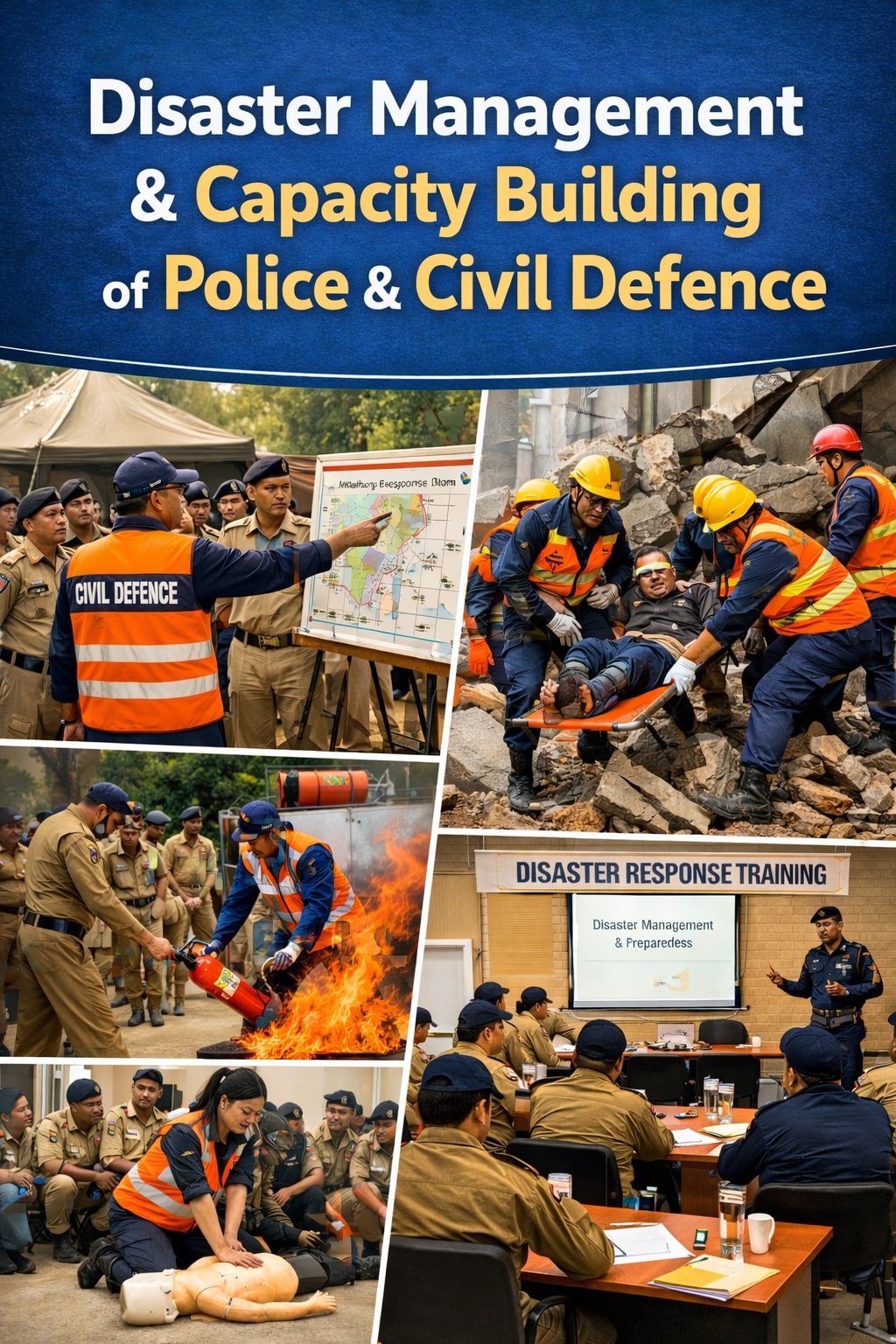
Capacity building is the ongoing effort of building, preparing and improving the skills, knowledge, resources, systems, and abilities for the ability to cope with changing environments. It is beyond one-off training and emphasizes development for the long-term.
In disaster management and disaster readiness training, one aspect that becomes critical is training police and civil defence personnel on how to conduct rescue operations, to use, and provide access to modern equipment that also contains communication devices and drones, establishing clear coordination rules for different agencies, conducting mock drills with the communities where officers live, and teaching people what they can do in the event of flooding or earthquake.
Another instance would be the school teacher training program: they’re not only teaching new ways of teaching but also receiving continued support, supporting materials and peer learning groups over a period of years to raise quality for all students. In other words, capacity building builds the ability of people and countries to be stronger, more resilient and more effective professionals for the future.
Building capacities for police and civil defence forces in disaster management is essential to support preparedness, respond rapidly, and support communities for resilience. Appropriate disaster management, whether responding to natural disasters (e.g. floods, earthquakes, cyclones) or man-made disasters (such as industrial accidents and terrorist attacks) should be planned, coordinated, and practiced professionally.
Police and civil defence officers and other frontline responders serve in law enforcement, as well as in rescue, relief, evacuation, and maintaining public order. This systematic capacity building arms these institutions with the required skills, technological tools, resources, and organizational structures to respond to complex emergencies in a way they can effectively protect lives and property.
Legal & Institutional Framework
- Disaster Management Act, 2005: Establishes the National Disaster Management Authority (NDMA) and mandates training for police and civil defence.
- Civil Defence Act, 1968: Defines the role of civil defence volunteers in disaster preparedness and response.
- National Institute of Disaster Management (NIDM): Provides specialized training modules for police, civil defence, and community volunteers.
- National Disaster Response Force (NDRF): Conducts large-scale training programs for police, SDRF, and civil defence units.
Current Capacity Building Initiatives
- Training Programs: In 2025 alone, NDRF conducted 716 courses benefiting over 25,000 personnel and volunteers, including 3,178 civil defence members.
- Community Awareness Modules: Tailored for rural and hilly areas, focusing on first response and evacuation.
- Civil Defence Volunteer Development: NDMA handbooks emphasize structured training, simulation exercises, and integration with sister organizations.
- Technology Integration: GIS mapping, drones, and communication systems for real-time disaster monitoring.
Comparative Approaches
|
Aspect |
Police Role |
Civil Defence Role |
|
Preparedness |
Risk mapping, law enforcement, drills |
Community training, awareness campaigns |
|
Response |
Evacuation, maintaining order, rescue ops |
First aid, shelter management, volunteer support |
|
Recovery |
Investigation, restoring normalcy |
Rehabilitation support, rebuilding trust |
|
Capacity Building Needs |
Specialized disaster training, tech tools |
Volunteer mobilization, structured modules |
Challenges
- Resource Constraints: Limited equipment and manpower for large-scale disasters.
- Coordination Gaps: Police, civil defence, and NDRF often work in silos.
- Volunteer Retention: Civil defence relies heavily on volunteers, making sustainability difficult.
- Urban-Rural Divide: Training modules often fail to address rural vulnerabilities.
Drawbacks
One major drawback in India’s disaster response system is that police, civil defence, fire services, health departments, NGOs, and local communities often work in silos. All authorities specialize in their personal duties with little to no up-to-date coordination, information sharing, or collaborative planning.
As a result, when a disaster strikes — such as a flood or earthquake — help arrives late, gets duplicated in some areas and completely misses others, creates confusion among victims, and devours valuable time and resources. This combination of poor teamwork results in a slow, inefficient, and less effective response — particularly in saving lives and supporting vulnerable populations in the first few critical hours.
Policy Recommendations
Integrated Training Framework: Joint exercises with police, civil defence, NDRF, and community groups.
Technology Upgradation: Use of drones, AI-based predictive models, and mobile apps for disaster alerts.
Community-Centric Approach: Empower local volunteers as first responders. Institutional Reforms: Establish dedicated disaster management cells within police departments.
International Collaboration: Exchange programs with countries experienced in disaster resilience, such as Japan’s earthquake preparedness and US FEMA models.
Equipment Procurement: Procurement of lates equipment, machinery, and tools for use in disaster sites.
Conclusion
Capacity building for police and civil defence is more than just training people; it is about the building of a stronger and more capable society that’s better able to contend with disasters. By linking clear laws and rules, frequent and good-quality training, latest equipment, modern technology including early warning systems and drones, and active participation from local communities, India can develop a rapid, fair, and long-lasting disaster response system. Working together—from government teams to ordinary citizens—delivers assistance to people quickly, includes everyone, particularly women, children, and the elderly, and helps communities recover and stay safe for the future.