





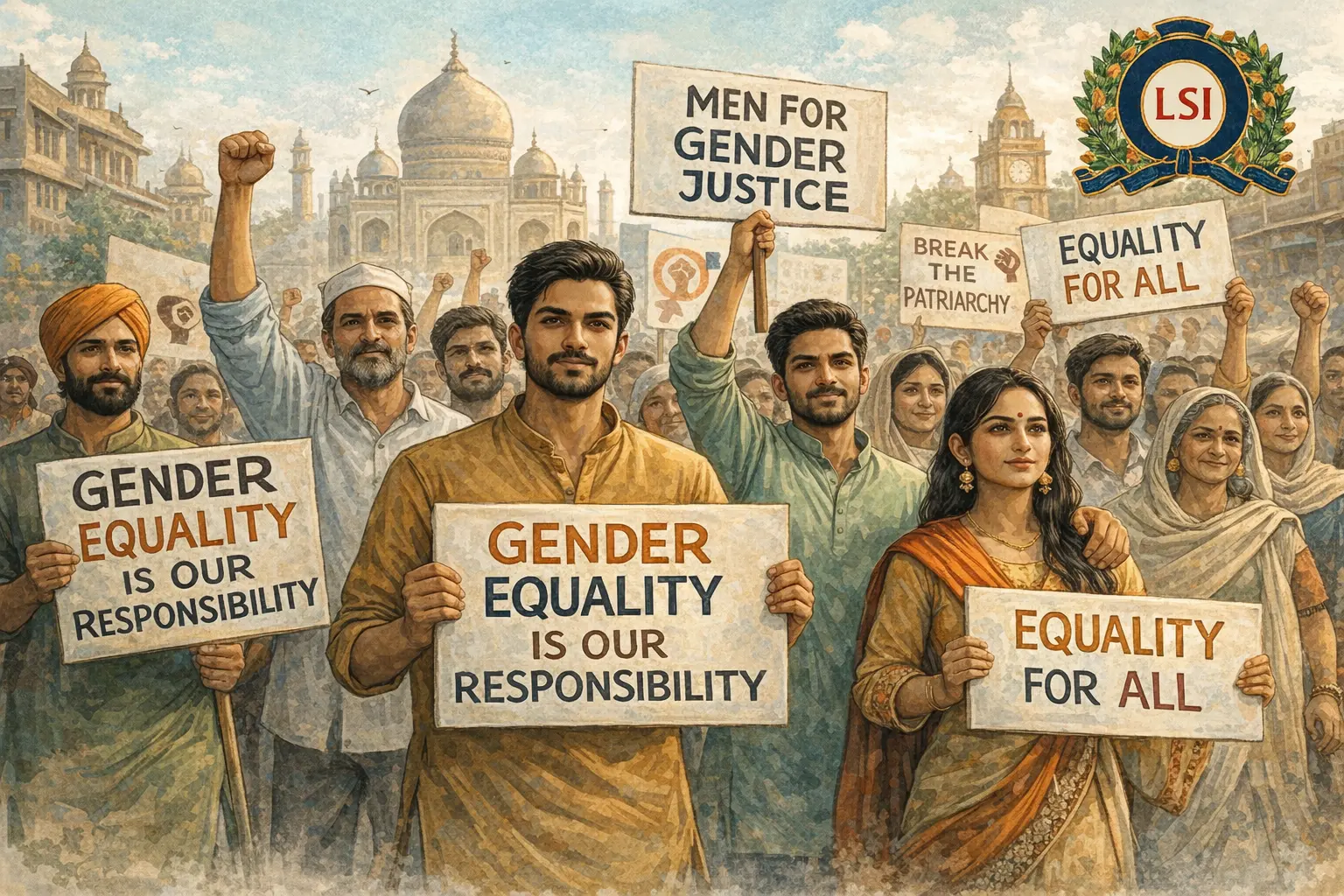
Reframing Women’s Rights and Men’s Role
Women’s rights are often framed as women’s issues—something women advocate for, women benefit from, and women alone should concern themselves with. Yet this framing obscures a fundamental reality: gender equality requires transformation not just of women’s subordinate status but of men’s privileged position.
Men, who hold disproportionate power in families, communities, institutions, and society, are not merely bystanders to women’s struggles but active participants in systems that benefit them while harming women. Achieving gender equality demands engaging men and boys—challenging harmful masculinity norms, enlisting them as allies and co-conspirators in transformation, fostering their stake in equality, and fundamentally reimagining what it means to be a man.
This is not about centering men in feminism or diverting resources from women’s movements, but recognizing that men’s active participation in dismantling patriarchy is essential for sustainable change.
Understanding Masculinity In Indian Contexts
Before discussing male engagement in gender equality, understanding how masculinity is constructed and performed in Indian contexts is essential.
Hegemonic Masculinity And Its Mandates
Masculinity in India, while diverse across regions, religions, castes, and classes, shares certain hegemonic ideals—culturally dominant norms about what “real men” are and do.
These ideals emphasize:
- Dominance and authority over women and lower-status men. Real men make decisions, control resources, and command respect. They lead families, represent households publicly, and exercise authority that others must defer to.
- Provider role and economic success. Masculinity is tied to earning capacity and providing for dependents. Men who cannot fulfill provider roles face emasculation, regardless of circumstances, creating economic hardship.
- Sexual prowess and conquest. Masculinity is demonstrated through sexual experience, control over women’s sexuality, and producing children, particularly sons. Virginity before marriage may be demanded of women, while men’s sexual experience is expected and valorized.
- Physical strength and stoicism. Real men are physically strong, tough, and emotionally controlled. They don’t cry, show vulnerability, or express emotions beyond anger. Physical courage and willingness to use violence to defend honor are masculine ideals.
- Honor and respect. Men’s honor—izzat—is paramount and tied to controlling female family members’ behavior, particularly their sexuality. Dishonor must be avenged, often through violence.
These ideals are unattainable for most men—economic pressures make providing difficult, not all men are physically dominant, and emotional suppression causes psychological harm. Yet they function as standards against which men are judged and judge themselves, creating anxieties and compensatory behaviors when ideals can’t be met.
Caste, Class, And Masculinities
Masculinity is not singular but multiple, shaped by caste, class, religion, and region.
| Social Location | Masculinity Characteristics |
|---|---|
| Upper-Caste | Emphasized intellectual and spiritual authority, leadership, and control through social power rather than merely physical force, though violence has always been available as an enforcement mechanism. |
| Dalit and Lower-Caste | Systematically denied access to hegemonic masculinity’s privileges—property ownership, educational access, political power, and respect. Constructed through labor, physical strength, and resistance to caste oppression. |
| Middle-Class | Emphasizes education, professional success, and respectability. |
| Working-Class | Emphasizes physical labor, solidarity, and economic struggle. |
| Elite | Exhibited through conspicuous consumption, global mobility, and social capital. |
All men benefit from male privilege relative to women, but men disadvantaged by caste, class, or religion experience emasculation through systems denying them masculine ideals’ achievement. This creates complex dynamics where marginalized men may assert dominance over women in their communities as compensation for subordination by higher-status men.
Costs Of Masculinity
While masculinity confers privileges, it also imposes costs:
- Emotional suppression causing mental health problems
- Pressure to provide, creating stress
- Restricted life choices compared to feminine flexibility
- Shorter life expectancies from risky behaviors
- Alienation from children through distant fathering
These costs don’t equate to women’s oppression but create stakes in transformation for men themselves.
The “man box”—rigid expectations about masculine behavior—traps men in performances that may not reflect their authentic selves, desires, or values. Men who deviate—showing emotion, choosing non-traditional careers, sharing domestic labor, rejecting violence—face social sanctioning through mockery, questioning of sexuality or masculinity, and exclusion from male peer groups.
Men’s Roles In Perpetuating Gender Inequality
Honest reckoning with men’s engagement requires acknowledging how men perpetuate inequality—not just “bad men” but ordinary men through everyday practices.
Violence And Coercion
Men perpetrate the vast majority of violence against women—domestic violence, sexual assault, harassment, and femicide. Not all men are violent, but violence against women is overwhelmingly male behavior serving to control, punish, and dominate women.
This violence isn’t aberrant individual pathology but systematically produced through masculinity norms valorizing dominance, objectifying women, and positioning violence as legitimate masculine assertion. Men who don’t personally commit violence often fail to challenge peers who do, creating cultures of complicity.
Controlling Women’s Autonomy
Men control women’s lives through decision-making power in families—determining daughters’ education, arranging marriages, controlling wives’ employment, managing finances, and restricting mobility. This control operates through both coercion and ideological justifications about protection, tradition, or natural male authority.
Even well-meaning control—fathers restricting daughters’ mobility for safety, husbands managing finances to reduce wives’ burdens—reinforces women’s subordination by positioning men as gatekeepers of women’s choices rather than respecting women’s autonomous decision-making.
Exploiting Women’s Labor
Men benefit from women’s unpaid domestic and care work—cooking, cleaning, childcare, elder care—while contributing themselves minimally. This exploitation is naturalized through ideologies about women’s inherent nurturing capacity or appropriate gender roles, obscuring that unequal division of labor is produced through power, not nature.
Even when women engage in paid employment, they typically still perform the majority of household labor—the “second shift”—while men’s contributions to housework remain minimal. Men’s leisure time exceeds women’s because women’s labor subsidizes it.
Occupying Space And Resources
Men disproportionately occupy public space—talking more in meetings, interrupting women, and physically spreading in public transportation. They consume more household resources—food, healthcare, education—particularly in resource-constrained families practicing son preference. They dominate positions of power and decision-making across institutions.
This is not because men inherently need or deserve more, but because male privilege normalizes men’s centrality, importance, and prioritization. Challenging this requires men consciously stepping back, sharing space, and redistributing resources equitably.
Socialization Of Boys
Men, as fathers, uncles, teachers, and community members, socialize boys into masculinity—teaching them to suppress emotions, dominate others, avoid “feminine” activities, and position themselves as superior to girls and women. This intergenerational transmission perpetuates patriarchy.
When fathers model distant, authoritarian parenting while mothers do emotional labor, when men mock boys for crying or playing with girls, when male teachers privilege boy students, or when coaches emphasize aggressive competition, they reproduce gender inequality in the next generation.
Barriers To Male Engagement
Despite potential benefits from equality, multiple barriers prevent many men from actively supporting gender justice.
Privilege And Comfort
Men benefit from current arrangements—having decisions made for them through domestic labor, wielding authority in families, and accessing economic and political power disproportionately. Equality requires relinquishing privileges and sharing power—changes that feel like losses even when overall outcomes improve.
Privilege is often invisible to those holding it. Men may genuinely believe they don’t benefit from gender inequality, that they’ve earned positions through merit, or that their partners freely choose to do more housework. Recognizing privilege—that their comfort rests on women’s disadvantage—requires uncomfortable self-examination.
Threatened Masculinity
Gender equality challenges core masculinity norms. Sharing domestic labor, accepting female authority in workplaces or homes, supporting wives’ careers over one’s own, or showing emotional vulnerability contradict masculine ideals that men have internalized and that define their identities.
For men whose self-worth is tied to masculine achievement, equality threatens their sense of self. Particularly for marginalized men whose masculine status is already precarious, supporting women’s advancement may feel like losing the little privilege they possess.
Lack Of Models
Many men lack role models demonstrating alternative masculinities—fathers who shared domestic work equally, male peers who practice feminist values, cultural narratives showing men as nurturing parents or equal partners. Without models, men may not envision how to be men differently or believe alternative masculinities are possible or desirable.
Social Costs
Men who support gender equality or reject hegemonic masculinity face social costs—mockery from male peers, accusations of being “hen-pecked” or emasculated, questioning of sexuality, or exclusion from male social networks. These sanctions, while less severe than penalties women face for transgressing femininity, nonetheless deter many men from openly supporting equality.
Misunderstanding Equality
Some men misunderstand equality as a threat rather than a benefit, believing it means male disadvantage, that women’s gains mean men’s losses, or that feminism hates men. These misunderstandings prevent engagement, fostering defensiveness or hostility rather than openness to transformation.
Models Of Male Engagement
Despite barriers, various models of male engagement in gender equality exist, each with strengths and limitations.
Supportive Partners
Many men demonstrate commitment to equality primarily in intimate relationships—sharing housework and childcare, supporting partners’ careers, making decisions collaboratively, and respecting partners’ autonomy. These micro-level changes, while limited to private spheres, model alternative relationship possibilities and benefit both partners and children witnessing egalitarian dynamics.
However, personal relationships alone don’t challenge broader structural inequalities. Men who practice equality at home while remaining silent about workplace discrimination or community violence limit transformation’s reach. Private gender justice must extend into public advocacy to create societal change.
- Sharing housework and childcare
- Supporting partners’ careers
- Collaborative decision-making
- Respecting partners’ autonomy
Active Fathers
Growing numbers of men embrace engaged fatherhood—participating actively in childcare, developing emotional connections with children, and sharing parenting responsibilities equally with partners. This challenges traditional distant father roles and demonstrates care work as masculine.
Active fathering benefits children—particularly boys who learn that men can be nurturing, and daughters who develop confidence having fathers treating them as equals. It also redistributes care work, enabling mothers’ fuller participation in employment and public life.
Yet even “involved fathers” sometimes receive excessive praise for ordinary parenting that mothers do without recognition, highlighting persistent gendered expectations. Active fathering must be normalized as a basic responsibility, not an exceptional contribution worthy of special acknowledgment.
| Aspect | Impact |
|---|---|
| Emotional Engagement | Strengthens child development and bonding |
| Shared Parenting | Redistributes care work more equitably |
| Role Modeling | Challenges traditional masculine stereotypes |
Workplace Allies
Some men use workplace positions to advance gender equality—mentoring women colleagues, advocating for equitable hiring and promotion, challenging sexist behavior, implementing family-friendly policies, and ensuring women’s voices are heard in meetings. These actions leverage male privilege and authority to create more equitable professional environments.
Effective workplace allyship requires ongoing learning, listening to women colleagues about their experiences, and using power to amplify rather than speak over women’s voices. It means addressing sexism even when no women are present, making it clear that discrimination is unacceptable regardless of the audience.
- Mentoring women colleagues
- Advocating equitable hiring and promotion
- Challenging sexist behavior
- Implementing family-friendly policies
- Ensuring women’s voices are heard
Activists And Advocates
Male activists working explicitly for gender equality—through organizations, campaigns, education, or advocacy—represent committed engagement. They participate in anti-violence campaigns, challenge harmful masculinity norms, educate other men, and support women’s movements’ demands.
Organizations like Men Against Violence and Abuse (MAVA) in India work specifically on engaging men in gender justice. Such efforts demonstrate that some men recognize gender equality as a moral imperative and dedicate significant energy to transformation.
However, male activists must navigate carefully—supporting without centering themselves, using privilege productively without claiming leadership, and remaining accountable to women’s movements rather than defining independent agendas. The line between genuine allyship and attention-seeking saviorism requires constant vigilance.
Public Figures And Cultural Influencers
Celebrities, athletes, actors, and other public figures who publicly support gender equality influence broader cultural attitudes. When prominent men speak against violence, model engaged fatherhood, or advocate for women’s rights, they shift norms about what’s masculine and acceptable.
Bollywood actors discussing consent, cricketers supporting daughters’ education, or business leaders implementing gender-equitable policies create visibility for equality. However, their advocacy must be authentic rather than performative, backed by actual behavioral change and institutional transformation rather than merely rhetoric.
Strategies For Engaging Men And Boys
Effectively engaging men requires strategic approaches addressing barriers while building motivations for change.
Education And Awareness
Comprehensive sexuality education, teaching boys about gender equality, consent, healthy relationships, and rejecting violence, shapes attitudes before they solidify. School curricula that challenge gender stereotypes, include women’s contributions to history and society, and model egalitarian interactions influence boys’ development.
Community education through workshops, campaigns, and dialogues reaches men with messages about equality benefits, costs of toxic masculinity, and alternatives to violence and control. Messaging emphasizing that equality benefits men—through improved relationships, healthier emotional lives, and shared burdens—motivates engagement.
Educational efforts must avoid moralizing or blame that creates defensiveness. Effective approaches start from empathy and respect, invite reflection on personal experiences of masculinity’s costs, and model rather than lecture about equality.
Working Through Male Influencers
Engaging respected male community members—religious leaders, elders, sports figures, cultural icons—to advocate for equality leverages existing authority structures while using male voices that other men may hear more readily than women’s advocacy. When male religious leaders preach against violence or male elders support girls’ education, they provide cultural legitimacy and permission for change.
However, this strategy risks reinforcing that male voices matter more than women’s, that permission from male authorities is required for women’s rights, and that transformation must be male-led. Careful framing positions male influencers as supporting women’s self-determination rather than granting it, amplifying women’s demands rather than replacing them.
Creating Male Peer Networks
Men’s groups where men discuss masculinity, relationships, parenting, and emotions create supportive spaces for practicing alternative masculinities. These groups help men navigate the social costs of rejecting hegemonic masculinity by providing peer validation and modeling that being different men is possible and valuable.
Groups like Men’s Action for Stopping Violence Against Women (MASVAW) create peer accountability and solidarity for men challenging patriarchy. Such networks reduce the isolation men might feel when deviating from masculine norms and provide communities affirming egalitarian values.
Engaging Fathers
Parenting programs specifically targeting fathers educate about child development, teach practical childcare skills, and encourage emotional connection with children. These programs challenge assumptions that men are incompetent at care work and demonstrate that involved fathering benefits children and fathers themselves.
Paternity leave policies—making leave available and creating cultures where taking it is acceptable—normalize men’s childcare participation. When men take parental leave, it challenges assumptions about care as women’s work and begins shifting workplace cultures around work-family balance.
Addressing Violence
Programs working with men who have used violence—batterer intervention programs, counseling, transformative justice approaches—seek to change violent behavior while holding men accountable. These programs vary in effectiveness, with best practices emphasizing genuine accountability, addressing underlying attitudes justifying violence, and long-term behavioral change rather than quick fixes.
Bystander intervention training teaches men to safely intervene when witnessing harassment or violence rather than remaining passive. Such programs recognize that most men aren’t violent but often don’t challenge peers who are, and that changing this complicity can reduce violence.
Media And Cultural Change
Creating media content—films, television, advertising, social media—modeling positive masculinities provides cultural scripts for alternative ways of being men. When fathers are shown doing childcare competently, men express vulnerability without ridicule, or male characters reject violence and control, they normalize behaviors currently seen as unmasculine.
Campaigns like the Bell Bajao campaign, encouraging men to intervene in domestic violence they witness, used cultural messaging showing men as protectors of women’s rights rather than perpetrators or passive bystanders. Such framing appeals to masculine ideals while redirecting them toward equality.
Tensions and Challenges
Engaging men in gender equality creates tensions requiring navigation.
Centering Men vs. Supporting Women
The fundamental tension is how to engage men without centering them in movements focused on women’s liberation. Women’s movements have justifiably prioritized women’s leadership, voices, and concerns. Male engagement shouldn’t divert attention, resources, or leadership from women to men.
“Male feminists” sometimes dominate conversations, seeking praise for basic equality support or positioning themselves as authorities on women’s experiences. Genuine allyship requires supporting women’s leadership rather than competing for attention or authority.
Motivation: Justice vs. Benevolence
Engagement should be motivated by commitment to justice and recognition of women’s full humanity and equal rights, not by benevolent desire to help “weaker” women or protect “vulnerable” women. The latter reproduces paternalism, positioning women as needing male protection rather than possessing rights men must respect.
Men must recognize their own complicity and responsibility for inequality rather than positioning themselves as rescuers. Equality isn’t about good men saving women from bad men but about all men examining and changing their own behaviors and privileges.
Accountability
Male allies must remain accountable to women’s movements, accepting criticism and correction rather than defensiveness. This requires humility—recognizing that, despite good intentions, men make mistakes, speak over women, or replicate patterns they intend to challenge.
Creating structures for accountability:
- Male-led initiatives consulting with feminist organizations
- Men listening more than speaking
- Directing resources and credit to women doing the work
These help maintain appropriate relationships between male allies and women’s movements.
Separatism vs. Integration
Debates exist about whether men should organize separately or participate in integrated movements.
| Approach | Core Argument |
|---|---|
| Separatist | Men need their own spaces to examine masculinity and unlearn patriarchy without burdening women with educating them. Men working with men can challenge peers in ways women cannot. |
| Integrationist | Gender justice requires collaboration; separation reinforces gender divides, and learning happens through diverse interactions. |
Most effective approaches probably combine both—separate spaces for men’s consciousness-raising alongside integrated organizing where appropriate.
Performative Allyship
“Performative allyship”—men publicly declaring support for equality to gain social capital while not changing actual behavior or challenging privilege—is a common criticism.
Examples include:
- Men who post feminist hashtags while treating women employees inequitably
- Proclaiming gender equality while avoiding housework
- Condemning other men’s sexism while remaining silent about their own
These demonstrate performative rather than substantive commitment.
Genuine allyship requires:
- Consistent behavior across private and public spheres
- Willingness to sacrifice privileges and comfort
- Ongoing self-examination rather than one-time public declarations
Success Stories and Models
Despite challenges, examples exist of successful male engagement making tangible differences.
The White Ribbon Campaign
The White Ribbon Campaign, started in Canada after the Montreal Massacre and now global, including in India, engages men and boys in working to end violence against women. Men wearing white ribbons signal personal commitment to never committing, condoning, or remaining silent about violence against women.
The campaign works through:
- Education
- Community mobilization
- Cultural change
It emphasizes men’s responsibility for ending male violence rather than women needing to protect themselves. It has reached millions of men with anti-violence messaging.
Parivartan
Parivartan, a Mumbai-based program, uses group education with men to promote gender-equitable attitudes and behaviors, reduce violence, and improve health.
The program has shown measurable impacts on men’s attitudes and behaviors:
- Reduced violence perpetration
- More equitable household labor division
- Improved relationship quality
MASVAW
Men’s Action for Stopping Violence Against Women (MASVAW) works with men in Mumbai slums, conducting workshops on gender, violence, and health.
The peer education model uses trained male facilitators who discuss masculinity, relationships, and equality in accessible ways, creating networks of men supporting behavior change.
Individual Transformations
Beyond organized programs, countless individual men have transformed:
- Fathers becoming equal partners in childcare
- Sons challenging parental restrictions on sisters
- Husbands supporting wives’ career prioritization
- Male colleagues mentoring women
- Challenging workplace sexism
These individual changes, while not making headlines, cumulatively shift cultures and possibilities.
The Path Forward
Engaging men effectively requires comprehensive, nuanced strategies that harness men’s potential contributions while maintaining women’s centrality in gender justice movements.
Starting Young
Engaging boys early—through schools, families, communities—prevents harmful masculinity from solidifying. Teaching boys that caring, emotional expression, equality, and respect are masculine values shapes a generation less invested in patriarchy.
Contributors include:
- Fathers modeling equality for sons
- Mothers refusing to raise sons as privileged while constraining daughters
- Communities celebrating boys who deviate from rigid masculinity norms
All contribute to raising boys who’ll become men supporting equality.
Systemic Change
Individual men’s transformation, while valuable, doesn’t substitute for institutional change.
Institutions must implement policies and practices promoting equality, including:
- Parental leave
- Flexible work
- Anti-discrimination enforcement
- Gender-sensitive education
- Equitable representation in leadership
Men in power positions bear particular responsibility for using their positions to institutionalize equality rather than merely expressing personal support.
Ongoing Learning
Men committed to equality must recognize this as a lifelong journey requiring continuous learning, self-reflection, and a willingness to change. Masculinity and privilege operate unconsciously; constant vigilance is needed to notice and challenge internalized assumptions and behaviors.
Listening to women—particularly women of marginalized identities whose experiences differ from privileged women’s—remains essential. Men cannot assume they understand women’s experiences or know what women need; they must continuously learn from women’s articulated experiences and perspectives.
Coalition Building
Men’s engagement in gender justice should connect to broader social justice—recognizing intersections between gender and caste, class, religion, disability, and sexuality. Men working against caste oppression, economic exploitation, or religious discrimination can link these struggles to gender justice, building comprehensive visions of liberation.
Conclusion: Shared Struggle for Transformation
Gender equality is not a women’s issue but a human issue requiring the transformation of all gender relations—not just women’s subordination but men’s privilege and the rigid masculine ideals constraining men themselves.
While women must lead movements for their own liberation, sustainable transformation requires men’s active engagement—not as saviors or leaders but as allies, co-conspirators, and fellow travelers in reimagining gender.
Challenges Of Engaging Men
Engaging men is neither easy nor straightforward. It requires:
- Confronting privilege and complicity
- Changing behaviors that are comfortable and familiar
- Facing social costs from other men
- Maintaining humility and accountability
Many men will resist, defending privileges or insisting they’re not part of the problem.
Why Men’s Engagement Is Essential
Yet engaging men is essential. The structural realities make this clear:
| Reality | Required Transformation |
|---|---|
| Men hold power disproportionately | Transformation requires that power be used for equality or challenged until redistributed |
| Men socialize boys | Breaking intergenerational transmission requires men raising boys differently |
| Men perpetrate violence | Ending it requires men changing their behaviors and challenge their peers |
| Men benefit from women’s unpaid labor | Justice requires men to shoulder fair shares |
Benefits Of Gender Equality For Everyone
Most fundamentally, gender equality benefits everyone—creating:
- Richer emotional lives
- Healthier relationships
- Fairer societies
- Freedoms from restrictive gender expectations
Men who support equality gain authentic relationships, emotional intimacy, deeper connections with children, and liberation from exhausting performances of dominance and control.
Vision Of Equal Gender Relations
The vision is of gender relations characterized by genuine equality, mutual respect, and shared humanity—where:
- Masculinity doesn’t require dominating femininity
- Fatherhood is as valued and practiced as motherhood
- All people can develop full ranges of human capacities regardless of gender
Achieving this vision requires women’s continued leadership and men’s transformative engagement—not as separate projects but as interconnected dimensions of collective liberation.
Everyday Actions That Drive Transformation
Every man who:
- Shares housework equally
- Challenges sexist jokes
- Supports female colleagues
- Models engaged fathering
- Questions his own privileges
Contributes to transformation.
Every father raising sons to respect women and daughters to expect equality shapes the future. Every male ally using privilege to amplify marginalized voices advances justice. These actions, multiplied across millions of men, can fundamentally transform gender relations.
The Long Journey Toward Justice
The journey is long and obstacles many, but the destination—gender equality benefiting all while oppressing none—justifies the sustained effort required.
Men’s engagement, done properly with accountability and humility, accelerates progress toward societies where gender doesn’t determine destiny, where all humans can flourish in their full complexity and potential, and where justice prevails over privilege.

