





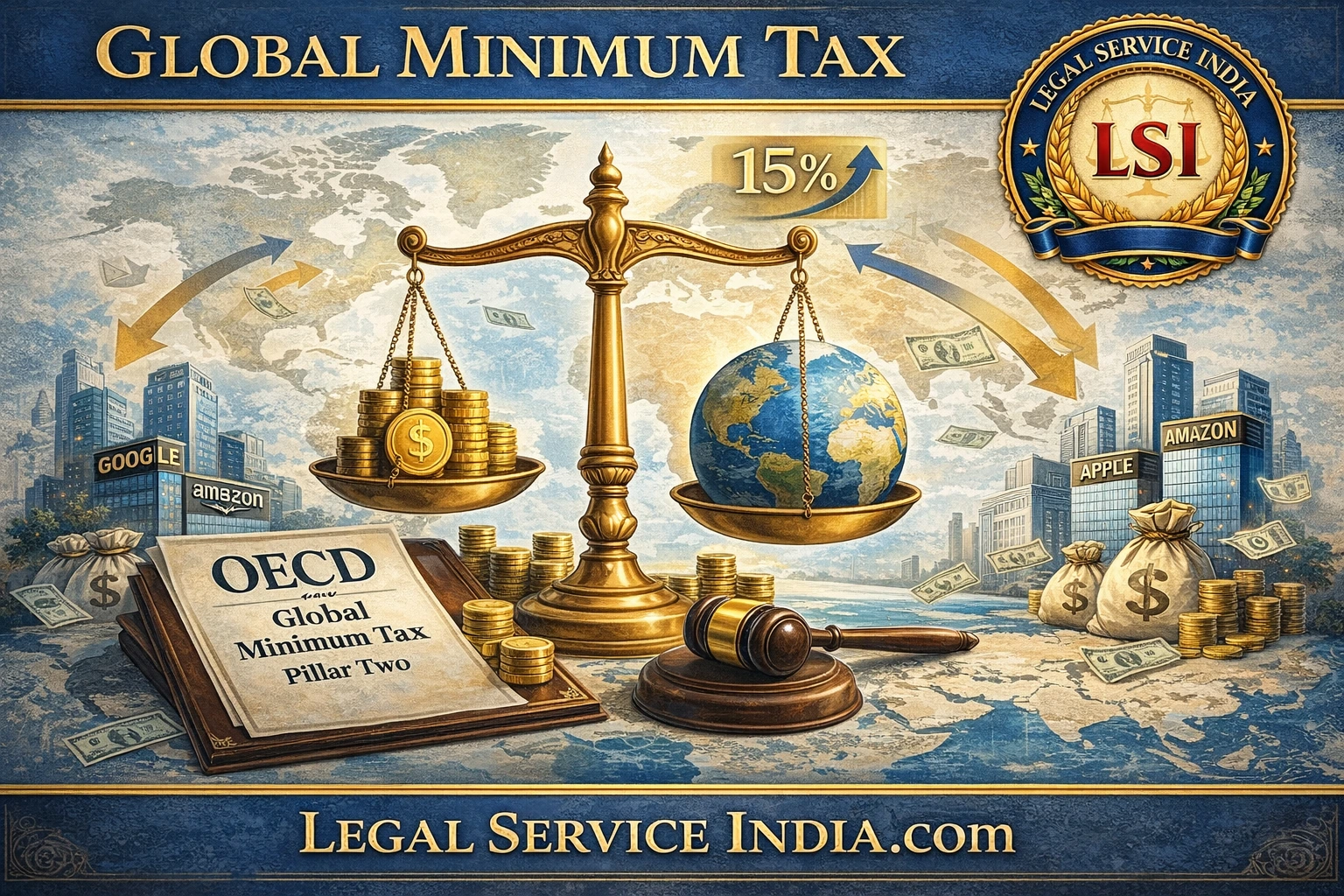
Introduction To Global Minimum Tax
MNC’s are various big companies in many countries like Google, Apple, Amazon which shift profits from one country to another, which are not always physically but mostly through accounting strategies. There are also various low-tax jurisdictions, where countries have tax rates that are very low or almost zero like Ireland (12.5% – Standard corporate tax rate, 15% – applies to large multinational groups due to OECD global minimum tax rules), Cayman Islands (0% corporate tax), Bermuda (traditionally 0% corporate tax, now 15% minimum rate for large MNC’s aligned with OECD rules).
Profit Shifting Explained
- Big companies earn money in high tax countries like India, USA, etc.
- But show their profits in low-tax countries.
- This helps them reduce their overall tax liability.
Multinational companies often transfer their profits to countries with lower tax rates so that they can avoid paying higher taxes in countries where they actually earn money and reduce their overall tax liability which leads to governments losing their tax revenue, creating unfair advantage which led to OECD introducing Global Minimum Tax.
OECD Global Minimum Tax Framework
OECD an international organisation thus proposed the rule of Global Minimum Tax (15%), which is a pillar two framework ensuring large multinational enterprises MNE’S with over 750 million euros in annual revenue pay at least a 15% effective tax rate on profits in every jurisdiction. Interpretation being, that big multinational companies must pay at least 15% tax, no matter where they operate.
- Prevents tax avoidance
- Ensures fair taxation globally
- Allows countries to collect remaining tax
Even if they shift profits to low-tax countries other countries can step in and collect the remaining tax. Their goal is to stop tax avoidance and create a fair global tax system. Although, India has not fully accepted or implemented the global minimum tax yet, it is applying the cautious approach carefully evaluating its potential impact including studying its impact before full implementation.
Key Components Of Pillar Two
| Rule | Description |
|---|---|
| Income Inclusion Rule (IIR) | Parent company pays additional tax if subsidiaries are taxed below 15% |
| Undertaxed Profits Rule (UTPR) | Other countries can impose tax if parent country does not |
| Qualified Domestic Minimum Top-up Tax (QDMTT) | Country collects additional tax itself |
| Substance-Based Income Exclusion (SBIE) | Protects genuine business activities from unfair taxation |
For instance, if a multinational enterprise operates in a country where it pays only 5% tax, and the global minimum rate is 15%, an additional 10% tax will be imposed to meet the minimum threshold.
BEPS And Tax Avoidance
The emergence of the Global Minimum Tax is closely linked to the persistent issue of Base Erosion and Profit Shifting (BEPS), a practice commonly adopted by multinational corporations to minimise their overall tax liability. In simple terms, companies often generate substantial income in high-tax countries but strategically record their profits in jurisdictions offering significantly lower tax rates or no taxation at all.
- Countries lose rightful tax revenue
- Creates unfair advantage for MNCs
- Affects developing economies significantly
The growing reliance on tax havens such as Bermuda and the Cayman Islands has further intensified this concern. While these practices may fall within legal boundaries, they create a clear imbalance between multinational corporations and domestic businesses.
How Pillar Two Works
The OECD’s Pillar Two framework introduces the concept of a Global Minimum Tax with the objective of ensuring that large multinational enterprises pay a minimum level of tax, irrespective of where they operate or report their profits. At its core, the framework sets a minimum effective tax rate of 15%, targeting multinational groups with significant global revenues.
- Discourages profit shifting
- Creates balanced tax environment
- Ensures minimum taxation globally
India’s Approach To Global Taxation
- Structured corporate tax regime
- Equalisation Levy (introduced in 2016)
- Significant Economic Presence (SEP)
India has taken early steps to tax the digital economy through measures such as the Equalisation Levy. Another important development is the concept of Significant Economic Presence (SEP), which seeks to establish a taxable connection based on a company’s economic engagement within India rather than its physical presence.
Impact On India
Tax Sovereignty
- Limits flexibility in tax policy
- Affects domestic economic strategies
Revenue Impact
- May increase tax collection
- But risk of revenue shifting to other countries
Foreign Investment Impact
- Reduces effectiveness of tax incentives
- Shifts focus to infrastructure and market size
Administrative Challenges
- Complex rules
- Higher compliance burden
- Need for stronger tax administration
Critical Analysis
- Promotes fairness and transparency
- Reduces tax avoidance
- But may limit policy flexibility for developing countries
- Creates administrative burden
While the framework promotes fairness, it may disproportionately affect developing economies like India. Therefore, although Pillar Two is a necessary reform in the evolving global tax landscape, its implementation must be approached with caution.
Way Forward For India
- Adopt gradual implementation
- Protect fiscal sovereignty
- Align global and domestic interests
- Actively participate in global negotiations
A balanced approach that combines global alignment with domestic flexibility will be key to ensuring that India benefits from the evolving international tax framework without losing its policy autonomy.
Conclusion
The introduction of the OECD’s Global Minimum Tax marks a significant shift in the international tax framework, aiming to address long-standing issues of profit shifting and tax avoidance. While it promotes greater fairness and consistency in the taxation of multinational enterprises, it also raises important concerns regarding the extent of national control over tax policy.
The success of the Global Minimum Tax will depend on how effectively countries like India balance global cooperation with domestic fiscal autonomy.

