What a Distant Arctic Island Means for India
Barely days into the new year, global politics already feels unsteady. What once sounded like exaggerated political commentary now appears disturbingly plausible. From Venezuela to Iran, and now Greenland, the actions and threats emanating from Washington suggest that the world is drifting away from rules and toward raw power.
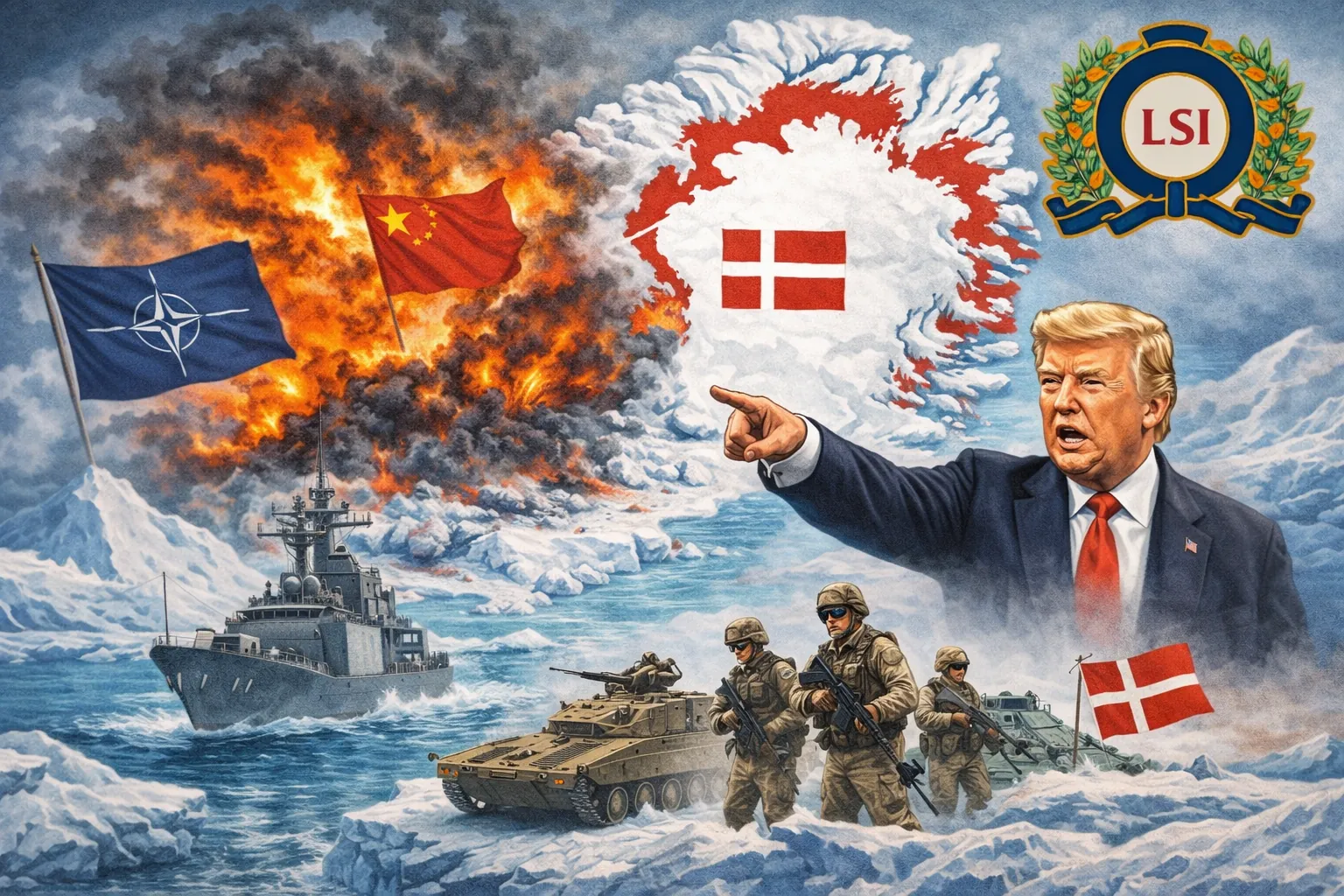
At the centre of this turbulence stands Donald Trump, whose confrontational approach has raised alarms not only among rivals of the United States, but also among its closest allies. The latest flashpoint is Greenland—an icy, sparsely populated island that has suddenly become the focus of intense geopolitical ambition.
Why Greenland, and Why Now?
At first glance, Greenland hardly looks like a prize worth destabilising global alliances for. It is cold, remote, and home to barely 56,000 people. Yet appearances are deceptive.
Greenland occupies one of the most strategic locations on the planet. It sits between North America and Europe, bridging the Arctic and the Atlantic. Control over Greenland means influence over Arctic sea routes, submarine movements, and future global trade corridors that are emerging as polar ice melts.
Though geographically closer to North America, Greenland has deep political and cultural ties with Europe. It is a self-governing territory under the Kingdom of Denmark, which manages its defence and foreign affairs. Crucially, Denmark is a member of NATO—and so is the United States.
This is where the danger lies.
A Threat That Shakes NATO from Within
If the United States were to use force—or even coercive pressure—against Greenland, it would amount to a NATO member threatening the territory of another NATO member. The alliance was designed for collective defence against external threats, not internal conflict.
Such an act would tear at NATO’s very foundation. An alliance built on trust cannot survive if its strongest member turns against its own partners. European leaders understand this risk clearly, which is why Denmark has repeatedly stated that Greenland is not for sale, nor will it be surrendered under pressure.
Ironically, the justification offered by Washington—that Greenland is vital for American security to prevent Chinese or Russian influence—mirrors the very logic Russia has used to justify its actions in Ukraine. When that argument comes from Moscow, Washington denounces it as imperialism. When it comes from Washington, it is presented as national interest. This double standard has not gone unnoticed.
Beneath the Ice: The Real Prize
Greenland’s true value lies beneath its melting ice.
As climate change accelerates, Greenland is revealing vast reserves of oil, gas, gold, and—most importantly—rare earth minerals. These minerals are the backbone of modern technology:
- Smartphones
- Electric vehicles
- Semiconductors
- Defence systems
- Renewable energy infrastructure
At present, China dominates the global rare earth supply chain. The United States has been searching desperately for alternatives, and Greenland represents one of the few viable long-term options. American corporate interests, including some of the world’s most powerful tech investors, have already shown keen interest in the island’s resources.
Control over Greenland would not deliver instant riches. Mining there is expensive, environmentally risky, and technologically challenging. But in the long run, it could reshape global supply chains—and that is precisely why it matters.
From Arctic Ice to Global Instability
If might replaces law as the guiding principle of international relations, the consequences will be global.
An American move on Greenland would signal to the world that borders and sovereignty are negotiable if you are powerful enough. That message would not be lost on Russia, China, or any other ambitious power. Ukraine, Taiwan, and even parts of Asia—including regions vital to India—would suddenly appear far more vulnerable.
The erosion of international norms would push the world toward an arms race, forcing countries to choose between economic development and military preparedness. For emerging powers, this is a dangerous dilemma.
What This Means for India
For India, the implications are profound.
India has long relied on a relatively stable global order to focus on growth, trade, and internal development. If that order collapses, India will be forced to divert more resources toward defence and strategic hedging. Neutrality will become harder to maintain, and strategic autonomy more expensive to preserve.
There Are Only Three Realistic Paths Forward
- Ignore global instability and focus narrowly on domestic growth—an increasingly risky option.
- Ramp up defence spending, accepting slower economic progress.
- Build comprehensive national capacity—economic, technological, and military—so India is resilient regardless of how the world fractures.
The third option is the most difficult, but also the most sustainable. It requires long-term vision, institutional strength, and serious investment in technology, manufacturing, and strategic planning.
A World at a Crossroads
Greenland is not just about an island. It is a test case for the future of the international system.
If alliances collapse, if sovereignty becomes optional, and if power alone determines outcomes, the world will enter a far more dangerous phase. For India—and for all emerging powers—the coming years will demand clarity, unity, and foresight.
The ice in Greenland may be melting, but the chill it sends through global politics is only beginning to be felt.