





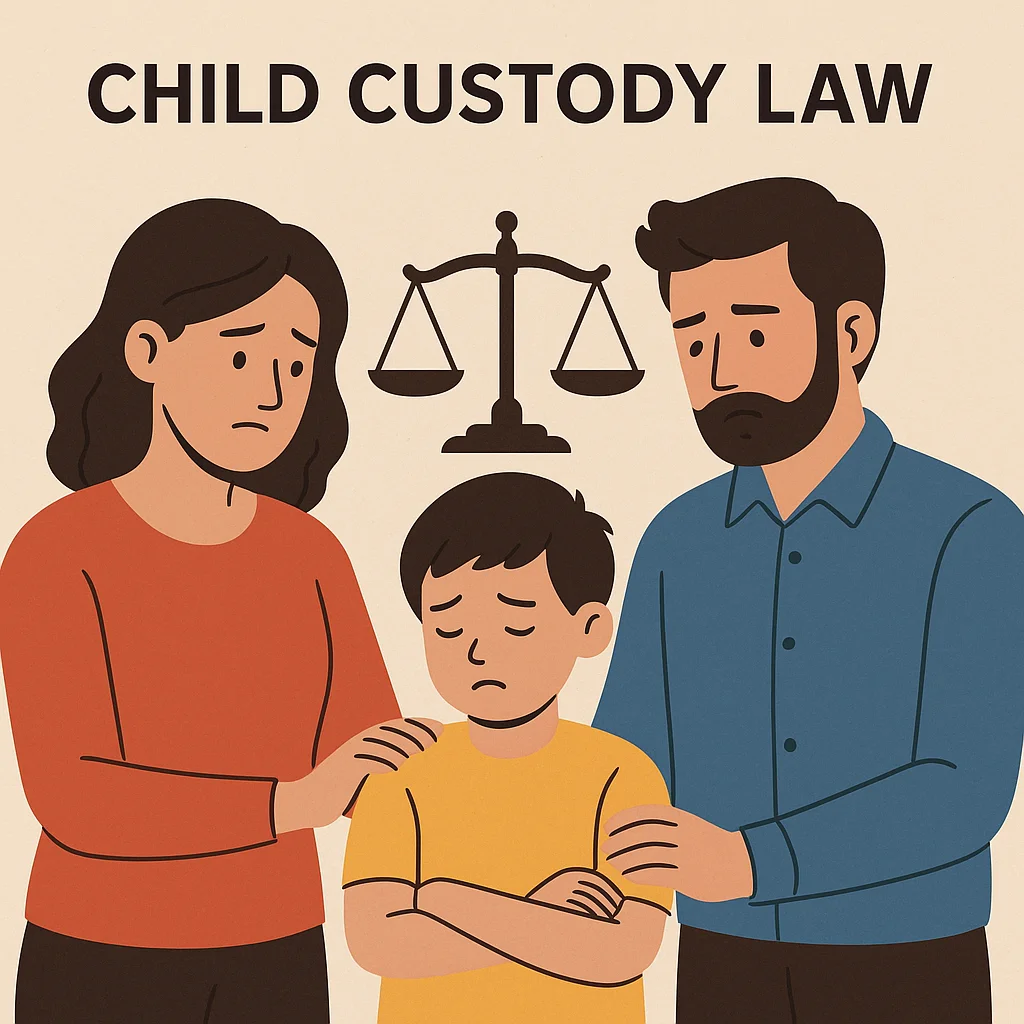
When parents separate or divorce, one of the most emotional issues is child custody. Indian law focuses on one main principle: what is best for the child. Here’s what every parent should know.
Types of Custody in India:
- Physical Custody The child lives with one parent. The other parent gets visitation rights.
- Legal Custody The right to make important decisions about the child’s education, health, and religion.
- Joint Custody Both parents share responsibilities. The child may live with both parents at different times.
- Third-Party Custody In rare cases, grandparents or relatives get custody if both parents are unfit.
Which Parent Gets Custody?
Indian law doesn’t automatically favor mothers or fathers. The court decides based on:
- Age of the child: Children under 5 years usually stay with the mother (but not always)
- Child’s preference: Courts listen to children above 9 years
- Parent’s ability: Who can provide better care, education, and emotional support
- Parent’s character: History of abuse, addiction, or neglect matters
- Child’s current routine: Courts avoid disrupting the child’s school and friendships
Laws That Apply:
| Law | Applicable To |
|---|---|
| Hindu Minority and Guardianship Act, 1956 | For Hindus, Buddhists, Jains, and Sikhs |
| Guardians and Wards Act, 1890 | For all religions |
| Muslim Personal Law | For Muslims |
| Parsi and Christian personal laws | For their respective communities |
How to File for Custody:
- Step 1: Hire a family lawyer
- Step 2: File a petition in Family Court stating why you should get custody
- Step 3: Provide evidence:
- Your income and stability
- Child’s school records
- Medical records
- Character certificates
- Proof of good living conditions
- Step 4: Court may interview the child privately
- Step 5: Court passes custody order
What About Visitation Rights?
The parent who doesn’t get physical custody has the right to meet the child regularly. Courts typically allow:
- Weekend visits
- Holiday time
- Phone/video calls
- Participation in school events
Can Custody Orders Change?
Yes. If circumstances change (like parent’s remarriage, relocation, child’s preference, or changed behavior), you can file for custody modification.
Child Maintenance:
Regardless of custody, both parents must financially support the child. The non-custodial parent pays monthly maintenance for:
- Education fees
- Medical expenses
- Food and clothing
- Extracurricular activities
Important Tips for Parents:
- Never use the child as a weapon against your ex-spouse
- Don’t speak negatively about the other parent in front of the child
- Follow court orders strictly
- Keep communication respectful for the child’s sake
- Focus on your child’s happiness, not winning the battle
Can Grandparents Get Custody?
Yes, if both parents are proven unfit due to abuse, addiction, mental illness, or abandonment, grandparents can file for custody under the Guardians and Wards Act.
Remember, courts always prioritize the child’s welfare over parents’ wishes. The best outcome is when parents cooperate and create a peaceful co-parenting arrangement.

