





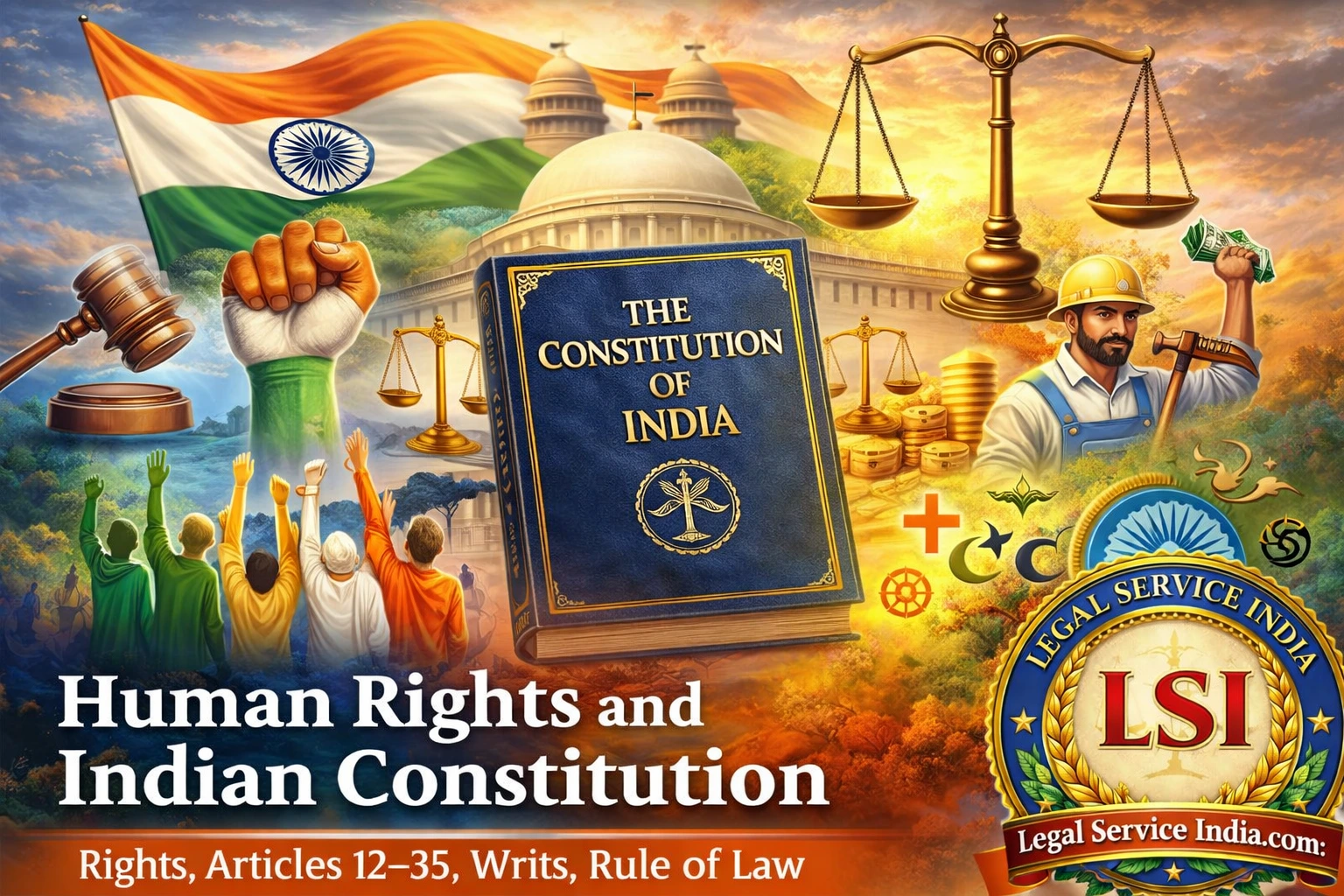
Human Rights And Indian Constitution
Rights are rights they are equal for all, and everyone deserves them. The Sudanese people are being killed by their own Para-military force, Rapid Support Force, while the international community remains silent. Human rights are rights which allows one person to live life with dignity no matter then age, gender, caste, or race etc.
Types Of Human Rights
Human rights can be classified into following on the basis of their scope and nature-
- Civil Rights – These rights are necessary for living a dignified life. This includes rights like Right to life, right to personal liberty and right to privacy etc.
- Political Rights – These are the rights which allows one person to take part in political and government activities. It includes rights like Rights to vote, right to Freedom of speech and expression, right to peaceful assemble and it also includes Right to universal and equal suffrage.
- Economic Rights – These are rights which are essential for living a health life as they guarantee one minimum necessities of life. These rights are Right to work, right to choice of employment, right to fair wages etc.
- Social And Economic Rights – These rights make sure smooth functioning of the society while balancing that everyone can follow and enjoy their cultures. The rights are Right to education, right to social security and right to freedom of religion etc.
Human Rights In Indian Constitution
Human rights in Indian constitution are mentioned in the Part 3 of the constitution and from Article 12 to 35. They guarantee six types of fundamental rights to the citizen which are Right to equality [Article 14-18], Right to freedom [Article19-22], Right against exploitation [ Article 23-24], Right to freedom of religion [ Article 25-28], Cultural and educational rights [Article 29-30], Right to constitutional remedies [ Article 32].
These rights are as mentioned-
| Fundamental Right | Articles | Description |
|---|---|---|
| Right To Equality | Article 14 – 18 | Ensures equality before law, prohibits discrimination and abolishes untouchability and titles. |
| Right To Freedom | Article 19 – 22 | Protects freedom of speech & expression and freedoms of residence, movement, profession, assembly and association. |
| Right Against Exploitation | Article 23 – 24 | Prohibits human trafficking, forced labour and child labour in mines, factories or hazardous places. |
| Freedom Of Religion | Article 25 – 28 | Provides freedom of conscience and free profession, practice, management and propagation of religion. |
| Cultural And Educational Rights | Article 29 – 30 | Protects culture and gives minorities the right to establish and administer educational institutes. |
| Right To Constitutional Remedies | Article 32 | Allows citizens to approach the Supreme Court for enforcement of fundamental rights. |
Right To Equality
This right is from Article 14 to 18. It covers and ensures equality before law, no discrimination and it is further supported by equality before law and abolishment of untouchability and titles.
Right To Freedom
This right is explained from Article 19 to 22. It protects freedom of speech & expression and protects freedom of residence, movement, profession, assemble and associate further it makes sure protection in criminal cases and rights like right to life, education and from any arbitrary arrest and detention.
Right Against Exploitation
This right is covered between Article 23 to 24. This right prohibits human trafficking and any kind of forced labour and child labour in any mine, factory, or hazardous place.
Freedom Of Religion
This right is explained between Article 25 to 28. This right gives freedom to conscience & free, profession, practice, manage, and propagation of religion.
Cultural And Educational Rights
This right is explained in Article 29 and 30. This right protects the culture and gives right to minority to establish and administer educational institutes.
Right To Constitutional Remedies
Article 32 explains right to constitutional remedies. It states that fun can go to the Supreme Court to enforce these rights in case of violation. According to B.R Ambedkar Article 32 is the Heart And Soul of the constitution, this section gives the Supreme Court the power top issue writs in case of violation of fundamental rights.
There are five writs which can be issued by the Supreme Court.
Types Of Writs
| Writ | Meaning | Description |
|---|---|---|
| Habeas Corpus | To Have The Body Of | An order compelling the person to bring the person before the court and it checks the legality of the arrest and states that a person detained unlawfully must be released. |
| Mandamus | We Command | A command given to a public officer or authority to perform their duty which they failed or is not intentionally performing. |
| Prohibition | To Forbid | A stay order by higher court to stop a lower court or a tribunal (quasi-judiciary body) from exceeding jurisdiction. |
| Certiorari | To Be Certified | Used either to quash or transfer a pending case to another higher court generally in case of lack or excess jurisdiction. |
| Quo Warranto | By What Authority | A legal challenge to legality of a public officer holding the office or using the power. |
Rule Of Law In India
These are the rights and provisions given in the India constitution. India follows Rule of law which makes sure that everyone follows the law.
The principle of rule of law states that Law is the supreme entity of the land which is sovereign and holds the most authority in a nation. Pluto and Aristotle have also defined law as King of kings stating that law is something which is above the King or Government of a nation. Hence saying that law is above everyone not the ruler and in provision of law there will be Justices not the arbitrary use of power.
A.v Dicey states the government doesn’t run by the will of the people but by the system setup by the law. He says that the person in the power doesn’t run by the will or needs of the person in power but by the law. Focusing on the fact that people in the power are too bid and under the law.
Principles Of Rule Of Law
- Equality Before Law – Law sees everyone as equal no matter the age, caste, gender, religion, race etc.
- Supremacy Of Law – Law is the supreme authority of the land and above everyone.
- Predominance Of Legal System – In case of violation of law, a legal system will be followed to deliver justice.
Importance Of Human Rights
Human rights are essential for the development of a human and it is also important in a democracy because it is essential to ensure Justice, Liberty and Equality. The fundamental rights given in Part III of the Indian constitution gives all the human right which is further ensured by Article 32 which provides V writs which Supreme Court can evoke in case of violation.
For the principle of rule of law ensures that everyone follows and is under the law. Thus, ensuring that not only human rights are given but also followed and provide justice in case of violation of these rights in India.

