





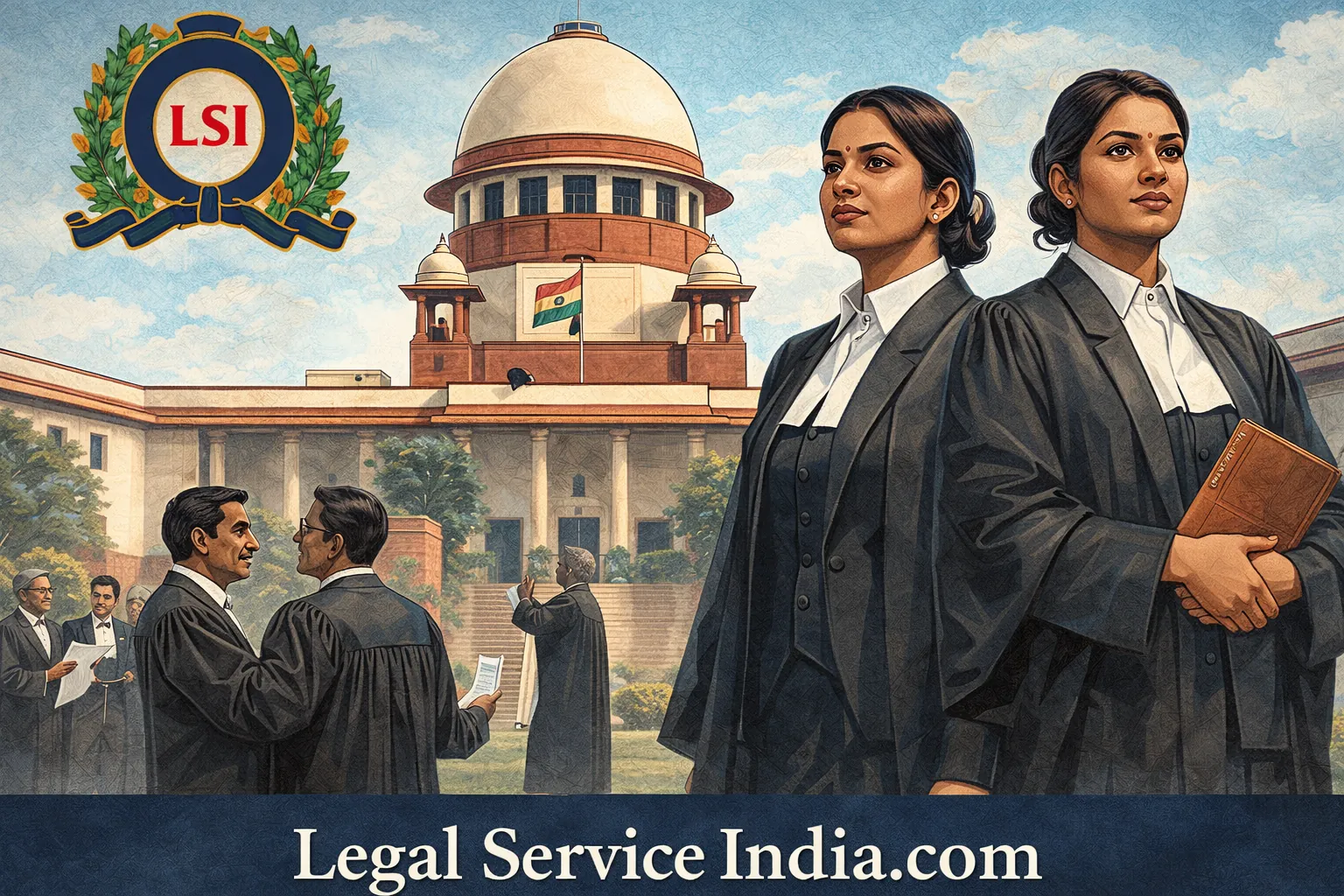
Gender Inequities in India’s Legal Profession
The legal profession in India occupies a unique position—simultaneously upholding justice, gender equality, and constitutional rights while itself embodying significant gender inequities. Women have been formally permitted to practice law in India since 1923, a century of ostensible equality. Yet today, women constitute barely 15% of advocates enrolled with Bar Councils and face systematic barriers at every career stage—from law school experiences to courtroom practice, from securing briefs to achieving judicial appointments, from managing work-life balance to confronting sexual harassment.
Understanding these challenges, celebrating the remarkable women who’ve succeeded despite obstacles, examining how the profession’s masculine culture perpetuates inequality, and reimagining legal practice to genuinely include women is essential for both the legal profession’s integrity and the broader pursuit of gender justice in India.
Historical Context: Women’s Entry into Legal Practice
Women’s participation in India’s legal profession has evolved from complete exclusion through grudging acceptance to today’s incomplete inclusion.
Early Pioneers and Barriers
- Cornelia Sorabji (1866–1954) was India’s first woman lawyer, admitted to practice before the Allahabad High Court in 1923 after years of struggle. She had graduated from Oxford in 1892 but couldn’t practice in India because women were not permitted. Her eventual admission came after persistent advocacy and legal changes, yet she practiced in limited capacity, working primarily on behalf of women in purdah who couldn’t appear in courts.
- Regina Guha became the first woman to enroll as an advocate after the Advocates Act 1961, marking formal integration of women into the legal profession. Yet her enrollment didn’t transform the profession’s masculine character—women remained exceptions, oddities to be remarked upon rather than normalized presences.
Post-Independence Growth
Women’s law school enrollment gradually increased post-independence, particularly from the 1980s onward. Today, women constitute approximately 40–50% of law students in many institutions, approaching gender parity in legal education—a dramatic shift from earlier decades when law schools were almost exclusively male.
However, this educational parity hasn’t translated to professional parity. The attrition rate for women between law school graduation and sustained legal practice is substantial. Many women law graduates never practice, practice briefly before leaving, or work in non-litigation legal roles rather than courtroom advocacy.
Legislative and Judicial Milestones
| Year | Milestone |
|---|---|
| 1923 | Legal Practitioners (Women) Act allowed women to practice law |
| 1949 | Indian Constitution guaranteed equality and prohibited discrimination, theoretically ensuring women’s equal participation in all professions including law |
| 1961 | Advocates Act integrated different legal practitioners into unified Bar, theoretically on equal terms regardless of gender |
| 1997 | Supreme Court’s Vishaka judgment on workplace sexual harassment, ironically developed by legal profession, highlighted that law itself was workplace requiring harassment protections |
| 2000s–Present | Increasing women’s judicial appointments, though still far from parity, with first woman Chief Justice of High Court (Leila Seth, 1991) and Supreme Court judges including Justice Fathima Beevi, Justice Sujata Manohar, and more recently Justice Indu Malhotra |
These milestones mark progress yet also reveal how recent women’s full participation is—the first woman lawyer practiced just 100 years ago, and substantive inclusion remains ongoing struggle.
The Current Landscape: Numbers and Representation
Quantifying women’s participation across legal profession’s different dimensions reveals persistent gender gaps.
Enrollment and Practice
- Approximately 15% of enrolled advocates with Bar Councils across India are women.
- Percentages vary by state—higher in Kerala, Delhi, and other progressive states; lower in more conservative regions.
- This percentage has gradually increased but remains disproportionately low given women’s law school enrollment.
The gap between law school graduation and Bar enrollment/active practice reflects multiple factors—women not joining profession after graduation, joining but quickly leaving, or practicing irregularly making them less visible in professional counts.
Seniority and Specialization
- Women’s representation decreases at higher seniority levels.
- Senior advocates—designated lawyers recognized for exceptional competence and experience—are overwhelmingly male.
- Among Supreme Court practitioners, women constitute tiny percentage, clustering in junior positions rather than senior leadership.
Sectoral Concentration:
- Women lawyers concentrate in certain practice areas—family law, consumer protection, civil litigation.
- Women are scarce in constitutional law, criminal defense, corporate litigation, arbitration, and tax law.
- This concentration reflects both stereotypes about appropriate domains for women and practical barriers accessing male-dominated specializations.
Judiciary
- Supreme Court: Currently 3–4 women judges out of sanctioned strength of 34 (approximately 10–12%).
- High Courts: Women judges constitute approximately 10–15% across High Courts, with significant variation.
- District Judiciary: Women’s representation is higher, approaching 30% in some states, partly due to recruitment through judicial services exams which are relatively merit-based.
The glass ceiling in judiciary is evident—women judges are concentrated in lower courts and rare in Chief Justice positions or senior judicial leadership.
Legal Education Faculty
- Women constitute approximately 20–30% of law school faculty nationally.
- Higher percentages are found in newer private universities; lower in older National Law Universities and traditional institutions.
- Women faculty cluster in family law, human rights, and clinical legal education.
- Women are scarce in property law, taxation, or jurisprudence.
- Women are underrepresented in law school leadership—as deans, directors, or vice-chancellors—and in influential faculty positions shaping curriculum, hiring, or institutional culture.
Challenges in Legal Education
The pipeline producing women lawyers begins with law schools, where experiences shape career trajectories and professional identities.
Classroom Dynamics
- Implicit Bias: Law school pedagogy often employs Socratic method—aggressive questioning, public performance, competitive argumentation—that may favor masculine communication styles. Faculty may unconsciously call on male students more, engage their contributions more seriously, or interrupt women students more frequently.
- Case Method: Legal education centers on case analysis, and cases often involve women as victims, property, or objects of legal regulation rather than agents. Feminist legal theory or gender perspectives remain marginal in most curricula, implicitly communicating that law is male domain analyzing issues affecting women from external perspectives.
- Sexual Harassment: Law students face sexual harassment from peers and sometimes faculty. The irony that future lawyers experience harassment in institutions teaching law creates cognitive dissonance, while reporting mechanisms may be inadequate or hostile.
Networking and Mentorship
- Old Boys’ Networks: Influential alumni networks, placement opportunities, and mentorship often flow through informal channels that exclude or marginalize women.
- Male faculty may mentor male students more comfortably, providing career guidance and professional introductions women don’t receive.
- Internship Access: Securing internships with senior advocates, judges, or prestigious law firms requires connections that women students may lack.
- Women interns also face harassment risks and may be assigned peripheral tasks rather than substantive legal work.
Competitive Culture
Law school culture often valorizes aggressive competitiveness, long hours, and single-minded career focus—masculine ideals that may alienate women or create conflicts with other life goals. The “ideal law student” archetype implicitly male creates discomfort for women who don’t fit or don’t wish to fit this template.
Barriers in Legal Practice
Women entering legal practice encounter multiple barriers affecting their ability to establish, sustain, and advance in legal careers.
Getting Started: The Brief Drought
- Accessing Briefs: Junior lawyers depend on briefs—cases brought by clients or referred by senior advocates. Male juniors often receive briefs through family connections, old boys’ networks, or informal social connections that women may lack.
- Chamber Systems: Male seniors may hesitate hiring women juniors, citing concerns about propriety, comfort, or commitment. Women juniors in male chambers may face isolation or inappropriate behavior.
- Client Reluctance: Some clients prefer male lawyers, perceiving them as more aggressive, credible, or capable. Women lawyers report clients explicitly requesting male representation or expressing skepticism about women’s abilities.
Courtroom Challenges
- Judicial Attitudes: Some judges exhibit bias—interrupting women lawyers more, questioning their credentials, making gendered comments about appearance or demeanor, or showing visible annoyance at women advocates’ arguments.
- Opponent Tactics: Male opposing counsel may employ gendered tactics—condescension, interruption, aggressive intimidation, or inappropriate comments about appearance.
- Physical Infrastructure: Court infrastructure often lacks adequate facilities for women—insufficient or unsanitary bathrooms, no private spaces for nursing mothers, inadequate security in parking or corridors.
Work-Life Balance and Family Pressures
- Irregular Hours: Legal practice involves unpredictable schedules—last-minute hearings, late evening drafting, weekend research.
- Marriage and Motherhood: Women lawyers face pressure to marry and have children during prime career-building years. Extended maternity leaves, childcare responsibilities, or family relocations interrupt practice.
- Social Expectations: Women lawyers face scrutiny male lawyers don’t—questioned about neglecting families or being “too ambitious.”
Financial Challenges
- Initial Investment: Establishing legal practice requires financial investment without guaranteed income.
- Income Instability: Junior lawyers’ income is uncertain and initially minimal.
- Opportunity Costs: The long period before legal practice becomes financially viable means women invest years with minimal returns.
Sexual Harassment and Gender-Based Violence
- Harassment Prevalence: Women lawyers face sexual harassment from senior lawyers, judges, clients, court staff, and opponents.
- Retaliation Fears: Reporting harassment risks career consequences—lost briefs, hostile work environments, professional reputation damage, or explicit retaliation.
- Institutional Response: Bar Associations and courts often lack effective harassment complaint mechanisms. Even when procedures exist, institutional cultures may blame victims, protect powerful men, or handle complaints informally without adequate accountability.
Sectoral Variations And Specializations
Women’s experiences vary across legal practice sectors, with some domains more accessible than others.
Litigation Vs. Non-Litigation
- Litigation barriers: Courtroom litigation presents particular challenges—requiring aggressive oral advocacy, courtroom presence, client development through networks, and irregular schedules. Women’s concentration outside litigation partly reflects these barriers.
- Corporate legal roles: Women are better represented in corporate legal departments, law firms’ transactional practices, compliance roles, or legal process outsourcing. These positions offer regular hours, defined hierarchies, and workplace environments with HR structures—though corporate law has its own gender challenges.
Practice Areas
- Family law: Women cluster in family law—matrimonial disputes, domestic violence, custody—both because clients seek women lawyers for sensitive issues and because family law is seen as “appropriate” for women. However, family law is often lower-paying and less prestigious than corporate or constitutional practice.
- Public interest law: Women are well-represented in public interest litigation, human rights advocacy, and social justice lawyering. These areas align with gendered expectations about women’s caring orientation while allowing meaningful work on systemic issues. However, public interest law often pays poorly, creating financial sustainability challenges.
- Criminal law: Women are scarce in criminal defense, particularly in serious crimes. Criminal law’s adversarial nature, challenging clients, security concerns, and masculine culture deter women’s entry. Women in criminal law report facing skepticism from clients, judges, and peers.
- Constitutional and commercial law: High-stakes constitutional litigation and commercial arbitration remain male-dominated. These prestigious, lucrative specializations require senior mentorship, extensive networks, and aggressive practice styles that women struggle to access or adopt.
Geographic Variation
- Supreme Court and High Courts: Practice before superior courts requires extensive experience, resources, and networks that women disproportionately lack. Supreme Court advocacy is particularly male-dominated, with handful of women practitioners among hundreds of regular advocates.
- District courts: Women’s representation is higher in district courts where practice is somewhat more accessible and less dependent on elite networks. However, district court infrastructure may be worse, safety concerns higher, and professional prestige lower.
- Metropolitan vs. smaller cities: Women lawyers in metro cities have better access to supportive networks, corporate legal roles, and progressive work environments. In smaller cities, conservative social norms and lack of role models create additional barriers.
Advancement And Leadership
Even women who successfully establish practices face barriers to advancement and leadership within the profession.
Senior Designation
The senior advocate designation, conferring prestige and higher fees, is conferred by courts based on experience and competence. Women’s underrepresentation among senior advocates reflects multiple factors:
- Delayed careers: Women’s career interruptions for family responsibilities mean they reach qualification thresholds later or demonstrate less continuous practice
- Selection bias: Designation processes may favor well-connected candidates from dominant networks that exclude women
- Visibility gaps: Women’s lower profile due to network exclusions or practice in less prestigious areas affects recognition
Bar Association Leadership
Bar councils and associations governing legal profession are overwhelmingly male-led. Women constitute tiny percentages of Bar Council members, association executive committees, or leadership positions. This underrepresentation means women’s concerns—harassment, infrastructure, work-life balance—receive inadequate attention in professional governance.
Electoral politics within Bar Associations often involve masculine networking, financial resources, and aggressive campaigning that disadvantage women candidates. Women who do win leadership positions sometimes face marginalization or resistance from male colleagues.
Judicial Appointments
Despite constitutional commitment to equality, women’s judicial appointments lag badly:
| Institution | Status Of Women’s Representation |
|---|---|
| Supreme Court | Only 11 women have ever been appointed Supreme Court judges since independence, compared to hundreds of men. Current representation around 10% reflects slow progress. |
| High Courts | Women constitute approximately 12-15% of High Court judges. Several High Courts have never had women Chief Justices despite qualified women judges. |
- Appointment processes: Collegium system—where senior judges select future judges—operates through networks and informal assessments that may disadvantage women. The opacity of selection criteria and absence of diversity mandates perpetuate male dominance.
Success Stories And Role Models
Despite barriers, many women have built remarkable legal careers, demonstrating what’s possible and inspiring others.
Trailblazing Advocates
- Indira Jaising: Built distinguished career in constitutional law and public interest litigation, serving as Additional Solicitor General and founding Lawyers Collective. Her work on gender justice, labor rights, and constitutional issues demonstrated women’s capacity for highest-level advocacy.
- Kamini Jaiswal: Practices criminal law at Supreme Court level, breaking into male-dominated criminal defense and proving women’s effectiveness in aggressive advocacy requiring courtroom presence and strategic brilliance.
- Menaka Guruswamy and Arundhati Katju: Successfully argued historic case decriminalizing homosexuality (Navtej Singh Johar), demonstrating women lawyers’ leadership on constitutional issues with profound social implications.
- Vrinda Grover: Specializes in criminal law and human rights, representing survivors of sexual violence and working on justice for marginalized communities, showing how women lawyers can combine advocacy with activism.
Judicial Leaders
- Justice Fathima Beevi: Became India’s first woman Supreme Court judge in 1989, breaking a barrier that had existed for four decades post-independence.
- Justice Leila Seth: Became first woman Chief Justice of a High Court (Himachal Pradesh, 1991), demonstrating women’s capability for judicial leadership.
- Justice Indu Malhotra: Became first woman Supreme Court judge appointed directly from Bar rather than judiciary, validating women advocates’ excellence and opening direct pathway for future appointments.
These success stories are important but also highlight how exceptional women’s achievements remain—each “first woman to…” demonstrates how recent and rare women’s access to various positions is.
Supportive Structures And Interventions
Various initiatives aim to support women lawyers, with varying effectiveness and reach.
Women Lawyers’ Associations
Organizations like All India Women Lawyers Association, Indian Association of Women Lawyers, and regional groups provide networking, mutual support, continuing legal education, and advocacy on profession-related issues affecting women.
These associations create communities where women lawyers support each other, share experiences, mentor juniors, and collectively address discrimination. However, they reach limited numbers and cannot single-handedly transform profession’s structural inequities.
- Networking opportunities
- Continuing legal education programs
- Peer mentorship
- Advocacy on profession-related gender issues
Mentorship Programs
Formal and informal mentorship programs connect junior women lawyers with experienced practitioners. Organizations and law schools facilitate mentorship, helping women navigate career challenges and build professional confidence.
Effective mentorship requires commitment from senior lawyers willing to genuinely support women’s advancement—providing briefs, introductions, strategic guidance, and moral support rather than token gestures.
- Providing professional briefs
- Introducing juniors to networks
- Strategic career guidance
- Moral and professional support
Law Firm Initiatives
Some corporate law firms implement diversity initiatives—recruitment targets, retention programs, flexible work arrangements, anti-harassment policies, mentorship structures. These efforts recognize that diverse teams perform better and that women’s retention requires addressing structural barriers.
However, law firm initiatives often focus on junior/mid-level women while senior partnership remains male-dominated. Work-life balance rhetoric may not match practice cultures requiring extreme hours. Initiatives’ effectiveness varies dramatically across firms.
| Initiative Type | Objective |
|---|---|
| Recruitment Targets | Increase women’s entry into firms |
| Retention Programs | Reduce mid-career attrition |
| Flexible Work Arrangements | Support work-life balance |
| Anti-Harassment Policies | Create safe work environments |
| Mentorship Structures | Support career progression |
Bar Council Reforms
Efforts to reform Bar Council governance include pushing for women’s representation in leadership, establishing harassment complaint mechanisms, improving court infrastructure for women, and creating continuing legal education on gender issues.
Progress is slow due to resistance from entrenched male leadership, but gradual changes—more women elected to Bar Councils, harassment committees established, infrastructure improvements—indicate evolution.
- Women’s representation in leadership
- Harassment complaint mechanisms
- Improved court infrastructure
- Gender-focused continuing legal education
Judicial Diversity Advocacy
Campaigns advocating for increased women’s judicial appointments include public interest litigations, advocacy by women lawyers’ groups, and civil society pressure. Arguments emphasize that judiciary reflecting population diversity improves justice delivery and public trust.
Some progress is visible—more women judges appointed recently, though still far from parity. Sustained advocacy and transparency in appointment processes could accelerate change.
Systemic Reforms Needed
Addressing women’s underrepresentation and barriers requires comprehensive reforms across legal education, practice structures, and institutional governance.
Legal Education
Curriculum Reform
Curriculum reform: Integrating gender perspectives throughout curriculum, teaching feminist legal theory, analyzing law’s gendered impacts, and featuring women’s legal achievements normalizes gender awareness rather than treating it as specialty subject.
Pedagogy
Pedagogy: Diversifying teaching methods beyond aggressive Socratic interrogation, creating inclusive classroom cultures, and addressing bias in faculty-student interactions can make legal education more welcoming.
Anti-Harassment
Anti-harassment: Robust sexual harassment policies, functioning Internal Complaints Committees, and cultures taking complaints seriously protect students and model professional standards.
Practice Reforms
Infrastructure
Infrastructure: Adequate washrooms, nursing rooms, secure parking, and safety measures in courts make sustained practice feasible for women.
Flexible Scheduling
Flexible scheduling: While litigation requires responsiveness, courts could adopt practices reducing unpredictability—scheduled hearing times, reduced adjournments, avoiding extremely early or late hours.
Brief Distribution
Brief distribution: Transparency in how briefs are allocated, legal aid cases assigned, or chamber positions offered can reduce network-based discrimination favoring connected men.
Institutional Governance
Representation Mandates
Representation mandates: Requiring minimum women’s representation on Bar Councils, court committees, and professional governance bodies ensures women’s voices in decision-making.
Appointment Transparency
Appointment transparency: Making judicial appointment criteria explicit, ensuring diverse collegium composition, and mandating consideration of diversity in selections could improve women’s judicial representation.
Harassment Accountability
Harassment accountability: Effective complaint mechanisms, swift investigations, meaningful consequences for harassers, and protection for complainants are essential for safe work environments.
Cultural Transformation
Challenging Stereotypes
Challenging stereotypes: Confronting assumptions about women’s appropriate legal roles, questioning masculine practice culture, and celebrating diverse practice styles can shift professional norms.
Role Modeling
Role modeling: Increasing visibility of successful women lawyers, highlighting diverse career paths, and normalizing women in all specializations challenges stereotypes about women’s capabilities.
Male Ally Engagement
Male ally engagement: Recruiting senior male lawyers to mentor women, advocate for diversity, call out discrimination, and support reforms leverages male power for transformation.
The Business And Justice Case
Beyond equity arguments, compelling professional reasons exist for increasing women’s participation in legal profession.
Diverse Perspectives Improve Justice
Representing Half The Population
Representing half the population: When judiciary and Bar are overwhelmingly male, legal perspectives, interpretations, and outcomes may reflect partial views not accounting for women’s experiences and concerns.
Gender-Sensitive Jurisprudence
Gender-sensitive jurisprudence: Women judges and lawyers often bring attention to gender dimensions of legal issues—interpreting laws considering impacts on women, asking questions male colleagues might miss, or developing jurisprudence addressing systemic gender inequities.
Client Service
Client service: Women clients seeking legal representation for sensitive issues—sexual violence, domestic abuse, family matters—often prefer women lawyers who may better understand their experiences and provide empathetic representation.
Professional Excellence
Talent Utilization
Talent utilization: Excluding or underutilizing women means profession loses access to half the talent pool. Societies that fully utilize diverse talent outperform those that don’t.
Competition And Quality
Competition and quality: More diverse, inclusive profession creates broader competition where excellence rather than gender or connections determines success, improving overall professional quality.
Institutional Legitimacy
Public Trust
Public trust: Justice system’s legitimacy partly depends on representing the society it serves. Judiciary and legal profession that are demographically skewed undermine public confidence that justice is impartial and accessible to all.
Democratic Values
Democratic values: Legal profession should exemplify constitutional values including equality. When the very profession interpreting and enforcing equality laws itself practices discrimination, institutional hypocrisy undermines broader justice claims.
Looking Forward: Vision For Gender-Equal Legal Profession
Transforming India’s legal profession to genuinely include women requires sustained commitment across multiple dimensions.
The Vision Is Of Legal Profession Where:
- Women constitute half of practicing advocates, reflecting population demographics
- Women are equally represented across specializations—criminal law, constitutional law, arbitration, corporate practice—not concentrated in “soft” areas
- Women reach senior designation, partnership, and judicial appointment at rates matching male colleagues, indicating merit-based advancement
- Women lead Bar Associations, court committees, law schools, and law firms, shaping professional culture and governance
- Women feel safe, respected, and valued throughout careers without facing harassment, discrimination, or gendered barriers
- Work structures accommodate diverse life circumstances—parenting, elder care, health needs—enabling sustained careers alongside personal responsibilities
- Legal education prepares all students for inclusive profession, teaching gender awareness and modeling equitable practices
Achieving This Vision Requires:
- Individual women’s continued courage pursuing legal careers despite obstacles
- Male allies actively supporting women colleagues, mentoring women lawyers, and challenging discrimination
- Institutional reforms in courts, Bar Associations, and law schools removing structural barriers
- Cultural transformation challenging masculine profession norms and normalizing diverse practice styles
- Policy interventions mandating diversity, transparency in appointments and case allocation, and accountability for harassment
- Sustained advocacy by women’s organizations demanding change and holding institutions accountable
The legal profession’s transformation matters not only for women lawyers’ careers but for justice itself. When the profession delivering justice is itself unjust, the very foundations of rule of law are compromised. A legal system that excludes half the population cannot credibly claim to serve all.
Every woman who persists in legal practice despite barriers, every successful advocacy challenging discrimination, every reform improving women’s conditions, and every mind changed about women’s capabilities moves the profession closer to genuine equality. The journey is long and obstacles many, but the destination—legal profession truly serving justice for all—is worth pursuing.
Conclusion
Women in India’s legal profession navigate complex terrain between formal equality—enshrined in Constitution and proclaimed in professional rhetoric—and lived inequality—evident in numbers, experiences, and barriers. While the profession has progressed from complete exclusion to partial inclusion, the distance to genuine equity remains vast.
The challenges women lawyers face—from accessing initial opportunities through managing work-life conflicts to confronting harassment and achieving leadership—reflect broader patriarchal structures while having profession-specific dimensions. The legal profession’s particular irony is that the very system interpreting and enforcing gender equality laws itself systematically disadvantages women.
Yet the profession also offers unique opportunities for advancing justice. Women lawyers have been at forefront of gender rights litigation, challenging discriminatory laws, representing survivors, and developing gender-sensitive jurisprudence. Women judges bring diverse perspectives improving judicial decision-making and institutional legitimacy.
The path to gender equality in legal profession is both professional necessity and justice imperative. Creating truly inclusive profession where women’s talent is fully utilized, their perspectives valued, and their advancement unimpeded by gender would benefit not only women lawyers but clients, justice system, and society. Until that transformation occurs, the legal profession’s promise of justice for all remains unfulfilled for half its potential members and inadequate for those it serves.

