Introduction
Rights to human beings are basic rights and liberties that everyone deserves by virtue of being a human, no matter what their race or colour is; it does not depend on an individual’s nationality, religion or gender etc.
In fact, these rights are guaranteed by international human right treaties and regional human rights systems the legal basis of protection and promotion on a global scale for everyone.
Scope and Objective of the Paper
This paper seeks to offer a thorough investigation into the international human rights treaties and also regional systems of human rights that are highlighting their importance, peculiarities as well as in what way they contribute for the development of Human Rights worldwide.
International Human Rights Treaties
International treaties on human rights define the legal obligations and responsibilities of all states in protecting as well as promoting human rights. These treaties are created according to the norms of international law aimed at protection and guaranteeing certain fundamental rights as well as freedoms for an individual person.
Foundation of International Human Rights Law
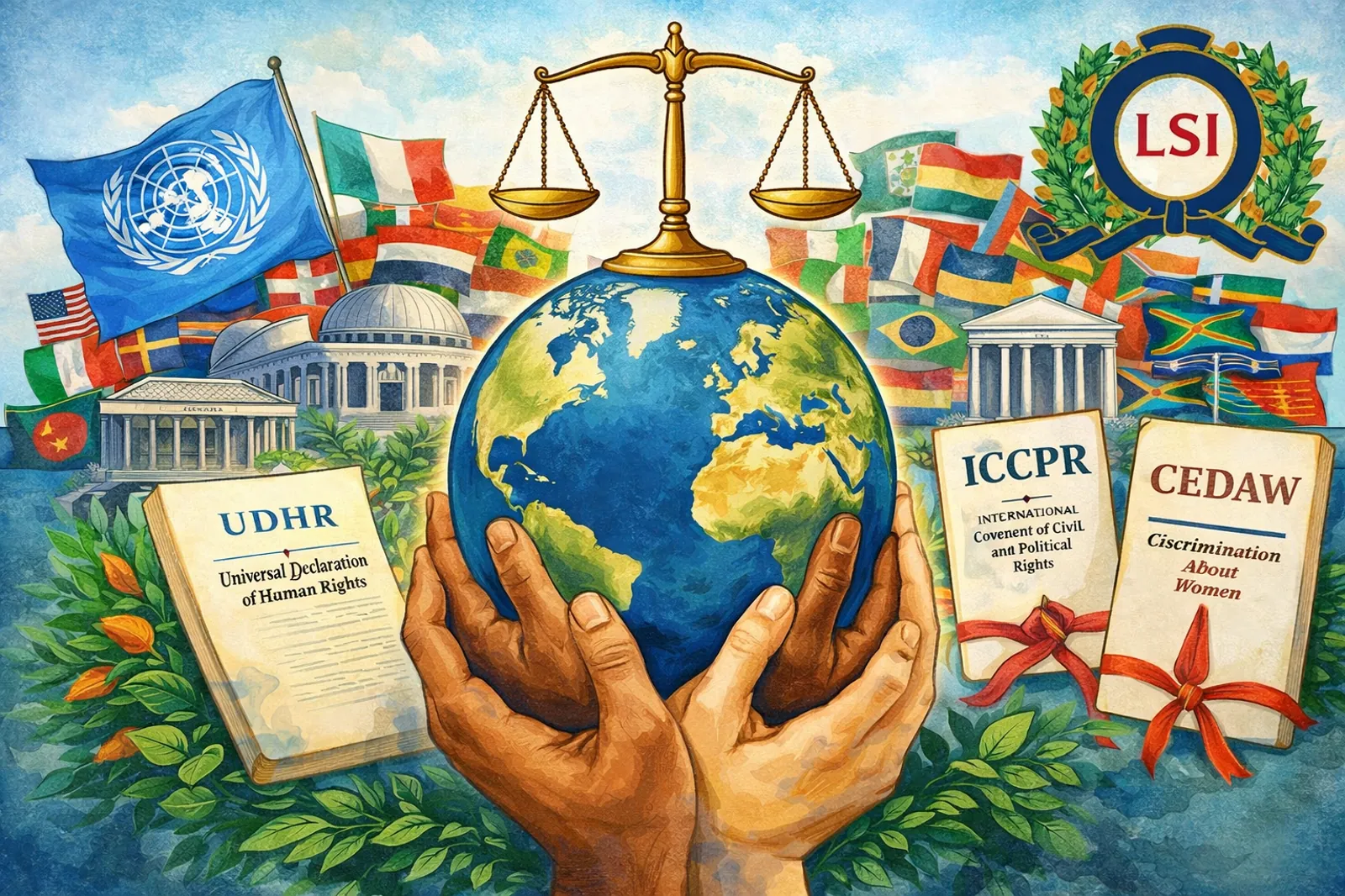
The foundation of the international human rights law is based on the Universal Declaration of Human Rights (UDHR), which was officially adopted in 1948 by the United Nations General Assembly. The UDHR lists numerous civil, political, economic and many other rights that are supposed to be basic for everyone.
Core International Human Rights Treaties
Besides the UDHR, some other fundamental international human rights treaties have also been approved by the world community. These include the ICCPR, ICESCR, CEDAW and ICRC have others.
- International Covenant on Civil and Political Rights (ICCPR)
- International Covenant on Economic, Social and Cultural Rights (ICESCR)
- Convention on the Elimination of All Forms of Discrimination Against Women (CEDAW)
- ICRC and other related instruments
State Obligations and Accountability
All these treaties address many different aspects of human rights and prescribe the responsibilities on the part of states parties to respect, protect, and also fulfill these rights. There are different ways through which states that have ratified these treaties can be challenged and held accountable for any violation, including reporting requirements at the state level, treaty bodies as well as in international courts.
Regional Human Rights Systems
Aside from the international human rights treaties, regional human rights systems play an very important part in developing the protection of humans’ right within particular areas around them.
Regional human rights systems are established through the treaties and agreements between the states in a specific region for the purpose of advancing and ensuring observance, at the regional level.
These systems support and also supplement the worldwide platform of human rights protection through international treaties.
European Human Rights System
One of the best-known regional human rights systems is the European system, which operates under the auspices of ECHR and is oversees by ECtHR. The civil and political liberties acknowledged by the ECHR are manifold, from right to life through the freedom of torture up to free speech.
The ECtHR is in a good position to pronounce on the matter concerning individual and also interstate complaints alleging violation of European Convention creating binding judgments regarding such cases.
Inter-American Human Rights System
Likewise, the Inter-American system includes the American Declaration of Rights and also Duties of Man as well as The American Convention on Human Rights that provides an adequate legal basis for safeguarding human rights in this region.
The main institutions that ensure the adherence to these instruments are the Inter-American Commission on Human Rights (IACHR) and also the Inter-American
Court of Human Rights (IACtHR)
Other Regional Human Rights Systems
Other regional human rights systems are the African Charter on Human and Peoples’ Rights managed by the Commission of Human and People’s Right as well as the Arab Charter on Human Rights under both League of Arab States.
The Distinctive Characteristics of Regional Human Rights Systems
The regional human rights systems are characterized by some unique features that differentiates them from the global human treaties and make them very effective in the promotion of Human Rights.
Regional Tailoring And Local Context
First, regional systems of the human rights enable specific tailoring as well as proper understanding relevant to the topic that each country within a given region faces. This ‘elasticity’ makes the states to focus on addressing local human rights concerns in a more indigenous manner, with regard to cultural, social and political variations that distinguishes one area from another.
Enhanced Enforcement Mechanisms
In addition, the regional systems often offer many additional enforcement tools that supplement those at the international level.
- For instance, courts in the regions can deliver judgments that are binding to the cases on human rights and thus directly affect state compliance with its human right commitments.
- This increases further the level of accountability and enforcement beyond what is internationally available through global treaty bodies.
Regional Cooperation And Shared Responsibility
A distinctive quality of the regional human rights systems is that they promote mutual relations between the states within a particular region in order to address local common challenges with respect to the human rights jointly.
- Regional systems encourage dialogue
- Reciprocity among states
- Sharing of good practices
Which in turn can greatly lead to increased effectiveness for responses against human right abuses as well as also create a culture of respecting human rights within that region.
The Role Of International And Regional Human Rights Frameworks
The role of international human rights treaties and also regional human right systems is discussed in this section.
International human rights treaties and regional human rights systems play a very complex, but also vital part in promoting the realization of it. These tools play an very important role in the enactment of these objectives through respecting the human rights, punishing miscreants, and ushering in a culture of dignity and equality justice.
Universal Standards And State Obligations
Secondly, the universal standard for protection of human rights applies to all states as it is dictated by international treaties on human rights.
- Ratifying these treaties, states promise to support the fundamental human rights principles
- Answer for any violations in reports before reviewing bodies from the potentially formulate recommendations
This ensures that there is a shared basis for interpreting and dealing with the human rights across the globe.
Complementary Role Of Regional Systems
Regional human rights systems operate in a very complementary manner for they modify the depth and also form of protection, while relying on global standards.
These systems add a further level of the supervision and enforcement at the regional scale, thus enabling better responses to such challenges.
Promotion Of Human Rights Culture
In addition, international treaties and regional systems help to cultivate the human rights respect culture through education, awareness-raising programs as well as advocacy activities.
Through the promotion of human rights principles by governments, civil society organizations and many people these instruments aid in development a culture that respects dignity and equality non-discrimination.
Remedies And Compensation For Violations
Furthermore, the treaties and regional systems act as major tools for fighting a systemic violation of human rights which provides great compensation to victims.
| Mechanism | Purpose |
|---|---|
| Individual Complaints Mechanisms | Provide the means through which individuals whose rights have been infringed upon can seek compensation |
| Legal Actions | Help in the prevention of future breaches and also encouragement for justice to the victims |
This is helping in the prevention of future breaches and also encouragement for justice to the victims.
Challenges And Opportunities
International human rights treaties and regional human rights systems play a very critical role in enhancing the protection of the many human rights yet, not without any challenges that influence their operations.
State Compliance With Treaty Obligations
A major problem concerns the compliance of the states parties with their treaty obligations. Despite their many commitments, some states may fail to carry out the treaty provisions fully or even systematically violate human rights. This highlights the need for effective monitoring mechanisms and enforcement aids to ensure compliance.
Resource And Capacity Limitations
Furthermore, both the international treaty bodies and regional human rights organizations have a lot of limitations as regards to resources and also capacity. Such bodies are sometimes limited by the funding, personnel infrastructure and also operational capacity which can affect their operations.
These resource problems need to be dealt with in order for these mechanisms can improve both their efficiency and also impact.
Need For Institutional Collaboration
In addition, much more collaboration is required between the international treaty bodies and regional human rights systems to achieve uniformity in the approach toward addressing many issues of human rights.
- Collaboration among these entities would foster more efficient actions in monitoring the compliance of states with their obligations under treaties
- It would also help in dealing with cross-cutting human rights issues that span different regions
Emerging Opportunities And Benefits
In the midst of these obstacles, there also are potential benefits towards empowering international human rights treaties and regional regimes.
- Improved participation with the civil society organizations, national human rights institutions and also other stakeholders can strengthen the monitoring of state compliance in treaty implementation
- The introduction of the technology and data-based practices could contribute to streamlining reporting processes while also increasing transparency in evaluating state performance on the human rights issues
Conclusion
International human rights treaties and also regional human rights systems are very essential instruments for enforcing the compliance with fundamental freedoms and also punishing the offenders.
These instruments offer a global structure that affirms the human dignity, and enables regional specific responses.
International treaties and regional systems develop a culture of dignity, equality, and justice through promoting cooperation in the states grounds human rights principlesrecognition aware offering victims redress channels.
In the face of mounting challenges to human rights as we grapple with an interdependent world, it is crucial that such mechanisms are made even more stronger through enhanced collaboration, resourcing and inventive strategies for the successful protection and promotion of all the people’s basic rights