





Importance Of Oceans And Marine Environment
Oceans cover more than 70 percent of the Earth’s surface and play a central role in regulating climate, supporting biodiversity, and facilitating global trade. However, the cumulative impact of human activities has resulted in unprecedented stress on marine ecosystems. Recognizing the transboundary nature of marine degradation, international law has emerged as a key regulatory tool aimed at ensuring the protection and preservation of the marine environment.
Evolution Of Legal Framework
The development of marine environmental law has progressed from fragmented sectoral agreements to a more integrated regime. Early conventions primarily addressed specific concerns such as oil pollution and dumping. The adoption of the United Nations Convention on the Law of the Sea marked a paradigm shift by codifying a comprehensive legal framework governing all uses of the oceans, including environmental protection.
Subsequent instruments have complemented UNCLOS by addressing emerging environmental concerns. For instance, the MARPOL Convention regulates ship-based pollution, while the Convention on Biological Diversity promotes conservation and sustainable use of marine biodiversity.
Key Milestones In Marine Law
| Instrument | Focus Area |
|---|---|
| United Nations Convention on the Law of the Sea (UNCLOS) | Comprehensive governance of ocean use and environmental protection |
| MARPOL Convention | Regulation of ship-based marine pollution |
| Convention on Biological Diversity (CBD) | Conservation and sustainable use of biodiversity |
Core Principles Of Marine Environmental Protection
International marine environmental law is underpinned by several well-established principles:
- Obligation to Prevent Transboundary Harm: States must ensure that activities within their jurisdiction do not cause environmental damage beyond their borders.
- Precautionary Principle: Preventive action should be taken even in the absence of full scientific certainty.
- Polluter Pays Principle: Responsibility for environmental damage lies with the polluter.
- Sustainable Development: Balancing environmental protection with developmental needs.
- Common Heritage of Mankind: Particularly applicable to the deep seabed, emphasizing collective responsibility.
These principles have been reinforced through international jurisprudence and state practice, forming part of customary international law.
Institutional And Regulatory Mechanisms
Effective implementation of marine environmental obligations is facilitated by a network of international institutions:
- The International Maritime Organization formulates binding regulations to prevent marine pollution from vessels.
- The United Nations Environment Programme coordinates global environmental governance and supports regional seas initiatives.
- The International Tribunal for the Law of the Sea adjudicates disputes and has contributed to the development of environmental jurisprudence.
Supporting Frameworks And Cooperation
Additionally, regional agreements and soft-law instruments enhance cooperation and address localized marine issues.
Contemporary Challenges
Despite a sophisticated legal architecture, significant challenges persist:
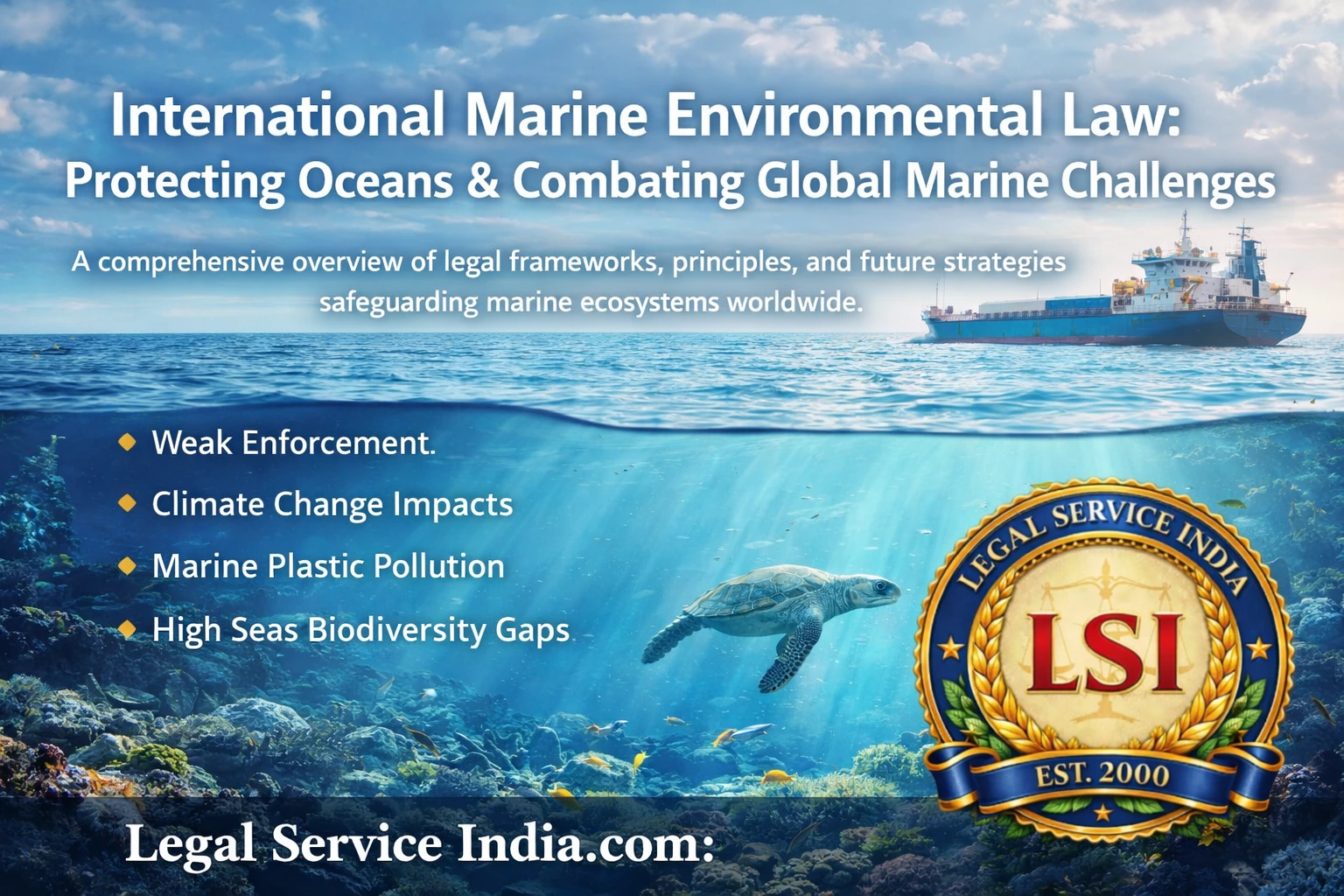
- Enforcement Deficits: Weak compliance mechanisms and jurisdictional limitations undermine effectiveness.
- Climate Change Impacts: Ocean warming, acidification, and sea-level rise pose existential threats not fully addressed within existing treaties.
- Marine Plastic Pollution: Escalating plastic waste demands a coordinated global legal response.
- Biodiversity Beyond National Jurisdiction (BBNJ): Governance gaps exist in areas beyond national jurisdiction, though recent negotiations signal progress toward a binding framework.
Summary of Key Challenges
| Challenge | Description | Impact |
|---|---|---|
| Enforcement Deficits | Weak compliance and jurisdictional limits | Reduces effectiveness of legal frameworks |
| Climate Change Impacts | Ocean warming, acidification, sea-level rise | Threatens marine ecosystems globally |
| Marine Plastic Pollution | Increasing plastic waste in oceans | Harms biodiversity and human health |
| Biodiversity Beyond National Jurisdiction (BBNJ) | Governance gaps in high seas areas | Weak protection of global marine biodiversity |
Future Perspectives And The Way Forward
The future of marine environmental protection under international law lies in strengthening both normative frameworks and enforcement mechanisms. Key developments and recommendations include:
- Operationalization of the BBNJ Agreement: The recently adopted High Seas Biodiversity Agreement (BBNJ) represents a landmark step toward conserving marine biodiversity in areas beyond national jurisdiction. Its effective implementation will be crucial.
- Integration of Climate and Ocean Governance: Greater coherence between ocean law and climate regimes, particularly the Paris Agreement, is essential to address climate-induced marine degradation.
- Adoption of a Global Plastics Treaty: Ongoing negotiations for a legally binding instrument on plastic pollution could significantly strengthen marine protection efforts.
- Technological and Scientific Advancements: Use of satellite monitoring, artificial intelligence, and data-sharing platforms can enhance compliance and enforcement.
- Strengthening Compliance Mechanisms: Introducing stricter monitoring, reporting, and accountability frameworks will improve state adherence to obligations.
- Capacity Building and Equity: Developing states require technical and financial support to meet international obligations, ensuring equitable participation in marine governance.
- Ecosystem-Based Management: Moving beyond sectoral approaches toward holistic, ecosystem-based management of marine resources.
Key Recommendations Overview
| Recommendation | Purpose | Expected Outcome |
|---|---|---|
| Operationalization of BBNJ Agreement | Implement high seas biodiversity protection | Improved conservation of marine biodiversity |
| Integration of Climate and Ocean Governance | Align ocean and climate frameworks | Better response to climate-driven marine issues |
| Global Plastics Treaty | Legally binding plastic pollution control | Reduced marine pollution |
| Technological Advancements | Enhance monitoring and enforcement | Improved compliance and transparency |
| Strengthening Compliance Mechanisms | Increase accountability | Better adherence to international obligations |
| Capacity Building and Equity | Support developing states | Inclusive global marine governance |
| Ecosystem-Based Management | Adopt holistic management approach | Sustainable use of marine resources |
Conclusion
International law has developed a comprehensive and dynamic framework for the protection of the marine environment, anchored in the United Nations Convention on the Law of the Sea and supported by a range of specialized agreements and institutions. However, the growing complexity of marine environmental challenges necessitates continuous evolution of legal norms and stronger enforcement mechanisms. A forward-looking, integrated, and cooperative approach is essential to safeguard the oceans for present and future generations.

