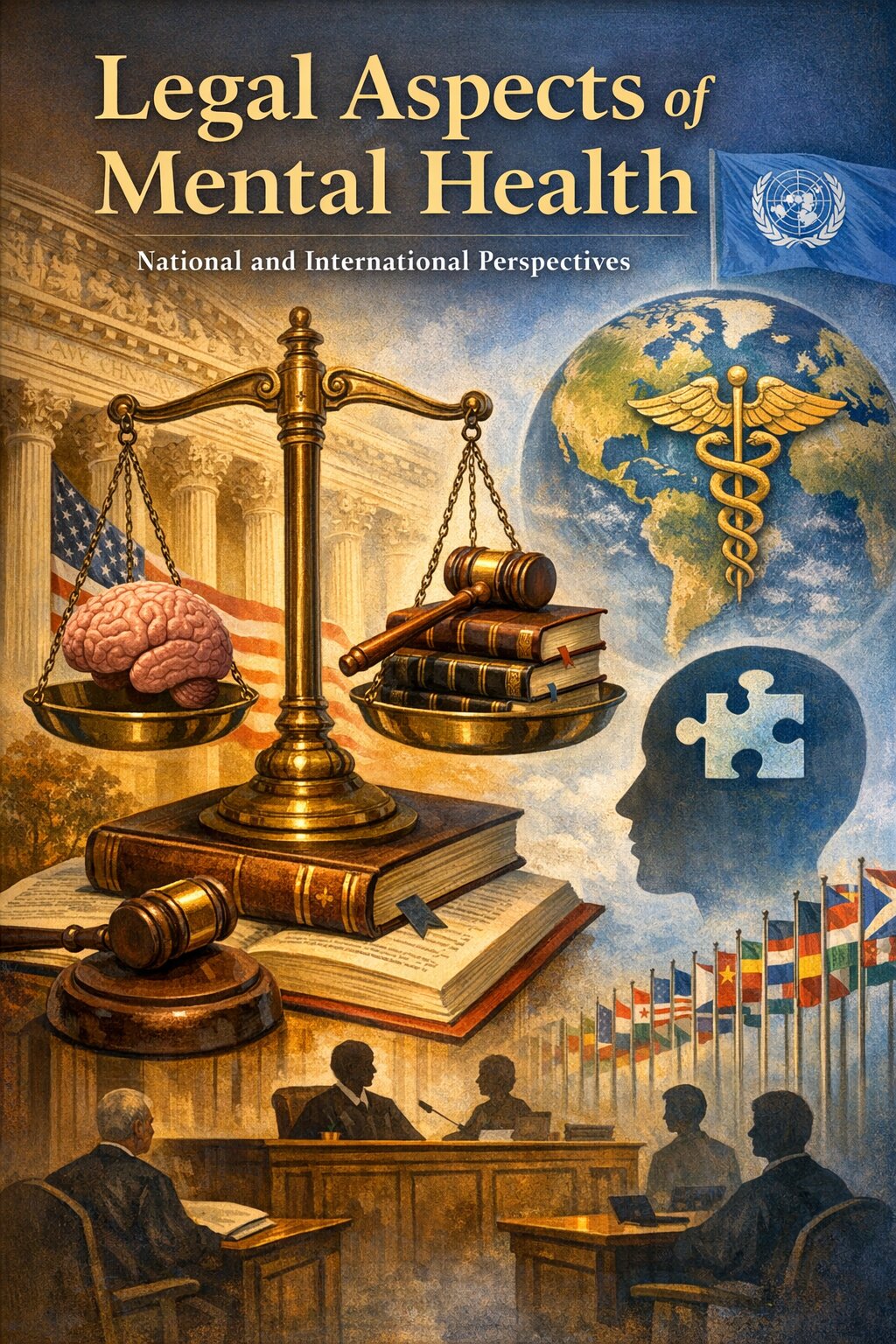
Mental health has become an increasingly important concern in modern legal and policy frameworks. Today, legal systems across the world recognize that mental health is an essential component of human dignity, well-being, and fundamental rights. Laws relating to mental health aim to protect individuals suffering from mental illness, ensure access to treatment, and prevent discrimination, abuse, and social exclusion. Both national legislation and international human rights instruments play a vital role in shaping the legal standards governing mental health care and protection.
Mental Health Law in the National Context
In India, the legal framework governing mental health has undergone significant transformation. Earlier legislation such as the Indian Lunacy Act, 1912 reflected colonial attitudes that viewed persons with mental illness mainly as subjects of custody and control rather than individuals with rights. This outdated approach was later replaced by the Mental Healthcare Act, 1987, which attempted to regulate psychiatric institutions and procedures for admission, detention, and discharge of patients. However, the Act was criticized for being institution-centric and for failing to adequately safeguard the rights and dignity of persons with mental illness.
A major shift occurred with the introduction of the Mental Healthcare Bill, 2013, which was later enacted as the Mental Healthcare Act, 2017. This law marked a transition toward a rights-based approach to mental health care. The Act recognizes the right of every person to access affordable and quality mental health services provided or funded by the government. It also guarantees rights such as informed consent, confidentiality, protection from inhuman treatment, and access to community-based mental health care.
The Act introduced progressive provisions such as advance directives, allowing individuals to state their treatment preferences in advance, and the appointment of a nominated representative to make decisions on behalf of a patient when they are unable to do so. It also established Central and State Mental Health Authorities to regulate mental health services and protect patient rights.
Another landmark reform established the legal presumption that individuals attempting suicide are acting under severe stress, prioritizing clinical care and rehabilitation over punitive measures. This shift effectively neutralized the application of the erstwhile Section 309 of the Indian Penal Code, transitioning the state’s response from criminal prosecution to compassionate intervention.
Mental Health and Human Rights
Mental health is closely linked to the protection of fundamental human rights. Persons with mental illness are entitled to the same rights and freedoms as other individuals, including the rights to dignity, equality, liberty, privacy, and access to health care. Unfortunately, individuals with mental illness have historically been subjected to stigma, discrimination, and institutional abuse.
Human rights principles require that mental health care be provided in a humane and respectful manner. Patients must be treated with dignity, and any restrictions on their liberty—such as involuntary admission—must be strictly regulated by law and subject to safeguards. The recognition of mental health as a human rights issue has encouraged governments to reform their laws and policies to ensure better protection for vulnerable individuals.
The United Nations Convention on the Rights of Persons with Disabilities
A major milestone in the international protection of mental health rights is the United Nations Convention on the Rights of Persons with Disabilities (CRPD), adopted in 2006. This convention recognizes persons with psychosocial and intellectual disabilities as holders of full human rights and fundamental freedoms.
The CRPD emphasizes principles such as equality before the law, non-discrimination, autonomy, and social inclusion. It obliges states to ensure access to health care, education, employment, and justice for persons with disabilities, including those with mental illnesses. The convention also promotes community-based care instead of long-term institutionalization and recognizes the legal capacity of persons with disabilities to make decisions about their own lives.
India ratified the CRPD in 2007, and many provisions of the Mental Healthcare Act, 2017 were enacted in line with the obligations under this convention.
Role of the Judiciary in Protecting the Rights of the Mentally Ill
The judiciary has played an important role in protecting the rights of persons with mental illness and ensuring humane treatment. The Supreme Court of India and various High Courts have intervened in cases involving poor conditions in mental health institutions and violations of patient rights.
Through judicial activism and public interest litigation, courts have emphasized that individuals with mental illness must be treated with dignity and provided proper medical care and rehabilitation. Judicial decisions have also highlighted the responsibility of the state to improve mental health facilities, prevent unlawful detention in psychiatric institutions, and ensure adequate protection of patients’ rights.
By interpreting constitutional rights such as the right to life and personal liberty under Article 21, the judiciary has expanded the legal protection available to persons suffering from mental illness.
Role of the National Human Rights Commission
The National Human Rights Commission of India (NHRC) has also played a significant role in safeguarding the rights of persons with mental illness. The Commission conducts inspections of mental hospitals and psychiatric institutions across the country to monitor conditions and ensure compliance with human rights standards.
The NHRC has issued several recommendations aimed at improving mental health care, including better infrastructure, adequate staffing, rehabilitation programs, and community-based treatment. It has also highlighted cases of abuse, neglect, and inhuman conditions in mental institutions and urged governments to take corrective action.
Through its reports, awareness campaigns, and policy recommendations, the Commission has helped bring mental health issues into the national human rights discourse.
Challenges in Implementation
Despite progressive laws and policies, several challenges remain in the effective implementation of mental health rights. Many regions continue to face shortages of trained mental health professionals, limited funding, and inadequate infrastructure. Social stigma surrounding mental illness also discourages individuals from seeking treatment or asserting their legal rights.
Moreover, rural and marginalized communities often lack access to mental health services. Addressing these challenges requires stronger government commitment, improved public awareness, and greater integration of mental health services into primary health care systems.
Judicial Evolution: Landmark Supreme Court Mandates on Mental Health
The Indian judiciary has elevated mental health to a core fundamental right under Article 21 (right to life and personal liberty), encompassing dignity, autonomy, and psychological well-being. Key precedents include:
Navtej Singh Johar v. Union of India (2018): Invoked the Mental Healthcare Act, 2017 to affirm that sexual orientation is not a mental disorder, rejecting discrimination and linking psychological integrity to human dignity.
Common Cause v. Union of India (2018): Upheld patient autonomy via advance directives and living wills; recognized attempted suicide as a manifestation of severe stress, effectively decriminalizing it.
Accused ‘X’ v. State of Maharashtra (2019): Established mental illness as a mitigating factor in sentencing, including against the death penalty, prioritizing humane treatment.
Gaurav Kumar Bansal v. Union of India (2017 onwards): Directed reforms in mental health institutions, mandating a shift from custodial asylums to community-based rehabilitation and halfway homes.
These rulings built a foundation for viewing mental well-being as inseparable from dignified life, compelling state action beyond mere legislation.
The pivotal recent milestone is Sukdeb Saha v. State of Andhra Pradesh (2025 INSC 893, 25 July 2025), where the Supreme Court explicitly declared mental health an integral component of Article 21. Triggered by a NEET aspirant’s tragic death amid academic pressure, the judgment transferred the investigation to the CBI and issued binding “Saha Guidelines” for all educational institutions, coaching centres, and hostels nationwide.
These include mandatory mental health policies (aligned with UMMEED/MANODARPAN), access to qualified counsellors, staff training, suicide prevention measures, ban on harmful practices (e.g., performance-based segregation), district-level monitoring committees, and state/UT compliance reporting.
Building on this, Amit Kumar v. Union of India (2026 INSC 62, 15 January 2026) addressed student suicides in higher education institutions (HEIs). It mandated immediate FIR registration for campus suicides/unnatural deaths, round-the-clock medical/mental health access, qualified professionals (avoiding misuse of “counsellor” titles), centralized data collection, institutional accountability, and monthly action-taken reports (ATRs) to authorities. The Court emphasized systemic failures, institutional apathy, and the need for a National Task Force-developed model protocols (e.g., suicide prevention/postvention frameworks), with ongoing judicial oversight to curb tokenistic compliance.
These judgments mark a shift from statutory rights under the 2017 Act to enforceable constitutional guarantees, focusing on prevention, accountability, and rehabilitative care—particularly in high-pressure educational settings.
India’s Mental Health Crisis: Rising Burden and Systemic Gaps
The Escalating Burden
India is facing a silent epidemic. Recent data indicates that 10–15% of adults suffer from diagnosable mental disorders, with a lifetime prevalence of approximately 13.7%. This translates to over 150 million people grappling with depression, anxiety, and stress-related conditions. The crisis is particularly acute in urban centres, fuelled by escalating societal pressures and the lingering psychological aftershocks of the pandemic. Beyond the human toll, the economic implications are staggering, with projected losses in the trillions, underscored by a distressing rise in suicide rates.
Legislative Progress vs. Structural Deficits
While the Mental Healthcare Act (2017), the National Mental Health Programme (NMHP), and the Tele-MANAS digital helpline represent significant policy strides, the physical infrastructure remains archaic and overstretched. India suffers from a crippling shortage of specialists, with only 0.75 psychiatrists per 100,000 people—a fraction of the WHO-recommended ratio. This scarcity extends to psychologists and paramedics, resulting in a staggering treatment gap of 80–92%. In the absence of accessible, affordable, and evidence-based care, many vulnerable individuals are driven toward faith healers or unregulated practitioners, further entrenched by persistent social stigma.
The Path Forward: Funding, Education, and Enforcement Mechanisms
To effectively bridge the implementation gap and translate progressive legislation and judicial declarations into tangible outcomes, India must prioritize multi-pronged reforms. First, substantially increase fiscal allocations—earmarking a dedicated percentage (at least 5-10% of the health budget) for mental health services, with a focus on community-based infrastructure, Tele-MANAS expansion, and integration into primary healthcare. Second, the National Medical Commission (NMC) should reform the MBBS curriculum by establishing mental health as a fully independent, mandatory subject with dedicated examinations, ensuring every graduate is equipped for early identification and primary intervention in psychiatric issues.
Third, launch nationwide destigmatization campaigns through media, schools, workplaces, and community programs to normalize seeking help, reduce reliance on faith healers or quacks, and encourage early treatment. Critically, enforcement must be strengthened through mechanisms tied to recent Supreme Court directives. Building on the Sukdeb Saha v. State of Andhra Pradesh (2025 INSC 893) ruling—which constitutionalized mental health under Article 21 and issued binding “Saha Guidelines” for educational institutions—the government should establish district-level monitoring committees (as directed) to oversee compliance in schools, colleges, coaching centres, and hostels, with mandatory annual reporting and penalties for non-adherence.
Complementing this, the Amit Kumar v. Union of India (2026 INSC 62) judgment (15 January 2026) mandates immediate police reporting of student suicides/unnatural deaths (on or off-campus), round-the-clock medical access in residential higher education institutions (HEIs), qualified mental health professionals (avoiding misuse of “counsellor” titles), centralized suicide data collection, and institutional accountability via the National Task Force’s protocols. States/UTs and HEIs must submit monthly action-taken reports (ATRs) to relevant authorities, with judicial oversight possible through contempt proceedings for violations.
These enforcement layers—district monitoring, mandatory reporting, centralized data, and periodic judicial review—provide the accountability needed to prevent symbolic reforms. Combined with increased funding, curriculum overhaul, and anti-stigma efforts, they can shift mental healthcare from reactive crisis management to proactive, equitable, and rights-based public health priority.
Conclusion
While India has successfully transitioned from a colonial, custodial model of mental health to a progressive, rights-based framework anchored by the Mental Healthcare Act of 2017 and international standards like the UNCRPD, a profound “implementation gap” persists. The shift from criminalizing distress to prioritizing clinical care—exemplified by the neutralization of Section 309 IPC—marks a significant moral and legal victory; however, these legislative triumphs are undermined by a staggering 80–92% treatment gap and a critical shortage of specialists.
Ultimately, the realization of mental health as a fundamental facet of the Right to Life under Article 21 depends on moving beyond paper-based reforms. Bridging this chasm requires a concerted effort to scale up fiscal allocations, modernize medical education through the NMC, and dismantle the pervasive social stigma that still forces millions to the fringes of the healthcare system.