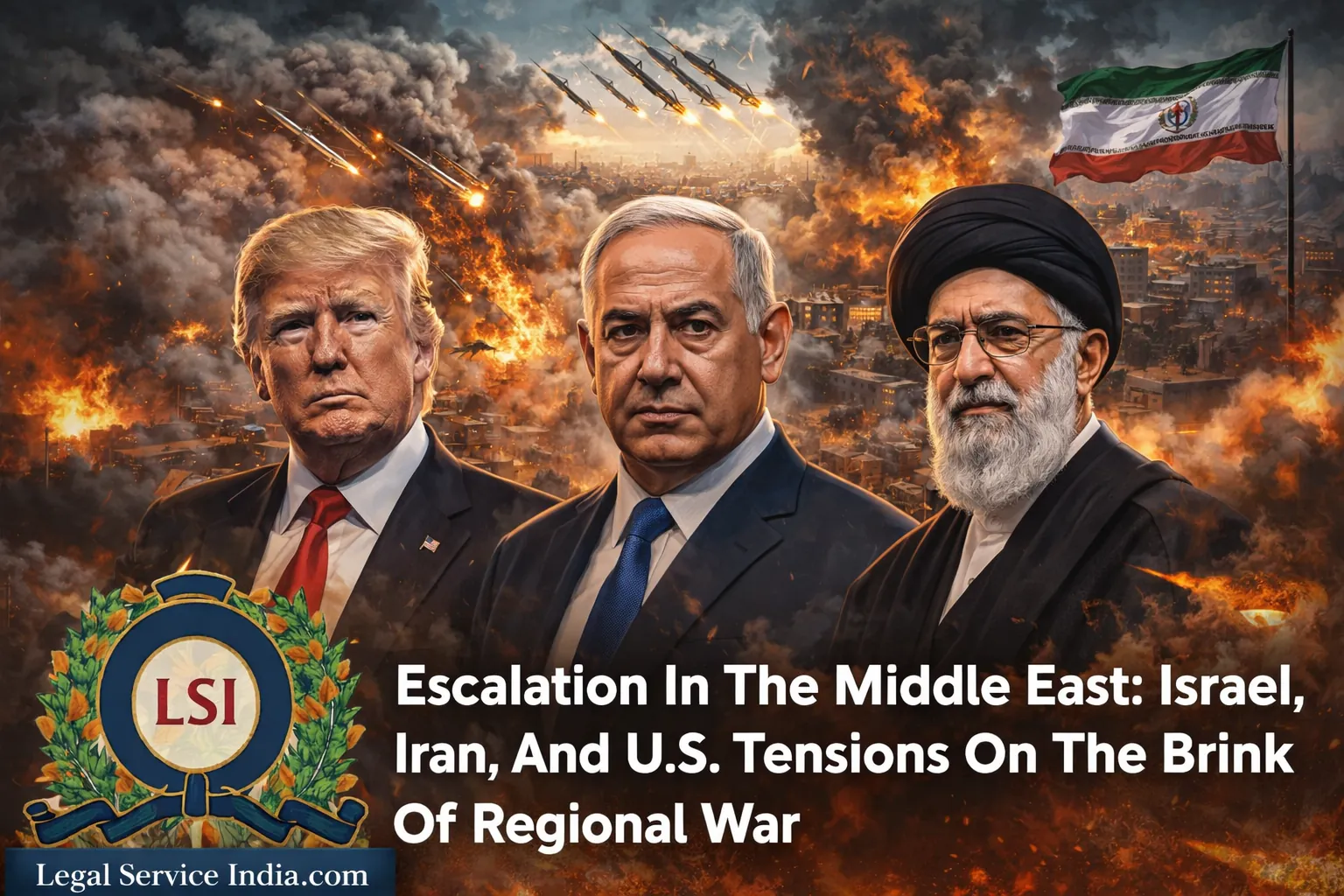
The Latest Escalation In The Middle East
The latest escalation in the Middle East has once again pushed the world to the brink of a wider regional conflict. Recent statements by Israeli Prime Minister Benjamin Netanyahu and U.S. President Donald Trump, along with growing tensions between Iran and Western powers, have reignited debate about the true origins of this war and the long historical forces that led to it.
Many analysts argue that what is unfolding today is not a sudden crisis but the culmination of decades of geopolitical maneuvering, ideological battles, and strategic ambitions that have shaped the Middle East for generations.
Netanyahu’s Long-Standing Vision
The current confrontation gained attention after Prime Minister Benjamin Netanyahu reportedly stated that Israel’s bombing campaign against Iran is being carried out with the support of the United States, President Donald Trump, and the U.S. military.
According to his remarks, the cooperation between Israel and the United States has enabled him to pursue a goal he had long desired — a strategic confrontation with Iran.
For critics of the war, this statement reinforces the belief that the conflict has been part of Netanyahu’s strategic vision for decades. Analysts point to ideological doctrines developed in the 1990s that proposed a more aggressive regional strategy for Israel.
The “Clean Break” Doctrine
One such document, often referred to as the “Clean Break” doctrine from 1996, advocated reshaping the Middle East through strategic pressure and confrontation with adversarial states. Critics argue that this approach helped lay the groundwork for continuous instability and military interventions across the region.
For them, the present conflict represents the culmination of a strategic project aimed at weakening regional rivals and ensuring Israeli dominance in the Middle East.
The United States And The Expanding War
The role of the United States has been central to the unfolding crisis. Washington’s military and political support for Israel has intensified the scale of the confrontation with Iran.
At the same time, President Donald Trump has publicly expressed interest in negotiating with Iranian leaders even as military strikes and covert operations have escalated.
Trump reportedly said that Iran “wants to talk” and that he would be willing to engage in discussions. However, many observers believe Iran has little incentive to trust diplomatic overtures after repeated breakdowns in negotiations and the use of diplomacy as a prelude to military action.
This contradiction — calls for negotiation alongside escalating military pressure — has fueled skepticism about whether diplomacy is genuinely being pursued or merely used as a strategic tactic.
A Pattern Of Intervention Across The Middle East
Critics of current policy argue that the war with Iran is part of a broader pattern of interventions across the Middle East and North Africa.
Over the past several decades, conflicts have erupted in multiple countries including:
- Libya
- Sudan
- Somalia
- Palestine
- Lebanon
- Syria
- Iraq
- Yemen
- Iran
These wars and interventions have resulted in massive human and economic costs. Millions of lives have been lost, and entire regions have been destabilized. Trillions of dollars have been spent on military operations while political solutions have remained elusive.
The cumulative result has been a region marked by prolonged instability, humanitarian crises, and shifting alliances.
Domestic Opposition In The United States
Despite the aggressive posture abroad, public opinion in the United States has increasingly turned against prolonged military conflicts.
Many Americans are skeptical of new wars in the Middle East, especially after the experiences of Iraq and Afghanistan. Polling data in recent years has suggested growing sympathy for Palestinian civilians and widespread fatigue with endless military interventions.
Critics also accuse political leaders of campaigning on promises to avoid new wars while later supporting policies that expand military engagements.
The Question Of Iran’s Future
In Washington, political figures such as Senator Lindsey Graham have argued that Iran must no longer remain a major sponsor of terrorism and that the Iranian people should determine their own political future.
However, critics point out that discussions about Iran’s future often lack a clear plan for what would follow a regime collapse. The absence of a defined strategy raises fears that Iran could experience instability similar to what occurred in Iraq after the 2003 invasion.
Some policymakers reject the idea that external powers would be responsible for rebuilding Iran if its government falls, arguing that the Iranian people themselves must decide their political system.
The Historical Roots Of U.S.–Iran Tensions
The deep mistrust between Iran and the United States dates back more than seven decades.
The 1953 Coup
In 1953, a joint operation by the CIA and Britain’s intelligence service MI6 overthrew Iran’s democratically elected Prime Minister Mohammad Mossadegh. Mossadegh had nationalized Iran’s oil industry, arguing that the country’s resources should belong to its people rather than foreign companies.
The coup installed the Shah of Iran, whose authoritarian rule was backed by the United States. His government relied heavily on a powerful security apparatus and faced widespread domestic opposition.
The 1979 Iranian Revolution
In 1979, the Iranian Revolution overthrew the Shah and replaced him with an Islamic Republic led by clerical authorities. The revolution transformed Iran into a fierce critic of American influence in the region.
The Iran–Iraq War And Continued Hostility
Soon after the revolution, the Iran–Iraq War erupted in 1980, when Iraqi leader Saddam Hussein invaded Iran. The conflict lasted eight years and resulted in hundreds of thousands of deaths.
During that period, the United States supported Iraq as a counterweight to revolutionary Iran. Ironically, Saddam Hussein later became a primary adversary of Washington, culminating in the 2003 U.S. invasion of Iraq.
Since the end of that war, tensions between the United States and Iran have persisted through sanctions, covert operations, cyberattacks, and assassinations of key figures.
The Nuclear Dispute And The JCPOA
A major diplomatic breakthrough occurred in 2015 with the signing of the Joint Comprehensive Plan of Action (JCPOA).
| Agreement | Participants | Main Objective |
|---|---|---|
| Joint Comprehensive Plan Of Action (JCPOA) | United States, United Kingdom, France, Russia, China, Germany, And Iran | Limit Iran’s nuclear program in exchange for lifting international sanctions |
The agreement between Iran and the P5+1 powers — the United States, United Kingdom, France, Russia, China, and Germany — imposed strict limits on Iran’s nuclear program. In return, international sanctions were supposed to be lifted.
The deal placed Iran’s nuclear facilities under extensive monitoring by the International Atomic Energy Agency (IAEA).
However, the agreement faced strong opposition from Israeli leadership. In 2018, the Trump administration withdrew from the JCPOA and reinstated sanctions on Iran, a move that dramatically increased tensions.
Since then, relations have deteriorated further, with renewed sanctions, covert operations, and attacks on nuclear facilities.
Diplomacy And Distrust
Repeated attempts at negotiation between Iran and Western powers have often ended in failure. Critics argue that diplomatic talks have sometimes been undermined by parallel military operations or political pressure. This has deepened Iranian skepticism toward negotiations and made diplomatic breakthroughs increasingly difficult. Even when negotiations resumed with mediators such as Oman, trust remained fragile due to previous breakdowns.
Key Challenges To Diplomatic Progress
- Repeated breakdowns in negotiations between Iran and Western powers.
- Parallel military operations undermining diplomatic efforts.
- Political pressure complicating peace talks.
- Growing Iranian distrust toward Western diplomatic initiatives.
- Fragile trust even when negotiations resume through mediators like Oman.
The Role Of Global Alliances
At international forums such as the United Nations Security Council, reactions to the conflict have been sharply divided. Some countries aligned with the United States have criticized Iran, while others have warned that escalating military actions could trigger a wider regional war. Critics claim that many governments hosting U.S. military bases tend to support Washington’s positions, raising questions about the independence of their foreign policy decisions.
Global Political Positions
| Position | Countries / Groups | Main Concern |
|---|---|---|
| Supportive Of U.S. Position | Countries hosting U.S. military bases | Criticism of Iran and support for U.S. strategy |
| Cautious Or Critical | Other international actors | Warning that escalation could trigger regional war |
| Neutral / Divided | Members within global institutions | Calls for restraint and diplomatic solutions |
Economic And Regional Consequences
The conflict is also beginning to affect countries beyond the immediate battlefield. Reports of missile strikes and drone attacks across the Gulf region have raised fears about economic disruption, especially in global trade hubs such as Dubai. Such attacks threaten tourism, investment, and financial stability in cities that depend heavily on their reputation for safety and prosperity.
For Gulf states that host American military bases, the war has created a dangerous dilemma: their alliances may also make them targets in a broader confrontation.
Potential Economic Impacts
- Disruption of regional trade and commerce.
- Decline in tourism and international investment.
- Financial instability in major economic hubs.
- Increased security risks for Gulf states hosting foreign military bases.
A Changing Global Order
Some analysts argue that the war highlights a deeper transformation in global politics. While the United States continues to invest heavily in military operations, other countries — particularly China — are focusing on technological advancement, infrastructure, and economic development.
This contrast has fueled debate about whether the pursuit of global military dominance is weakening America’s long-term competitiveness. At the same time, many critics believe that constant warfare drains national resources and distracts from domestic priorities such as infrastructure, economic stability, and technological innovation.
Contrasting Global Strategies
| Strategic Focus | Countries Emphasizing It | Key Priorities |
|---|---|---|
| Military Expansion | United States | Global security operations and defense spending |
| Economic & Technological Growth | China and emerging economies | Infrastructure, technology, and development |
The Uncertain Future
As tensions continue to escalate, the world faces a critical question: Will this conflict expand into a broader regional war, or will diplomacy eventually bring the sides back from the brink?
The answer remains uncertain. What is clear, however, is that the roots of the crisis run deep — shaped by decades of intervention, ideological rivalry, and geopolitical ambition.
Whether the current conflict leads to greater instability or forces a renewed push for diplomacy may determine the future of the Middle East and the global balance of power.
- The Iran–Israel Conflict of 2026: How the Middle East Reached the Brink of War
- How Ali Khamenei Was Killed in His Tehran Compound: Verified Facts and Global Consequences
- Iran’s Power Struggle After Khamenei: What May Happen Next in Tehran
- Ayatollah Khamenei Assassination: How Iran’s Power Structure, Middle East Stability and Global Order Could Change