Left Wing Extremism (LWE), also known as Naxalism or Maoism, refers to insurgent activities by Maoist groups in India, primarily driven by ideological opposition to the state and socioeconomic grievances. These groups operate in the “Red Corridor,” a belt stretching across central, eastern, and southern India, encompassing parts of states like Chhattisgarh, Jharkhand, Odisha, Bihar, Maharashtra, Andhra Pradesh, Telangana, Madhya Pradesh, West Bengal, and Uttar Pradesh. As of 2025, LWE violence has declined significantly due to government efforts, with only 11 districts categorized as most affected, down from 126 in 2018. However, sporadic attacks on security forces, government officials, and infrastructure persist, posing risks to civilians, including travellers.
While LWE incidents rarely target foreigners directly, the unpredictable nature of the conflict— involving ambushes, improvised explosive devices (IEDs), extortion, and kidnappings—makes travel in these areas hazardous. Rural and forested regions are particularly vulnerable, with limited infrastructure, poor connectivity, and restricted access. This article provides an exhaustive guide to precautions based on official travel advisories from governments like the US, UK, and Canada, as well as insights from security reports and traveller experiences. It covers planning, en-route measures, on-site safety, emergency responses, and considerations for vulnerable groups. Always prioritize official advisories and consult local authorities before proceeding.
Understanding the Risks in LWE Affected Areas
LWE groups, such as the Communist Party of India (Maoist), target symbols of state authority, including police, paramilitary forces, and development projects. Attacks often involve IEDs planted on roads, gunfire exchanges, and sabotage of railways or communication towers. In 2024-2025, incidents were concentrated in core areas like Bastar (Chhattisgarh), Giridih (Jharkhand), and Malkangiri (Odisha), with occasional spillover into bordering districts.
Key risks for travellers include:
Collateral Damage: Being caught in crossfire or explosions during operations against insurgents.
Kidnapping and Extortion: Rare for tourists but possible in remote areas; insurgents may demand ransom or use captives for leverage.
Restricted Movement: Security checkpoints, curfews, and roadblocks can disrupt plans; unexploded ordnance and landmines pose hidden dangers near borders or conflict zones.
Secondary Threats: Poor healthcare access, natural hazards (e.g., flooding in monsoons), wildlife encounters in forests, and opportunistic crimes like theft in underdeveloped regions.
Civil Unrest: Protests or bandhs (strikes) called by insurgents can halt transport and services.
Foreign governments classify these areas as high-risk. The US State Department designates parts of central and east India as Level 4 (“Do Not Travel”) due to terrorism. The UK FCDO advises against all but essential travel to affected pockets, citing Naxalite activities. Canadian advisories recommend avoiding non-essential travel to states like Assam and Manipur, with outright avoidance of Jammu and Kashmir and border areas.
Pre-Travel Precautions: Planning and Preparation
Thorough preparation is essential to minimize risks. Treat LWE areas as sensitive zones requiring extra diligence.
Research and Assess Risks
Consult Official Advisories: Review updates from your home country’s foreign affairs department (e.g., US State Department, UK FCDO, Travel.gc.ca). Check for changes in security classifications; for instance, US employees need special authorization for most LWE states.
Identify Affected Districts: Use resources like the Indian Ministry of Home Affairs’ list of LWE districts (e.g., 70 under Security Related Expenditure Scheme as of 2021, updated periodically). Avoid “most affected” districts like Bastar, Bijapur, and Dantewada in Chhattisgarh unless essential.
Monitor Local News: Follow reliable sources such as The Times of India, BBC, or Press Information Bureau for real-time updates on incidents. Apps like InShorts or government alerts can help.
Enroll in Traveler Programs: Register with programs like the US STEP (Smart Traveler Enrollment Program) to receive alerts and facilitate emergency assistance.
Obtain Necessary Permissions and Documentation
Permits for Restricted Areas: Many LWE districts require inner line permits (ILPs) or special permissions for foreigners, especially in northeastern states or tribal belts. Apply via Indian embassies or online portals like e-FRRO.
Carry Identification: Keep multiple copies of your passport, visa, travel itinerary, and emergency contacts. Store digital versions securely (e.g., via cloud services).
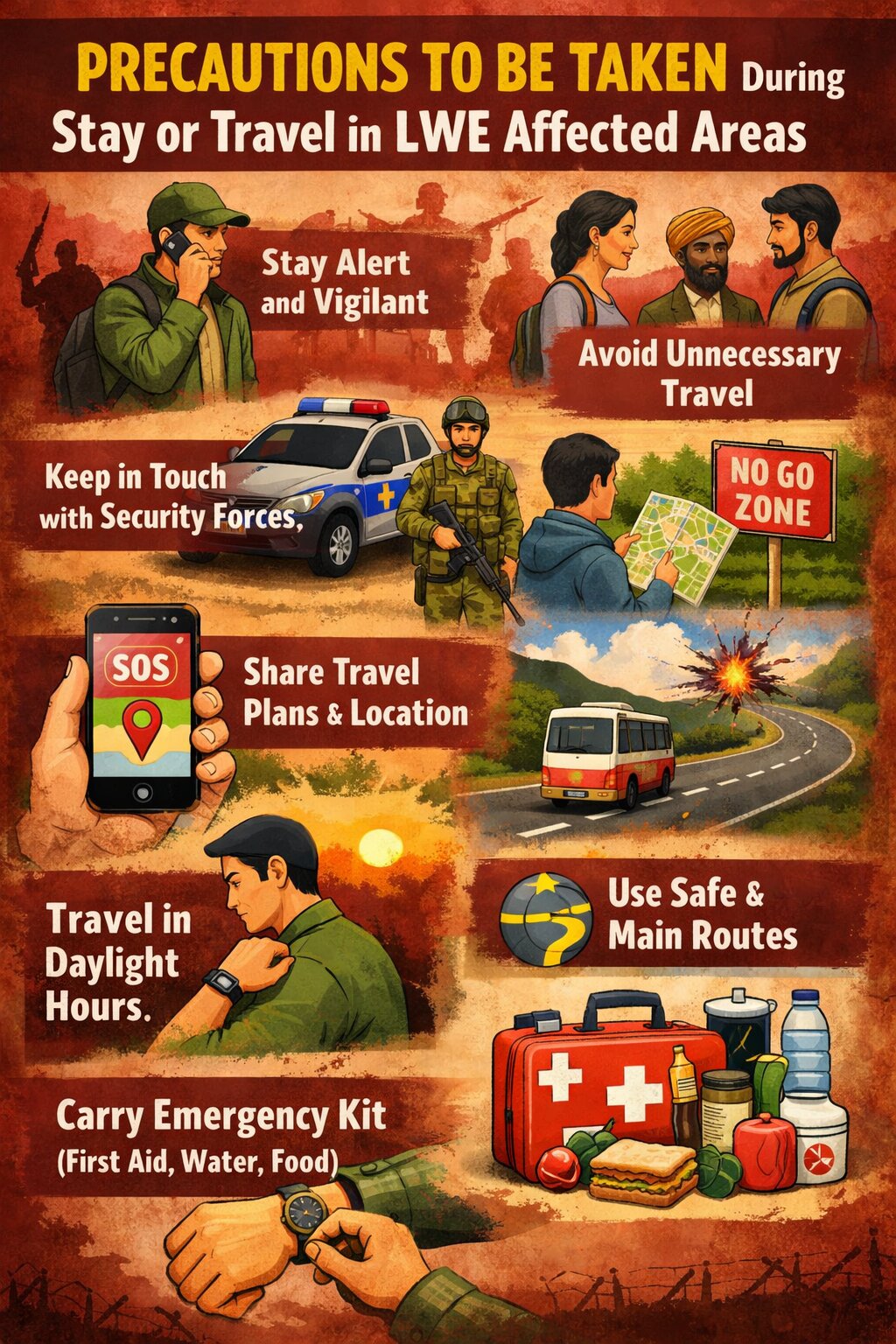
Insurance and Health Prep: Secure comprehensive travel insurance covering medical evacuation, as rural hospitals are under-equipped. Get vaccinations for hepatitis, typhoid, and rabies; carry anti-malarials for forested areas. Pack a first-aid kit with essentials like bandages, antiseptics, and medications for diarrhoea.
Choose Safe Itineraries and Providers
Opt for Guided Tours: Use reputable operators affiliated with the Ministry of Tourism or associations like IATO (Indian Association of Tour Operators). Avoid solo exploration in rural interiors.
Avoid High-Risk Periods: Steer clear during monsoons (June-October) when floods exacerbate isolation, or around elections/festivals when tensions rise.
Budget for Contingencies: Plan for delays due to roadblocks; carry extra cash (ATMs are scarce) and portable chargers for poor network coverage.
Precautions During Travel: Transportation and Transit
Travel in LWE areas often involves remote roads and limited public transport, increasing vulnerability.
Selecting Safe Modes of Transport
Road Travel: Prefer daytime journeys on major highways; avoid night drives due to poor lighting and higher ambush risks. Use app-based cabs (Uber/Ola) or pre-booked vehicles from trusted hotels rather than street hires. In Chhattisgarh, for example, security convoys may be available for certain routes.
Rail and Air: Trains are safer but check for sabotage history in areas like Jharkhand. Opt for AC coaches and avoid accepting food/drinks from strangers to prevent spiking. Fly into major hubs like Raipur or Ranchi, then use escorted ground transport.
Public Transport: Buses in rural areas can be overcrowded; choose government-operated ones and sit near the driver. Avoid hitchhiking.
En-Route Safety Measures
Security Checkpoints: Expect frequent stops by police or CRPF (Central Reserve Police Force); cooperate fully, present documents, and don’t argue. These are for safety, not harassment.
Stay Alert: Monitor surroundings for unusual activity (e.g., roadblocks or crowds). Avoid discussing politics or insurgency with locals or drivers, as it could invite suspicion.
Communication: Share your location via apps like WhatsApp or Google Maps with trusted contacts. Carry a satellite phone if venturing deep into forests, as mobile signals are weak (note: unauthorized satellite devices are illegal).
Precautions During Stay: Daily Habits and Accommodation
Once in the area, focus on low-profile behavior and secure lodging.
Choosing Accommodation
Stay in Reputable Places: Opt for branded hotels (4-5 stars) or government guesthouses in urban centres. Avoid remote homestays unless vetted. In Bastar, for instance, tourist complexes like those in Jagdalpur are safer.
Security Features: Choose properties with CCTV, guarded entrances, and emergency protocols. Confirm if they have ties to local police.
Daily Routines and Behavior
Avoid Isolation: Travel in groups, especially after dark. Stick to well-lit, populated areas; don’t venture into forests or villages alone.
Cultural Sensitivity: Dress modestly (long sleeves, pants) to blend in; respect local customs and avoid photographing sensitive sites like military installations.
Health and Hygiene: Drink bottled water, avoid street food in rural spots to prevent illnesses like “Delhi belly.” Carry hand sanitizers and mosquito repellents.
Financial Caution: Use cards sparingly due to skimming risks; withdraw from bank ATMs. Beware of scams like fake guides or overcharging.
Wildlife and Nature: In forested areas, hire local guides for treks; watch for animals like elephants or tigers. Learn basic self-defence and carry a whistle or pepper spray (check legality).
Emergency Responses and Contacts
Immediate Actions: If caught in unrest, seek shelter, avoid crowds, and contact your embassy. For medical emergencies, head to the nearest district hospital.
Key Contacts: Police (100/112), Ambulance (108), Fire (101). US Embassy (New Delhi: +91-11-2419-8000), UK High Commission (+91-11-2419-2100), Canadian High Commission (+91-11-4178-2000).
Evacuation Plans: Have a contingency with alternate routes and extraction options via insurance providers.
Special Considerations for Vulnerable Groups
Women Travelers: Avoid solo travel; use women-only compartments on trains. Report harassment immediately; apps like Safetipin can map safe zones.
Solo Travelers: Join group tours; inform hotels of your plans daily. Follow blogs like those on Chhattisgarh safety for tailored tips.
Journalists and Researchers: Obtain media permits; avoid sensitive topics. LWE groups may view outsiders as spies.
LGBT+ Travelers: Exercise discretion; public affection can attract harassment.
Conclusion
Traveling or staying in LWE affected areas demands heightened vigilance, respect for local dynamics, and adherence to advisories. While the government’s multi-pronged strategy— including security deployments, infrastructure development, and civic programs— has reduced threats, personal safety hinges on proactive measures. If risks outweigh benefits, consider safer alternatives like urban India or non-affected rural spots. Safe travels require balancing adventure with caution— always err on the side of prudence.