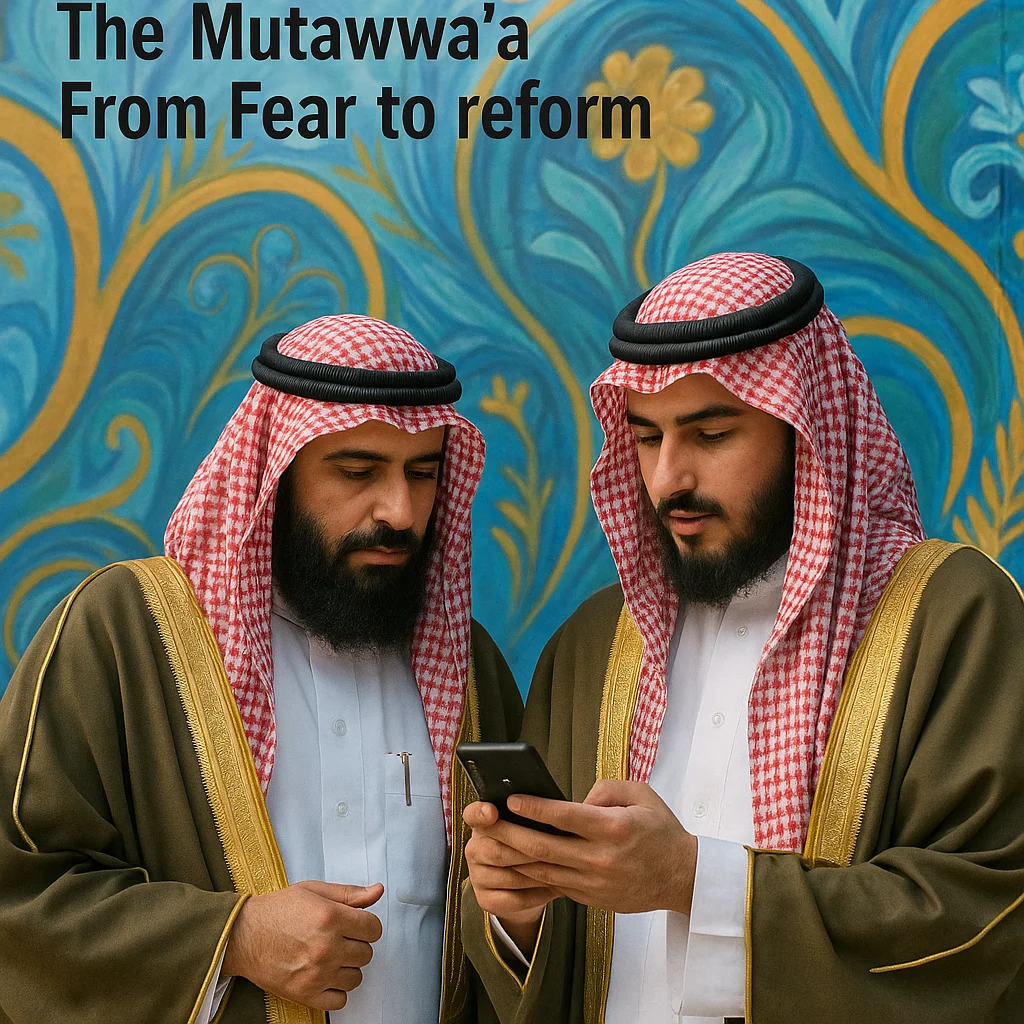
The Mutawwa’a (officially the Commission for the Promotion of Virtue and Prevention of Vice, or CPVPV) were once the most visible and feared symbol of strict religious rule in Saudi Arabia. Their job was to ensure everyone followed strict Islamic rules in public spaces.
The Mutawwa’a (religious police) originated in 1926 when Abdulaziz Al Saud united the kingdom. Formally established in 1940, the Committee for Promotion of Virtue and Prevention of Vice grew powerful after the 1979 Grand Mosque siege, reaching peak authority in the 1980s-2000s.
The Mutawwa’a once effectively curbed public alcohol consumption, reduced open immorality, protected prayer times by closing shops, preserved gender segregation in chaotic early decades, and reinforced Islamic identity during rapid oil-era social change, earning genuine respect from conservative families who saw them as guardians of faith and social order.
The Mutawwa’a often abused power, publicly humiliating and beating people, chasing women for minor dress issues, blocking girls from escaping a 2002 school fire (15 died), harassing expatriates, closing businesses arbitrarily, and fostering fear and resentment, damaging Islam’s image globally while fuelling underground vice.
The Old Days of Fear and Force
For years, the word “Mutawwa’a” meant enforcement. They were seen everywhere—in streets, malls, and markets—checking that:
- Women wore full, proper covering.
- Men and women stayed strictly separated in public places.
- Shops closed immediately during prayer times.
- Nobody consumed alcohol or listened to forbidden music.
They had real power. They could stop, question, and even arrest people. A tragic example of their extreme power occurred in 2002 when they prevented schoolgirls from escaping a burning school in Mecca because the girls were not properly covered, a disaster that caused global outrage. Just ten years ago, an officer might still chase a man for wearing shorts or force a woman into a van over visible hair or nail polish.
Everything Changed in 2016
The major shift began in 2016 under Crown Prince Mohammed bin Salman, as part of his sweeping national transformation plan, Vision 2030. A new royal order immediately stripped the religious police of their core powers:
- They can NO longer arrest anyone.
- They can NO longer chase or question people.
- They must now only offer polite advice (speaking “kindly and gently”).
- If they witness a crime, they must report it to the regular police—they cannot act themselves.
This change turned the Mutawwa’a from powerful enforcers into simple advisors.
The New Role: Quiet Guidance
Today, the Mutawwa’a are rarely seen in public. Their role has drastically shrunk and shifted towards educational and community work, matching the country’s move toward a more open society.
This shift happened alongside new social freedoms: women were allowed to drive (2018), cinemas reopened, music concerts became common, and men and women can now mix in restaurants and events.
The CPVPV now focuses on:
- Educational Campaigns: Their work includes public programs, like the Ramadan 2025 efforts that reached millions, encouraging people to fast and pray.
- Advisory Support: They offer advice online and at Hajj centres, helping pilgrims and visitors understand appropriate behavior.
- Community Work: They focus on creating educational materials and joining community discussions to promote moderate values, rather than patrolling the streets.
Conclusion
By late 2025, the story of the Mutawwa’a is the story of Saudi Arabia’s rapid change. They have moved from being a feared police force to a quiet, spiritual guide. The old days of public fear and religious control are mostly gone, cementing the country’s direction toward modernization under Vision 2030.