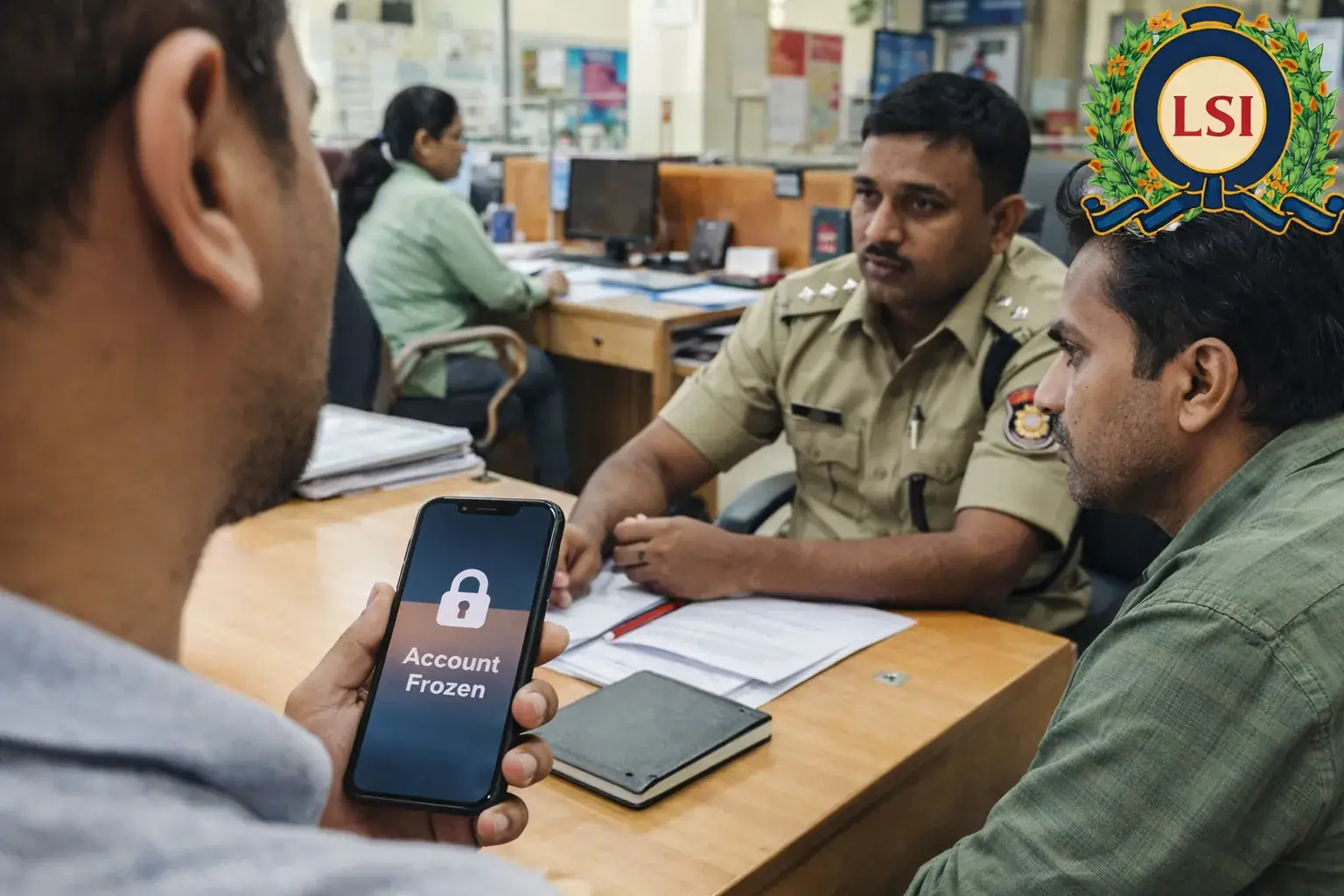
Rise Of Cybercrime And Indiscriminate Bank Account Freezing
The surge in cybercrime has led to a parallel rise in a troubling trend: the indiscriminate freezing of bank accounts. Often, innocent individuals find their funds locked simply because a “tainted” amount—sometimes negligible—has entered their account through a complex fraud trail. While the police aim to track illicit gains, the lack of precision often leaves citizens remediless, especially when investigations span different states, creating a “jurisdictional impasse” where local courts feel unauthorized to intervene.
The Legal Framework: From CrPC To BNSS
The power to freeze accounts, once governed by Section 102 of the CrPC, now resides in Section 106 of the Bharatiya Nagarik Suraksha Sanhita (BNSS), 2023.
While the Supreme Court in State of Maharashtra v. Tapas D. Neogy (1999) affirmed that bank accounts are “property” liable for seizure, it also established that this power is not absolute. It must be balanced against constitutional rights and strict procedural adherence.
| Earlier Provision | Current Provision | Key Principle |
|---|---|---|
| Section 102, CrPC | Section 106, BNSS, 2023 | Bank accounts are “property” liable for seizure, but power is not absolute |
Key Safeguards And Judicial Mandates
To prevent the misuse of Section 106, constitutional courts have emphasized several critical checks:
- Mandatory Reporting: As established in T. Subbulakshmi v. Commissioner of Police (2013), freezing an account without informing the jurisdictional Magistrate is illegal. This reporting is a mandatory safeguard, not a discretionary choice for the police.
- Property Nexus: There must be a direct link between the account and the alleged offense. Freezing an entire account for a small suspicious transaction is often viewed as disproportionate.
- Judicial Supervision: The Magistrate is not a silent spectator. They possess the inherent authority to scrutinize the legality of a freeze and, where procedural flaws exist, order defreezing.
Preserving The Rule Of Law
Ultimately, Section 106 BNSS must be interpreted as a shield against arbitrary state action rather than a sword for procedural harassment. Recognizing the Magistrate’s jurisdiction to intervene is not an expansion of judicial power, but a faithful application of statutory safeguards. Fairness dictates that an innocent person’s right to their property should not be a casualty of investigative complexity.
Summary: Application Of Section 106 BNSS
The shift to BNSS does not grant police a blank check. Section 106 must be applied with surgical precision and prompt judicial accountability to ensure the hunt for cybercriminals does not result in the financial paralysis of innocent citizens.
Written By: Adv.Hinesh Mamta Navratan Rathod
Advocate |Writer- Legal Article | Active in Politics |Human Rights Activist | Social Worker |
Ph no: 8652544618, Email id [email protected]