





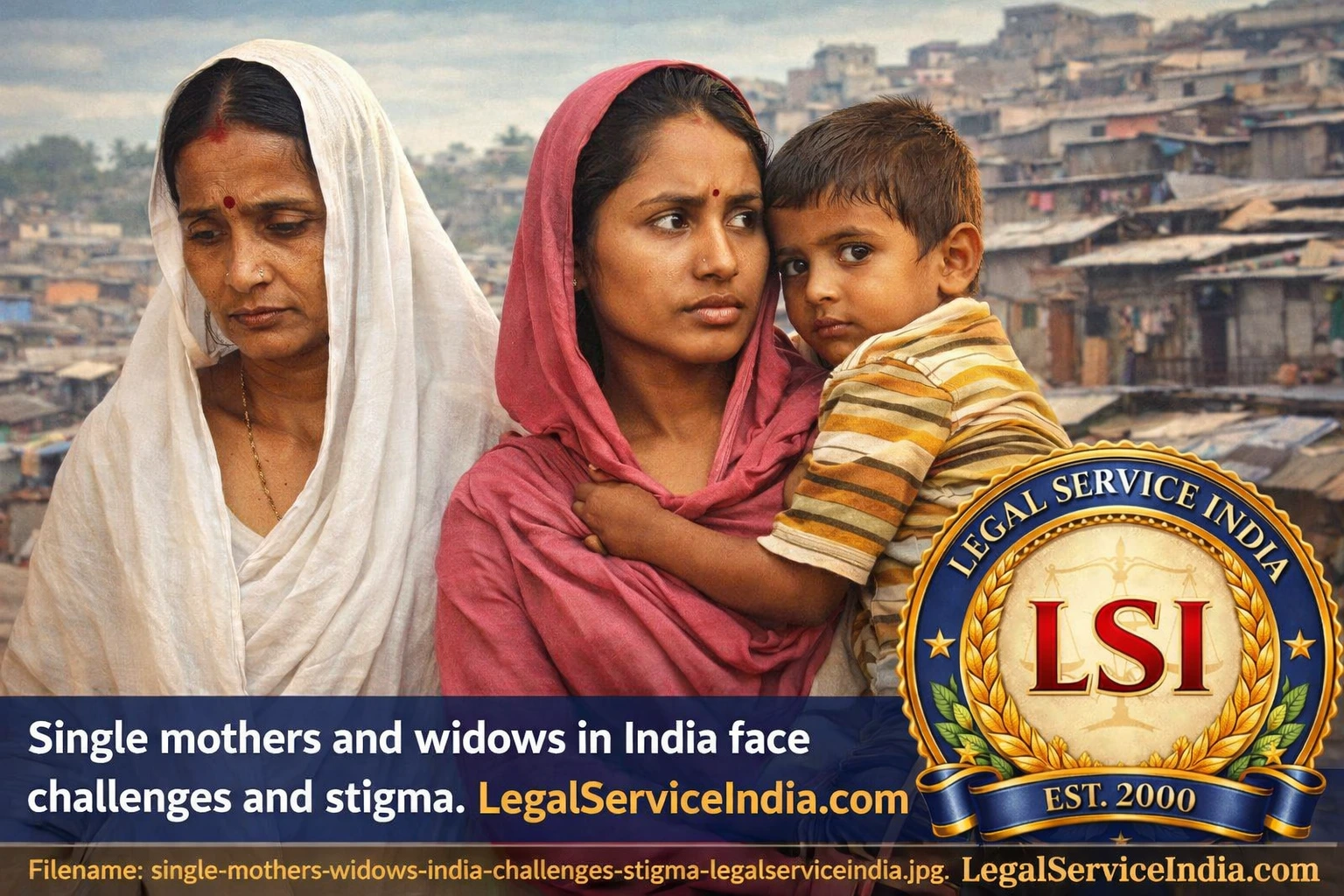
In a society where marriage defines women’s identity, worth, and security, women without husbands—whether widowed, divorced, separated, or never married—occupy precarious social positions marked by stigma, economic vulnerability, and systemic marginalization. Single mothers and widows in India navigate overlapping challenges: raising children alone without adequate support, facing social ostracism and blame, managing economic survival with limited opportunities, confronting discriminatory laws and practices, and fighting for dignity in communities that view them as inauspicious, sexually suspect, or social burdens.
Yet amidst these harsh realities, these women demonstrate extraordinary resilience—creating survival strategies, building support networks, challenging restrictive norms, and raising children against overwhelming odds. Understanding their experiences, the structural barriers they face, the intersections between widowhood and single motherhood, and the transformations needed to ensure their rights and dignity is essential for both gender justice and social inclusion in India.
Defining The Landscape: Who Are Single Mothers And Widows?
India’s single mothers and widows constitute diverse populations often facing similar stigma and challenges despite varied circumstances.
Single Mothers: Diverse Pathways
Single mothers include women raising children alone due to:
- Widowhood: Husbands’ deaths leaving women sole parents—the largest category of single mothers in India
- Divorce/Separation: Women who’ve left marriages due to domestic violence, incompatibility, or abandonment
- Unmarried Mothers: Women who had children outside marriage—through relationships, assault, or choice—facing particularly intense stigma
- Abandoned Wives: Women whose husbands left but didn’t divorce, leaving legal limbo
- Migrant Workers’ Wives: Women whose husbands work elsewhere for extended periods, functioning as de facto single parents
Widows: Numbers And Demographics
India has approximately 46-50 million widows, constituting roughly 10-11% of adult women. This massive population faces varied circumstances:
| Aspect | Details |
|---|---|
| Age Distribution | While stereotypes focus on elderly widows, many become widowed young—in their 20s, 30s, or 40s—with decades of life ahead |
| With Children | Approximately 60-70% of widows have dependent children, overlapping with single mother category |
| Rural vs Urban | About 70% of widows live in rural areas where traditional restrictions are more severe |
| Economic Status | Most widows are poor—approximately 45% live below poverty line |
| Caste Variations | Dalit and lower-caste widows face compounded discrimination |
The Intersection
Widows constitute the largest group of single mothers in India, but not all widows are mothers and not all single mothers are widows. However, challenges overlap significantly—economic vulnerability, social stigma, parenting pressures, and discrimination affect both groups similarly.
Social Stigma: Living Under Suspicion
Perhaps the most pervasive challenge single mothers and widows face is intense social stigma positioning them as inauspicious, sexually suspect, and socially disruptive.
Widowhood As Misfortune And Curse
- Inauspiciousness: Hindu tradition considers widows inauspicious—their presence at weddings, religious ceremonies, or auspicious occasions is unwelcome or prohibited. This belief treats widowhood as contagion spreading misfortune.
- Blamed for husband’s death: Some communities hold women responsible for husbands’ deaths—implying they committed sins in past lives, failed wifely duties, or brought bad karma. This cruel logic compounds grief with guilt.
- Social exclusion: Widows are excluded from social gatherings, festivals, and community events. Their participation is restricted, creating isolation and psychological distress.
- Dress codes: Widows are expected to wear white or drab colors, avoid jewelry and cosmetics, and visually mark themselves as widowed—constant public identification enforcing stigma.
Single Mothers’ “Questionable” Character
- Sexual suspicion: Women without husbands are viewed as sexually available, promiscuous, or morally suspect. Single mothers face assumptions about their sexuality and unwanted sexual advances from men viewing them as “easy targets.”
- Blamed for marital failure: Divorced or separated women are blamed for marriage breakdowns—accused of being difficult wives, bad mothers, or having affairs—regardless of actual circumstances like abuse or abandonment.
- Unmarried mothers: Women who had children outside marriage face the most intense stigma—labeled as immoral, shameless, or bringing family dishonor. Their children are stigmatized as “illegitimate.”
- Community judgment: Single mothers face constant scrutiny—their parenting criticized, children’s behavior attributed to fatherlessness, and every life choice judged through lens of their marital status.
Impact On Children
- Fatherless stigma: Children of single mothers face stigma—teased about absent fathers, excluded from activities, or treated as unfortunate. This affects children’s psychological wellbeing and social integration.
- Educational discrimination: Some schools discriminate against single mothers’ children—requiring both parents’ presence, questioning family structure, or treating children differently.
- Social exclusion: Children may be excluded from friends’ homes, birthday parties, or social events due to mothers’ marital status, creating isolation.
Regional And Religious Variations
| Category | Description |
|---|---|
| North vs South | Northern India generally shows more restrictive attitudes toward widows and single mothers compared to southern states where widow remarriage is more accepted. |
| Hindu traditions | Traditional Hindu practices around widowhood are particularly restrictive, though reform movements have challenged these. |
| Muslim communities | Muslim widows face different challenges—purdah restrictions may intensify, and remarriage while legally permissible faces social resistance. |
| Tribal communities | Some tribal traditions show more acceptance of widow remarriage and flexible family structures, though modernization sometimes intensifies restrictions. |
Economic Survival: The Primary Struggle
Beyond stigma, economic survival is single mothers’ and widows’ most pressing challenge—supporting themselves and children without male earning or family support.
Employment Challenges
- Limited opportunities: Women suddenly needing employment after widowhood or separation often lack education, skills, or work experience. Formal employment is inaccessible for many.
- Discrimination: Employers may view single mothers as unreliable—assuming childcare responsibilities will interfere with work—or widows as unlucky, creating hiring barriers.
- Low wages: Women’s work concentrates in low-paying sectors—domestic work, agricultural labor, informal manufacturing. These jobs barely provide survival income, let alone supporting children.
- Work-family conflict: Single mothers managing employment and childcare alone face intense time pressures. Lack of affordable childcare makes sustained employment difficult.
- Sexual harassment: Single mothers and widows working outside home face heightened sexual harassment—viewed as sexually available and lacking male protection.
Property And Inheritance Rights
- Legal vs actual rights: Despite legal rights to inherit husbands’ property, widows often don’t receive inheritance:
- In-laws usurp property: Husbands’ families claim ancestral property, excluding widows
- Pressure to relinquish: Widows face pressure to sign over property to brothers-in-law or adult sons
- Lack of legal knowledge: Many widows don’t know their rights or how to claim them
- Legal costs: Pursuing inheritance through courts is expensive and time-consuming
- Lack of documentation: Properties may lack clear titles, or widows’ names may not be on documents, complicating claims.
- Remarriage penalties: Some communities deny widows inheritance if they remarry, forcing choice between property and new relationships.
Financial Literacy And Access
- Banking barriers: Many widows lack bank accounts, financial literacy, or control over finances—husbands managed all money. After widowhood, accessing financial services is challenging.
- Credit exclusion: Formal credit requires collateral or steady income widows often lack. They turn to informal moneylenders charging exploitative interest rates.
- Economic dependency: Without independent income or assets, widows depend on families—adult children, in-laws, or natal families—creating vulnerability to exploitation or abandonment.
Government Schemes And Their Limitations
- Widow pensions: Many states offer widow pensions (₹300-1,000 monthly)—inadequate amounts that don’t cover basic needs, let alone support children.
- Pension access: Complex application processes, documentation requirements, corruption, and bureaucratic delays prevent many eligible widows from accessing pensions.
- Other schemes: Programs for single mothers or widows exist—housing, education support, vocational training—but reach limited numbers due to inadequate funding, poor implementation, or lack of awareness.
Parenting Challenges: Raising Children Alone
Single mothers and widows with children face unique parenting challenges compounded by economic pressures and social stigma.
Sole Responsibility
- All decisions alone: From daily routines to major decisions about education, health, or discipline, single mothers make all choices without partner consultation or support.
- Emotional burden: Being sole parent means no sharing of worries, celebrations, or challenges. The psychological weight of complete responsibility is immense.
- No backup: When sick, exhausted, or overwhelmed, there’s no partner to take over. Single mothers must function regardless of personal needs.
Economic Pressures On Children
- Child labor: Economic desperation sometimes forces children into work—sacrificing education for immediate income—perpetuating poverty cycles.
- Educational sacrifices: School fees, books, uniforms, and opportunity costs of education are often unaffordable, limiting children’s futures.
- Nutrition and health: Limited resources mean inadequate nutrition, delayed healthcare, and compromised child wellbeing.
Psychological Impact
- Grief and trauma: Children losing fathers or experiencing parental divorce/separation face trauma. Single mothers must support children’s emotional processing while managing their own grief.
- Mother’s mental health: Single mothers face depression, anxiety, and stress from overwhelming responsibilities. This affects parenting quality and family dynamics.
- Role modeling: Concerns exist about children lacking same-gender parent role models—boys without fathers, girls without seeing partnership models—though single mothers often develop creative solutions.
Social Isolation
- Limited social activities: Financial constraints and social stigma limit children’s participation in extracurricular activities, birthday parties, or social events, affecting development and happiness.
- Maternal isolation: Single mothers’ isolation from social networks means children lose extended family and community relationships that provide support and enrichment.
Living Arrangements And Family Dynamics
Where and with whom single mothers and widows live significantly affects their wellbeing and autonomy.
Living With In-Laws
- Expectation: Widows are often expected to remain in husbands’ homes with in-laws, particularly when property or grandchildren are involved.
- Advantages:
- Provides housing
- Childcare support
- Some financial security
- Disadvantages:
- Lack of autonomy: In-laws control widows’ lives—restricting mobility, dictating childcare, monitoring behavior
- Exploitation: Widows may be treated as unpaid servants—doing household work without respect or independence
- Emotional abuse: Blamed for son’s death, compared unfavorably to son, or treated as burden
- Property control: In-laws may control widows’ inheritance or earnings
- Remarriage prohibition: In-laws oppose widows remarrying, wanting to maintain control
Returning To Natal Families
- Common response: Many widows or divorced women return to parents’ homes.
- Advantages:
- Emotional support
- Familiar environment
- Help with childcare
- Disadvantages:
- Burden perception: Natal families may view returning daughter as financial and social burden
- Limited space: Parents’ homes may lack space or resources for additional members
- Brother’s opposition: Brothers’ wives may resent resources going to sister rather than their own nuclear families
- Temporary solution: Parents age or die, leaving widows again homeless
Independent Living
- Rare but growing: Some widows establish independent households—renting rooms or living in own properties.
- Advantages:
- Autonomy
- Dignity
- Freedom from family control
- Ability to make own decisions
- Challenges:
- Economic barriers: Requires sustainable income difficult for many widows to achieve
- Social suspicion: Single women living alone face community suspicion and harassment
- Safety concerns: Without male protection, women may face harassment or exploitation
- Isolation: Independence can mean isolation without family support networks
Widow Colonies And Institutions
- Vrindavan and Varanasi: Famous for widow colonies—thousands of widows living in religious towns, surviving through temple service, begging, or charity.
- Institutional living: Some NGOs or religious organizations provide widow homes—shelter and basic support.
- Conditions: Often poor—crowded living, minimal resources, lack of dignity, and separation from families and children.
Legal Framework: Rights And Gaps
Indian law provides certain rights to single mothers and widows, though implementation and gaps create ongoing challenges.
Property And Inheritance Rights
- Hindu Succession Act: Widows inherit husbands’ property—Class I heirs with equal rights to children. Yet actual inheritance depends on property type, family cooperation, and widows’ ability to claim rights.
- Maintenance: Hindu law and personal laws provide widows’ rights to maintenance from deceased husbands’ estates or families if unable to maintain themselves.
- Challenges: Legal rights don’t translate to actual possession—family resistance, legal costs, lengthy court processes, and lack of legal literacy prevent widows from claiming rights.
Remarriage Rights
- Legal permission: All Indian women have legal rights to remarry. Hindu Widows’ Remarriage Act (1856) legalized widow remarriage, though social acceptance lags.
- Penalties: While legally permitted, remarrying widows often lose inheritance rights to deceased husbands’ property in practice, forcing choice between new relationships and economic security.
Child Custody And Guardianship
- Mother’s custody: Single mothers typically have custody of children, particularly young children, though fathers’ families sometimes challenge custody.
- Legal guardianship: Mothers are legal guardians, though some procedures require fathers’ presence or consent, creating problems for single mothers.
Social Security
- Widow pensions: Statutory provisions exist but amounts are inadequate and access is limited.
- Single mother support: Few specific provisions for non-widowed single mothers—divorced, separated, or unmarried mothers largely unsupported.
Gaps And Needed Reforms
- Inadequate financial support: Pensions and support schemes don’t provide livable incomes.
- Property claim procedures: Simplifying inheritance claims, reducing legal costs, and providing legal aid would help widows access rights.
- Employment protections: Laws preventing discrimination against single mothers and widows in employment are needed.
- Domestic violence survivors: Better protection and support for women fleeing violence and becoming single mothers.
- Unmarried mothers: Legal and social support for unmarried mothers and their children, removing stigma and discrimination.
Regional Variations: Geography Of Discrimination
Single mothers’ and widows’ experiences vary significantly across India’s diverse regions.
| Region | Key Characteristics |
|---|---|
| North India | Restrictive attitudes, rare widow remarriage, intense stigma, traditional practices like wearing white and social exclusion |
| South India | More progressive, better acceptance of remarriage, improved economic opportunities |
| Urban Areas | More anonymity, better job access, but isolation and urban poverty challenges |
| Rural Areas | Strong social scrutiny, fewer opportunities, adherence to traditions |
| Tribal & Northeast India | Flexible traditions in some areas, but modernization introducing stigma |
North India: Restrictive Traditions
- Uttar Pradesh, Bihar, Haryana, Rajasthan: Most restrictive attitudes—widow remarriage is rare, widows face intense stigma, and traditional practices like wearing white and social exclusion persist.
- Patrilocal residence: Strong norms of women living in husbands’ villages mean widows are far from natal families without support.
- Honor culture: Concerns about family honor severely restrict widows’ and single mothers’ autonomy, with communities policing behavior.
South India: Relatively Progressive
- Kerala, Tamil Nadu, Karnataka: More acceptance of widow remarriage, less restrictive dress codes, and better social integration.
- Matrilineal pockets: Some communities with matrilineal traditions show more acceptance of women without husbands.
- Economic opportunities: Better economic development provides more employment opportunities, improving survival prospects.
Urban Vs Rural
- Urban areas: More anonymity, less community policing, better employment opportunities, and access to support services. However, urban poverty and isolation create different challenges.
- Rural areas: Intense social scrutiny, limited economic opportunities, stronger adherence to traditional restrictions, but sometimes better community support networks.
Tribal And Northeast India
- Varied traditions: Some tribal communities have more flexible attitudes toward widow remarriage and single mothers.
- Modernization impacts: Integration with mainstream Indian culture sometimes introduces stigmas previously absent in tribal traditions.
Source: :contentReference[oaicite:0]{index=0}
Children Of Single Mothers: Intergenerational Impact
Single mothers’ children face specific challenges that can perpetuate cycles of disadvantage. :contentReference[oaicite:0]{index=0}
Educational Outcomes
- Lower enrollment: Single mothers’ children have lower school enrollment rates due to economic pressures and need for children’s labor or earnings.
- Higher dropout: Economic stress, stigma, and lack of parental time for educational support increase dropout rates.
- Limited higher education: Financial constraints prevent many children from accessing college or professional education, limiting career prospects.
Psychological Wellbeing
- Stigma internalization: Children facing stigma about absent fathers or mothers’ marital status may internalize shame, affecting self-esteem.
- Behavioral issues: Stress, poverty, and stigma can manifest in behavioral problems, academic difficulties, or social withdrawal.
- Resilience: Many children also develop exceptional resilience, empathy, and maturity from navigating challenges.
Economic Trajectories
- Poverty perpetuation: Without education and with stigma, single mothers’ children face limited economic opportunities, perpetuating poverty across generations.
- Early work: Children entering workforce early for family survival forgo education, limiting future earnings potential.
- Early marriage: Daughters may be married young to reduce family burden, perpetuating cycles of child marriage and limited opportunities.
Breaking Cycles
- Support interventions: Educational scholarships, mentorship programs, and economic support for single mothers can break intergenerational cycles.
- Psychological support: Counseling and support groups help children process trauma and build resilience.
- Success stories: Many children of single mothers succeed despite challenges, demonstrating that with support, outcomes improve dramatically.
Resilience And Survival Strategies
Despite overwhelming challenges, single mothers and widows demonstrate extraordinary resilience, creating survival strategies and support systems. :contentReference[oaicite:1]{index=1}
Economic Strategies
- Multiple income sources: Combining various income activities—domestic work, selling goods, piece-rate work, agricultural labor—to cobble together survival income.
- Informal credit: Utilizing rotating savings groups (chit funds), borrowing from neighbors, or accessing microfinance when formal credit is unavailable.
- Child involvement: While problematic, children contributing through part-time work or household labor helps family survival, balancing this with education where possible.
- Skill development: Learning skills—tailoring, beauty services, cooking—to increase earning capacity.
Social Support Networks
- Women’s groups: Forming or joining women’s collectives, self-help groups, or mutual support networks provides emotional support and sometimes economic cooperation.
- Religious communities: Temples, mosques, or churches sometimes provide community, material support, and social connection.
- NGO support: Connecting with organizations supporting single mothers or widows provides resources, information, and advocacy.
Identity And Advocacy
- Challenging stigma: Some widows and single mothers openly challenge restrictions—remarrying, refusing dress codes, participating in social functions—modeling alternative possibilities.
- Collective action: Organizing as widows or single mothers to demand rights, pension access, or social acceptance.
- Political participation: Some widows and single mothers engage in local governance—joining panchayats or women’s committees—claiming voice in community decisions.
Psychological Coping
- Spirituality: Many find solace and strength in religious faith, spiritual practices, or philosophical frameworks making sense of suffering.
- Reframing narrative: Viewing survival as strength, taking pride in managing alone, and focusing on children’s wellbeing rather than internalizing stigma.
- Peer support: Connecting with others in similar situations reduces isolation and provides validation.
NGOs And Support Organizations
Numerous organizations work with widows and single mothers, providing services and advocating for rights. :contentReference[oaicite:2]{index=2}
Service Provision
| Organization | Key Services |
|---|---|
| Loomba Foundation | Supports education for widows’ children internationally and in India. |
| Guild of Service | Provides shelter, vocational training, and support for destitute women including widows in Chennai. |
| Sulabh International | Established widow homes in Vrindavan and elsewhere, though conditions have been criticized. |
| Numerous local NGOs | Provide vocational training, legal aid, counseling, and economic support across India. |
Advocacy And Awareness
- Widow remarriage campaigns: Organizations promote widow remarriage, challenging social stigma and celebrating couples who remarry.
- Legal awareness: Training widows about inheritance rights, pension access, and legal protections.
- Stigma reduction: Public campaigns challenging stereotypes and promoting dignity for women without husbands.
Limitations
- Reach: NGOs reach small fractions of widows and single mothers needing support.
- Funding: Limited resources constrain services—support is often temporary or insufficient.
- Paternalism: Some organizations impose moralistic conditions or don’t center women’s own voices and priorities.
Policy Recommendations And Reforms
Addressing single mothers’ and widows’ challenges requires comprehensive policy reforms across multiple domains. :contentReference[oaicite:0]{index=0}
Economic Security
- Adequate pensions: Substantially increase widow and single mother pensions to provide livable income—at least ₹5,000-7,000 monthly adjusted for inflation.
- Universal coverage: Ensure all widows and single mothers access pensions without bureaucratic barriers—streamlined applications, mobile enrollment, and direct bank transfers.
- Employment programs: Priority for widows and single mothers in government employment programs, vocational training, and entrepreneurship support.
- Property rights enforcement: Free legal aid for widows claiming inheritance, fast-track courts for property disputes, and penalties for families denying widows’ rights.
Social Protection
- Housing: Priority allocation of government housing for single mothers and widows, ensuring safe, affordable shelter.
- Education support: Full scholarships, free books and uniforms, and hostel facilities for single mothers’ and widows’ children ensuring education isn’t sacrificed.
- Healthcare: Free or subsidized healthcare for single mothers, widows, and their children including mental health services.
- Childcare: Subsidized childcare enabling single mothers to work without compromising children’s safety and development.
Legal Reforms
- Simplify property claims: Remove bureaucratic barriers to widows claiming inheritance.
- Pension rights: Statutory entitlement to adequate pensions without loss upon remarriage.
- Maintenance enforcement: Stronger enforcement of maintenance orders for divorced or separated women.
- Anti-discrimination: Laws prohibiting discrimination against single mothers and widows in employment, housing, and services.
Social Change
- Stigma reduction campaigns: Public awareness challenging stereotypes and promoting dignity.
- Widow remarriage promotion: Incentives for widow remarriage, social recognition of couples who remarry, and cultural campaigns normalizing remarriage.
- Community education: Working with religious leaders, community organizations, and local governance to change attitudes and practices.
- Media representation: Positive media portrayals of single mothers and widows challenging stereotypes.
Support Services
- Counseling: Accessible mental health support for trauma, grief, and stress.
- Legal aid: Free legal services for property claims, custody disputes, or violence-related legal needs.
- Helplines: Dedicated helplines providing information, support, and crisis intervention.
- One-stop centers: Integrated service centers providing multiple supports—legal, financial, psychological, educational—in single locations.
Success Stories: Transforming Adversity Into Strength
Amidst challenges, many single mothers and widows have built remarkable lives, demonstrating resilience and possibility.
Economic Success
- Kiran Mazumdar-Shaw: Lost father young; mother raised children alone while working. Kiran became India’s richest self-made woman entrepreneur, founding Biocon.
- Countless local entrepreneurs: Widows and single mothers starting small businesses—catering, tailoring, shops—building economic independence and employing other women.
Education Achievements
- Children’s success: Many single mothers’ children excel academically, enter professional careers, and achieve success despite early disadvantages—testament to maternal sacrifice and children’s determination.
Social Change
- Activists: Widows and single mothers becoming activists for others in similar situations, organizing communities and demanding rights.
- Remarriage examples: Widows who remarried and live fulfilling lives challenge stigma and model possibilities for others.
Cultural Contributions
- Artists and writers: Single mothers and widows expressing experiences through art, literature, or film, creating awareness and challenging stereotypes.
Conclusion: From Vulnerability To Agency
Single mothers and widows in India occupy positions of profound vulnerability—facing stigma that marks them as inauspicious or immoral, economic precarity threatening survival, social isolation severing support networks, and institutional neglect denying adequate assistance. These vulnerabilities stem not from women’s inherent weaknesses but from patriarchal structures that define women’s worth through marital status, deny women economic independence, and punish deviation from prescribed gender roles.
Yet vulnerability doesn’t mean victimhood. Single mothers and widows demonstrate extraordinary strength—raising children against overwhelming odds, creating survival strategies with minimal resources, challenging restrictive norms through their very existence, and advocating for rights and dignity. Their resilience deserves recognition, celebration, and most critically, systemic support enabling them to thrive rather than merely survive.
Transforming single mothers’ and widows’ lives requires comprehensive change—adequate economic support recognizing their contributions and needs, legal reforms protecting rights and enabling claims, social transformation challenging stigma and welcoming women without husbands as full community members, and support services providing practical assistance with parenting, mental health, and livelihood development.
This isn’t charity but justice. These women raised India’s children, maintained families, and contributed to communities. They deserve dignity, security, and opportunity rather than blame and abandonment. Their children deserve education, nutrition, and futures unconstrained by circumstances of birth or parents’ marital status.
Every widow who secures her inheritance, every single mother who finds sustainable employment, every child who completes education despite family structure, and every community that welcomes rather than ostracizes women without husbands moves India toward justice. The goal is not just helping vulnerable women survive but creating society where marital status doesn’t determine women’s access to resources, respect, and opportunities—where women can build fulfilling lives regardless of whether they have partners, and where children’s potential isn’t limited by family structure.
The journey from stigma to acceptance, from vulnerability to security, and from marginalization to inclusion is long. But it’s necessary—both for millions of single mothers and widows struggling today and for the society India aspires to become—one truly committed to equality, dignity, and justice for all.

