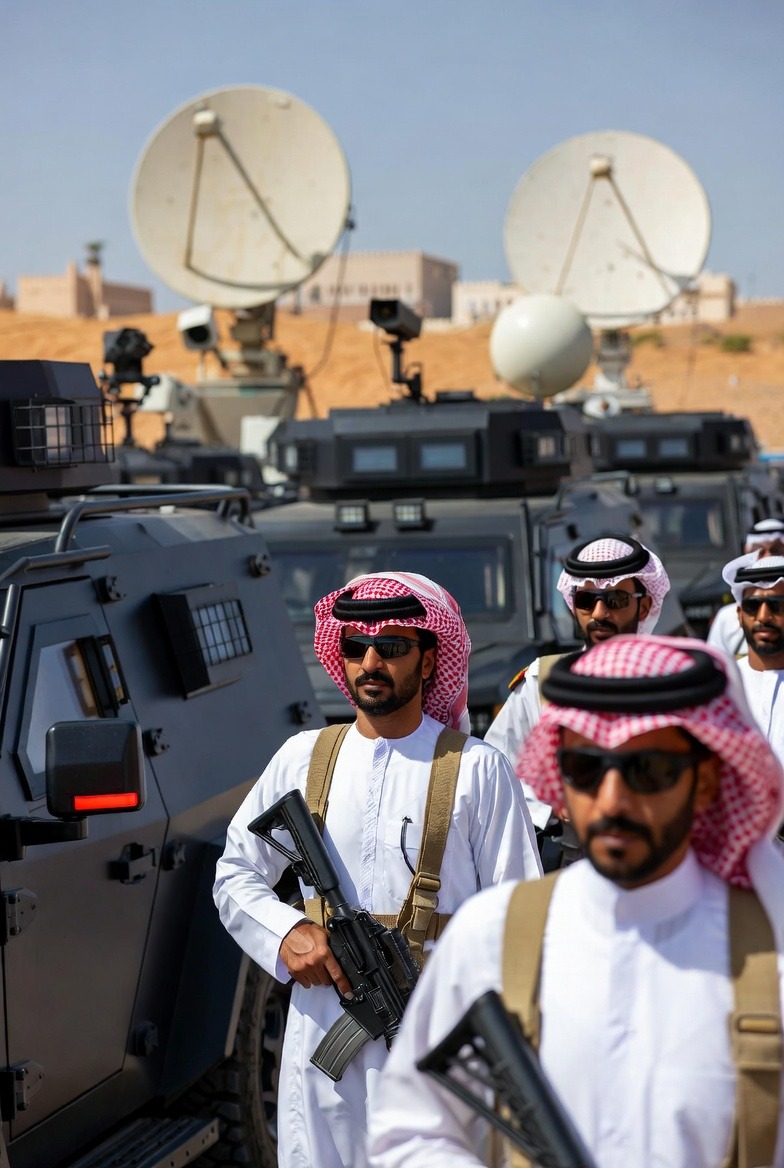
In the heart of the Arabian Peninsula—where ancient tradition converges with extraordinary modern ambition—VVIP security in Saudi Arabia stands among the most sophisticated, multilayered, and formidable protection systems in the world. Safeguarding the Custodian of the Two Holy Mosques, the Crown Prince, senior members of the Royal Family, and distinguished state guests demands nothing short of absolute precision, unwavering loyalty, and cutting-edge capability. This is not merely security; it is a strategic fortress, engineered to preserve stability in a kingdom that profoundly shapes global energy markets, religious stewardship, and geopolitics.
The Pillar of Royal Protection: Saudi Royal Guard Command
At the apex of Saudi Arabia’s VVIP security architecture stands the Saudi Royal Guard Command (Royal Guard Regiment)—an elite force established in 1929 by King Abdulaziz Al Saud and progressively refined into a highly specialized, autonomous entity reporting directly to the King.
Independent of the regular armed forces and the Ministry of Defense, the Royal Guard’s mandate is singular and non-negotiable:
- Round-the-clock close protection of the King and Crown Prince—domestically and internationally—across all residences, movements, and modes of transport.
- Comprehensive security of royal palaces, including Taybah (Medina), Aja (Hail), and Hijr (Al-Ahsa), through layered perimeter defenses, access control, and continuous surveillance.
- Protection of visiting heads of state and high-profile dignitaries during official visits, summits, and ceremonial events.
Operating its own dedicated communications and command systems, the Royal Guard maintains operational secrecy and autonomy. Its structure includes elite infantry battalions, armoured elements, and specialized security detachments—fusing traditional Bedouin loyalty with uncompromising modern military discipline.
Layers of an Impenetrable Shield
Saudi VVIP protection follows a defense-in-depth doctrine that rivals—and in several respects exceeds—the most advanced systems worldwide. Core elements include:
- Close Protection Teams: Highly trained personal security officers form the innermost protective ring. Expert in close-quarters combat, threat anticipation, and instantaneous response, they remain discreet yet unmistakably dominant when required.
- Convoy and Movement Security: Royal movements are marked by meticulously choreographed motorcades featuring armoured SUVs, luxury sedans, and multiple decoy vehicles. Routes are sanitized in advance, supported by reconnaissance teams, air surveillance when necessary, and rapid-response units positioned along the corridor. These convoys project both deterrence and authority.
- Intelligence-Driven Advance Work: Every appearance—public or private, domestic or international—is preceded by exhaustive risk assessment. Multi-agency intelligence inputs guide venue sanitization, crowd profiling, contingency planning, and real-time threat monitoring.
- Technological Dominance: Advanced surveillance systems, electronic countermeasures, secure communications, and cyber-defense capabilities form an invisible protective layer. Modern Saudi VVIP security actively counters drone threats, cyber intrusion, and asymmetric attack vectors.
- Inter-Agency Integration: The Royal Guard operates in seamless coordination with other elite forces, including the Saudi Arabian National Guard—historically loyal to the ruling family—and the Special Security Forces under the Ministry of Interior, ensuring unity of command and zero operational friction.
Cultural Fusion and Absolute Loyalty
A defining feature of Saudi VVIP security is its unique synthesis of heritage and modernity. Guards may appear in traditional white thaubs, keffiyeh, and agal, symbolizing cultural legitimacy, while carrying state-of-the-art weapons and employing advanced tactical doctrine. This visible fusion reinforces authority in a society where tribal allegiance, religious stewardship, and royal legitimacy are deeply intertwined.
Loyalty is absolute and non-negotiable. Personnel undergo rigorous vetting, continuous evaluation, and intensive training to ensure total commitment to the House of Saud. The system is built less on reaction and more on prevention—neutralizing threats well before they reach the protective perimeter.
A Shield of Sovereign Stability
In an era marked by geopolitical volatility, transnational terrorism, and rapidly evolving threat landscapes, Saudi Arabia’s VVIP protection regime exemplifies how a state safeguards its leadership with uncompromising resolve. It extends far beyond bodyguards and convoys; it is a declaration of sovereign strength, where the security of the Kingdom’s highest figures mirrors the security of the state itself.
As Saudi Arabia advances toward its Vision 2030, embracing transformation without relinquishing tradition, its protective architecture remains steadfast—an unseen yet omnipresent force ensuring that power, faith, and national continuity endure under unassailable guard.