





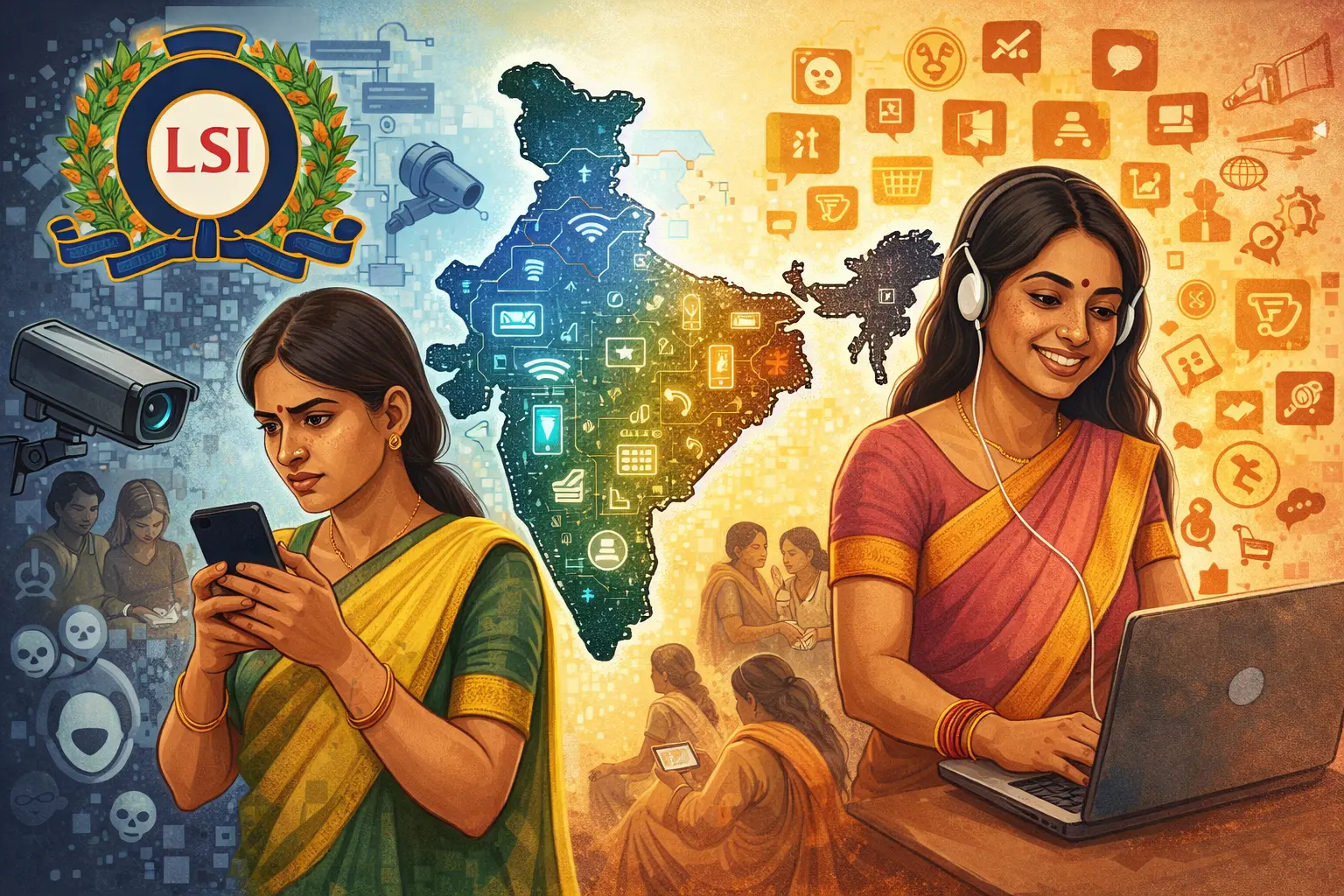
India’s rapid digital transformation—expanding internet connectivity, smartphone proliferation, digital payment systems, online education, and e-governance—is reshaping how people access information, services, opportunities, and each other. For women, this digital revolution presents profound paradoxes: unprecedented opportunities for learning, earning, connecting, and organizing coexist with new forms of exclusion, surveillance, harassment, and control. Understanding how gender shapes digital access and experiences, how technology is transforming women’s lives, and how digital spaces reproduce and sometimes challenge offline inequalities is crucial for ensuring that India’s digital future includes all women, not just the privileged few.
The Gender Digital Divide: Access and Exclusion
India’s digital growth has been remarkable—from around 50 million internet users in 2010 to over 750 million by 2023. However, this expansion has been profoundly unequal across gender lines, creating a persistent digital gender gap.
Unequal Access to Devices and Connectivity
Women are significantly less likely than men to own smartphones or have regular internet access. Studies indicate that women’s smartphone ownership is approximately 30-40% lower than men’s. In rural areas, the gap is even wider, with many women having no personal device and limited or no internet access.
Device ownership patterns reveal household hierarchies. In families with limited resources, smartphones are purchased for male members—fathers, husbands, or sons—while women and daughters are expected to share devices or do without. The justification is often economic—men need phones for work—but reflects deeper devaluation of women’s communication and information needs.
Even when women access devices, usage is often restricted and supervised. Husbands or fathers may control when, how, and for what purposes women use phones. Women may need permission to download apps, access certain websites, or communicate with people outside family circles. This surveillance turns devices meant for connection into tools of control.
Internet connectivity mirrors device ownership patterns. Women have less access to mobile data, Wi-Fi, or broadband. Cost is a significant barrier—data plans strain household budgets, and women’s internet access is deemed less essential than men’s. In rural areas where connectivity infrastructure is limited, women’s mobility restrictions prevent them from accessing cybercafes or other public internet facilities that men can use.
Digital Literacy Gaps
Beyond access to devices and connectivity, digital literacy—the ability to effectively use digital technologies—shows significant gender gaps. Women, particularly those who are older, less educated, or from rural areas, often lack the skills to navigate smartphones, use apps, search for information online, or protect their digital privacy and security.
This digital illiteracy stems from multiple factors. Lower educational attainment means women have less familiarity with technology from school. Reduced exposure to devices means less opportunity to develop skills through practice. Gender norms that position technology as male domain discourage women from experimenting with and learning digital tools.
The digital literacy gap has cascading consequences. Women cannot access government services moving online, apply for jobs through digital platforms, access health information, or participate in online education. They depend on male family members or others to navigate digital spaces, creating new forms of dependence and vulnerability to exploitation.
Language barriers compound digital literacy challenges. Much online content is in English, inaccessible to women who speak only regional languages. While vernacular language content is growing, it remains limited compared to English content. Voice-based and visual interfaces help but don’t fully eliminate language barriers.
Economic Barriers
The cost of devices, data, and digital services creates significant barriers for poor women. A smartphone represents weeks or months of income for many women. Data plans, while cheaper than before, still strain tight budgets. Women’s limited independent income means they cannot afford digital access without male relatives’ financial support, which comes with control.
Free or subsidized internet programs, while expanding access, often have limitations—restricted to certain sites, limited data, or requiring navigation of bureaucratic processes to access. Women’s digital inclusion requires addressing both access costs and underlying economic inequalities limiting women’s purchasing power.
Digital Opportunities: Education, Employment, and Entrepreneurship
Despite barriers, digital technologies create opportunities for women’s education, employment, and entrepreneurship that didn’t previously exist.
Online Education and Skill Development
Digital platforms provide educational content—from basic literacy to university courses—accessible to anyone with internet connection. For women facing mobility restrictions, family responsibilities, or geographic distance from educational institutions, online learning offers alternatives to traditional education.
MOOCs (Massive Open Online Courses), educational YouTube channels, skill development apps, and digital libraries provide free or low-cost learning resources. Women can learn at their own pace, on their own schedules, from home—overcoming barriers that prevent accessing physical classrooms.
Language learning apps, vocational training videos, and professional certification courses enable women to develop marketable skills. Digital literacy programs specifically targeting women help build foundational skills for further learning and employment.
However, realizing online education’s potential requires addressing access barriers. Women without devices or connectivity cannot benefit. Those lacking initial digital literacy cannot navigate learning platforms. The discipline of self-directed online learning can be challenging without support structures.
Digital Employment
The digital economy creates employment opportunities through online platforms—freelancing, remote work, digital marketing, content creation, online tutoring, and various gig economy options. For women, digital work offers flexibility to earn income while managing household responsibilities that make traditional employment difficult.
Freelancing platforms connect women with clients globally, enabling them to work from home on flexible schedules. Writing, graphic design, programming, data entry, transcription, and virtual assistance are among services women provide through digital platforms. This work provides income and professional experience without requiring physical workplace presence that families may restrict.
E-commerce platforms enable women to sell products—handicrafts, homemade food, clothing, or other goods—reaching markets far beyond local areas. Women entrepreneurs use social media for marketing, digital payment systems for transactions, and logistics services for delivery, creating businesses without physical storefronts.
However, digital employment also presents challenges. Platform work is often insecure, poorly paid, and without benefits or protections. Women may face harassment from clients. Payment systems may disadvantage those without bank accounts or digital payment literacy. Competition is intense, and building client bases or online businesses requires time, skills, and resources many women lack.
Financial Inclusion
Digital financial services—mobile banking, digital wallets, online payment systems—expand financial inclusion for women. Historically, women had limited access to banking, requiring male family members to manage finances. Digital financial tools can provide women direct access to financial services.
The Pradhan Mantri Jan Dhan Yojana brought millions of women into formal banking through bank accounts. While many accounts remain underutilized, they provide infrastructure for receiving government transfers, making payments, and saving money independently of male relatives.
Digital payment apps like Paytm, PhonePe, and Google Pay enable transactions without physical cash, potentially giving women more control over money. However, digital financial inclusion requires literacy to use apps, devices to access them, and confidence to manage finances digitally—barriers many women face.
Microfinance and digital lending platforms provide credit access, though predatory lending practices sometimes exploit women’s financial vulnerability. The ease of accessing loans digitally can lead to over-indebtedness when women lack financial literacy to evaluate terms.
Digital Spaces and Women’s Voices
Social media and digital platforms have transformed how women communicate, organize, and participate in public discourse.
Social Media as Public Space
Social media platforms—Facebook, Twitter, Instagram, WhatsApp—provide women spaces to express opinions, share experiences, and connect with others. For women whose physical mobility is restricted, digital spaces offer access to public discourse denied in offline life.
Women use social media to build communities around shared interests, identities, or causes. Mothers’ groups, professional networks, feminist communities, and support groups for survivors of violence create solidarity and mutual support. These digital communities transcend geographic boundaries, connecting women who might never meet physically.
Influencers, content creators, and bloggers build audiences and sometimes livelihoods through social media. Women create content on diverse topics—fashion, cooking, parenting, social issues, comedy, education—expressing creativity and expertise while reaching wide audiences.
Political mobilization happens through social media. The #MeToo movement in India spread through social media, with women sharing experiences of workplace harassment. Campaigns on violence, discrimination, and rights issues gain visibility through digital organizing. Social media enables rapid information dissemination and collective action.
Digital Activism and Advocacy
Digital platforms have become crucial tools for women’s rights advocacy. Organizations use websites, social media, and digital campaigns to raise awareness, mobilize support, and pressure for policy changes. Online petitions, viral campaigns, and digital storytelling reach audiences far beyond what traditional organizing could achieve.
Women journalists, activists, and advocates use blogs, podcasts, and YouTube channels to analyze issues, challenge dominant narratives, and center marginalized voices. Alternative media spaces created digitally provide platforms for perspectives mainstream media ignores.
Digital documentation of rights violations—videos of violence, screenshots of harassment, crowdsourced evidence—creates accountability and pressures institutions to respond. The permanence and shareability of digital content makes denial more difficult.
However, digital activism has limitations. Online organizing doesn’t always translate to offline change. The ease of digital participation—clicking “like” or sharing posts—may substitute for deeper engagement. Digital campaigns can be performative, generating attention without producing concrete reforms.
The Dark Side: Technology-Facilitated Violence and Harassment
Digital spaces, while offering opportunities, have become sites of intense gender-based violence targeting women.
Online Harassment and Abuse
Women in digital spaces face torrents of harassment—unsolicited sexual messages, rape and death threats, sexually explicit images sent without consent, abusive comments, and coordinated pile-ons. This harassment aims to intimidate, silence, and punish women for being visible in public digital spaces.
Women who express opinions, particularly on political, social, or feminist issues, face especially intense abuse. Women journalists, activists, politicians, and public figures receive threats of violence against themselves and their families. The volume and viciousness of online abuse can be overwhelming and traumatizing.
The harassment is often sexualized, with threats of rape and graphic sexual violence common. Women’s appearances are mocked, their sexual histories speculated about, and their private lives invaded. This gendered harassment rarely affects men with comparable visibility.
Trolling campaigns target women systematically. Organized groups coordinate to flood women’s social media with abuse, report their accounts to get them suspended, or create hashtags attacking them. These campaigns effectively silence women or force them off platforms.
Image-Based Abuse
Non-consensual sharing of intimate images—”revenge porn”—is a particularly harmful form of technology-facilitated violence. Former partners share private sexual images or videos without consent to humiliate and harm women. Morphed images making it appear women are in sexual situations they never were are created and circulated.
The impact of image-based abuse is devastating. Women face social ostracism, family rejection, loss of employment or education opportunities, and severe psychological trauma. The permanence of digital content—once shared, images are nearly impossible to fully remove—compounds the harm.
Legal protections against image-based abuse are inadequate. The Information Technology Act contains provisions relevant to obscene content, but they’re difficult to use and don’t comprehensively address non-consensual image sharing. Platforms’ removal processes are slow and incomplete.
Doxxing and Privacy Violations
Doxxing—publishing personal information like addresses, phone numbers, or family details without consent—exposes women to offline danger. Harassers use doxxing to threaten women’s physical safety, contact employers or families with false information, or enable stalking.
Privacy violations through hacking accounts, stealing data, or accessing devices without permission enable harassment and control. Intimate partner violence increasingly includes digital dimensions—partners monitoring locations, reading messages, controlling social media access, or using spyware.
Platform Inadequacies
Social media platforms’ responses to harassment are inadequate. Reporting mechanisms are cumbersome, removing abusive content is slow or doesn’t happen, and consequences for harassers are minimal. Platforms claim they cannot police content while simultaneously allowing abuse to flourish.
Algorithmic amplification sometimes spreads harassment—abusive content goes viral while counter-speech is suppressed. Platform designs prioritizing engagement may inadvertently reward provocative or abusive content with visibility.
Women bear the burden of protecting themselves—blocking harassers, limiting visibility, avoiding controversial topics—rather than platforms creating safe environments. This burden restricts women’s free expression and participation in digital public spaces.
Surveillance and Control
Technology enables new forms of surveilling and controlling women by families, partners, and states.
Family Surveillance
Families use technology to monitor and control women’s activities. Location tracking apps allow parents or husbands to monitor women’s movements. Social media monitoring lets families oversee women’s interactions and friendships. Access to devices enables reading messages and emails.
This surveillance restricts autonomy even when women have physical mobility. Knowing they’re being tracked, women self-censor, avoid certain activities, or develop elaborate workarounds to evade surveillance while appearing compliant.
Some families use monitoring as safety measure, genuinely concerned about daughters’ or wives’ security. However, the line between protection and control is often blurred, with surveillance justified as care while functioning as restriction.
Intimate Partner Surveillance
Abusive partners use technology to control and monitor. Checking phones, demanding passwords, installing spyware, controlling social media accounts, or using location tracking enables partners to surveil constantly. Technology-facilitated coercive control is increasingly recognized as form of domestic violence.
This surveillance traps women in abusive relationships. Partners know their locations, communications, and activities, making escape planning difficult. Women fear leaving because partners have threatening information or intimate images that could be weaponized.
State Surveillance and Digital Authoritarianism
Government surveillance through digital technologies raises concerns about privacy and civil liberties. Biometric databases, digital identity systems, and internet monitoring affect everyone but can particularly impact marginalized women’s access to services or expose them to state violence.
Data breaches or misuse of government databases can expose women’s private information—health records, financial details, addresses—to exploitation. Women accessing services for domestic violence, abortion, or other sensitive needs face privacy risks in increasingly digitized service delivery.
Women in Technology Professions
While technology creates opportunities, the technology industry itself remains male-dominated, with women underrepresented in tech professions, facing discrimination, and struggling to advance.
Underrepresentation in STEM
Women are underrepresented in science, technology, engineering, and mathematics (STEM) education and careers. Cultural stereotypes portraying these fields as masculine discourage girls from pursuing STEM. Educational systems often fail to encourage girls’ interest in technical subjects.
The pipeline for women in tech is leaky—girls drop out at each stage from school STEM courses to university technical programs to tech careers. Those entering tech careers face hostile work environments, discrimination, and lack of advancement opportunities, driving many to leave.
Female representation in technical roles—software engineering, data science, systems architecture—is particularly low. Women in tech often occupy non-technical roles—HR, marketing, project management—rather than engineering or technical leadership positions.
Workplace Challenges
Women in tech face hostile workplace cultures characterized by “bro” culture, sexist assumptions about women’s technical abilities, and sexual harassment. They’re assumed less technically competent, have their contributions overlooked or attributed to male colleagues, and face skepticism about their expertise.
Advancement to leadership is difficult. The lack of women in senior technical and management positions means fewer mentors and role models for women. Networking happens in male-dominated spaces and informal gatherings that exclude women.
Pay gaps exist even in relatively high-paying tech sector. Women earn less than men for comparable roles and experience. Negotiation disadvantages, unconscious bias in performance evaluations, and occupational segregation all contribute to wage disparities.
Entrepreneurship and Innovation
Some women are building tech startups and innovations, though they face significant barriers. Access to funding is challenging—venture capital funding goes overwhelmingly to male-founded startups. Investors’ unconscious biases mean women entrepreneurs face more skepticism and scrutiny.
Women-led tech startups often focus on solving problems affecting women or underserved communities—health tech, education tech, safety apps. This focus, while valuable, is sometimes dismissed as niche or less scalable than male-focused startups.
Supportive ecosystems—incubators, accelerators, and networks specifically for women entrepreneurs—have emerged, providing resources, mentorship, and community. These initiatives help overcome some barriers but don’t fully compensate for systemic disadvantages.
Digital Divides Within Women
The digital gender gap intersects with other inequalities—class, caste, rural-urban, education, age—creating vastly different digital experiences among women.
Class Divides
Wealthy, educated women have smartphones, high-speed internet, digital literacy, and safe, supportive environments for digital participation. They access education, employment, networks, and opportunities through technology.
Poor women lack devices, connectivity, and skills. Digital poverty compounds economic poverty, excluding them from opportunities that could improve their circumstances. The digital divide reinforces and potentially widens economic inequalities.
Urban-Rural Gaps
Urban women have better connectivity, more devices, greater digital literacy, and more diverse online opportunities than rural women. Infrastructure disparities—better internet connectivity in cities—combine with social factors—greater restrictions on rural women—to create stark differences.
Rural women’s digital participation often centers on entertainment—videos, music, social media—rather than productive uses like education or employment. This pattern reflects both limited literacy and awareness of productive digital possibilities.
Age and Generational Differences
Young women are digital natives, comfortable with technology and adept at navigating digital spaces. Older women, particularly those who didn’t encounter technology in youth, struggle with digital literacy and are often excluded from digital spaces.
However, some older women are learning digital skills, motivated by desire to connect with distant family, access information, or participate in online communities. Intergenerational digital literacy programs can help bridge age-related gaps.
Caste and Religious Divides
Dalit, Adivasi, and Muslim women face additional barriers beyond gender. Discrimination in education and employment limits their resources for accessing technology. They may face online harassment based on both gender and identity.
Online spaces can reproduce offline caste and religious hierarchies. Dominant-caste and majority-religion women may dominate digital feminist spaces, marginalizing voices and concerns of Dalit, Adivasi, or Muslim women.
Pathways to Digital Inclusion and Safety
Ensuring that digital transformation empowers rather than excludes women requires comprehensive strategies.
Expanding Access
Infrastructure Investment: Expanding internet connectivity to rural and underserved areas through affordable broadband, public Wi-Fi, and mobile networks enables access for currently excluded populations.
Affordable Devices: Subsidized smartphones or tablets for women from low-income households, or community device-sharing programs, can expand device access.
Free or Low-Cost Data: Zero-rating educational and health content, affordable data plans, or data vouchers for women can reduce cost barriers.
Building Digital Literacy
Targeted Training: Digital literacy programs specifically for women, delivered in vernacular languages, respecting cultural contexts, and addressing women’s specific needs and concerns can build skills.
Community-Based Learning: Training delivered through women’s groups, self-help groups, or community centers creates supportive learning environments and overcomes mobility barriers.
Intergenerational Programs: Training that involves daughters teaching mothers or younger women supporting older women leverages existing relationships and builds skills across generations.
Ensuring Safety
Platform Accountability: Requiring social media and digital platforms to implement effective harassment prevention, rapid content removal, and meaningful consequences for abusers can make online spaces safer.
Legal Protections: Comprehensive legislation addressing online harassment, image-based abuse, and technology-facilitated violence with effective enforcement mechanisms provides recourse for victims.
Awareness and Support: Education about online safety, digital self-defense skills, and support services for survivors of technology-facilitated violence helps women protect themselves and recover from harm.
Increasing Representation in Tech
STEM Education: Encouraging girls in STEM through school programs, mentorship, and challenging stereotypes builds pipeline for tech careers.
Industry Reforms: Tech companies implementing anti-discrimination policies, addressing hostile workplace cultures, ensuring equal pay, and creating advancement pathways for women can retain women in tech careers.
Supporting Women Entrepreneurs: Funding, mentorship, and networks specifically supporting women-led tech startups can increase women’s presence in tech innovation and leadership.
Inclusive Design
Gender-Responsive Technology: Designing technology with women’s needs, contexts, and safety in mind rather than defaulting to male users creates more inclusive products.
Participatory Design: Including women from diverse backgrounds in technology design and development ensures products serve varied needs and don’t perpetuate biases.
Conclusion
India’s digital transformation presents profound contradictions for women. Technology offers unprecedented opportunities—for learning, earning, connecting, and organizing—that could dramatically empower women. Yet the same technologies enable new forms of harassment, surveillance, and control while digital divides exclude millions of women from digital opportunities.
The digital gender gap is not merely about numbers—how many women have internet access versus men—but about the quality and safety of digital experiences. Even when women access technology, they may face harassment that makes participation untenable, surveillance that turns connection into control, or discrimination that limits opportunities.
Ensuring that digital India includes all women requires addressing both access barriers—devices, connectivity, literacy, costs—and safety challenges—harassment, abuse, surveillance. It requires transforming both technology provision and the cultures surrounding technology use. Women need not just access to technology but safe, supportive environments for digital participation.
The diversity among women means that digital inclusion strategies must address intersecting inequalities. Solutions that serve urban, educated, wealthy women may not reach rural, poor, or marginalized women. Inclusive digital transformation requires understanding varied barriers and crafting context-appropriate interventions.
Women are not merely passive recipients of technology but active shapers of digital futures. Women entrepreneurs, activists, content creators, and everyday users are leveraging technology for empowerment, innovation, and resistance. Supporting and amplifying these efforts while addressing barriers creates foundations for genuinely inclusive digital transformation.
The future of women’s rights in India will increasingly be shaped by digital technologies. Whether that future is one of empowerment or exclusion, liberation or control, depends on choices made now about digital access, safety, representation, and governance. Technology alone doesn’t determine outcomes—social, economic, and political choices about how technology is designed, distributed, and regulated shape whether digital transformation serves gender equality or perpetuates inequality.
As India builds its digital future, the imperative is clear: ensure that every woman—regardless of class, caste, religion, location, or ability—can safely access, meaningfully participate in, and help shape digital spaces. Only then will India’s digital revolution fulfill its promise for all citizens, not just the privileged few.

