





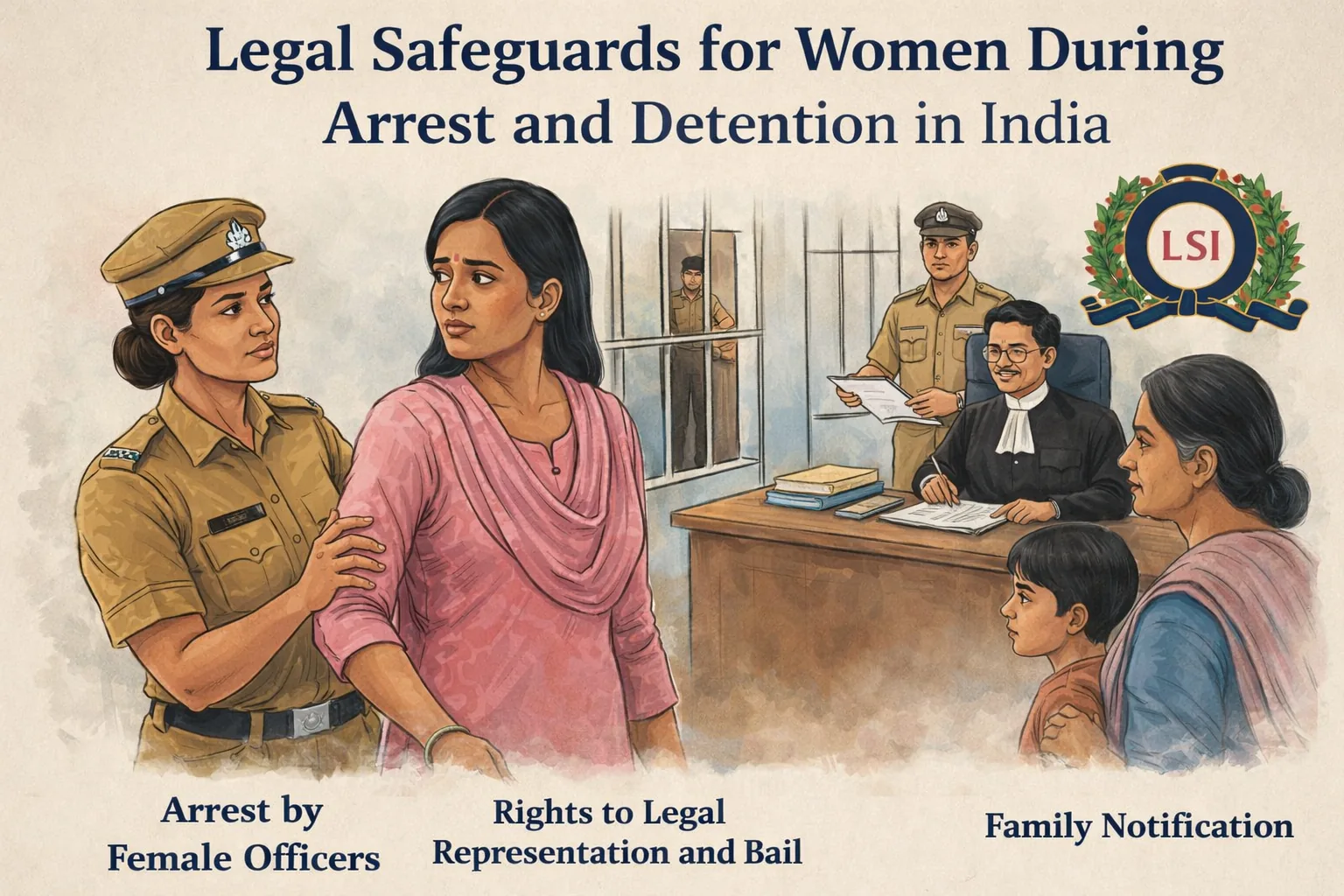
The arrest and detention of women in India involves specific legal safeguards designed to protect their dignity, safety, and rights. Understanding these protections is essential for ensuring that women in contact with the criminal justice system are treated fairly and humanely. These provisions recognize the particular vulnerabilities women face in custody and seek to prevent abuse and mistreatment.
Constitutional and Legal Framework
The Indian Constitution guarantees fundamental rights to all citizens, including those accused of crimes. Article 21 protects the right to life and personal liberty, which courts have interpreted to include the right to be treated with dignity during arrest and detention. Article 22 specifically provides protections for arrested persons, including the right to be informed of the grounds for arrest, the right to consult a lawyer, and the right to be produced before a magistrate within 24 hours.
The Code of Criminal Procedure, 1973 (CrPC), sets out detailed procedures for arrest and detention. Section 46 specifically addresses the arrest of women, while Section 51 deals with searches of arrested persons. These provisions reflect recognition that women require special protections during interactions with law enforcement.
Special Protections for Women During Arrest
Indian law provides several crucial safeguards specifically for women facing arrest, recognizing their vulnerability to abuse and the need for gender-sensitive procedures.
Arrest by Female Police Officers
Section 46 of the CrPC mandates that when a woman is to be arrested, the arrest must be made by a female police officer or, at a minimum, with strict regard for decency. Male police officers cannot touch or physically restrain a woman during arrest unless necessary, and even then, female officers should be present.
This protection aims to prevent sexual harassment and maintain the dignity of women during the arrest process. Violation of this provision can result in disciplinary action against police officers and can be grounds for challenging the legality of the arrest.
Timing Restrictions on Arrest
A critical protection for women is that they cannot be arrested after sunset and before sunrise except in exceptional circumstances. This rule applies unless the arrest is being made by a female police officer or under unavoidable circumstances, with prior permission from a Judicial Magistrate.
This timing restriction acknowledges safety concerns and aims to prevent abuse that might occur during nighttime arrests when oversight is minimal. Any arrest of a woman during prohibited hours without proper authorization can be challenged as illegal.
Searches of Women
Section 51(2) of the CrPC provides that whenever it is necessary to cause a woman to be searched, the search shall be made by another woman with strict regard to decency. Male police officers are strictly prohibited from conducting searches of female suspects or accused persons.
The search must be conducted in a private place, away from public view, maintaining the woman’s dignity and privacy. Strip searches require additional justification and oversight, and any violation of search procedures can constitute grounds for legal action against the police.
Rights of Women Upon Arrest
Women arrested in India possess specific rights that police must respect and facilitate. Understanding these rights empowers women to protect themselves and enables their families and lawyers to ensure proper treatment.
Right to Know Grounds of Arrest
Police must inform a woman of the full grounds for her arrest at the time of arrest. This information must be provided clearly and in a language she understands. She has the right to see the arrest warrant if the arrest is being made pursuant to a warrant.
For warrantless arrests, which are permitted only in specific circumstances such as cognizable offenses, the woman must be informed of the facts constituting the alleged offense and the legal basis for arrest without warrant.
Right to Bail
Women have the right to seek bail, and courts generally show special consideration for women, particularly pregnant women, nursing mothers, and women with young children. The CrPC and judicial precedents recognize that detention of women affects not just them but often their dependent children and families.
For many offenses, bail is a matter of right rather than discretion. Police must inform arrested women of their right to apply for bail and facilitate contact with lawyers who can assist with bail applications.
Right to Legal Representation
From the moment of arrest, a woman has the right to consult and be defended by a lawyer of her choice. Police must inform her of this right and allow reasonable facilities for consultation. For women who cannot afford lawyers, legal aid must be provided at state expense under the Legal Services Authorities Act, 1987.
The right to lawyer consultation cannot be denied, and any confession or statement obtained without access to legal advice may be inadmissible in court.
Right to Inform Family or Friends
An arrested woman must be allowed to inform a family member, friend, or person of her choice about her arrest and the place of detention. This right helps ensure that arrests do not occur secretly and provides a check against custodial abuse.
Police must facilitate this communication as soon as practicable after arrest, allowing the woman to make necessary arrangements for children or dependents and ensuring that someone knows her whereabouts.
Right to Medical Examination
An arrested woman has the right to medical examination, which serves both to document any pre-existing injuries (protecting police from false accusations) and to identify any injuries sustained during arrest (protecting the woman from custodial violence). The examination must be conducted by a female medical officer or, if unavailable, by a male doctor in the presence of a female staff member.
The medical examination should document the woman’s physical and mental condition, any injuries, and, where relevant, collect evidence. The woman has the right to request specific medical attention for health conditions.
Detention and Custody Conditions
Once arrested, women must be held in conditions that respect their dignity and address their specific needs. Indian law and international standards to which India is a signatory provide guidelines for appropriate custody conditions.
Separate Detention Facilities
Women must be detained separately from men. Lock-ups, jails, and detention centers must have separate sections or facilities for women. Female guards and staff should supervise women’s detention areas.
This separation aims to prevent sexual violence, harassment, and exploitation. Mixed custody facilities without proper segregation violate women’s rights and expose them to significant danger.
Pregnant Women and Nursing Mothers
Pregnant women and nursing mothers receive special consideration in the criminal justice system. Courts generally avoid remanding pregnant women to custody except in serious cases, and they are often released on bail with conditions.
Women who give birth while in custody have the right to keep their infants with them for a specified period, typically until the child reaches age six. Prisons must provide appropriate medical care during pregnancy and childbirth, including access to gynecologists and midwives.
Nursing mothers must be provided with facilities to care for their infants, including adequate nutrition, hygiene products, and private space for nursing. The psychological and physical needs of both mother and child must be accommodated.
Menstrual Hygiene and Healthcare
Women in custody must be provided adequate sanitary products for menstruation at no cost. Access to clean water, private toilet facilities, and disposal mechanisms for sanitary products are basic requirements that detention facilities must meet.
Healthcare in detention must address women’s specific needs, including gynecological care, mental health services, and treatment for any chronic conditions. Denial of necessary medical care constitutes cruel treatment.
Prohibition Against Custodial Violence
Indian law absolutely prohibits torture, custodial violence, and other forms of abuse against detained persons, including women. The Supreme Court has repeatedly held that custodial violence is a violation of fundamental rights and constitutes a crime.
Section 498A and False Cases
While Section 498A of the IPC provides crucial protection for women against cruelty by husbands and in-laws, concerns have been raised about its misuse in some cases. The Supreme Court has issued guidelines to prevent automatic arrests in 498A cases, requiring police to first verify allegations.
However, these guidelines aim to prevent misuse without diluting protections for genuine victims of domestic violence. Women making complaints in good faith remain fully protected, and police must investigate allegations thoroughly.
Protection Against Sexual Violence in Custody
Sexual assault and harassment of women in custody is a particularly egregious violation that attracts severe punishment. The Criminal Law (Amendment) Act, 2013, enhanced penalties for sexual violence by persons in positions of authority, including police and jail officials.
Any sexual contact between custodial staff and detained women is presumed to be non-consensual due to the power imbalance. Women who experience or fear sexual violence in custody should immediately inform judicial authorities, lawyers, or contact helplines and human rights organizations.
Judicial Oversight and Production Before a Magistrate
Section 57 of the CrPC requires that police produce arrested persons before a magistrate within 24 hours of arrest, excluding travel time. This provision applies equally to women and serves as a crucial check on police power.
During this production, the magistrate must satisfy herself that the arrest was lawful, that the woman has been informed of her rights, and that she has not been subjected to abuse. The woman can raise concerns about her treatment directly with the magistrate.
The magistrate must also determine whether continued detention is necessary or whether bail should be granted. For women, courts generally lean toward bail unless there are compelling reasons for continued custody, particularly considering dependent children and family circumstances.
Vulnerable Categories Requiring Extra Protection
Certain categories of women require additional safeguards when interacting with the criminal justice system.
Tribal and Rural Women
Women from tribal communities and rural areas often lack awareness of their legal rights and may not speak Hindi or English. Police and courts must ensure that information is provided in languages these women understand and that they have access to interpretation services.
Cultural sensitivity is important, as practices and norms in tribal and rural communities may differ from mainstream understanding. Legal processes should accommodate these differences while still protecting women’s rights.
Women with Disabilities
Women with physical or mental disabilities require accommodations to ensure meaningful access to justice. This includes physical accessibility of detention facilities, communication assistance for those with hearing or speech impairments, and appropriate medical and psychological care.
Police and judicial procedures must be adapted to enable women with disabilities to understand proceedings and exercise their rights effectively.
Women from Marginalized Communities
Women from scheduled castes, scheduled tribes, religious minorities, and other marginalized communities often face compounded discrimination in the criminal justice system. Extra vigilance is needed to ensure they receive equal protection and are not subjected to bias or prejudice.
Rights Violations and Remedies
When women’s rights during arrest or detention are violated, several remedies are available through the legal system.
Habeas Corpus Petitions
If a woman is illegally detained or held in unlawful custody, a habeas corpus petition can be filed in the High Court or Supreme Court seeking her immediate release. These petitions receive urgent consideration and can result in swift judicial intervention.
Complaints to Human Rights Bodies
The National Human Rights Commission and State Human Rights Commissions investigate complaints of rights violations during arrest and detention. They can conduct inquiries, recommend action against erring officials, and award compensation.
Criminal Complaints Against Police
Women subjected to illegal arrest, custodial violence, or other abuses can file criminal complaints against police officers. Offenses such as wrongful confinement, assault, and sexual harassment carry serious penalties.
Such complaints should be filed with senior police officials or directly with magistrates. Independent investigation by agencies like the State Crime Branch or CBI may be sought in serious cases.
Civil Suits for Damages
Victims of illegal arrest or custodial abuse can file civil suits seeking monetary compensation for the harm suffered. Courts have awarded significant damages in cases of custodial violence and illegal detention.
Recent Developments and Reforms
The criminal justice system continues to evolve with reforms aimed at better protecting women’s rights during arrest and detention.
Supreme Court Guidelines
The Supreme Court has issued numerous guidelines over the years to protect arrested persons, including specific provisions for women. The DK Basu guidelines establish procedures for arrest and detention that police must follow, with serious consequences for violations.
Recent judgments have emphasized that arrest should be the last resort, particularly for women, and that police must justify the necessity of arrest rather than making arrests routinely.
Technology and Oversight
Some states have introduced reforms such as mandatory videography of arrests, electronic tracking of persons in custody, and online systems for reporting arrests. These technological measures increase transparency and accountability.
CCTV cameras in police stations and detention facilities, particularly in areas where women are held, provide additional safeguards against abuse, though their effectiveness depends on proper implementation and monitoring.
Training and Sensitization
Police training increasingly includes modules on gender sensitivity, women’s rights, and proper procedures for dealing with female suspects and accused persons. However, implementation remains inconsistent, and more comprehensive training is needed across all levels.
International Standards and Obligations
India is party to international human rights treaties that set standards for the treatment of women in detention. The Convention on the Elimination of All Forms of Discrimination Against Women (CEDAW) and the Bangkok Rules (United Nations Rules for the Treatment of Women Prisoners and Non-custodial Measures for Women Offenders) provide detailed guidelines that should inform Indian law and practice.
These international instruments recognize that women in criminal justice systems have distinct needs and vulnerabilities requiring specific attention. They emphasize non-custodial measures for women wherever possible, particularly for pregnant women and mothers of young children.
Role of Civil Society and Legal Aid
Non-governmental organizations, legal aid services, and civil society groups play a vital role in protecting women’s rights during arrest and detention. These organizations provide free legal assistance, monitor detention facilities, document rights violations, and advocate for systemic reforms.
Women arrested or detained should seek assistance from legal aid services if they cannot afford private lawyers. Many bar associations and NGOs offer pro bono legal help for women facing criminal charges.
Challenges and Persistent Issues
Despite legal protections, significant challenges persist in ensuring that women’s rights during arrest and detention are respected in practice.
Gap Between Law and Implementation
The gap between legal provisions and their implementation remains substantial. Police stations often lack adequate female officers, making it difficult to comply with requirements for female-conducted arrests and searches. Training deficiencies mean many officers are unaware of or indifferent to women’s specific rights.
Infrastructure Deficiencies
Many police stations and detention facilities lack separate spaces for holding women, proper sanitary facilities, or female staff. These infrastructure gaps make it impossible to provide conditions that respect women’s dignity and safety.
Social Stigma
Women who are arrested or detained face severe social stigma that can have lasting effects on their lives, even if they are ultimately acquitted or released. This stigma affects their families, particularly children, and can lead to social ostracization.
The fear of stigma may also prevent women from reporting rights violations or seeking legal redress, as doing so draws further attention to their interaction with the criminal justice system.
Conclusion
The arrest and detention of women in India is governed by legal provisions designed to protect their dignity, safety, and rights. These protections recognize women’s particular vulnerabilities in custody and establish procedures intended to prevent abuse and ensure humane treatment.
However, effective protection depends on proper implementation of these laws, adequate resources and infrastructure, trained and sensitized personnel, and strong oversight mechanisms. Women must be aware of their rights so they can insist on proper treatment and seek remedies when violations occur.
Continued reform of the criminal justice system should prioritize gender-sensitive approaches that recognize women as rights-holders deserving equal protection and respect. Only through sustained attention to both legal frameworks and practical implementation can India ensure that women’s encounters with the criminal justice system uphold rather than undermine their fundamental rights and dignity.

