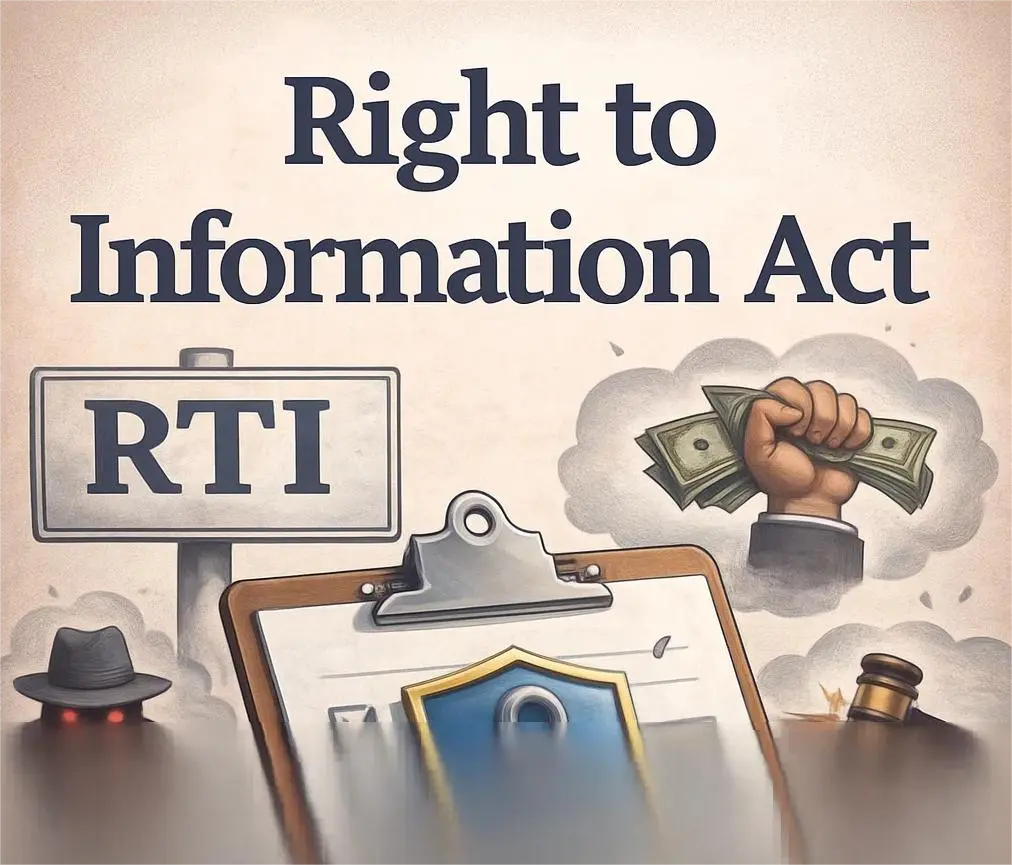
The Right to Information (RTI) Act, 2005, is rightly celebrated as one of independent India’s most powerful democratic reforms. By empowering every citizen to seek information from public authorities, it dismantled walls of secrecy and ushered in an era of accountability and participatory governance.
Yet, two decades later, a troubling shadow has emerged. The same law that was designed to enlighten is increasingly being weaponised for harassment, blackmail, personal vendettas, and commercial gain. This misuse does not merely burden the system — it threatens to erode public faith in transparency itself.
Frivolous and Vexatious Queries: Paralysing the System
A significant proportion of RTI applications are neither informative nor public-spirited. Applicants bombard public authorities with absurd, irrelevant, or deliberately voluminous queries. Some individuals file thousands of applications annually, often targeting a single department or officer. The result? Genuine requests are delayed, administrative resources are diverted, and Public Information Officers (PIOs) spend more time responding to noise than serving the public.
RTI as a Tool of Extortion
In its darkest form, the Act has become an instrument of coercion. Targeted RTI queries are used to unearth sensitive or embarrassing information, which is then leveraged to extract money, favours, or silence from public officials and contractors. In several states, organised “RTI blackmail” rackets have been exposed and FIRs registered.
Repetitive and Harassing Filings
Serial applicants routinely refile the same or slightly rephrased questions, trapping officers in an endless cycle of responses and appeals. This deliberate harassment demoralises the bureaucracy and obstructs normal governance.
Settling Personal Scores
Disgruntled employees, business rivals, or individuals locked in private disputes frequently misuse RTI to obtain material that serves no public interest but can damage reputations or fuel litigation.
Commercial Exploitation
Proprietary tenders, contract details, and other commercially sensitive data obtained through RTI are sometimes sold to competitors or used for unfair advantage, turning a public-interest law into a tool for private profit.
Administrative Overload and Governance Paralysis
PIOs, already stretched by regular duties, are overwhelmed. Departments report that RTI work now consumes 30–50 % of some officers’ time. The irony is bitter: a law meant to improve governance is hampering it.
The Root Cause: Asymmetrical Accountability
The Act imposes strict penalties on PIOs for delays or wrongful denials, yet it provides almost no deterrent against deliberate misuse by applicants. This glaring asymmetry encourages abuse and discourages voluntary disclosure.
The Way Forward: Protecting Transparency by Curbing Abuse
Strengthening the RTI regime does not mean diluting the citizen’s right to know. It means safeguarding that right from exploitation. Sensible, balanced reforms are both necessary and possible:
- Empower PIOs to reject manifestly frivolous or vexatious applications with recorded reasons (several states have already amended rules accordingly).
- Introduce graduated penalties or temporary restrictions for proven serial misusers.
- Impose reasonable costs in appropriate cases, as courts have begun to do.
- Massively expand proactive disclosure under Section 4 to reduce the very need for repetitive RTIs.
- Provide PIOs better training, legal support, and dedicated staff.
- Create a centralised database of habitual misusers (with strong privacy safeguards) to protect public authorities from coordinated harassment.
Conclusion: Saving RTI from Its Exploiters
The Right to Information Act remains a cornerstone of Indian democracy. But a law loses legitimacy when a tiny minority transforms a public good into a private weapon.
Addressing misuse is not an attack on transparency — it is the only way to preserve it. Unless deliberate abuse is firmly checked, two dangers loom: genuine applicants will continue to suffer, and a frustrated system will retreat behind broader interpretations of exemptions, achieving through judicial and administrative practice what no government dares do through amendment.
Only by distinguishing responsible use from reckless exploitation can India ensure that the RTI Act remains what it was always meant to be: a beacon of accountability, not a tool of intimidation.
Important Links
- Lawyers in India
- Copyright Registration in India
- Caveat Filing in Supreme Court of India
- Mutual Consent Divorce in Delhi NCR: WhatsApp 9650499965
Also Read: File Legal Notice in India: Complete Guide to Drafting, Procedure, Cost & Legal Rights