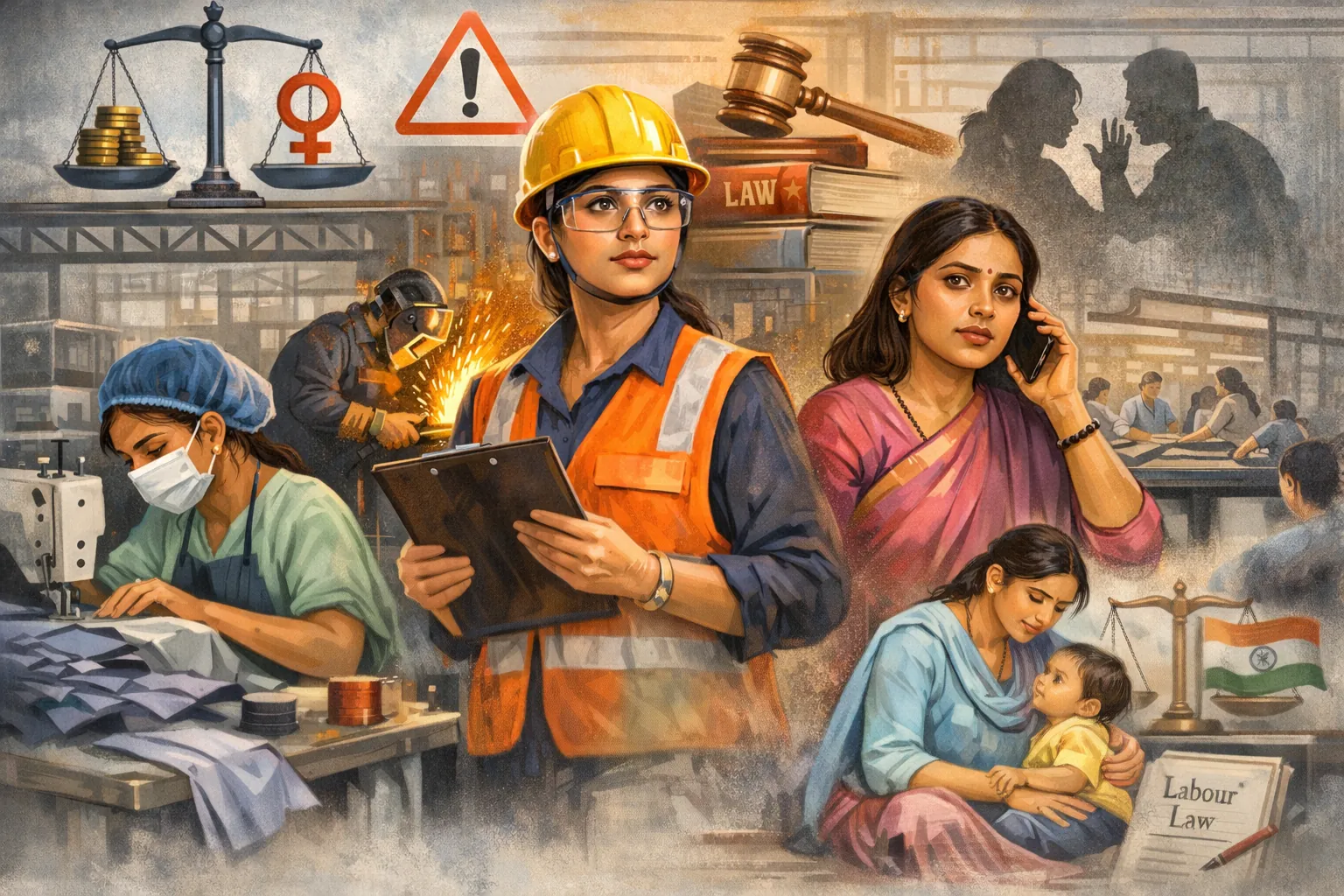
Women play a vital role in factory-based industries such as textiles, garments, electronics, food processing, and manufacturing. In many countries, factories depend heavily on women workers because of their skills, patience, and efficiency. However, despite their important contribution, women working in factories often face difficult working conditions and several challenges. Women constitute a significant share of the global manufacturing workforce, yet their working conditions often reflect gendered disparities in pay, safety, advancement opportunities, and support for family responsibilities.
Many women work long hours in factories, sometimes exceeding the standard workday. Overtime is often compulsory, especially during peak production seasons. In some factories, wages are low and may not match the effort or hours worked. Although laws exist in many countries to protect workers, these laws are not always strictly enforced.
Working Conditions of Women in Factories
Physical Conditions
Physical conditions: long hours, shift work (including night shifts), repetitive tasks, and high-speed production lines can lead to fatigue, musculoskeletal disorders, and stress. In some sectors, inadequate ventilation, poor lighting, and inadequate safety gear are reported, increasing health risks.
Long working hours and compulsory overtime
Shift work, including night shifts
Repetitive and monotonous tasks
High-speed production lines
Inadequate ventilation and poor lighting
Lack of proper safety gear
Many women work long hours in factories, sometimes exceeding the standard workday. Overtime is often compulsory, especially during peak production seasons. In some factories, wages are low and may not match the effort or hours worked. Although laws exist in many countries to protect workers, these laws are not always strictly enforced.
Safety and Health
The physical working environment can also be challenging. Poor ventilation, high noise levels, crowded workspaces, and lack of proper safety equipment can affect women’s health. Repetitive tasks, such as stitching or assembling parts, may lead to fatigue, back pain, or other health issues over time.
Exposure to hazardous chemicals, heavy machinery, and insufficient emergency preparedness are persistent concerns. Women may face gaps in PPE fit, access to medical services, and reproductive health considerations in environments not designed with their needs in mind.
The physical working environment can also be challenging. Poor ventilation, high noise levels, crowded workspaces, and lack of proper safety equipment can affect women’s health. Repetitive tasks, such as stitching or assembling parts, may lead to fatigue, back pain, or other health issues over time.
Facilities and Family Support
In some workplaces, facilities such as clean drinking water, restrooms, maternity leave, or childcare support are limited or unavailable. This makes it harder for women, especially mothers, to balance work and family responsibilities.
Facility
Availability Issues
Clean Drinking Water
Limited or unavailable in some factories
Restrooms
Inadequate or unhygienic facilities
Maternity Leave
Restricted or poorly implemented
Childcare Support
Often absent, affecting working mothers
Labor Rights and Protections
Formal contracts, wage transparency, paid leave, and social security access differ by country and sector; gaps can leave women vulnerable to exploitation or inconsistent wages.
Work Organization
Rigid production targets, limited autonomy, and hierarchical supervision can affect job satisfaction and error rates. In some contexts, little control over break times or task assignments contributes to stress.
Facilities and Services
Access to clean water, sanitary facilities, safe transportation, and reliable childcare support varies widely. Lack of crèche facilities and flexible scheduling can complicate balancing work and caregiving duties.
Key Challenges Faced by Women Workers
Gender Inequality.
Pay Gap and Advancement Barriers
Women frequently receive lower wages than men for equal work and have limited access to promotion and skill-building opportunities, while supervisory and leadership positions are largely held by men.
Women often earn less than men for similar roles and face a steeper glass ceiling, with fewer leadership opportunities and mentorship prospects in manufacturing.
Workplace Culture and Sexual Harassment
Sexual harassment and gender-based discrimination remain prevalent in some factories and industrial establishments, contributing to higher turnover and job dissatisfaction among women.
Work-Life Balance Pressures
Expectations around caregiving, child care, and household duties disproportionately affect women, influencing absenteeism and turnover and limiting career progression.
Safety and Health Vulnerabilities
Factory workers often face health and safety risks due to extended working hours, insufficient rest, and hazardous environments, which negatively impact their physical and mental health, while access to proper healthcare and health education remains inadequate.
Inadequacies in PPE, reproductive health considerations, and insufficient health services pose distinct risks for women in factory settings.
Job Insecurity
Large number of women work in temporary or contract positions that lack job security and benefits, and the risk of dismissal often discourages them from reporting unfair or exploitative practices.
Representation and Support Networks
Underrepresentation in leadership reduces access to mentorship and role models; isolation can hinder skill development and advancement.
Regional Variations
Conditions vary by country and industry—garment and textile sectors, informal or unregulated workplaces, and unorganized sectors often show weaker protections and higher vulnerability for women.
Progress and Solutions
Improving working conditions requires joint efforts from governments, factory owners, and society. Strict enforcement of labor laws, fair wages, safe working environments, and equal opportunities are essential.
Providing education about workers’ rights, health care, maternity benefits, and childcare facilities can greatly improve the lives of women factory workers.
Area
Key Measures
Policy and Regulation
Enforce equal pay for equal work, implement clear anti-harassment policies, and require transparent reporting on gender wage gaps and promotions.
Workplace Design and Safety
Ensure properly fitted PPE, ergonomic assessment of tasks, safe night-shift policies, and accessible health services, including reproductive health considerations.
Supportive Culture and Leadership
Establish mentorship programs, sponsor women’s leadership tracks, and cultivate inclusive cultures that value diverse perspectives.
Family-Friendly Practices
Provide flexible scheduling, paid parental leave, on-site or subsidized childcare, and transport safety measures to ease caregiving burdens.
Accountability and Measurement
Set measurable targets for women’s representation, monitor retention and advancement rates, and publish progress to build trust with workers and communities.
On 21 November 2025, India replaced 29 outdated labour laws with four new labour codes—covering wages, industrial relations, social security, and occupational safety—significantly improving workers’ rights. These reforms ensure timely payment of wages, gratuity, fixed working hours, enhanced safety standards, and free healthcare. Fixed-term employees now receive the same benefits, leave, medical coverage, and social security as permanent staff, qualify for gratuity after just one year of continuous service, and must be paid equally, strengthening income stability and job security.
Gig & Platform Workers
New labour laws now officially acknowledge gig and platform-based work, requiring aggregators to allocate 1–2% of their yearly revenue (up to 5% of total payments) to worker welfare funds, while Aadhaar-linked Universal Account Numbers ensure that benefits are easily accessible, transferable, and available nationwide, even for migrant workers.
Women Workers Achieve Equal Status
The Occupational Safety, Health, and Working Conditions Code, 2020 allows women to work night shifts in factories with their consent and proper safety measures such as adequate lighting, security, and transportation. It also requires crèches for workplaces with over 50 women employees, ensures equal pay, protects against hazardous tasks through risk assessments, and by 2025 aims for nationwide safety standards, medical facilities, and harassment complaint mechanisms.
The new framework outlaws gender-based discrimination and mandates equal pay for equal work. Women can work night shifts and take on any role, including underground mining and operating heavy machinery, with safety measures and consent. Grievance panels must include women, and “family” now covers parents-in-law for female employees, expanding coverage and promoting inclusivity.
Equal pay for equal work is mandatory.
Women can work night shifts across all IT and ITES establishments, unlocking higher earning opportunities.
Harassment, discrimination, and wage disputes must be resolved.
Social security includes fixed-term employment provisions.
Compulsory appointment letters are mandated.
Hazardous Industry Workers
Employees in dangerous industries are guaranteed free yearly health examinations, and national guidelines will be introduced to enhance workplace safety. Women are allowed to work in all high-risk settings, such as underground mines and heavy machinery, promoting equal job opportunities, while a safety committee must be established to monitor safety measures and ensure proper management of hazardous materials.
Digital and Audio-Visual Workers
Journalists in electronic media, dubbing artists, and stunt performers will now receive full benefits, including clear appointment letters detailing roles, pay, and social security rights. Wages must be paid promptly, and overtime requires consent and double pay.
Minimum wages are compulsory for all workers, formal employment is ensured through appointment letters, exploitation is prohibited, wages are protected during leave, and the central government’s floor wage guarantees fair compensation.
Coverage for MSME Employees
All employees working in micro, small, and medium enterprises are covered by the Social Security Code, 2020, and eligibility depends on the size of the workforce. A minimum wage is assured for every worker, as is access to workplace amenities such as rest areas, drinking water, and canteens.
Provision
Benefit
Working Hours
Standardised across establishments
Overtime
Double wages for extra work
Leave
Paid leave entitlements
Wage Payment
Timely and mandatory
Conclusion
Women are a backbone of factory industries, yet they continue to face many challenges at work. Ensuring safe, fair, and respectful working conditions is not only a matter of justice but also important for economic and social development. Empowering women workers leads to stronger industries and healthier communities. By promoting equal opportunities, fair wages, and protection from discrimination, societies can create more inclusive and productive workplaces for women.
Despite some improvements, women factory workers still encounter complex challenges related to workplace safety, unequal wages, limited leadership opportunities, and the burden of caregiving responsibilities, which can be addressed through effective policies and supportive, inclusive work environments.
The new framework outlaws gender-based discrimination and mandates equal pay for equal work. Women can work night shifts and take on any role, including underground mining and operating heavy machinery, with safety measures and consent. Grievance panels must include women, and “family” now covers parents-in-law for female employees, expanding coverage and promoting inclusivity.