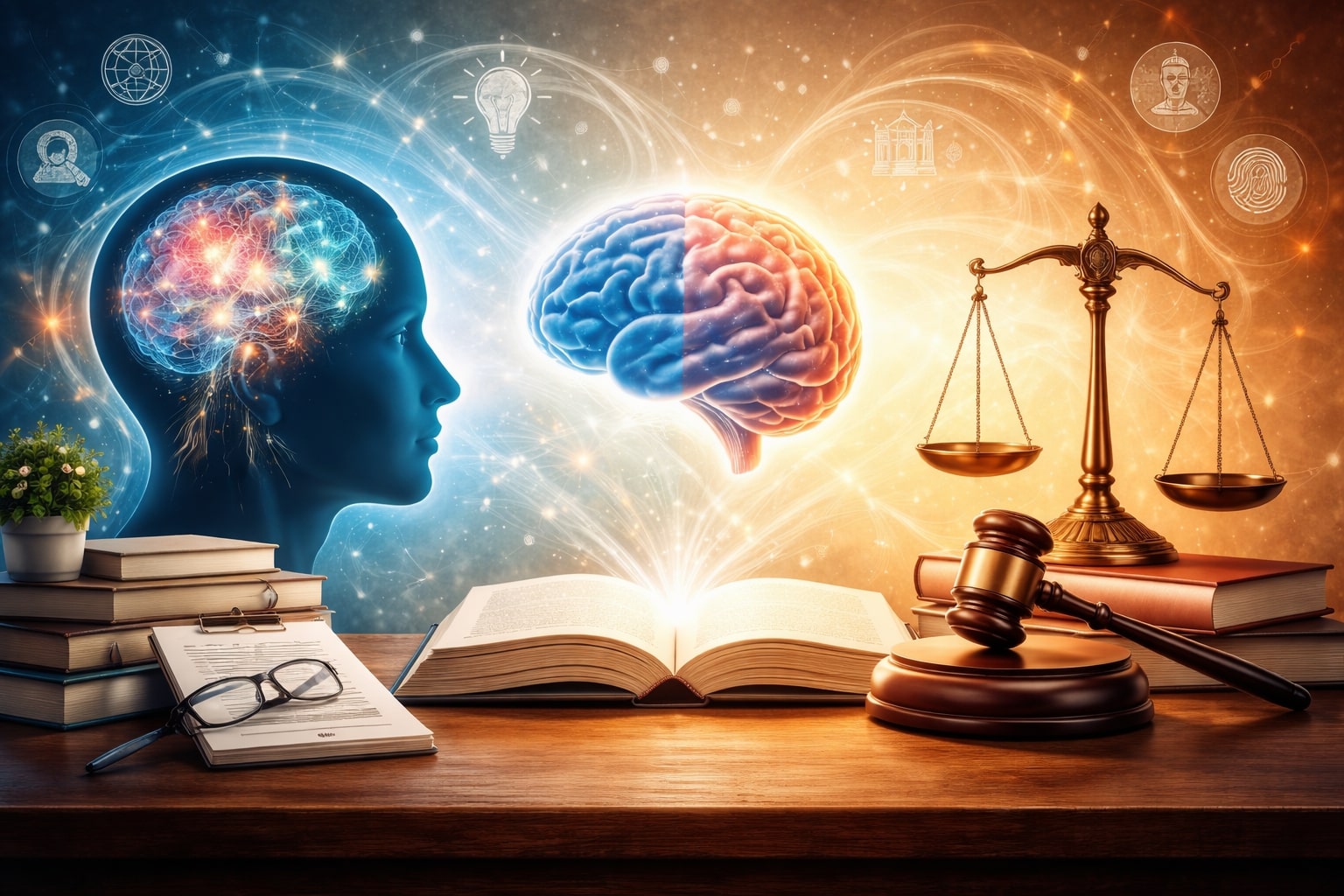
The relationship between psychology and the legal framework is deeply intertwined, as insights into human cognition, emotions, and behavior aid judicial systems in comprehending the root causes of criminal acts and evaluating the credibility of testimonies. For instance, recognizing that human memory is inherently prone to distortion prompts courts to scrutinize eyewitness accounts with greater caution. Concurrently, the legal system imposes boundaries on the profession of psychology, establishing regulations governing permissible practices, research methodologies, and protocols for safeguarding confidential information.
A notable example is India’s Protection of Children from Sexual Offenses (POCSO) Act, which compels mental health professionals to disclose instances of child abuse they encounter in their practice. This illustrates how the two domains continuously shape one another, fostering a legal environment where equitable decision-making, the protection of individual rights, and enhanced investigative techniques contribute to more just outcomes and improved judicial rulings. Mandatory reporting under POCSO applies broadly but poses ethical challenges for psychologists.
The Influence of Psychology on Legal Systems
- Understanding the Roots of Criminal Conduct: Psychology offers critical insights into human motives, intent, and mental states—factors that are essential in determining legal accountability. In India, the Bhartiya Nyaya Sanhita, 2023 acknowledges this through Section 22, which provides for what is commonly known as the “insanity defence.” According to this provision, individuals suffering from a mental disorder that impairs their understanding of their actions may be exempt from full criminal liability.
- Indian judgments
Gian Kaur v. State of Punjab (1996): In this case, the Supreme Court upheld the criminalization of abetment of suicide under Section 306 IPC, ruling that Article 21 does not include a right to die. It distinguished rational suicide from acts by vulnerable or insane individuals needing protection, though it is not a direct insanity defense case.
State of Maharashtra v. Suresh (2000): The court reduced the offender’s sentence after psychological evaluations indicated a significantly impaired mental state affecting their judgment.
Ashiruddin Ahmad v. King (1949): A foundational case applying the M’Naghten Rules (basis of Section 84 IPC): The accused, suffering from delusions, killed his son believing it was a sacrifice to God. The court acquitted him, holding he did not know the nature/quality of the act or that it was wrong.
Hari Singh Gond v. State of Madhya Pradesh (2008): Supreme Court clarified that Section 84 provides a legal test (not medical) for insanity: Mere mental illness or abnormality (e.g., emotional imbalance, irresistible impulse) does not exempt unless it prevents understanding the act’s nature or wrongfulness. Emphasizes the distinction between legal and medical insanity.
State of Madhya Pradesh v. Ahmadullah (1961): Stresses the burden on the accused to prove unsoundness of mind at the time of the offense; prior or subsequent insanity alone is insufficient.
Shine Kumar v. State of Kerala (Kerala High Court): Acquitted the accused under Section 84 after he killed his parents, citing family history of insanity, lack of motive, and no attempt to flee—factors raising reasonable doubt about mens rea.
Sheela Barse v. Union of India (1986): The Supreme Court advocated for humane and reformative treatment of juvenile delinquents, highlighting their unique psychological needs.
The Juvenile Justice (Care and Protection of Children) Act, 2015 mandates psychological evaluations before determining appropriate rehabilitation or intervention strategies for minors in conflict with the law.
- Global perspective
- The M’Naghten Rules (UK, 1843) established a foundational legal standard for insanity, focusing on whether the accused could comprehend the nature and moral wrongness of their actions at the time of the crime.
- The Role of Memory in Legal Testimony: Cognitive psychology reveals that human memory is fallible, influenced by stress, suggestion, and perception biases. As a result, eyewitness accounts—though often compelling—can be misleading. Courts have increasingly recognized these limitations and now approach such testimony with greater scrutiny, requiring corroborating evidence.
- R v. Turnbull (UK, 1976): This ruling laid down procedural guidance for judges on assessing the reliability of eyewitness identification, stressing the need for caution, especially in cases with weak or suggestive identification procedures.
- Adolescent Development and Justice for Young Offenders: Neuroscientific and developmental psychology show that the adolescent brain is still maturing, particularly in areas governing impulse control, risk assessment, and emotional regulation. This justifies treating young offenders differently from adults, with a focus on rehabilitation rather than punishment.
- Roper v. Simmons (USA, 2005): The U.S. Supreme Court ruled that executing individuals for crimes committed before the age of 18 violates constitutional protections, citing scientific evidence on the ongoing development of the adolescent brain.
Integrating Psychological Expertise in Judicial Proceedings: Mental health assessments conducted by trained professionals play a vital role in legal decision-making. They assist courts in determining a defendant’s competency to stand trial, assessing the likelihood of future harm, and identifying factors that may warrant leniency during sentencing. In India, the Mental Healthcare Act, 2017 mandates that individuals with mental illness be prioritized for treatment and support, promoting a more compassionate and evidence-based justice system.
The Intersection of Law and Psychology
Legal frameworks play a foundational role in guiding the practice, research, and ethical responsibilities of psychologists, ultimately safeguarding public welfare.
- Professional Boundaries – Statutory requirements enforce critical ethical practices such as maintaining client confidentiality, obtaining informed consent, and reporting specific legal obligations, including those outlined in laws like the POCSO Act.
- Governance of Research – Institutional and national standards, such as the guidelines issued by India’s ICMR, regulate psychological studies involving human subjects to ensure integrity, safety, and ethical rigor.
- Influence on Public Policy – Findings from psychological research inform the development of effective societal policies, including road safety measures, interventions for domestic abuse, and strategies for offender rehabilitation.
Key Provision/Case Laws and the Psychological Ideas Behind Them
| Law / Case | Country | Psychological relevance |
| BNS Section 22 | India | Allows an “unsound mind” defence; needs a psychological assessment |
| Gian Kaur v. Punjab (1996) | India | Upheld criminalization of abetment of suicide; distinguished protection for vulnerable/insane individuals from rational acts, but not a direct insanity defense case. |
| State of Maharashtra v. Suresh (2000) | India | Sentencing reduced because of impaired mental capacity |
| Juvenile Justice Act, 2015 | India | Applies developmental psychology for youth offenders |
| Sheela Barse v. Union of India (1986) | India | Ordered reform‑oriented treatment for juveniles |
| M’Naghten Rules (1843) | UK | Set a legal test for insanity based on understanding right/wrong |
| R v. Turnbull (1976) | UK | Provided standards for judging eyewitness reliability |
| Roper v. Simmons (2005) | USA | Barred death penalty for minors, citing brain‑development research |
| Brown v. Board of Education (1954) | USA | Used psychological studies to end school segregation |
| POCSO Act (2012) | India | Forces psychologists to report child‑abuse cases |
| Mental Healthcare Act (2017) | India | Directs courts to favour treatment over punishment for the mentally ill |
| Dusky v. United States (1960) | USA | Established that defendants must understand proceedings; requires psychological evaluation |
| Ashiruddin Ahmad v. King (1949) | India | Applied M’Naghten Rules under Section 84 IPC, now Section 22 BNS; acquitted due to delusional belief preventing understanding of act’s wrongfulness. |
| Hari Singh Gond v. State of M.P. (2008) | India | Clarified legal (not medical) test for insanity; mere mental disorder insufficient without proof of incapacity regarding act/nature/wrongfulness. |
The Two‑Way Relationship
Psychology → explains behaviour, cognition, mental health
↓
Law → uses that knowledge for criminal liability, evidence rules, juvenile treatment
↓
Legal framework → sets ethical standards, research rules, reporting duties
↓
Psychology → adapts to legal requirements, informs policy, prevention, and rehabilitation
This dynamic exchange ensures that both fields evolve in tandem, fostering a holistic approach to justice and mental health.
Key take‑aways
- Psychological expertise equips the legal system with an understanding of a person’s intent, mental state, and susceptibility.
- The legal arena regulates psychological practice through professional ethics, research safeguards, and compulsory reporting obligations.
- Statutes and judicial rulings—both in India and internationally—illustrate the intersection and mutual influence of law and psychology.
- Continuous collaboration between the two disciplines enhances the justice system, promoting greater equity, fairness, and respect for individual rights.
Suggestions for Policy
- Compulsory implementation of psychological assessments in all criminal cases to gauge deliberation and cognitive function.
- Incorporate forensic psychological education into law enforcement training programs to refine investigative techniques and minimize prejudice.
- Reform juvenile justice frameworks through evidence-based guidance from developmental and cognitive psychological studies.
- Acknowledge memory’s inherent unreliability when scrutinizing witness testimony and other forms of subjective evidence.
- Elevate ethical protocols and establish clear oversight mechanisms for psychological professionals engaged in judicial contexts.
- Educate the public on mental health awareness and legal protections to foster mutual trust and voluntary cooperation with the justice system.
Conclusion
The interplay of psychology with law makes the legal system more humane, helps preserve rights, and benefits society as a whole. Psychologists’ research aids judges in interpreting laws, deciding sentences, and developing rehabilitation plans, whereas legal rules direct psychologists’ ethical practice and research. The legal decisions of many Indian and international courts attest that embedding psychological knowledge within law produces fairer outcomes. This partnership will build a justice system that is evidence-based, compassionate, and effective.