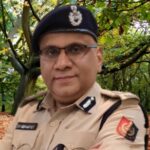
In the summer of 2011, I found myself embarking on an unexpected yet pivotal chapter of my career. After serving as Additional Superintendent of Police (SP) in Nadia, I was appointed on promotion as the Commandant of the State Armed Police, 11th Battalion, in Chharrah, Purulia. The station was located approximately 8 kilometres away from Purulia town, nestled in an area that was both harsh and unforgiving. The place, known for its scorching heat, parched lands, and an isolation that bordered on desolation, stood as a stark contrast to my previous assignments. What awaited me was not only a professional challenge but also a personal test of resilience, leadership, and the strength of family bonds. To understand the isolation of Chharrah, one must first understand its storied past.
Chharrah
Chharrah, located approximately 8-10 kilometres from Purulia town, West Bengal, holds a significant historical backdrop that many may not be aware of. The area, which is now home to two state-armed police battalions, was once the site of a bustling military airfield during World War II. Known as Chharrah Airfield, this site covers an area of 600 acres and has a story that intertwines with both the global conflict of the time and the subsequent development of the region.
Built in 1942, Chharrah Airfield played a crucial role in the Second World War. It was initially established to support the operations of the United States Army Air Force (USAAF) in the Indian subcontinent. The airfield was primarily designed to accommodate B-24 Liberator bombers, which were integral to the USAAF’s strategic operations in the Pacific Theatre. However, in 1943, the facility underwent significant upgrades to handle even more advanced aircraft, the B-29 Superfortresses, which were to play a pivotal role in the bombing campaigns over Japan.
In the years that followed, the airfield became a base for several key military units, including the 677th Bomb Squadron, nicknamed “Round Robin Rosie”, and the 444th Bombardment Squadron of the Royal Indian Air Force (RIAF). These squadrons were part of the Twentieth and Tenth Air Forces and were tasked with supporting the Allied efforts in the region. The base was a hub of activity as it prepared for the arrival of advanced Army Air Forces units, which began arriving in India in December 1943. These units worked tirelessly to upgrade the airfield, and thousands of local Indians were employed to help with the massive construction effort needed to support the new Superfortress operations.
The airfield’s strategic importance remained high until June 1945, when the last American personnel left the base, turning it over to the British colonial government. With the end of the war in sight, the need for the airfield diminished, and it was eventually abandoned. Over the years, the site fell into disuse, leaving behind remnants of its wartime past. Today, Chharrah Airfield stands as a silent witness to a significant chapter in history, far removed from its once-vibrant military past.
Despite its abandonment, the airfield and its history continue to be a part of the region’s identity. The nearby Chharrah railway station, located on the Adra-Purulia sector of the South Eastern Railway, serves as a reminder of the area’s historical connections. While the airfield may no longer host military aircraft, it remains an important landmark in the history of Purulia and the wider region, symbolising the contributions of many, both local and foreign, during one of the world’s most tumultuous periods.
But the echoes of wartime industry had long faded; by 2011, the technological marvel of the 1940s had been reclaimed by the jungle and the dust.
The Battling Conditions
The first impression of Chharrah, both the place and the battalion, was far from welcoming. The battalion’s condition was dire; the accommodation for personnel was inadequate, and even the commandant’s quarters left much to be desired. The area was not just remote – it was almost a jungle, frequently inhabited by snakes and scorpions. The temperature was relentlessly high, and the lack of proper water supply made things worse. Moreover, there were plans underway to relocate the entire battalion to Borjora, the 13th Battalion campus, in Bankura district, a move that seemed inevitable given the prevailing conditions.
Upon hearing about the state of affairs, I decided not to bring my family immediately. The decision was born out of caution. I felt it prudent to first evaluate the situation, assess the infrastructure, and make necessary arrangements before subjecting my family to such challenging conditions.
First Day in Chharrah
When I arrived at the battalion, I took charge from the Superintendent of Police (SP) of Purulia, who had been holding additional charge. My first task was to secure decent accommodation for the police personnel and myself. The residence of the commandant on the campus was in a dilapidated state – abandoned by the previous occupants, unkempt, and unsafe. But rather than feeling overwhelmed by the dire situation, I saw it as an opportunity to make a difference.
I immediately set to work, securing the residence with a makeshift barricade of tin and wood. The repairs were extensive: I had to fix the kitchen, the bathroom, the drawing room, and the bedrooms. Perhaps the most crucial job was installing a false ceiling to prevent snakes and scorpions from entering through the roof – a common problem in this area.
The task was far from easy, but after a few weeks of strenuous effort, I was able to transform the residence into a reasonably comfortable and habitable space. Once the repairs were done, I invited my family to join me in Chharrah.
However, no sooner had they arrived than misfortune struck in the form of chickenpox. Within a week of their settling in, both of my children contracted the illness. The situation was challenging, to say the least. But as is often the case with such incidents, we had to soldier on. I arranged for their treatment, ensuring they were well taken care of, while I kept the day-to-day functioning of the battalion intact. Despite the illness, I enrolled my children in a school in Purulia town. Given the 8-kilometre distance between the battalion and the school, daily commuting became a necessity. It was an inconvenience, but the well-being and education of my children were of utmost importance.
Challenges Faced by the Police Personnel
The police personnel stationed at the battalion were facing similar, if not more severe, challenges. Much like my family, they had to travel 8 kilometres to Purulia to procure basic necessities – whether it was toiletries; food items like rice and oil; or even something as simple as toothpaste and soap. The daily commute was exhausting, and the lack of infrastructure made life harder for them.
Recognising this, I resolved to make immediate improvements. The barracks, which housed the personnel, were old and decrepit. Many of them had fallen into disrepair and were unsafe. My first step was to repair the existing barracks, making them more comfortable and secure. But it wasn’t enough. The number of officers had grown, and more space was needed. To accommodate the increasing strength, I spearheaded the construction of new barracks. Along with these new structures, I made sure that sanitation was addressed, and we built new toilets to improve hygiene.
But the improvements didn’t stop there. I recognised the importance of access to basic services, such as banking and groceries. With this in mind, I arranged for an ATM to be installed on the campus. It would serve not only the police personnel but also the neighbouring villagers, who frequently came to withdraw money. We also established a small grocery store within the campus, allowing the personnel to procure daily necessities without the need to travel to Purulia Town every day. Additionally, I ensured that the local salon was upgraded so that personnel could maintain personal grooming standards.
The Water Crisis: A Battle Against the Earth
Of all the hardships at Chharrah, the water crisis was the most soul-crushing. In the blistering furnace of a Purulia summer, the lack of clean water wasn’t just a logistical failure; it was a constant, dehydrating weight on the morale of every man in the battalion. I realised quickly that my leadership would be judged not by my orders, but by my ability to find water in a desert of red dust and rock.
The terrain was our greatest adversary. Beneath the surface lay a stubborn, ancient bed of granite that had broken the will of previous teams. We brought in heavy machinery and specialists, but day after day, the rhythmic thud-thud-thud of the boring machine yielded nothing but dry, scorched powder. The operators, their skin caked in layers of fine red grit and sweat, eventually stopped. They looked at the parched horizon and began to pack their gear, convinced that Chharrah was a graveyard for hope.
I walked out into the heat and stood with them. I told them we weren’t just looking for a resource; we were fighting for the dignity of the families living here. I asked for one last effort—one final push into the heart of the stone.
The machine groaned back to life, its steel bit screaming against the bedrock. For hours, there was only the sound of friction and the oppressive silence of the surrounding jungle. Then, the vibrations changed. A low, subterranean shudder travelled through the soles of our boots.
Then came the breakthrough.
The earth didn’t just yield; it surrendered. A deafening roar erupted from the borehole as a violent geyser of crystal-clear water shattered the silence, shooting thirty feet into the midday sky. The spray was cold, fierce, and magnificent. It arched over the campus like a silver scimitar, turning the cracked, thirsty soil into a rich, dark mud in seconds.
The scene was pure jubilee. The men, who minutes ago were ready to concede defeat, ran into the spray, washing the bitter dust of weeks from their faces and uniforms. That “violent” surge of water did more than fill our tanks; it washed away the desolation of Chharrah. It was the moment the battalion realised that with enough persistence, even the most unforgiving ground can be made to bloom.
Recruitment
During my tenure as Commandant of the State Armed Police (SAP) 11th Battalion at Chharrah, Purulia, I had the privilege of holding additional responsibilities that expanded my role and provided me with a unique opportunity to contribute to the larger mission of strengthening law enforcement in West Bengal. One of the most significant roles I took on during this time was serving as the chairman of the recruitment board for the enrolment of junior constables in the West Bengal Police, which was held at the SAP 11th Battalion headquarters in Chharrah. In addition to this, I also served as the member secretary of the Range Recruitment Board for the recruitment of police constables, which was conducted at the Suri Police Lines in the Birbhum district.
These recruitment drives were not just routine administrative tasks but crucial initiatives in the broader context of law enforcement and security in the state. The Junglemahal region, which encompasses parts of Purulia, Bankura, and Jhargram, had been a hotspot for Maoist and Naxalite insurgency for several years. The recruitment of local youths as junior constables from these tribal-dominated areas played a pivotal role in the administrative efforts to combat the influence of these insurgent groups. By enlisting individuals from the local communities, the police force could establish a stronger rapport with the people and create a more localised, effective presence in the region.
The recruitment process itself was both rigorous and transparent. We carefully selected candidates who displayed the necessary physical fitness, mental acuity, and dedication to serving their communities. The local youth, many of whom had grown up in the midst of insurgent activities and faced significant socio-economic challenges, saw this as a significant opportunity to change their lives and contribute to the safety and stability of their regions. Many of them were deeply motivated by a desire to bring peace and development to their villages, which had long been affected by violence and unrest.
The strategic importance of this recruitment drive cannot be overstated. The inclusion of local youths in the police force helped bridge the gap between the law enforcement agencies and the communities they were meant to protect. These new recruits were not just law enforcement officers; they were members of the very communities they served. Their intimate knowledge of local customs, languages, and social dynamics allowed them to build trust with residents, which proved invaluable in the fight against Maoist and Naxalite forces.
This local involvement became a game-changer in the efforts to eradicate insurgent activities in the Junglemahal areas. By empowering the tribal communities and involving them directly in maintaining law and order, the police force was able to dismantle the support networks that insurgents had established in these regions because a family with a son in the police is less likely to support insurgents who threaten that son’s livelihood. The presence of local constables also served as a powerful deterrent to extremist elements, who found it increasingly difficult to operate in an area where the local population was actively working with the authorities to ensure peace and security.
As Chairman of the Recruitment Board at Chharrah and member secretary of the Range Recruitment Board in Suri, I was able to witness firsthand the transformative effect of this initiative. The success of these recruitment drives not only helped to strengthen the police force but also fostered a sense of hope and empowerment among the youth of these remote areas. It was a small yet significant step in the larger effort to bring about lasting peace and development in regions that had long been plagued by violence and instability.
Looking back, I realise that these recruitment efforts were not just about filling positions in the police force – they were about changing the very fabric of the communities we served. They were about offering a new path forward for the youth of the forest areas called Junglemahal due to the initiatives of the state administration, empowering them to take ownership of their own futures and contribute to the development of their own regions. The success of this approach was a testament to the resilience of the people in these areas and the power of community engagement in combating insurgency. It was an integral part of the larger success story of overcoming Maoist and Naxalite influence in West Bengal.
Overcoming Personal Health Challenges
While the infrastructure improvements were ongoing, I was not immune to the challenges of life in Chharrah. Soon after settling in, one day I began to experience severe stomach pain, which eventually turned out to be stones in my urinary tract. With no advanced medical facilities in Purulia, I was rushed to Bokaro for treatment. The doctors there recommended surgery, but I opted for an alternative approach – Ayurvedic treatment. Remarkably, the treatment worked, and the stones dissolved and passed naturally. A follow-up visit to a urologist in Kolkata confirmed that surgery was not needed.
Despite these personal health challenges, my resolve to improve the conditions for my family and the personnel at Chharrah remained strong. The year was filled with both physical and emotional hurdles, but through perseverance, we managed to navigate each one successfully.
A Year of Transformation
By the time my tenure in Chharrah drew to a close, the landscape had shifted entirely. The battalion was no longer a place defined by its hardships but by its progress. The dilapidated barracks had been renovated, and new structures had risen to accommodate our growing strength. The commandant’s residence, once a symbol of neglect, stood restored.
We had transformed the campus into a self-reliant community: the installation of an ATM, the upgrading of the salon, and the establishment of a co-operative store for daily necessities meant that the personnel were no longer forced to make the arduous journey to town for basic needs. Most importantly, the newfound water supply had turned a daily struggle for survival into a stable, dignified environment.
These were not just physical upgrades—they were the foundation for a profound boost in morale. The once-imminent plan to relocate the battalion to Borjora was officially abandoned, as Chharrah had evolved into a high-capacity success story, now capable of absorbing an additional battalion.
This evolution went beyond bricks and mortar; it was about fostering a sense of community and belonging. The personnel felt a deep-seated pride in the changes they had helped bring to life, and that pride translated into sharper discipline and exceptional performance.
For my family, the journey was equally transformative. Despite the early trials of illness and the harsh environment, they adapted with a resilience that mirrored the battalion’s own growth. Their unwavering support was the quiet engine behind my success, turning a daunting professional challenge into a shared victory of spirit and leadership.
Reflecting on the Experience
Looking back, my time in Chharrah was a defining chapter of my career. It taught me the importance of leadership under pressure, the value of resilience in the face of adversity, and the strength of family support. The challenges were numerous, but each one presented an opportunity to innovate and improve. What began as a daunting assignment turned into a successful transformation, thanks to the collective efforts of everyone involved.
The years I spent in Chharrah were not just about improving infrastructure – it was about improving lives. And that, in the end, was the most rewarding part of the experience.