





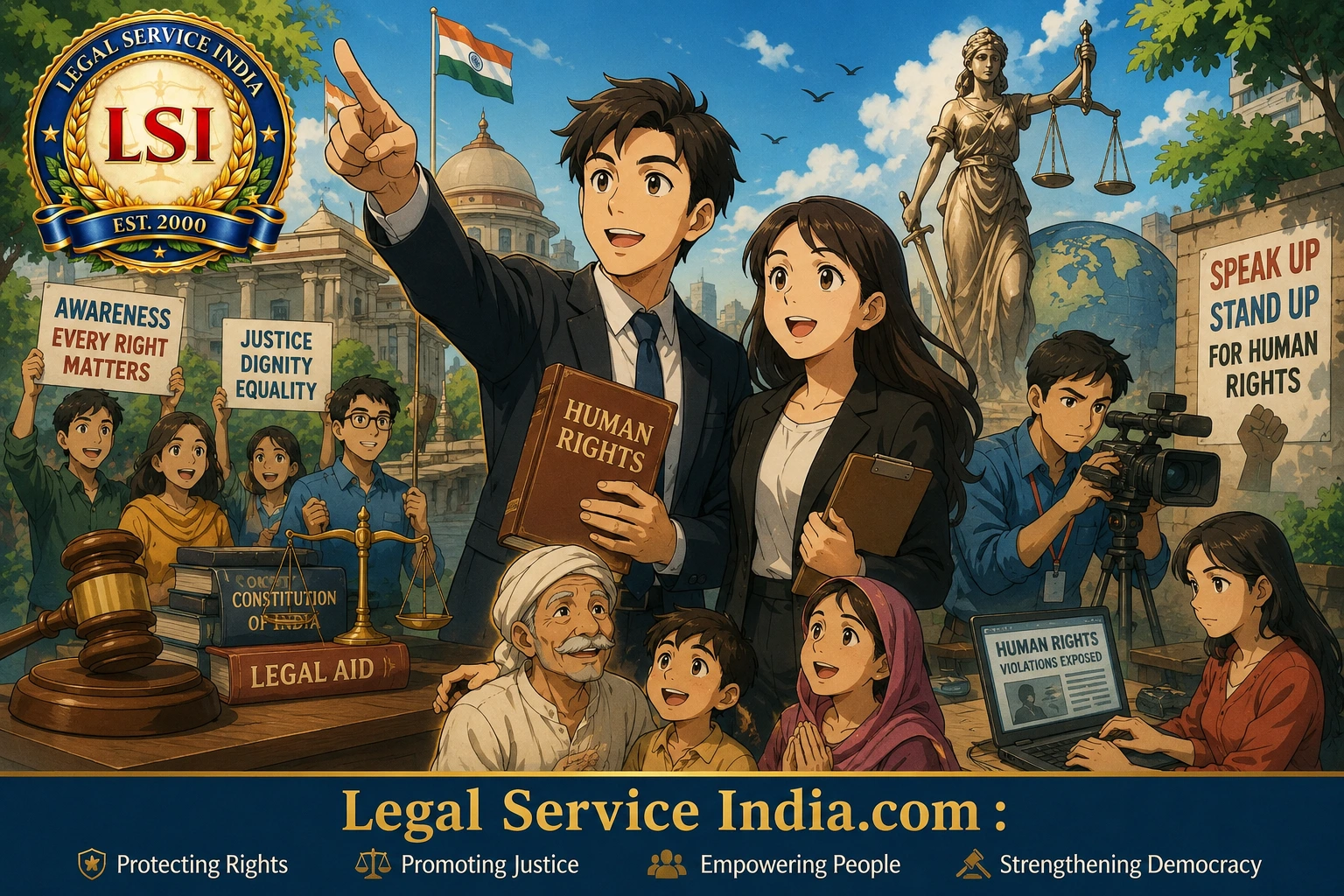
Abstract
Human rights are inalienable, fundamental standards inherent to all human beings regardless of nationality, sex, religion or status. Protection and promotion of human rights have usually been the responsibility of the state.
Human rights as enshrined in the Universal Declaration of Human Rights (UDHR) 1948 and subsequent international covenants remain perpetually threatened by state repression, institutional neglect and armed force.
Role of NGOs and Media in Human Rights Protection
This research paper examines the essential role played by the NGO and media institutions in promoting, documenting and protecting human rights at national and international levels.
In the absence of state or government authority, the non-state actors have emerged as critical watchdogs and advocated for protecting human rights.
This research paper plays a substantial role played by NGOs and media in safeguarding human rights. It analyses their key functions, challenges, contributions and interdependence in ensuring accountability, raising awareness and policy changes.
Key Human Rights Focus Areas
- Protection of fundamental human rights
- Promotion of democratic principles
- Documentation of human rights violations
- Raising public awareness
- Ensuring institutional accountability
- Encouraging policy reforms and changes
Summary of Findings
| Aspect | Role of NGOs and Media |
|---|---|
| Human Rights Protection | Safeguarding individuals against violations and abuse |
| Awareness Creation | Educating society about rights and legal protections |
| Accountability | Monitoring state and institutional actions |
| Policy Influence | Advocating reforms and legal changes |
| Democratic Strengthening | Supporting transparency and justice |
This research concludes that non-governmental organisations and media play a crucial role in strengthening democratic principles and ensuring the effective protection of human rights.
Introduction
Human rights are the foundation of a just and equitable society. They include social, political, cultural and economic rights essential for human dignity. Governments are responsible for protecting these rights, but sometimes their failure or inefficiency often leads to the necessity of intervention by civil society institutions.
Non-governmental organisations and media have appeared as powerful instruments in protecting human rights. NGOs act as watchdogs, advocates, and service providers, while the media plays a crucial role in circulating information and exposing violations of human rights. Their combined efforts contribute notably to accountability, transparency and justice.
The Universal Declaration of Human Rights (UDHR), adopted by the United Nations General Assembly on 10 December 1948, marked a crucial step in international relations by setting a comprehensive set of rights – civil, political, economic, etc. – that all states are obligated to respect and uphold.
Governments, who are the primary duty-bearers under international human rights law, frequently fail in protecting and promoting human rights and, in many cases, actively perpetrate violations against their own citizens, due to which non-governmental organisations and media institutions occupy a unique and interconnected space.
This paper examines the exhaustive study of the roles, functions, and challenges of NGOs and media in protecting human rights protections.
Key Highlights of Human Rights Protection
- Human rights ensure dignity, equality and justice for every individual.
- NGOs play the role of watchdogs, advocates and service providers.
- Media spreads awareness and exposes human rights violations.
- The UDHR serves as the foundation of modern international human rights law.
- Governments remain the primary duty-bearers under international law.
Meaning And Concept Of Human Rights
Human rights are the basic rights and freedoms that belong to every human being by virtue of being human. These rights are essential for living a life of dignity, equality and respect.
Human rights are inalienable; they should not be taken away, except in specific situations and according to due process. For example, the right to liberty may be restricted if a person is found guilty of a crime by a court of law.
The Universal Declaration of Human Rights (UDHR), adopted by the UN General Assembly in 1948, was the first legal document which set out the fundamental human rights to be protected universally.
The Universal Declaration of Human Rights, the International Covenant for Civil and Political Rights, and the International Covenant for Economic, Social and Cultural Rights together make up the International Bill of Right.
Core Features Of Human Rights
Human rights are defined by certain core features which make them unique and universally applicable. These features help us to understand why human rights are essential for every society.
| Feature | Meaning | Example |
|---|---|---|
| Universal | Human rights apply to every individual regardless of race, caste, sex, religion, nationality or social status. | Every person has the right to equality and dignity. |
| Inalienability | Human rights cannot be taken away or surrendered except according to lawful procedures. | A prisoner may lose freedom of movement but still retains basic human dignity. |
| Non-discrimination And Equality | All individuals are equal and should not face discrimination on the basis of religion, caste, gender or race. | Both men and women have equal rights to education and employment. |
| Indivisibility | All rights are interconnected and equally important. | Economic rights and political rights support each other. |
| Inherent | Human rights are given by birth and are not granted by the government. | Governments protect rights but do not create them. |
Universal Characteristics Of Human Rights
- Universal: The first and most important feature of human rights is that they are universal, which means they apply to each and every individual in the society regardless of their race, caste, sex, religion, etc. No matter who you are – rich or poor, male or female, from any country or religion – you are entitled to human rights. This principle was strongly affirmed in the Universal Declaration of Human Rights.
- Inalienability: Human rights are inalienable, which means they cannot be taken away or surrendered. A person cannot lose their basic right even if they are accused of a crime; however, in certain situations, like imprisonment, some rights, such as freedom of movement, may be restricted by law.
- Non-discrimination And Equality: The principle of human rights is that all individuals are equal and should not face discrimination on the basis of religion, caste, gender, race, etc. Example: Both men and women have the right to education and employment.
- Indivisibility: Human rights are indivisible in nature, which means that all types of rights are important and interconnected. An individual cannot fully enjoy one right without the other. Civil, political, social and economic rights all work together.
- Inherent: Human rights are inherent, which means rights given by birth and not granted by any state or government. The duty of government is to recognise and protect human rights, but it does not create them.
Concept And Non-Governmental Organisation (NGO)
Non-governmental organisations (NGOs) are voluntary, nonprofit entities that operate independently of government control and mostly engage in activities which are aimed at promoting social welfare, development and protection of rights.
The NGO term gained formal recognition in international law through the Charter of the United Nations (1945), particularly under Article 71, which allows consultative arrangements with non-governmental organisations.
The function of an NGO acts as a bridge between the state and the people, especially in those areas where governmental mechanisms are ineffective and inadequate.
NGOs are driven by values such as humanitarianism, social justice, human dignity and equality rather than profit motives.
Essential Elements Of An NGO
To be classified as an NGO, an organisation generally meets four elements:
| Element | Description |
|---|---|
| 1. Non-profit | They mainly focus on development, human dignity, and social growth rather than their own profits. They do not distribute profit to the owner and shareholder, and if there is any extra money, they reinvest that extra money back into their mission. |
| 2. Independent | They are governed by the private boards and membership, not by the government officials. |
| 3. Public Interest | Their primary motive is to improve the welfare of the society rather than their own profit. |
| 4. Voluntary | They often rely on a mix of professional staff and volunteers who are motivated by a common cause. |
Role Of Non-Governmental Organisations (NGO) In Protecting Human Rights
The primary responsibility of protecting human rights is on the state; however, the state often fails to protect human rights due to political, economic and institutional constraints.
In such situations, NGOs play a crucial role in ensuring the protection and promotion of human rights.
1. NGOs Act As Watchdogs Of Human Rights
One of the most important roles of NGOs is to act as watchdogs of human rights violations.
NGOs consistently monitor the human rights condition at local, national and international levels.
They document violences such as custodial violence, arbitrary detention, gender-based violence and child exploitation.
NGOs frequently carry out autonomous fact-finding missions in regions affected by conflict or crisis.
These missions reveal on-the-ground truths that might otherwise be obscured by governmental censorship or insufficient media access.
- Monitor human rights violations.
- Conduct fact-finding missions.
- Document abuses and injustices.
- Expose hidden human rights concerns.
2. Advocacy And Awareness Creation
NGOs play a significant role in educating the public about their rights.
NGOs fulfil this objective through various campaigning, workshops and community programmes which empower individuals to recognise and assert their rights.
Awareness is particularly crucial for developing countries where illiteracy and lack of access to information prevent people from claiming their rights.
NGOs shape public discourse and generate pressure on government by highlighting the injustices, and their campaigns often lead to social movements and mass mobilisation.
- Organise campaigns and awareness drives.
- Conduct workshops and community programmes.
- Promote legal and social awareness.
- Encourage public participation and mobilisation.
3. Legal Intervention And Access To Justice
In developing countries like India, NGOs have revolutionised access to justice through public interest litigation (PIL).
They file petitions on behalf of marginalised sections or communities who cannot approach the court themselves.
They also provide free legal assistance to victims of human rights violations, which include legal counselling, representation in court and assistance in filing a complaint.
- File Public Interest Litigations (PILs).
- Provide legal counselling.
- Offer court representation.
- Assist victims in filing complaints.
4. Humanitarian Assistance And Service Delivery
NGOs provide immediate relief during natural disasters, calamities, armed conflicts and humanitarian conflicts.
They provide services such as providing shelters, medical care and psychological support.
Apart from immediate relief, they also work on long-term development initiatives such as healthcare, education and livelihood programmes.
These efforts address the root cause of human rights violations, such as poverty and inequality.
- Provide disaster relief and rehabilitation.
- Offer healthcare and medical support.
- Support education and livelihood programmes.
- Address poverty and inequality.
5. Empowerment Of Marginalised Groups
The NGO focuses comprehensively on marginalised sections of society, including women, children, minorities and persons with disabilities.
They provide education, training and skill development programmes to enable individuals to be self-reliant.
- Support women and children.
- Promote minority rights.
- Assist persons with disabilities.
- Encourage self-reliance through education and training.
Role of Media in Protecting Human Rights
In modern democratic societies media acts as a fourth pillar of democracy, alongside the legislative, judiciary and executive. Its primary function is to inform, educate and hold power accountable. Responsible in the context of human rights, the media plays a fundamental role by ensuring transparency, exposing violations and shaping public discourse.
The development of digital technology and international communication media has become increasingly important in the preservation of human rights. It serves as a catalyst for social change and justice in addition to being a source of information.
Media includes all channels of mass communication, such as print media (newspapers, journals), broadcast media (television, radio) and digital media (social media, online platforms), and in a human rights context, media acts as a mediator between the state and citizens. It enables the flow of information regarding rights, violations and remedies, thereby strengthening democratic governance and accountability.
Major Roles of Media in Protecting Human Rights
| Role of Media | Importance in Human Rights Protection |
|---|---|
| Awareness and Education | Educates people about legal, constitutional and human rights. |
| Investigative Journalism | Exposes corruption, abuse and human rights violations. |
| Watchdog Function | Ensures accountability and transparency in governance. |
| Digital Media Reporting | Enables instant sharing of violations and social issues. |
| Protection of Vulnerable Groups | Highlights concerns of marginalised and disadvantaged communities. |
1. Media Act as an Instrument of Awareness and Education
One of the significant roles of media is to inform the public about their rights. Media perform this role by reporting on laws, policies, and social issues.
Media help individuals to understand their fundamental rights, basic rights, and legal rights. Media also contributes to human rights education by broadcasting documentaries, publishing investigative reports and hosting debates and discussions.
- Creates awareness regarding constitutional and legal rights.
- Educates citizens through debates, reports and documentaries.
- Encourages public participation in democratic processes.
2. Investigative Journalism and Exposure of Violations
Investigative journalism is one of the most important and strongest tools for protecting human rights. Journalists conduct in-depth research to expose custodial violence, human trafficking and corruption.
Media exposes lead to judicial enquiries, policy reform and government investigations.
- Reveals hidden human rights violations.
- Encourages judicial intervention and policy reforms.
- Strengthens accountability of public authorities.
3. Media as a Watchdog of Democracy
The media keep an eye on the actions of the government and also scrutinise their policies and actions. By scrutinising policies and decisions, it ensures that authorities do not abuse their power.
The media watchdog function is very crucial for promoting transparency, upholding the rule of law and preventing authoritarianism.
- Promotes transparency in governance.
- Checks misuse of governmental power.
- Supports democratic accountability.
4. Role of Social Media and Digital Platforms
The growth of digital media plays a crucial role in protecting human rights because it enables the ordinary individual to report human rights violations through videos, photos and social media posts.
Digital platforms make it difficult for the authorities to suppress information because they allow instant reporting of events, which enhances transparency and accountability.
- Allows instant sharing of information.
- Increases transparency and public awareness.
- Empowers ordinary citizens to report violations.
5. Media and Protection of Vulnerable Groups
Media plays a comprehensive role in covering issues which are of concern to marginalised communities, including women, children, minorities and refugees.
By covering stories of marginalised groups, media ensure that their concerns are heard and addressed. Media campaigns can challenge stereotypes and promote equality, contributing to social integration and justice.
- Raises issues faced by vulnerable communities.
- Promotes equality and social justice.
- Challenges stereotypes and discrimination.
Challenges Faced by NGO and Media
While NGOs and media play an important role in protecting human rights, they also face several constraints from a variety of structural, political, financial and ethical challenges.
These challenges not only limit their effectiveness but also undermine their credibility and independence.
Challenges Faced by NGO’s
| Challenge | Impact on NGOs |
|---|---|
| Financial Constraint and Dependency | Affects independence and long-term planning. |
| Limited Reach and Capacity | Restricts large-scale impact and outreach. |
| Security Risk and Threat | Creates fear, intimidation and operational difficulties. |
1. Financial Constraint and Dependency
One of the most substantial challenges faced by NGOs is lack of sustainable funding. NGOs rely heavily on donations, government funding and grants from international agencies.
This financial dependency creates several issues, like reduced autonomy in decision-making, influence of donors on organisational priorities and uncertainty in long-term planning.
- Reduced autonomy in organisational decisions.
- Dependence on external funding sources.
- Difficulty in long-term planning and sustainability.
2. Limited Reach and Capacity
Many NGOs who work on a grassroots level always struggle with limited human resources, lack of technical expertise, financial problems and inadequate human resources, which leads to a result that their ability to influence large-scale populations and to protect human rights on a massive scale is restricted.
- Lack of technical expertise and manpower.
- Financial limitations affect operational efficiency.
- Restricted outreach in remote and rural areas.
3. Security Risk and Threat
Human rights defenders working with NGOs often face serious risks like threats and intimidation, physical violence and arbitrary detention by the police authorities.
These are particularly common in conflict zones where activism is perceived as a threat.
- Threats and intimidation against activists.
- Risk of physical violence and detention.
- Challenges in conflict-prone regions.
Challenges Faced by Media
Media plays a significant role in protecting human rights and promoting democratic values. However, media organisations face several challenges that affect their ability to function freely and effectively.
1. Censorship and Restriction on Freedom of Press
Freedom of press is a most crucial factor of protecting human rights at large scale, but media organisations often face censorship through government control, legal restrictions and licence requirements. In India, freedom of speech and expression is provided under Article 19(1)(a) of the Constitution of India, but it is subject to reasonable restriction, which can sometimes be used to curb press freedom.
- Government control over media operations
- Legal restrictions and licence requirements
- Limitations imposed under reasonable restrictions
- Threats to independent journalism and free expression
2. Spread of Fake News and Misinformation
With the rise of digital platforms, which have facilitated the rapid spread of misinformation, fake news can mislead the public, incite violence and undermine democratic processes. This shows a serious threat to the credibility of media and its role in protecting human rights.
| Issue | Impact on Society |
|---|---|
| Fake News | Misleads the public and spreads confusion |
| Misinformation | Undermines democratic processes |
| Digital Manipulation | Incites violence and social unrest |
| Loss of Credibility | Weakens trust in media institutions |
3. Threat to Journalists
Journalists reporting on sensitive issues frequently face harassment and intimidation and physical attacks by the workers of the political parties. They often face legal action such as defamation suits. These threats create a climate of fear and discourage investigative journalism.
- Harassment and intimidation
- Physical attacks on journalists
- Defamation suits and legal pressure
- Fear that discourages investigative journalism
Conclusion
The protecting of human rights is a huge responsibility that extends beyond the government and authorities. NGOs and media come out as the most powerful forces in promoting justice, equality and accountability. NGOs act as a watchdog, advocate and service provider, while media serve as an informer, educator and catalyst for change.
Despite facing numerous problems or challenges, their role remains crucial in building a just and democratic society. NGOs and media combine efforts to create a robust mechanism for safeguarding human rights. In the evolving global landscape, NGOs continue to play a pivotal role in bridging the gap between the state and society, thereby strengthening democratic governance and promoting human dignity.
Strengthening the freedom and responsibility of media and NGOs is therefore essential for the realisation of human rights.
References
- https://en.wikipedia.org/wiki/Non-governmental_organization
- https://www.humanrightscareers.com/issues/whats-the-role-of-the-media-in-protecting-human-rights/
- https://blog.ipleaders.in/role-of-ngos-in-human-rights/
Written By: Suryansh Pandey, B.A.L.L.B., 4th Year; Dr Satish Chandra, School Of Law, Justice & Governance, Gautam Buddha University, Greater Noida, India

