




When parents separate, the first question is almost always the same: what happens to our child?
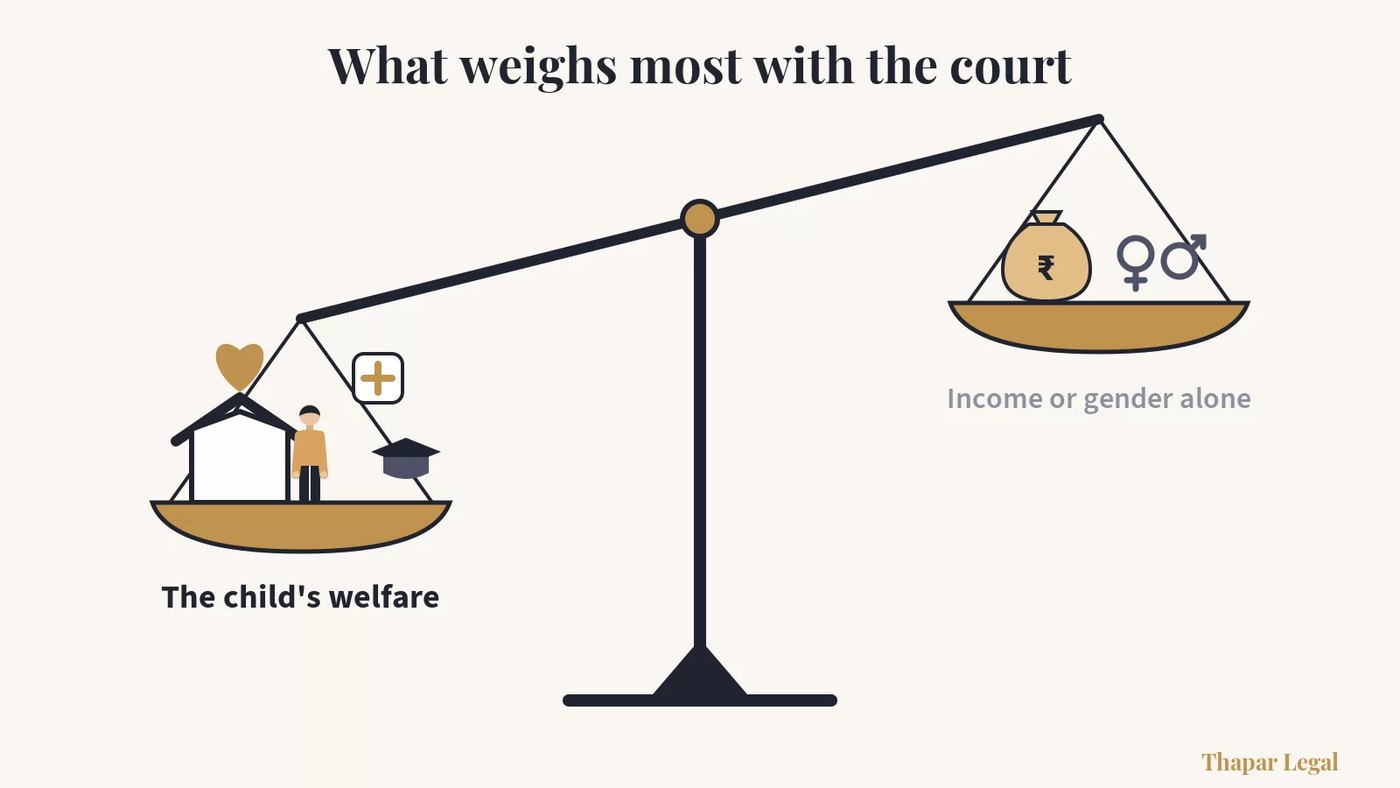
The answers people hear from relatives, friends and the internet are often confident and often wrong. Indian custody law turns on one idea above all others: the welfare of the child. Not who earns more, not who “wins” the divorce, and not which parent is the mother or the father.
Common Myths About Child Custody in India
Myth 1: The Mother Always Gets Custody
Under Section 6 of the Hindu Minority and Guardianship Act, a child under five should ordinarily be with the mother, and the Supreme Court underlined this in Roxann Sharma v. Arun Sharma (2015). But Section 13 of the same Act makes the child’s welfare the paramount consideration. The mother starts from a strong position, not a guaranteed one.
Myth 2: The Parent Who Earns More Wins
Income matters because children need food, school and healthcare. It does not decide custody. A father who earns far more but works twelve-hour days and travels constantly does not automatically outweigh a mother who has handled school, doctors and routine for years. And the higher earner can be ordered to contribute to the child’s maintenance even if the child lives with the other parent.
Myth 3: A Father Has No Real Chance
In Githa Hariharan v. Reserve Bank of India (1999), the Supreme Court treated both parents as equal guardians. Fathers succeed where they have been the main carer, where an older child is settled with them, or where the other home is unstable. Courts also distinguish between guardianship (the right to make decisions) and custody (where the child lives day to day), so both parents usually remain guardians.
Myth 4: The Child’s Choice Settles It
Section 17 of the Guardians and Wards Act lets the court consider the preference of a child old enough to form one, and judges often speak privately to children from around nine or ten. The wish is one factor among several. The court checks whether it is mature, freely given and good for the child, especially where one parent may have influenced it.
Myth 5: The Other Parent Loses Contact
Unless there is a real risk to the child, courts protect the bond with both parents. In Yashita Sahu v. State of Rajasthan (2020), the Supreme Court said a child is not property to be fought over, and recognised video calls as a way to keep that bond across distance. Weekends, holidays, festivals and calls are standard parts of a custody order.
Two Things Worth Knowing Early
1. You Do Not Have to Wait for the Divorce to End
Courts grant interim custody while a case runs, and a parent who has separated without filing for divorce can still apply under the Guardians and Wards Act.
2. Special Considerations for NRI Families
For NRI families, India has not signed the 1980 Hague Convention on child abduction. A foreign custody order is taken seriously but does not bind Indian courts automatically, and a parent whose child has been taken can file a habeas corpus petition in the High Court or the Supreme Court. Speed matters: the longer a child stays somewhere new, the more weight a court may give to the new routine.
Child Custody, Maintenance and Legal Guidance
Custody and money are separate questions, but they usually arrive together. This guide covers how maintenance for children is decided, and the full guide to child custody in India walks through every law, from the Guardians and Wards Act to Muslim, Christian and Parsi personal law.
The strongest custody case is not built against the other parent. It shows, with real evidence and a practical plan, how the child’s stability and relationship with both parents will be protected. Where a dispute is already underway, an experienced divorce and family lawyer can help build that child-focused case from interim orders to the final decision.