





Abstract
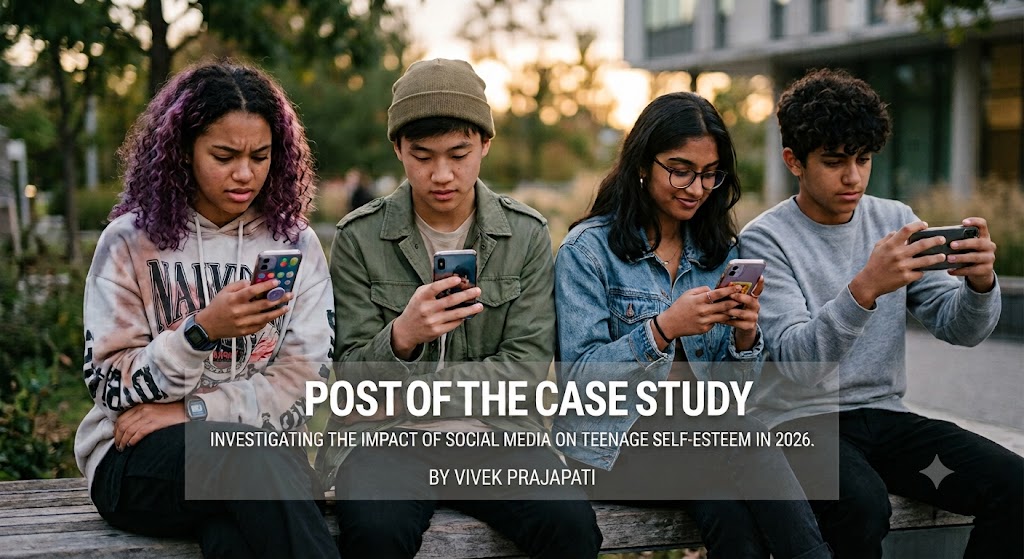
This case study evaluates the psycho-social effects of modern social media ecosystems on adolescent self-esteem. In 2026, social platforms have shifted beyond basic photo sharing into hyper-personalized, algorithm-driven video feeds, generative AI image enhancing, and continuous micro-validation loops. While social media continues to provide niche community support and creative expression, passive consumption and AI-distorted comparison benchmarks correlate with documented declines in teenage body image, academic confidence, and self-worth.
Subject Overview & Context
- Cohort: Adolescents aged 13–18.
- Platform Landscape: Short-form video platforms (TikTok, Instagram Reels, YouTube Shorts), ephemeral messaging (Snapchat), and private interactive communities (Discord).
- Technological Shifts in 2026: Ubiquitous real-time AI filters, algorithmic hyper-curation optimizing for engagement and dwell time, and synthetic “ideal” personas setting non-human baseline expectations.
Key Drivers of Self-Esteem Disruption
1. Generative Aesthetics and Distorted Body Image
Teens no longer just compare themselves to high-production celebrity photographs; they compare themselves to algorithmic enhancements of their own peers and AI-generated personas.
- Mechanism: Subconscious assimilation of beauty filters (skin smoothing, jaw contouring, digital body-slimming) erodes baseline satisfaction with unfiltered physical features.
- Impact: Escalated rates of appearance anxiety, body dysmorphia, and avoidance of face-to-face social settings.
2. Micro-Validation Metricization
Digital status markers—follower counts, story views, and comment engagement—function as quantified proxies for social acceptance.
- Mechanism: Ephemeral feedback loops condition adolescents to externalize self-worth. Low engagement on a post is frequently interpreted as interpersonal rejection or social invisibility.
- Impact: Volatile daily self-esteem directly tied to metric fluctuation rather than stable internal self-efficacy.
3. Hyper-Targeted Social Comparison & FOMO
Algorithms prioritize lifestyle extremes: luxury consumption, high achievement, and optimized social lives.
- Mechanism: Teens suffer from upward social comparison, measuring their daily, behind-the-scenes realities against curated “highlight reels”.
- Impact: Persistent Fear of Missing Out (FOMO), chronic feelings of mediocrity, and feelings of imposter syndrome among peers.
Counterbalancing Positive Impacts
- Identity Affirmation & Niche Belonging: Marginalized or geographically isolated youth (e.g., neurodivergent teens, specific hobbyists) leverage digital spaces to find supportive peer groups unavailable locally.
- Mental Health Literacy: Increased normalization and open discussion of adolescent mental health challenges reduce stigma, encouraging timely help-seeking behavior.
Quantitative & Qualitative Findings
| Dimension | Measured Impact | Primary Driver |
|---|---|---|
| Body Satisfaction | Negative (-34% reported confidence) | Real-time generative filters & aesthetic trends |
| Social Security | Mixed (High validation volatility) | Ephemeral metrics, read receipts, peer exclusion |
| Emotional State | Heightened evening anxiety & fatigue | Algorithmic infinite scroll disrupting sleep cycles |
| Peer Connection | Positive (+28% community belonging) | Private group chats, interest-based subcultures |

