Male Circumcision
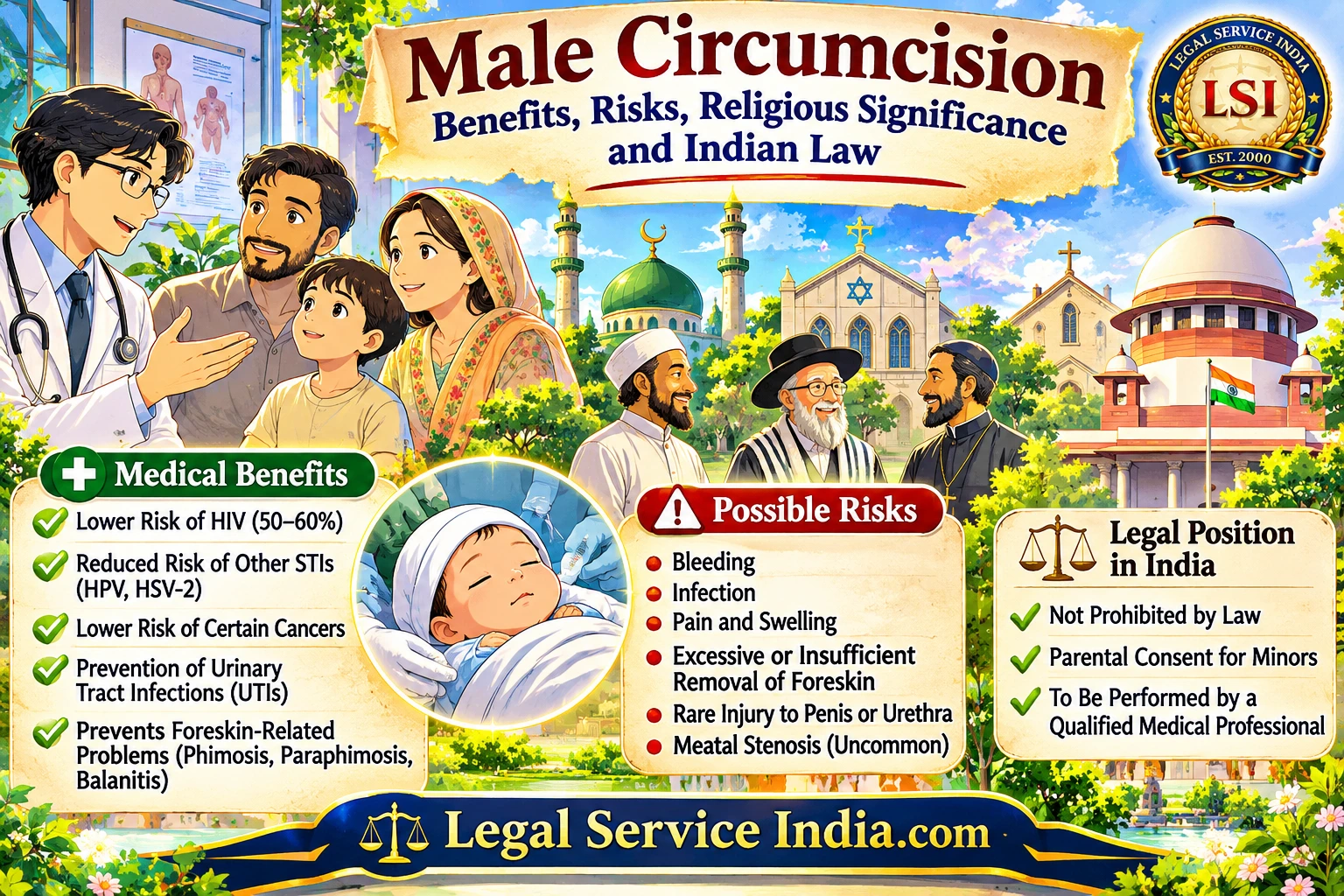
Male circumcision is a surgical procedure in which the foreskin covering the tip of the penis is removed. It is one of the oldest and most widely practised surgical procedures in the world and is performed for medical, religious, cultural and personal reasons. Medical research has identified several health benefits associated with circumcision, while also recognising that, like any surgical procedure, it carries certain risks.
Medical Benefits of Male Circumcision
Protection Against HIV
Research shows that circumcised men have approximately a 50–60% lower risk of acquiring HIV through heterosexual contact with an infected female partner. Removal of the foreskin reduces the likelihood of the virus entering the body through the inner foreskin tissue. This protective effect is most significant in settings with high heterosexual HIV prevalence; the absolute benefit is smaller in low-prevalence populations. Circumcision provides only partial protection and does not replace the consistent use of condoms or other proven prevention methods.
Protection Against Other Sexually Transmitted Infections (STIs)
Circumcision reduces the risk of certain STIs, particularly human papillomavirus (HPV) and genital herpes (HSV-2). It may also lower the risk of some other infections, though it does not offer complete protection against all STIs.
Reduced Risk of Certain Cancers
Penile cancer is rare. Circumcision, especially when performed in infancy or childhood, is associated with a lower risk of this disease. By reducing the transmission of high-risk HPV types, it may also indirectly lower the risk of cervical cancer in female partners.
Prevention of Urinary Tract Infections (UTIs)
Uncircumcised infant boys have a higher risk of urinary tract infections, particularly in the first year of life. Circumcision significantly reduces this risk, although the majority of uncircumcised boys do not develop UTIs.
Prevention of Foreskin-Related Problems
Circumcision prevents conditions such as phimosis (a foreskin that is too tight to retract), paraphimosis (a retracted foreskin that cannot return to its normal position and may compromise blood flow), and balanitis (inflammation or infection of the glans). Some of these conditions can also be managed medically or through alternative procedures.
Possible Risks and Complications of Male Circumcision
When performed by trained medical professionals under sterile conditions, circumcision is generally safe. Possible complications include bleeding, infection, pain, swelling, excessive or insufficient removal of foreskin, and, rarely, injury to the penis or urethra. Another uncommon complication is meatal stenosis (narrowing of the urethral opening). Proper medical supervision, sterile technique and adequate pain relief help minimise these risks.
Infant circumcision is regarded as an elective procedure by major paediatric associations, including the American Academy of Paediatrics. While the AAP has stated that the health benefits outweigh the risks, it does not recommend routine universal circumcision for all newborns.
Religious and Cultural Traditions of Male Circumcision
Circumcision has been practised for thousands of years and remains an important religious and cultural tradition in several communities.
Circumcision in Islam (Khitan or Khatna)
In Islam, male circumcision is known as ‘khitan’ or ‘khatna’. It is associated with personal cleanliness, hygiene and spiritual purity (Taharah). Although circumcision is not mentioned by name in the Quran, Muslims follow it as a tradition linked to Prophet Ibrahim (AS). The Quran states, “Then We revealed to you (O Muhammad): Follow the religion of Abraham…” (Surah An-Nahl, 16:123).
According to Prophet Muhammad (PBUH), circumcision is one of the natural practices of cleanliness (Fitrah). A well-known Hadith lists five practices of Fitrah: circumcision, shaving the pubic hair, trimming the moustache, clipping the nails and removing armpit hair (Sahih al-Bukhari and Sahih Muslim). Islamic scholars differ on its legal status. Some regard it as obligatory (Wajib), while others consider it a strongly recommended practice (Sunnah Mu’akkadah). In contemporary practice, circumcision is generally performed during infancy or childhood.
Circumcision in Judaism (Brit Milah)
In Judaism, circumcision is called Brit Milah, meaning the Covenant of Circumcision. It is a fundamental religious obligation and a sign of the covenant between God and the prophet Abraham. According to the Torah (Genesis 17:10–12), male children are to be circumcised on the eighth day after birth. The ceremony is traditionally performed by a trained religious practitioner known as a Mohel, provided the infant is medically fit.
Other Religious and Cultural Traditions
Some Christian communities, particularly Coptic and Ethiopian Orthodox Christians, practise male circumcision as part of their cultural and religious heritage. Mainstream Catholic and Protestant Christianity does not treat circumcision as a religious obligation. In several African communities, including the Xhosa and Maasai, circumcision serves as an important traditional rite of passage marking the transition from boyhood to manhood. Certain indigenous communities in other parts of the world also observe it as a cultural practice.
Legal Position of Male Circumcision in India
Male circumcision is not prohibited by any specific Indian law and is commonly performed for medical, religious and cultural reasons. When the procedure is carried out on a minor, informed consent must be obtained from the parent or legal guardian in accordance with applicable medical and legal requirements. The procedure should be performed by a suitably qualified medical professional under safe and hygienic conditions, with due regard for the child’s health, safety and best interests. Regulation 7.16 of the National Medical Commission’s Code of Medical Ethics Regulations, 2002, addresses the requirement of consent before surgical operations, including those performed on minors.
Conclusion
Male circumcision holds medical, religious, cultural and social significance. Medical research recognises several potential health benefits, particularly in reducing the risk of certain infections and foreskin-related conditions. At the same time, the procedure carries risks and is not medically necessary for every male. Any decision regarding circumcision should therefore take into account the medical benefits and risks, the requirement of informed consent, religious or cultural beliefs, and the individual’s overall health and circumstances.
References and Important Sources
Medical Sources
- World Health Organization (WHO), Voluntary Medical Male Circumcision for HIV Prevention.
- Centers for Disease Control and Prevention (CDC), Male Circumcision and HIV Prevention.
- Morris, B. J., Krieger, J. N. and Klausner, J. D. (2017), CDC’s Male Circumcision Recommendations Represent a Key Public Health Measure, Global Health: Science and Practice, 5(1), 15–27.
Islamic Sources
- Quran, Surah An-Nahl (16:123).
- Sahih al-Bukhari, Hadith on Fitrah.
- Sahih Muslim, Hadith 257.
Jewish Sources
- Torah, Genesis 17:10–14.
- Leviticus 12:3.
Indian Legal Source
- National Medical Commission, Code of Medical Ethics Regulations, 2002, Regulation 7.16.