Introduction
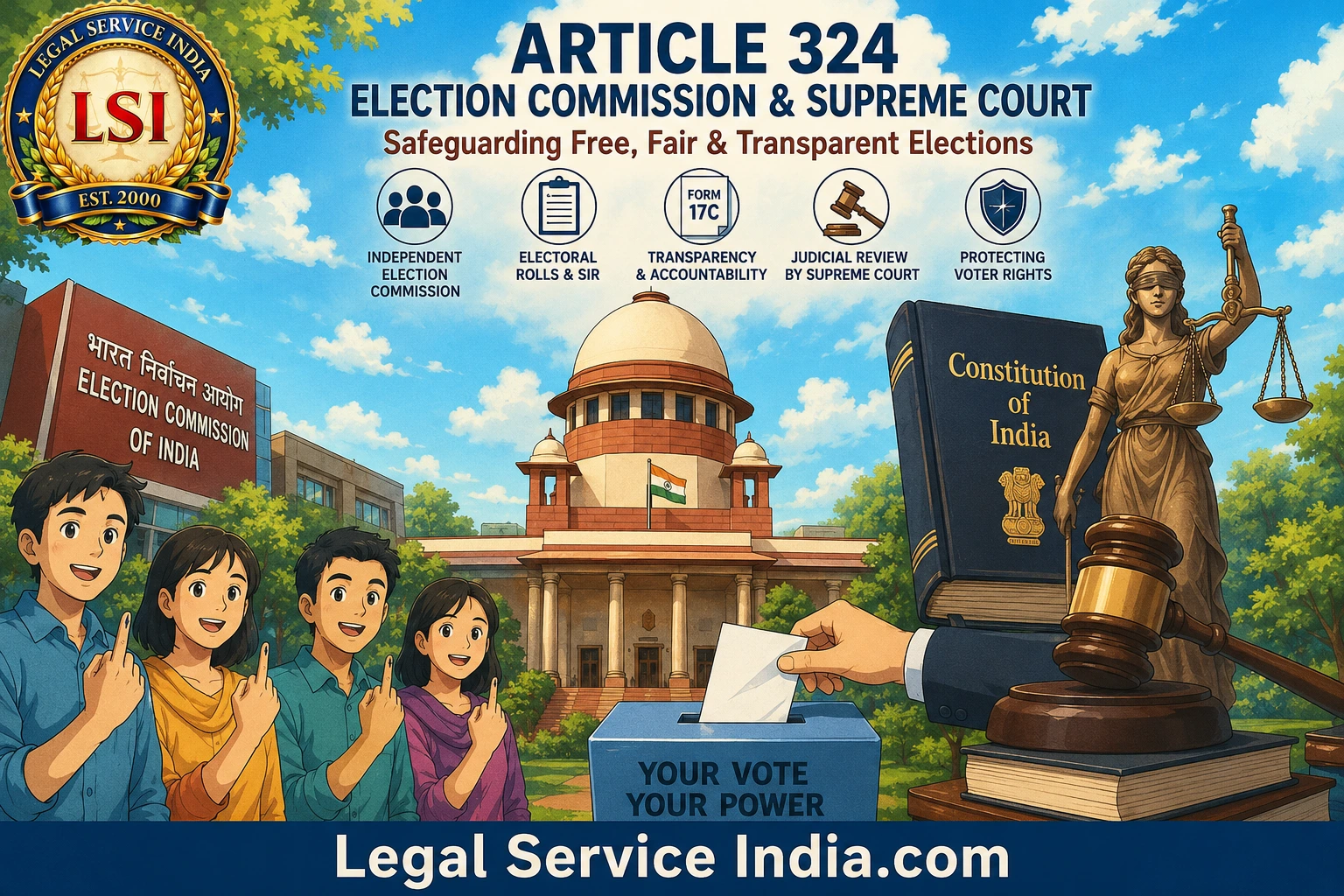
India’s constitutional democracy rests upon one fundamental promise—that every eligible citizen has an equal opportunity to elect representatives through free, fair and transparent elections. The Constitution entrusts this solemn responsibility to the Election Commission of India (ECI) under Article 324, while the Supreme Court of India acts as the ultimate constitutional guardian whenever questions arise regarding electoral fairness or institutional independence.
Recent public debates surrounding the appointment of Election Commissioners, the Special Intensive Revision (SIR) of electoral rolls, allegations relating to deletion of voters, transparency in electoral records, and the role of the Supreme Court have once again brought India’s electoral framework under intense scrutiny. The uploaded transcript reflects these concerns as expressed in a public address, raising constitutional questions about institutional accountability, electoral transparency, and judicial intervention.
It is important to note at the outset that many assertions discussed in the speech are allegations and viewpoints expressed by the speaker. Several issues remain subjects of pending litigation or political debate. Accordingly, this article analyses the constitutional and legal framework without treating disputed allegations as established facts.
Key Constitutional Issues Discussed
- Appointment of Election Commissioners.
- Special Intensive Revision (SIR) of electoral rolls.
- Allegations relating to deletion of voters.
- Transparency in electoral records.
- Role of the Election Commission of India under Article 324.
- Judicial oversight by the Supreme Court of India.
- Institutional accountability and electoral transparency.
Constitutional Focus of This Article
| Subject | Focus |
|---|---|
| Constitutional Framework | Role of the Election Commission of India under Article 324. |
| Judicial Review | Constitutional role of the Supreme Court in safeguarding free and fair elections. |
| Electoral Transparency | Issues relating to electoral rolls, transparency, and accountability. |
| Nature of Public Claims | Allegations and viewpoints are discussed only as part of constitutional analysis and not as established facts. |
Why the Election Commission Occupies a Unique Constitutional Position
Unlike ordinary statutory authorities, the Election Commission derives its authority directly from the Constitution. Article 324 vests in the Commission the superintendence, direction and control of elections to Parliament, State Legislatures and the offices of the President and Vice-President. This constitutional mandate makes the Election Commission one of India’s most important independent institutions.
Key Responsibilities of the Election Commission
Its responsibilities include:
- Preparation of electoral rolls
- Conduct of free and fair elections
- Recognition of political parties
- Enforcement of the Model Code of Conduct
- Ensuring impartial electoral administration
| Core Responsibility | Purpose |
|---|---|
| Preparation of electoral rolls | Ensures eligible citizens can exercise their right to vote. |
| Conduct of free and fair elections | Maintains the integrity of the democratic process. |
| Recognition of political parties | Regulates participation in the electoral system. |
| Enforcement of the Model Code of Conduct | Promotes fairness during election campaigns. |
| Ensuring impartial electoral administration | Strengthens public confidence in elections. |
Because elections determine political power itself, public confidence in the Commission’s neutrality is indispensable. The Supreme Court has repeatedly observed that democracy survives only when elections remain genuinely free and fair.
The Constitutional Debate Over Appointment of Election Commissioners
One of the most significant constitutional controversies concerns who appoints election commissioners. For decades, appointments were effectively made by the Executive without a statutory mechanism prescribed by Parliament. This constitutional vacuum led to litigation culminating in the landmark judgement:
Anoop Baranwal v. Union of India, (2023) 6 SCC 161
The Supreme Court examined the intent behind Article 324 and observed that an independent constitutional body requires an appointment mechanism that inspires public confidence. Until Parliament enacted a law, the Court directed that Election Commissioners should be selected by a committee comprising:
- The Prime Minister
- The Leader of Opposition in the Lok Sabha
- The Chief Justice of India
| Committee Member | Role in Selection |
|---|---|
| The Prime Minister | Member of the selection committee. |
| The Leader of Opposition in the Lok Sabha | Member of the selection committee. |
| The Chief Justice of India | Member of the selection committee until Parliament enacted a law. |
The objective was straightforward—to reduce exclusive executive dominance over appointments and strengthen institutional independence. The uploaded transcript refers extensively to this judgement while discussing subsequent legislative developments.
Parliament’s Subsequent Legislation
Following the Supreme Court’s judgement, Parliament enacted legislation prescribing a new appointment mechanism. Under the new law, the selection committee comprises:
- Prime Minister
- Union Cabinet Minister nominated by the Prime Minister
- Leader of Opposition
| Selection Committee Under the New Law | Status |
|---|---|
| Prime Minister | Member |
| Union Cabinet Minister nominated by the Prime Minister | Member |
| Leader of Opposition | Member |
The Chief Justice of India is no longer part of the committee. This legislative change immediately generated constitutional debate.
Arguments of Supporters and Critics
| Supporters’ View | Critics’ View |
|---|---|
| Supporters argue that Parliament has exercised its constitutional authority to enact the law contemplated under Article 324. | Critics contend that replacing the Chief Justice with a Cabinet Minister restores executive predominance, thereby diluting the independence that the Supreme Court intended to secure. |
The constitutional validity of the legislation has itself been challenged before the Supreme Court. As noted in the transcript, these challenges continue to remain pending.
Why Institutional Independence Matters
An election commission must not only be independent—it must also appear to be independent.
Public confidence depends upon:
- impartial appointments,
- transparent decision-making,
- equal treatment of political parties,
- consistent enforcement of election laws.
Constitutional democracies worldwide recognise that electoral authorities must function free from executive influence.
This principle is reflected in numerous international democratic standards, including those adopted by election management bodies across mature democracies.
India’s constitutional framework similarly expects neutrality from the Election Commission.
The Special Intensive Revision (SIR) Controversy
One of the major issues discussed in the transcript concerns the Special Intensive Revision (SIR) of electoral rolls.
According to the speech, concerns have been raised regarding:
- extensive verification of voters,
- documentary requirements,
- deletion of names,
- possible disenfranchisement,
- lack of consultation before initiating the exercise.
The speaker also refers to RTI applications allegedly seeking reasons behind the exercise and states that replies indicated no material records explaining the decision. These assertions represent the speaker’s account and remain matters of public and legal debate.
Legally speaking, electoral roll revision is not new.
The Representation of the People Act, 1950, empowers electoral authorities to revise electoral rolls periodically.
However, whenever large-scale revisions affect significant numbers of voters, constitutional questions naturally arise concerning:
- procedural fairness,
- notice,
- opportunity of hearing,
- transparency,
- compliance with natural justice.
These issues become especially significant where allegations of wrongful deletion are made.
Legal Issues Raised by Electoral Roll Revision
| Issue | Constitutional Concern |
|---|---|
| Procedural fairness | Whether fair procedures were followed during revision. |
| Notice | Whether affected voters received adequate notice. |
| Opportunity of hearing | Whether voters were allowed to present their case. |
| Transparency | Whether the revision process remained open and accountable. |
| Natural justice | Whether constitutional procedural safeguards were respected. |
The Constitutional Principle of Natural Justice
Indian constitutional jurisprudence has consistently recognised that administrative decisions affecting valuable rights should ordinarily comply with principles of natural justice.
Two basic rules govern such situations:
1. Notice
Affected persons should ordinarily know why action is proposed against them.
2. Opportunity to Be Heard
Individuals should generally have an effective opportunity to explain or contest adverse findings before irreversible consequences follow.
If electoral roll revisions result in deletion of names without adequate procedural safeguards, courts may examine whether constitutional guarantees have been respected.
Whether such safeguards were followed in any specific instance remains a factual matter that must be determined on evidence and, where applicable, judicial scrutiny.
Core Principles of Natural Justice
| Principle | Purpose |
|---|---|
| Notice | Inform affected individuals before adverse action is taken. |
| Opportunity to Be Heard | Allow individuals to respond before irreversible consequences occur. |
Allegations Regarding Electoral Roll Deletions
The speech also alleges that substantial numbers of voters were removed from electoral rolls and that algorithmic processes were employed in identifying names for deletion. It further claims that affected individuals were unable to secure timely hearings before election processes concluded. These are allegations made by the speaker and should not be treated as judicially established facts.
From a constitutional perspective, however, these allegations raise broader legal questions:
- Can automated or technology-assisted processes determine voter eligibility?
- What level of transparency is constitutionally required?
- What procedural safeguards must accompany such exercises?
- How should citizens challenge erroneous deletions?
- What remedies are available if elections conclude before disputes are adjudicated?
These issues are likely to remain central to future constitutional litigation concerning electoral administration.
Constitutional Significance of the Debate
The constitutional architecture governing India’s elections is founded upon two pillars: an independent Election Commission and effective judicial oversight by the Supreme Court. The debates surrounding the appointment of election commissioners, the special intensive revision of electoral rolls, and allegations concerning voter deletions have brought these institutions under unprecedented public scrutiny. While many of the assertions discussed remain contested and await judicial determination, the legal questions they raise are of profound constitutional significance.
Key Constitutional Takeaways
- Institutional independence strengthens public confidence in electoral democracy.
- The Representation of the People Act, 1950, authorises periodic revision of electoral rolls.
- Natural justice requires adequate notice and an opportunity to be heard.
- Large-scale electoral roll revisions may invite constitutional scrutiny where procedural safeguards are questioned.
- Questions regarding technology-assisted voter verification and electoral transparency are likely to remain important issues before constitutional courts.
Transparency in Elections: Why Form 17C Matters
One of the most debated issues concerning electoral transparency is the availability of Form 17C.
Form 17C is prepared at every polling station after voting concludes and records important polling data.
What Form 17C Records
- Number of electors assigned to the polling station;
- Number of voters who cast their votes;
- Number of votes recorded in the Electronic Voting Machine (EVM); and
- Polling details maintained by the Presiding Officer.
| Form 17C Data | Description |
|---|---|
| Electors Assigned | Number of electors assigned to the polling station. |
| Votes Cast | Number of voters who cast their votes. |
| EVM Votes Recorded | Number of votes recorded in the Electronic Voting Machine (EVM). |
| Polling Details | Polling details are maintained by the Presiding Officer. |
Because it is an official election document, many election law experts consider Form 17C an important safeguard against disputes relating to voter turnout.
Demands for Disclosure of Form 17C
The transcript states that demands for disclosure of Form 17C increased after concerns were expressed regarding differences between provisional voter turnout figures announced on polling day and the final turnout published subsequently.
According to the speaker, copies of Form 17C were not made publicly available despite repeated requests.
These statements reflect allegations made in the speech and should not be treated as judicial findings.
Why Electoral Transparency Matters
Transparency is the foundation of public confidence.
Even where election authorities act lawfully, public confidence may diminish if significant electoral information remains inaccessible.
The Supreme Court has repeatedly emphasised that democracy is not merely about conducting elections but ensuring that the electoral process commands public trust.
Constitutional Purposes of Transparency
Transparency generally serves several constitutional purposes:
- Enhancing electoral credibility;
- Reducing speculation and misinformation;
- Facilitating informed public debate;
- Enabling meaningful judicial review where disputes arise.
| Constitutional Purpose | Significance |
|---|---|
| Enhancing Electoral Credibility | Strengthens public confidence in the electoral process. |
| Reducing Speculation and Misinformation | Promotes accurate public understanding of election data. |
| Facilitating Informed Public Debate | Supports meaningful democratic discussion. |
| Enabling Meaningful Judicial Review | Assists courts in resolving election-related disputes where they arise. |
Constitutional Litigation Over Election Records
Conversely, restrictions on access to election-related records often become the subject of constitutional litigation.
CCTV Footage and Polling Records
The transcript also discusses demands for access to CCTV recordings from polling stations and the Presiding Officer’s diary, particularly in relation to allegations concerning long queues at polling stations after the scheduled closing time.
According to the speech, requests for the following were initially denied, resulting in litigation before the Punjab and Haryana High Court:
- CCTV footage
- Presiding Officer’s diary
- Token registers
- Polling records
The speaker further states that the High Court directed disclosure under the Conduct of Election Rules, following which the relevant rule was amended. These assertions are part of the speaker’s account and remain matters of legal and public discussion.
Constitutional Question on Electoral Transparency
The broader constitutional question is significant:
How should electoral transparency be balanced against legitimate concerns relating to voter privacy, election security and administrative efficiency?
Courts often face the difficult task of balancing competing constitutional values rather than favouring one interest absolutely.
Amendments to the Conduct of Election Rules
Whenever election rules are amended during or immediately following major electoral controversies, constitutional scrutiny naturally follows.
In such situations, courts generally examine the following issues:
- Whether delegated legislation exceeds statutory authority.
- Whether amendments undermine constitutional guarantees.
- Whether transparency obligations have been unjustifiably curtailed.
- Whether procedural fairness has been compromised.
Judicial Review of Election Rule Amendments
The legality of any particular amendment depends upon constitutional interpretation and judicial review rather than political opinion.
Allegations Regarding Voter Turnout
Another important issue raised in the transcript concerns differences between provisional voter turnout figures announced immediately after polling and final figures published later.
The speaker refers to instances where increases in voter turnout were allegedly larger than expected, including references to elections in Odisha, and suggests that these discrepancies generated demands for greater transparency. These are allegations and opinions expressed in the speech rather than judicially established facts.
Possible Administrative Reasons for Turnout Discrepancies
Legally, however, discrepancies between preliminary and final turnout figures may arise for various administrative reasons, including:
- Delayed compilation from remote polling stations.
- Reconciliation of polling data.
- Correction of reporting errors.
- Inclusion of data received after preliminary announcements.
Where unexplained discrepancies exist, greater transparency may strengthen public confidence and reduce unnecessary controversy.
Summary of Voter Turnout Issues
| Issue Raised | Legal Perspective |
|---|---|
| Difference between provisional and final turnout figures | May arise from legitimate administrative processes or require further transparency if unexplained. |
| Demand for greater transparency | Can strengthen public confidence in the electoral process. |
Allegations of Wrongful Deletion of Voters
The transcript further refers to allegations that:
- Certain names were deleted from electoral rolls.
- Technology or algorithms were used in identifying voters.
- Opportunities of hearing were allegedly inadequate.
- Tribunal proceedings did not conclude before elections.
These statements represent allegations made by the speaker and remain disputed matters.
Constitutional Issues Raised by Electoral Roll Revisions
From a constitutional perspective, however, these allegations raise important legal issues concerning:
- Procedural due process.
- Equal protection under Article 14.
- Democratic participation.
- Administrative accountability.
| Constitutional Principle | Relevance to Electoral Roll Revision |
|---|---|
| Procedural Due Process | Ensures fair notice and opportunity to be heard before deletion of names. |
| Article 14 | Requires equal treatment and protection against arbitrary action. |
| Democratic Participation | Protects every eligible citizen’s right to participate in elections. |
| Administrative Accountability | Requires electoral authorities to act fairly, transparently and in accordance with law. |
Every electoral roll revision must ultimately satisfy constitutional standards of fairness.
The Role of Judicial Review
Whenever constitutional institutions are alleged to have acted beyond their powers, judicial review becomes the principal safeguard.
The Supreme Court has consistently held that:
- Constitutional authorities remain accountable under the Constitution;
- Administrative discretion is subject to constitutional limitations;
- Arbitrariness is incompatible with Article 14.
However, courts also exercise restraint during ongoing electoral processes.
Election jurisprudence has traditionally recognised that judicial intervention during elections should remain limited except where exceptional constitutional circumstances exist.
This balance between restraint and intervention has always been one of the defining characteristics of Indian election law.
Public Confidence Is a Constitutional Value
Perhaps the greatest constitutional concern highlighted by the transcript is not merely the legality of individual decisions but the broader issue of public confidence in electoral institutions.
The speech repeatedly questions institutional credibility, transparency, and accountability. These observations are the speaker’s opinions and allegations rather than judicial conclusions.
For every constitutional democracy, perception matters.
Citizens must believe that:
- Electoral institutions are independent;
- complaints receive impartial consideration;
- Every eligible vote counts equally;
- Electoral disputes receive timely adjudication.
The Supreme Court has repeatedly recognised that democracy flourishes only where constitutional institutions command public confidence.
Constitutional Values Supporting Public Confidence
| Constitutional Value | Importance |
|---|---|
| Institutional Independence | Ensures free and impartial electoral governance. |
| Transparency | Strengthens public trust in constitutional institutions. |
| Accountability | Promotes responsible exercise of constitutional powers. |
| Equal Voting Rights | Protects the democratic principle of equal representation. |
Pending Constitutional Questions Before the Supreme Court
Several significant constitutional issues relating to electoral governance continue to engage judicial attention, including challenges concerning:
- the appointment process of Election Commissioners;
- the constitutional validity of the revised selection committee;
- electoral transparency;
- disclosure obligations;
- electoral roll revision procedures.
The transcript also notes that certain matters have remained pending before the Supreme Court for a considerable period. That observation reflects the speaker’s perspective regarding the pace of adjudication.
Until the Court finally decides these questions, the constitutional position on several issues will continue to evolve.
Key Constitutional Issues Under Consideration
| Issue | Constitutional Significance |
|---|---|
| Appointment of Election Commissioners | Concerns institutional independence. |
| Selection Committee | Examines the constitutional validity of the revised framework. |
| Electoral Transparency | Relates to public accountability. |
| Disclosure Obligations | Addresses transparency in electoral governance. |
| Electoral Roll Revision Procedures | Impacts voter participation and electoral fairness. |
Constitutional Lessons for Indian Democracy
India’s electoral framework has successfully conducted elections for decades across one of the world’s largest democracies.
Yet constitutional institutions must continuously evolve.
Whether one agrees or disagrees with the criticisms expressed in the transcript, the issues raised underscore several enduring constitutional principles:
- Institutional independence strengthens democracy.
- Transparency enhances legitimacy.
- Procedural fairness protects constitutional rights.
- Judicial review preserves the rule of law.
- Public confidence is indispensable to free and fair elections.
These principles remain central irrespective of political affiliation or electoral outcome.
Enduring Constitutional Principles
| Principle | Role in Democracy |
|---|---|
| Institutional Independence | Protects impartial constitutional governance. |
| Transparency | Enhances legitimacy and public trust. |
| Procedural Fairness | Safeguards constitutional rights. |
| Judicial Review | Preserves constitutional supremacy and the rule of law. |
| Public Confidence | Supports free and fair elections. |
Constitutional Relationship Between the Election Commission and the Supreme Court
The constitutional relationship between the Election Commission and the Supreme Court lies at the heart of India’s democratic architecture. Debates concerning electoral transparency, appointment of election commissioners, access to election records, voter roll revisions, and judicial oversight are not merely political controversies—they engage foundational constitutional values.
The transcript analysed in this article presents serious allegations and concerns regarding electoral governance. Those allegations remain matters of public debate, political contestation, and, in several instances, pending judicial consideration. They should not be construed as findings of fact.
Ultimately, the enduring strength of Indian democracy depends not only upon the conduct of elections but also upon sustained public confidence in the independence, transparency, and accountability of the constitutional institutions entrusted with safeguarding the electoral process.
Constitutional Accountability: The Need for Public Trust
Every constitutional institution ultimately derives its legitimacy not from political approval but from public confidence.
The framers of the Constitution deliberately insulated institutions like the Election Commission and the higher judiciary from day-to-day political influence because they perform functions that affect the democratic rights of every citizen.
The Election Commission does not merely conduct elections.
It safeguards the constitutional promise contained in:
- Article 324;
- Universal Adult Franchise under Article 326;
- Equality before Law under Article 14;
- Democratic governance forming part of the Constitution’s Basic Structure.
Constitutional Guarantees Protected by the Election Commission
| Constitutional Provision | Significance |
|---|---|
| Article 324 | Superintendence, direction, and control of elections. |
| Article 326 | Universal Adult Franchise. |
| Article 14 | Equality before the law. |
| Basic Structure Doctrine | Democratic governance as a foundational constitutional principle. |
Likewise, the Supreme Court functions as the final interpreter of the Constitution whenever questions arise concerning these guarantees.
The uploaded speech repeatedly emphasises that confidence in both institutions has become the subject of intense public debate. Those observations represent the speaker’s views and should not be treated as judicial findings.
Judicial Delay and Constitutional Consequences
One recurring concern highlighted in the transcript is that several constitutionally significant electoral disputes remain pending before the Supreme Court.
The speech refers to challenges involving:
- appointment of Election Commissioners;
- the Special Intensive Revision (SIR);
- electoral transparency;
- disclosure of Form 17C;
- voter deletions.
It further suggests that delayed adjudication may have practical consequences because elections continue while constitutional questions remain unresolved. These observations are those of the speaker.
From a constitutional standpoint, however, the issue deserves serious discussion.
Election disputes are unlike ordinary civil litigation.
Once an election has concluded, certain consequences become irreversible.
A citizen wrongfully deprived of voting in one election cannot ordinarily recover that lost constitutional opportunity.
Similarly, an electoral process completed before judicial determination may raise complex questions regarding effective constitutional remedies.
For this reason, constitutional courts across democracies often endeavour to hear election-related matters expeditiously whenever circumstances require.
Constitutional Concerns Arising from Delay
| Issue | Potential Constitutional Consequence |
|---|---|
| Pending election disputes | Important constitutional questions remain unresolved during elections. |
| Loss of voting opportunity | A citizen may be unable to recover a missed constitutional right to vote. |
| Completed electoral process | Judicial remedies may become increasingly complex after elections conclude. |
| Delayed adjudication | May affect the effectiveness of constitutional remedies. |
Can Courts Intervene During Elections?
Indian election law has traditionally followed the principle that courts should exercise restraint during an ongoing electoral process.
This principle seeks to prevent judicial intervention from disrupting elections.
However, constitutional jurisprudence also recognises that exceptional circumstances may justify judicial intervention where:
- Constitutional rights are directly affected;
- Statutory authorities allegedly exceed constitutional powers;
- procedural fairness is seriously questioned;
- Democratic rights face imminent prejudice.
Balancing these competing considerations is one of the most difficult responsibilities entrusted to constitutional courts.
Balancing Judicial Restraint and Constitutional Protection
| General Principle | Possible Exception |
|---|---|
| Judicial restraint during elections. | Direct impact on constitutional rights. |
| Avoid disruption of the electoral process. | Authorities allegedly exceeding constitutional powers. |
| Respect for electoral continuity. | Serious concerns regarding procedural fairness. |
| Minimal judicial interference. | Imminent prejudice to democratic rights. |
Electoral Transparency Is Not a Political Demand Alone
One significant lesson emerging from contemporary constitutional debates is that transparency should not be viewed through a partisan lens.
Whether requests relate to:
- electoral rolls,
- polling records,
- counting procedures,
- disclosure of election documents,
- appointment processes,
The constitutional objective remains identical:
maintaining public confidence in democratic institutions.
Transparency benefits every stakeholder.
It protects:
- voters;
- candidates;
- political parties;
- election officials;
- constitutional institutions themselves.
Benefits of Electoral Transparency
| Stakeholder | Benefit |
|---|---|
| Voters | Greater confidence in the electoral process. |
| Candidates | Fair and transparent competition. |
| Political Parties | Enhanced trust in electoral administration. |
| Election Officials | Improved institutional credibility. |
| Constitutional Institutions | Stronger public legitimacy. |
The more transparent an institution functions, the stronger becomes its legitimacy.
The Importance of Institutional Neutrality
The Constitution envisages the Election Commission as an impartial constitutional authority.
Accordingly, every decision of the Commission is expected to satisfy two tests:
Actual Independence
The Commission must function independently without improper external influence.
Perceived Independence
Equally important, reasonable citizens must believe that the Commission acts impartially.
The Supreme Court itself recognised this constitutional philosophy while deciding Anoop Baranwal v. Union of India, observing that appointments to constitutional offices should inspire confidence in institutional neutrality.
This principle extends beyond appointments.
It also applies to:
- Enforcement of the Model Code of Conduct;
- Electoral roll preparation;
- Adjudication of complaints;
- Administrative decision-making;
- Public communication.
Lessons from Comparative Constitutional Democracies
Across democratic jurisdictions, election management bodies increasingly emphasise:
- Transparency;
- Stakeholder consultation;
- Publication of procedures;
- Technological accountability;
- Accessible grievance mechanisms.
While institutional models differ from country to country, one common principle emerges:
Electoral legitimacy depends upon public trust.
Modern constitutional democracies increasingly recognise that public participation and institutional openness reduce controversy rather than create it.
India’s constitutional framework is fully capable of accommodating these democratic values while preserving electoral efficiency.
Technology and Electoral Administration
The transcript also raises concerns regarding the alleged use of algorithmic processes in electoral roll verification. Those assertions remain disputed and form part of the speaker’s allegations.
Nevertheless, the broader constitutional question extends beyond any particular controversy.
As technology becomes increasingly integrated into public administration, constitutional law must address several important issues:
- Should automated systems affecting constitutional rights be transparent?
- Can citizens understand how technology influences administrative decisions?
- What safeguards exist against algorithmic error?
- How should affected individuals challenge automated decisions?
| Emerging Constitutional Question | Significance |
|---|---|
| Transparency of automated systems | Protects constitutional accountability |
| Public understanding of technology | Strengthens procedural fairness |
| Safeguards against algorithmic error | Reduces arbitrary administrative action |
| Mechanisms to challenge automated decisions | Protects access to constitutional remedies |
These questions are likely to become increasingly important in future constitutional litigation, not merely in election law but across administrative governance.
Why Electoral Litigation Must Balance Rights and Stability
Election law always seeks to reconcile two competing constitutional objectives.
Protecting Democratic Rights
Every eligible citizen has a constitutional interest in participating in elections without arbitrary exclusion.
Preserving Electoral Stability
Election processes cannot remain indefinitely uncertain because democratic governance requires timely completion of elections.
The judiciary therefore constantly balances:
- Constitutional rights;
- Institutional stability;
- Administrative practicality;
- Democratic legitimacy.
| Constitutional Objective | Purpose |
|---|---|
| Protecting Democratic Rights | Ensures eligible citizens are not arbitrarily excluded from elections. |
| Preserving Electoral Stability | Allows elections to conclude within constitutionally prescribed timelines. |
This balancing exercise explains why election cases frequently involve difficult constitutional questions rather than straightforward legal answers.
The Constitutional Road Ahead
Looking forward, several reforms may strengthen confidence in India’s electoral system irrespective of political ideology.
These include:
1. Greater Institutional Transparency
Voluntary publication of electoral information wherever legally permissible can reduce unnecessary controversy.
2. Timely Constitutional Adjudication
Early disposal of constitutional challenges concerning elections provides certainty before electoral processes conclude.
3. Wider Public Consultation
Major electoral reforms benefit from consultation with political parties, constitutional experts, civil society and election administrators.
4. Strong Procedural Safeguards
Every voter should have meaningful notice and an effective opportunity to respond before adverse electoral decisions affecting voting rights are taken.
5. Consistent Public Communication
Clear explanations from constitutional institutions strengthen democratic confidence and minimise misinformation.
| Suggested Reform | Expected Constitutional Benefit |
|---|---|
| Greater Institutional Transparency | Builds public confidence and reduces controversy. |
| Timely Constitutional Adjudication | Provides legal certainty before elections conclude. |
| Wider Public Consultation | Encourages inclusive electoral reform. |
| Strong Procedural Safeguards | Protects voters’ constitutional rights. |
| Consistent Public Communication | Strengthens democratic confidence and counters misinformation. |
These suggestions reflect general constitutional principles and are not findings arising from the uploaded transcript.
Broader Constitutional Significance
The issues surrounding the Election Commission and the Supreme Court go far beyond contemporary political disagreement. They concern the enduring constitutional values that sustain the world’s largest democracy—independence of institutions, transparency in governance, procedural fairness, and the rule of law.
The uploaded speech presents a series of concerns regarding electoral administration, the appointment of Election Commissioners, the Special Intensive Revision of electoral rolls, voter deletions, access to election records, and the role of the Supreme Court. These matters include allegations, opinions, and issues that continue to be debated publicly or remain subject to judicial consideration. They should therefore be understood as contested claims rather than established legal conclusions.
Conclusion
Ultimately, constitutional democracy depends not merely on periodic elections but on sustained public confidence that every eligible citizen can participate freely, that constitutional institutions act independently and fairly, and that disputes affecting the electoral process receive timely and impartial judicial scrutiny.
As India’s constitutional jurisprudence continues to evolve, the relationship between the Election Commission and the Supreme Court will remain central to preserving the integrity, legitimacy, and resilience of the nation’s democratic framework.
The Supreme Court as the Sentinel of Democracy
The Constitution of India envisages the Supreme Court not merely as the highest appellate court but as the ultimate guardian of constitutional governance. Whenever disputes arise concerning elections, democratic participation, or the functioning of constitutional institutions, the Supreme Court occupies a pivotal position in maintaining the delicate balance between constitutional freedoms and institutional stability.
Election disputes differ fundamentally from ordinary civil or criminal litigation. Elections are periodic, time-sensitive, and have consequences that directly affect representative democracy. A delayed constitutional determination may, in some circumstances, result in consequences that cannot be fully reversed. The transcript repeatedly expresses concern that several issues relating to electoral governance have remained pending before the Supreme Court and urges greater judicial attention to these questions. These observations reflect the speaker’s perspective and are not judicial findings.
The Supreme Court has historically demonstrated its willingness to intervene when constitutional principles are threatened. Decisions concerning electoral reforms, candidate disclosures, the independence of constitutional authorities, and voter rights illustrate the Court’s enduring commitment to preserving democratic values while respecting the separation of powers.
The Constitutional Significance of Article 324
Article 324 occupies a unique place within India’s constitutional framework. It vests the superintendence, direction and control of elections in the Election Commission of India.
However, Article 324 does not operate in isolation.
Its exercise is informed by several constitutional principles, including:
- Rule of Law;
- Equality before Law under Article 14;
- Freedom of political participation;
- Universal Adult Suffrage under Article 326;
- The Basic Structure Doctrine protecting democracy and free elections.
Supreme Court Interpretation of Article 324
The Supreme Court has repeatedly interpreted Article 324 as conferring broad constitutional authority while simultaneously recognising that such authority must remain consistent with constitutional limitations and statutory provisions enacted by Parliament.
Consequently, whenever questions arise concerning transparency, electoral roll revision, appointment mechanisms, or electoral administration, they inevitably involve constitutional interpretation rather than purely administrative considerations.
| Constitutional Principle | Its Relevance Under Article 324 |
|---|---|
| Rule of Law | Ensures elections are conducted according to constitutional and legal standards. |
| Article 14 | Guarantees equality before law in electoral administration. |
| Political Participation | Protects democratic involvement of citizens. |
| Article 326 | Safeguards Universal Adult Suffrage. |
| Basic Structure Doctrine | Protects democracy and free and fair elections. |
Electoral Institutions Must Inspire Confidence
One of the enduring constitutional lessons emerging from India’s electoral jurisprudence is that constitutional institutions must command public confidence.
This principle extends beyond legal correctness.
Citizens should reasonably believe that constitutional authorities are:
- Independent;
- Impartial;
- Transparent;
- Accountable;
- Consistent in decision-making.
Institutional Credibility and Democratic Legitimacy
The transcript repeatedly argues that institutional credibility has become the central issue in contemporary electoral discourse. Whether one agrees with those concerns or not, public confidence remains an indispensable component of democratic legitimacy.
History demonstrates that strong constitutional institutions derive their authority not merely from statutory powers but from the trust reposed in them by the people.
| Essential Institutional Qualities | Why They Matter |
|---|---|
| Independence | Protects constitutional decision-making from external influence. |
| Impartiality | Ensures equal treatment of all stakeholders. |
| Transparency | Builds public confidence in institutional functioning. |
| Accountability | Strengthens constitutional governance. |
| Consistency | Promotes predictability and legal certainty. |
Transparency Strengthens Institutions, Not Weakens Them
Transparency is often misunderstood as an inconvenience for public institutions.
Constitutional experience suggests the opposite.
When constitutional authorities voluntarily disclose information within the limits of law, they generally achieve:
- Greater public trust;
- Reduced litigation;
- Improved administrative efficiency;
- Enhanced institutional legitimacy.
The Constitutional Value of Openness and Transparency
The transcript discusses requests for electoral documents, CCTV footage, polling records, and reasons underlying certain electoral exercises. Those discussions reflect allegations and demands raised by the speaker and should not be construed as findings against any constitutional authority.
From a constitutional perspective, openness and transparency frequently operate as preventive safeguards against misinformation and institutional distrust.
| Benefit of Transparency | Institutional Impact |
|---|---|
| Greater Public Trust | Strengthens democratic confidence. |
| Reduced Litigation | Minimises avoidable legal disputes. |
| Administrative Efficiency | Improves governance and decision-making. |
| Institutional Legitimacy | Enhances credibility of constitutional authorities. |
Electoral Reform Is a Continuous Constitutional Process
India’s election law has never remained static.
Over the decades, numerous reforms have emerged through:
- Parliamentary legislation;
- Supreme Court judgements;
- Recommendations of the Election Commission;
- Reports of the Law Commission of India;
- Recommendations of expert committees.
Significant Electoral Reforms in India
Significant reforms have included:
- Lowering the voting age from 21 to 18 years;
- Introduction of Electronic Voting Machines (EVMs);
- Inclusion of VVPAT systems;
- Mandatory disclosure of criminal antecedents and financial assets by candidates;
- Strengthening expenditure monitoring;
- Enhanced regulation of political parties.
Historical Evolution of Electoral Reforms
This historical trajectory demonstrates that electoral reform is an evolving constitutional process rather than a one-time legislative exercise.
| Area of Reform | Constitutional Significance |
|---|---|
| Voting Age | Expanded democratic participation |
| EVMs & VVPAT | Modernisation of the electoral process |
| Candidate Disclosures | Greater transparency and informed voting |
| Expenditure Monitoring | Improved electoral accountability |
| Political Party Regulation | Strengthened democratic governance |
The Need for Institutional Dialogue
Constitutional democracies function most effectively when institutions engage in constructive dialogue.
Election-related reforms benefit from consultation among:
- Parliament;
- Election Commission;
- Judiciary;
- Political parties;
- Civil society;
- Constitutional scholars.
Importance of Broad Consultation
Broad consultation often enhances both the legitimacy and effectiveness of reforms by ensuring that diverse perspectives are considered before major institutional changes are implemented.
The transcript questions whether adequate consultation preceded certain electoral initiatives. Those concerns represent the speaker’s account and remain matters of public debate.
Protecting the Right to Vote
Although the right to vote is recognised as a statutory right under the Representation of the People Act, the Supreme Court has consistently acknowledged that free and fair elections form part of the Constitution’s Basic Structure.
Consequently, electoral procedures must always advance democratic participation rather than unnecessarily impede it.
Constitutional Principles Governing Electoral Procedures
Where disputes arise regarding:
- Voter registration;
- Deletion of names;
- Electoral roll revision;
- Polling procedures;
Constitutional principles require that administrative processes remain fair, reasonable, and consistent with natural justice.
Equally, allegations concerning wrongful exclusion must ultimately be established through evidence before competent judicial or statutory forums.
Lessons from the Present Constitutional Debate
Regardless of political perspectives, the contemporary debate highlights several enduring constitutional truths.
| Constitutional Principle | Key Observation |
|---|---|
| 1. Institutions Must Be Independent | The credibility of constitutional authorities depends upon their actual and perceived independence. |
| 2. Transparency Promotes Trust | Openness strengthens democratic legitimacy and reduces avoidable controversy. |
| 3. Judicial Review Remains Essential | The availability of constitutional remedies reinforces the Rule of Law. |
| 4. Procedural Fairness Cannot Be Compromised | Every administrative decision affecting democratic participation should ordinarily comply with principles of natural justice. |
| 5. Democracy Requires Continuous Vigilance | The Constitution contemplates a living democracy that evolves through institutional accountability, legislative reform, and judicial interpretation. |
Final Reflections
The constitutional conversation surrounding the Election Commission and the Supreme Court extends far beyond immediate political controversies. It concerns the institutional architecture that safeguards the democratic rights of more than a billion citizens.
The uploaded speech presents a detailed critique of electoral administration, including issues relating to the appointment of Election Commissioners, the Special Intensive Revision of electoral rolls, transparency in electoral records, voter deletions, and the role of judicial oversight. These assertions constitute the speaker’s allegations, opinions, and interpretations, many of which remain matters of public debate or pending judicial consideration. They should not be understood as established findings of fact.
Constitutional Perspective on Electoral Legitimacy
From a constitutional perspective, however, one principle remains beyond dispute: the legitimacy of every democratic election ultimately depends upon public confidence in the impartiality, transparency, and independence of the institutions entrusted with conducting and safeguarding that election.
The Future of India’s Democratic Framework
As constitutional jurisprudence continues to develop, the Election Commission of India and the Supreme Court will remain central pillars of India’s democratic framework. Their continued commitment to constitutional values, institutional integrity, and the rule of law will shape not only the future of electoral governance but also the enduring strength of the Republic itself.
The Future of India’s Electoral Democracy
Every generation inherits constitutional institutions from the previous one.
The true measure of constitutional maturity lies not in the absence of criticism but in the willingness of institutions to respond to legitimate concerns through transparency, accountability and adherence to the rule of law.
India’s democratic journey over the last seven decades has been remarkable. Hundreds of national and state elections have been conducted peacefully across an extraordinarily diverse electorate. The Election Commission of India has earned international recognition for managing one of the world’s largest electoral exercises.
At the same time, constitutional democracies continuously evolve.
Public debate regarding electoral reforms, appointment mechanisms, voter roll revisions, transparency in election records and judicial oversight reflects the natural evolution of democratic governance rather than its failure.
The uploaded speech raises several concerns regarding these constitutional issues and argues that institutional reforms are necessary to restore public confidence. These views are those of the speaker and remain matters of public and constitutional debate.
Electoral Reform Should Rise Above Political Divides
One of the greatest strengths of constitutional democracies is that institutional reform should never depend upon which political party happens to be in power.
Whether reforms concern:
- Appointment of Election Commissioners
- Electoral roll verification
- Disclosure of polling records
- Model Code of Conduct enforcement
- Election technology
- Judicial oversight
The guiding principle should always remain the same:
The constitutional rights of every voter deserve equal protection irrespective of political affiliation.
Electoral reform should therefore be viewed as a national constitutional project rather than a partisan political exercise.
Core Principles of Electoral Reform
| Area of Reform | Constitutional Objective |
|---|---|
| Appointment of Election Commissioners | Institutional Independence |
| Electoral Roll Verification | Electoral Integrity |
| Disclosure of Polling Records | Transparency |
| Model Code of Conduct Enforcement | Fair Elections |
| Election Technology | Secure Electoral Administration |
| Judicial Oversight | Rule of Law |
Rebuilding Public Confidence
Public confidence cannot be created merely through legal provisions.
It must be earned through institutional conduct.
Constitutional institutions strengthen their credibility when they demonstrate:
- Fairness in decision-making
- Equal treatment of all stakeholders
- Prompt responses to legitimate grievances
- Openness in public communication
- Consistency in applying constitutional principles
The Election Commission and the Supreme Court occupy positions of extraordinary constitutional trust.
Their institutional legitimacy ultimately depends upon continued public confidence.
Institutional Trust Pillars
| Pillar | Importance |
|---|---|
| Fairness | Ensures impartial constitutional governance. |
| Transparency | Builds public trust. |
| Consistency | Strengthens institutional credibility. |
| Responsiveness | Addresses legitimate public concerns. |
| Equality | Protects every stakeholder equally. |
Lessons from Comparative Democracies
Many constitutional democracies periodically review their electoral systems through:
- Parliamentary Committees
- Independent Electoral Reform Commissions
- Judicial Commissions
- Public Consultations
- Expert Constitutional Panels
Such reviews generally focus upon:
- Transparency
- Technological safeguards
- Appointment procedures
- Campaign finance
- Electoral dispute resolution
India’s constitutional framework is sufficiently resilient to accommodate similar institutional introspection whenever Parliament considers reforms appropriate.
Comparative Focus Areas
| Review Mechanism | Primary Focus |
|---|---|
| Parliamentary Committees | Legislative Review |
| Independent Reform Commissions | Institutional Improvements |
| Judicial Commissions | Legal Compliance |
| Public Consultations | Citizen Participation |
| Expert Constitutional Panels | Long-term Constitutional Reform |
Constitutional Questions That May Shape the Future
Several important constitutional questions continue to occupy legal scholarship and public discourse.
These include:
- Should the appointment process for election commissioners be further insulated from executive influence?
- What procedural safeguards should accompany large-scale electoral roll revisions?
- To what extent should election-related documents be proactively disclosed?
- How should technology be regulated when used in electoral administration?
- What balance should courts maintain between judicial restraint and timely intervention during elections?
The answers to these questions will emerge through future legislative action, constitutional litigation and judicial interpretation.
Major Constitutional Issues Under Discussion
| Issue | Constitutional Concern |
|---|---|
| Appointment Process | Institutional Independence |
| Electoral Roll Revisions | Procedural Fairness |
| Disclosure of Election Records | Transparency |
| Election Technology | Regulation and Safeguards |
| Judicial Intervention | Balance Between Restraint and Accountability |
The Role of Citizens in Constitutional Democracy
The Constitution does not place responsibility for protecting democracy solely upon constitutional institutions.
Citizens themselves remain indispensable participants in preserving democratic values.
An informed electorate contributes by:
- Participating peacefully in elections
- Verifying electoral information responsibly
- Respecting constitutional processes
- Utilising lawful remedies where grievances arise
- Engaging in constructive democratic discourse
Healthy constitutional democracies thrive when disagreements are resolved through institutions established by law rather than through extra-constitutional means.
Citizens’ Responsibilities
| Responsibility | Contribution to Democracy |
|---|---|
| Peaceful Participation | Strengthens democratic legitimacy. |
| Responsible Verification | Promotes informed voting. |
| Respect for Constitutional Processes | Supports the rule of law. |
| Lawful Remedies | Protects constitutional rights. |
| Constructive Democratic Discourse | Encourages healthy public debate. |
The Continuing Importance of Judicial Review
Throughout India’s constitutional history, judicial review has functioned as one of democracy’s strongest safeguards.
The Supreme Court has repeatedly reaffirmed that:
- Constitutional authorities remain accountable under the Constitution;
- Arbitrariness is incompatible with Article 14;
- Democracy forms part of the Constitution’s Basic Structure;
- Free and fair elections constitute an indispensable constitutional value.
At the same time, judicial review operates within carefully evolved constitutional principles respecting institutional boundaries and separation of powers.
This delicate balance preserves both democratic governance and constitutional supremacy.
A Constitutional Perspective on the Present Debate
The speech forming the basis of this article presents serious criticisms of the functioning of the Election Commission and expresses concern regarding the role of the Supreme Court in addressing election-related disputes.
Those statements represent the speaker’s opinions, allegations and constitutional interpretations.
Many of the issues referred to remain politically contested, factually disputed or are the subject of pending legal proceedings.
Accordingly, they should not be treated as established findings of fact.
Constitutional Questions Emerging from the Debate
Nevertheless, the constitutional questions emerging from these debates are significant.
They concern:
- institutional independence;
- transparency;
- procedural fairness;
- democratic legitimacy;
- accountability of constitutional authorities.
These are issues that transcend immediate political controversies and touch the very foundations of constitutional governance.
Final Thoughts
India’s Constitution was drafted with remarkable foresight.
It anticipated that constitutional institutions would occasionally face criticism, political pressure and competing constitutional claims.
Its answer was not institutional perfection.
Its answer was constitutional accountability.
The Election Commission of India and the Supreme Court of India remain two of the Republic’s most important constitutional guardians.
Their effectiveness ultimately depends not only upon the powers conferred upon them but also upon the confidence reposed in them by the people.
As constitutional debates surrounding electoral governance continue to unfold, one principle remains immutable:
Free and fair elections are not merely an administrative exercise—they are the constitutional expression of the sovereignty of the people.
Every reform, every judicial decision and every institutional action must therefore be measured against one constitutional touchstone:
Does it strengthen the people’s faith in India’s democratic process?
That question will continue to guide constitutional discourse for generations to come.
Key Takeaways
| Constitutional Issue | Key Takeaway |
|---|---|
| Election Commission & Supreme Court | The Election Commission and Supreme Court occupy central positions in India’s constitutional democracy. |
| Institutional Legitimacy | Public confidence is essential for the legitimacy of electoral institutions. |
| Core Constitutional Values | Transparency, procedural fairness and accountability remain fundamental constitutional values. |
| Continuing Constitutional Debate | The appointment of election commissioners, electoral roll revisions, disclosure of election records and judicial oversight continue to generate significant constitutional debate. |
| Pending Legal Issues | Many concerns discussed in the source transcript remain allegations or matters pending before courts and should not be treated as judicially established facts. |
| Electoral Reform | Electoral reform is an evolving constitutional process requiring careful balancing of institutional independence, democratic participation and the rule of law. |
Important Supreme Court Judgements
| Sl. No. | Judgement | Citation |
|---|---|---|
| 1 | Mohinder Singh Gill v. Chief Election Commissioner | (1978) 1 SCC 405 |
| 2 | A.C. Jose v. Sivan Pillai | (1984) 2 SCC 656 |
| 3 | T.N. Seshan v. Union of India | (1995) 4 SCC 611 |
| 4 | Union of India v. Association for Democratic Reforms | (2002) 5 SCC 294 |
| 5 | People’s Union for Civil Liberties (PUCL) v. Union of India | (2003) 4 SCC 399 |
| 6 | Subramanian Swamy v. Election Commission of India | (2013) 10 SCC 500 |
| 7 | Anoop Baranwal v. Union of India | (2023) 6 SCC 161 |