Introduction
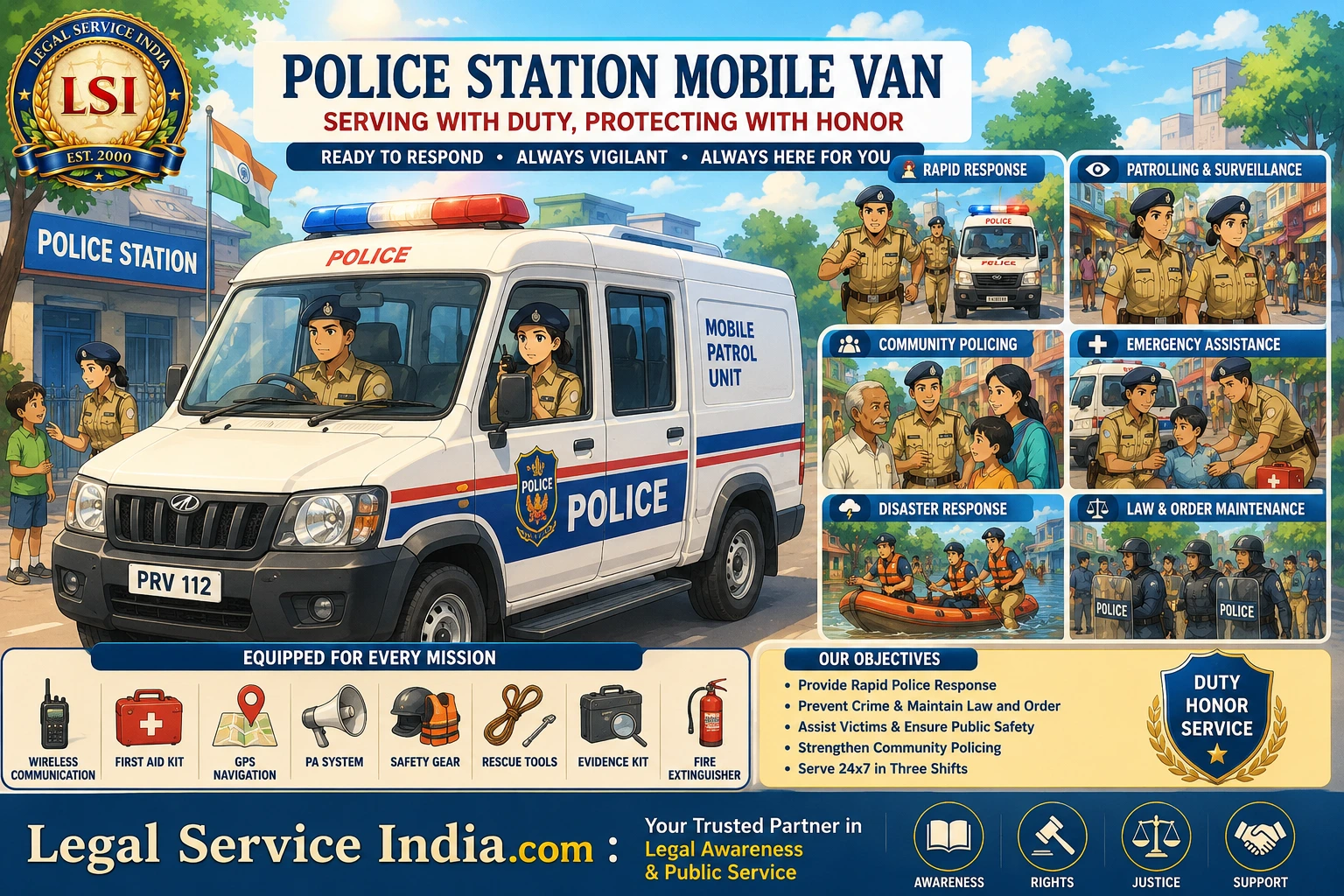
The Police Station Mobile Van, commonly referred to as the Police Van, Police Patrol Van, Mobile Patrol Unit, or Police Response Vehicle (PRV), is one of the most visible and indispensable operational assets of a police station. It serves as a mobile extension of the police station, enabling police personnel to respond rapidly to emergencies, patrol vulnerable areas, transport police personnel and arrested persons, provide assistance during disasters, maintain law and order, and deliver policing services directly to the community.
Modern policing is no longer confined to the police station. Citizens expect prompt police assistance at any time and at any location within the police station’s jurisdiction. The mobile van bridges this gap by taking policing to the streets, villages, highways, markets, residential areas, and public places. It significantly enhances police visibility, deters criminal activity, improves response time, and strengthens public confidence in law enforcement.
The police station mobile van performs a wide range of functions beyond routine patrols. It serves as a platform for preventive policing, crime detection, emergency rescue, disaster response, VIP security, election duties, community outreach, and coordinated operations with other emergency services. Consequently, it has become an integral component of modern, technology-driven, and citizen-centric policing.
Meaning of a Police Station Mobile Van
A police station mobile van is a specially designated police vehicle assigned to a police station for carrying out operational duties outside the station premises. Staffed by trained police personnel and equipped with communication systems, safety equipment, and emergency response tools, the van enables the police to provide continuous mobile surveillance and immediate assistance throughout the police station’s jurisdiction.
Depending on the state or police organization, it may also be known as
- Police Patrol Van
- Mobile Patrol Vehicle
- Police Response Vehicle (PRV)
- Mobile Police Unit
- Highway Patrol Vehicle
- Emergency Response Vehicle
- Beat Patrol Vehicle
- PCR Van
- RT Mobile
- Station Mobile
Objectives of the Police Station Mobile Van
The principal objectives of deploying a police station mobile van are
- Providing rapid police response to emergencies.
- Preventing crime through visible patrolling.
- Maintaining law and order.
- Enhancing police presence in vulnerable areas.
- Assisting victims of crime and accidents.
- Supporting criminal investigations.
- Transporting police personnel and arrested persons.
- Strengthening community policing.
- Coordinating with other emergency agencies.
- Providing immediate assistance during disasters.
- Operating continuously on a 24-hour basis in three shifts to ensure uninterrupted coverage of the police station jurisdiction.
Legal and Administrative Framework
The deployment and operation of police mobile vans are governed by:
- State Police Acts.
- Police Manuals and Police Regulations.
- Standing Orders and Departmental Circulars.
- Motor Vehicles Act, 1988, and applicable rules governing emergency vehicles.
- Bharatiya Nagarik Suraksha Sanhita (BNSS), 2023, concerning police powers of arrest, investigation, search, seizure, and maintenance of public order.
- Departmental Standard Operating Procedures (SOPs).
The officer-in-charge of the police station exercises overall administrative control over the mobile van, while operational deployment is supervised by the duty officer or other authorized officers.
Importance of the Police Station Mobile Van
The mobile van is one of the most important operational resources available to a police station.
Its importance lies in:
- Reducing police response time.
- Increasing police visibility.
- Enhancing public confidence.
- Preventing crime through active patrol.
- Facilitating quick intervention during emergencies.
- Improving coordination among police units.
- Supporting investigations.
- Providing mobility during law-and-order situations.
- Extending police services to remote areas.
In many jurisdictions, citizens associate the arrival of the police with the arrival of the patrol van, making it a visible symbol of public safety.
Types of Police Mobile Vans
Depending on operational requirements, police organizations may deploy different categories of mobile vehicles, including:
| Type of Mobile Van | Primary Purpose |
|---|---|
| Patrol Van | Used for routine patrolling, crime prevention, and emergency response. |
| Police Response Vehicle (PRV) | Specially equipped for rapid response to emergency calls received through police control rooms. |
| Crime Investigation Vehicle | Carries investigating officers, forensic kits, and evidence collection equipment to crime scenes. |
| Riot Control Vehicle | Used during public disturbances and equipped with protective gear and crowd-control equipment. |
| Traffic Patrol Vehicle | Deployed for traffic enforcement, accident response, and highway patrolling. |
| Women Safety Patrol Vehicle | Dedicated to responding to crimes against women and providing assistance to vulnerable persons. |
| Disaster Response Vehicle | Used during floods, earthquakes, fires, and other emergencies requiring rescue and relief operations. |
Composition of the Mobile Van Team
A police station mobile van is generally staffed by:
- One sub-inspector or assistant sub-inspector (team leader), where required.
- One Head Constable.
- Two or more constables.
- A trained driver constable.
The exact composition depends on the nature of deployment, local requirements, and operational circumstances.
Equipment Carried in the Mobile Van
A modern police mobile van is equipped with various operational and safety equipment, including
| Equipment | Purpose |
|---|---|
| Wireless communication system | Communication with police control rooms and field units. |
| Mobile telephone | Operational communication. |
| GPS navigation | Navigation and tracking. |
| Public Address (PA) system | Public announcements and crowd management. |
| First-aid kit | Emergency medical assistance. |
| Fire extinguisher | Fire safety. |
| Flashlights | Night operations. |
| Baton (lathi) | Law enforcement duties. |
| Riot control gear | Crowd control. |
| Protective helmets | Officer safety. |
| Bullet-resistant jackets (where required) | Protection during high-risk operations. |
| Handcuffs | Lawful restraint of detainees. |
| Rope | Rescue and operational use. |
| Breath analyzer (traffic units) | Traffic law enforcement. |
| Evidence collection kit | Crime scene investigation. |
| Camera or digital recording device | Documentation and evidence recording. |
| Traffic cones and barricade tape | Traffic and scene management. |
| Rescue tools | Emergency rescue operations. |
| Drinking water and emergency supplies | Support during prolonged deployments. |
Some advanced vehicles are also equipped with dashboard cameras, Automatic Vehicle Location (AVL) systems, and mobile data terminals.
Major Functions of the Police Station Mobile Van
The Police Station Mobile Van performs numerous operational functions that help police maintain law and order, prevent crime, respond to emergencies, and strengthen community policing.
A. Preventive Patrolling
Regular patrols remain one of the most effective methods of preventing crime.
Patrolling includes:
- Residential areas.
- Markets.
- Banks.
- Schools and colleges.
- Railway stations.
- Bus terminals.
- Industrial areas.
- Highways.
- Vulnerable neighborhoods.
- Public parks.
Visible police presence deters criminals and reassures the public.
B. Emergency Response
One of the primary functions of the mobile van is responding immediately to emergency calls such as
- Robbery.
- Murder.
- Assault.
- Domestic violence.
- Road accidents.
- Fire incidents.
- Missing children.
- Medical emergencies.
- Public disturbances.
- Suicidal attempts.
Rapid response often prevents escalation and saves lives.
C. Crime Scene Response
The mobile van transports investigating officers to crime scenes and assists in:
- Securing the scene.
- Protecting evidence.
- Establishing a perimeter.
- Assisting forensic teams.
- Managing crowds.
- Transporting exhibits.
Prompt arrival preserves crucial evidence.
D. Transportation of Police Personnel
The van transports police personnel for:
- Patrol duties.
- Raids.
- Arrest operations.
- Court duties.
- VIP security.
- Law-and-order deployment.
- Disaster relief operations.
Efficient transportation enhances operational readiness.
E. Transportation of Arrested Persons
The mobile van may be used for transporting arrested persons between:
- Crime scenes.
- Police stations.
- Hospitals.
- Courts.
- Correctional institutions.
Transport must comply with legal safeguards and ensure the safety and dignity of detainees.
F. Law and Order Duties
During public gatherings, festivals, protests, elections, or communal tensions, the mobile van assists in:
- Area domination.
- Crowd management.
- Route patrolling.
- Quick deployment of police personnel.
- Communication with control rooms.
- Maintaining public order.
G. Community Policing
The mobile van supports community policing by:
- Visiting villages and remote localities.
- Conducting awareness campaigns.
- Interacting with local residents.
- Assisting senior citizens.
- Supporting women and children.
- Building public trust.
- Encouraging reporting of crimes.
Regular interaction strengthens police-community relations.
H. Assistance During Disasters
The mobile van becomes an important resource during:
- Floods.
- Cyclones.
- Earthquakes.
- Building collapses.
- Fires.
- Landslides.
- Industrial accidents.
Police personnel provide rescue, evacuation, first aid, and relief coordination.
I. Traffic Management
The mobile van assists traffic police by:
- Responding to accidents.
- Removing road obstructions.
- Managing traffic congestion.
- Assisting stranded motorists.
- Enforcing traffic laws.
J. Search Operations
Police mobile vans participate in:
- Search for missing persons.
- Tracking suspects.
- Recovery of stolen property.
- Area searches.
- Joint operations with specialized units.
K. Naka Checking
| Activity | Purpose |
|---|---|
| Verification of identity and documents | Check vehicles, drivers, and passengers for valid licenses, registrations, and identification papers. |
| Detection of contraband and illegal items | Inspect for arms, ammunition, narcotics, or stolen property being transported. |
| Maintenance of law and order | Ensure security at checkpoints, prevent unauthorized movement, and deter criminal activity. |
L. Assisting Police Officers in Conducting a Raid
| Function | Description |
|---|---|
| Providing logistical support | Arrange transport, communication equipment, and secure entry/exit points during the raid. |
| Ensuring safety and control | Help in crowd management, securing suspects, and safeguarding officers during operations. |
| Documentation and evidence handling | Assist in recording seized items, preparing arrest memos, and maintaining proper chain of custody. |
Summary of Major Functions
| Function | Primary Objective |
|---|---|
| Preventive Patrolling | Crime prevention and public reassurance. |
| Emergency Response | Rapid assistance during emergencies. |
| Crime Scene Response | Evidence preservation and investigation support. |
| Transportation of Police Personnel | Operational deployment. |
| Transportation of Arrested Persons | Safe and lawful custody. |
| Law and Order Duties | Crowd control and public safety. |
| Community Policing | Public engagement and trust-building. |
| Disaster Assistance | Rescue and relief operations. |
| Traffic Management | Road safety and traffic regulation. |
| Search Operations | Locating suspects, missing persons, and stolen property. |
| Naka Checking | Security checks and crime prevention. |
| Raid Assistance | Operational support during police raids. |
Role in Modern Smart Policing
Technological advancements have transformed police mobile vans into mobile command units.
Modern features include:
- GPS-based vehicle tracking.
- Real-time communication with police control rooms.
- Mobile data terminals.
- Automatic vehicle location systems.
- Dashboard cameras.
- Digital FIR access.
- Criminal database connectivity.
- Facial recognition support (where lawfully authorized).
- Body-worn camera integration.
Technology enables faster decision-making and more effective field operations.
| Modern Technology | Operational Benefit |
|---|---|
| GPS-Based Vehicle Tracking | Real-time monitoring and faster deployment |
| Digital FIR Access | Instant access to case information |
| Dashboard Cameras | Enhanced transparency and evidence collection |
| Criminal Database Connectivity | Quick verification of suspects and records |
| Body-Worn Camera Integration | Improved accountability during police operations |
Responsibilities of the Vehicle Commander (Mobile Van Officer)
The officer leading the mobile van is responsible for:
- Maintaining discipline.
- Deploying personnel.
- Responding to emergency calls.
- Ensuring lawful police action.
- Reporting incidents.
- Supervising arrests.
- Maintaining communication with the police station.
- Ensuring vehicle safety.
- Completing operational records.
Duties of the Driver
The driver constable is responsible for:
- Safe driving.
- Daily vehicle inspection.
- Fuel management.
- Basic maintenance.
- Vehicle cleanliness.
- Reporting mechanical defects.
- Compliance with traffic rules.
- Ensuring operational readiness.
| Officer | Primary Responsibilities |
|---|---|
| Vehicle Commander | Leadership, emergency response, supervision, communication, lawful policing, operational records |
| Driver Constable | Safe driving, vehicle maintenance, inspections, fuel management, operational readiness |
Maintenance of the Mobile Van
Proper maintenance includes:
- Daily mechanical inspection.
- Fuel monitoring.
- Tire inspection.
- Brake testing.
- Cleaning.
- Equipment verification.
- Communication system checks.
- Emergency equipment inspection.
- Scheduled servicing.
Regular maintenance ensures uninterrupted operational capability.
Challenges Faced
Police station mobile vans often face several operational challenges:
- Vehicle shortages.
- Aging fleets.
- Limited fuel budgets.
- Poor road conditions.
- Heavy traffic congestion.
- Equipment maintenance.
- Long operational hours.
- Staff shortages.
- Mechanical breakdowns.
- Increasing emergency calls.
Continuous modernization and adequate funding are necessary to overcome these constraints.
| Challenge | Operational Impact |
|---|---|
| Vehicle Shortages | Reduced patrol coverage |
| Aging Fleets | Higher maintenance costs |
| Limited Fuel Budgets | Restricted operational mobility |
| Traffic Congestion | Delayed emergency response |
| Mechanical Breakdowns | Operational interruptions |
Best Practices
An efficient mobile van system should ensure:
- Twenty-four-hour availability.
- Regular preventive patrols.
- Prompt response to emergency calls.
- Well-trained personnel.
- Proper vehicle maintenance.
- Effective communication systems.
- GPS monitoring.
- Respect for human rights during operations.
- Proper documentation of patrol activities.
- Continuous coordination with police control rooms.
- Ensure mobility and continuous coverage, avoiding static deployment.
Constitutional Safeguards on Police Mobile Vans
In D.K. Basu v. State of West Bengal (1997), the Supreme Court laid down binding guidelines to curb custodial abuse, mandating visible officer identification, preparation of witness-attested arrest memos at the time of arrest, prompt intimation to relatives, right to legal aid, medical examination, and proper register entries — all of which squarely apply to arrests, detentions, and transit in police mobile vans.
This framework is reinforced by Joginder Kumar v. State of U.P. (1994), which prohibits arbitrary or routine arrests even during mobile operations, and Lalita Kumari v. Govt. of U.P. (2014), which requires immediate FIR registration for cognizable offences regardless of location.
High Courts have consistently treated police mobile vans as extensions of police stations, making them fully subject to BNSS procedures, territorial jurisdiction rules, and the fundamental rights to life and liberty under Articles 21 and 22 of the Constitution, whether used for patrolling, suspect transport, victim assistance, or evidence handling.
| Judgment | Key Principle | Application to Police Mobile Vans |
|---|---|---|
| D.K. Basu v. State of West Bengal (1997) | Safeguards against custodial abuse | Applies to arrests, detention, and transit |
| Joginder Kumar v. State of U.P. (1994) | Protection against arbitrary arrests | Applies during mobile policing operations |
| Lalita Kumari v. Govt. of U.P. (2014) | Mandatory FIR registration | Applies irrespective of the location of the offense |
Future Trends
Future police station mobile vans are expected to incorporate:
- Electric or hybrid vehicles.
- Artificial intelligence-assisted dispatch systems.
- Drone integration for aerial surveillance.
- Advanced mobile forensic kits.
- Real-time digital evidence transmission.
- Integrated emergency response platforms.
- Enhanced cybersecurity systems.
- Smart surveillance technologies.
- Environmentally sustainable operations.
These innovations will further improve police mobility, efficiency, and public service.
Conclusion
The police station mobile van is far more than a means of transportation; it is a mobile police station that extends the reach of law enforcement beyond the confines of the police station. By enabling rapid response, preventive patrolling, effective crime investigation, law-and-order management, and community engagement, it plays a pivotal role in modern policing. Its visibility reassures the public, deters criminal activity, and strengthens confidence in the police as a responsive and accessible institution.
Effective utilization of mobile vans requires trained personnel, reliable communication systems, well-maintained vehicles, and adherence to lawful and professional policing practices. As policing continues to evolve with technological advancements and changing public expectations, the police station mobile van will remain an indispensable instrument for delivering timely, efficient, and citizen-centric police services, thereby contributing significantly to public safety and the effective administration of justice.