





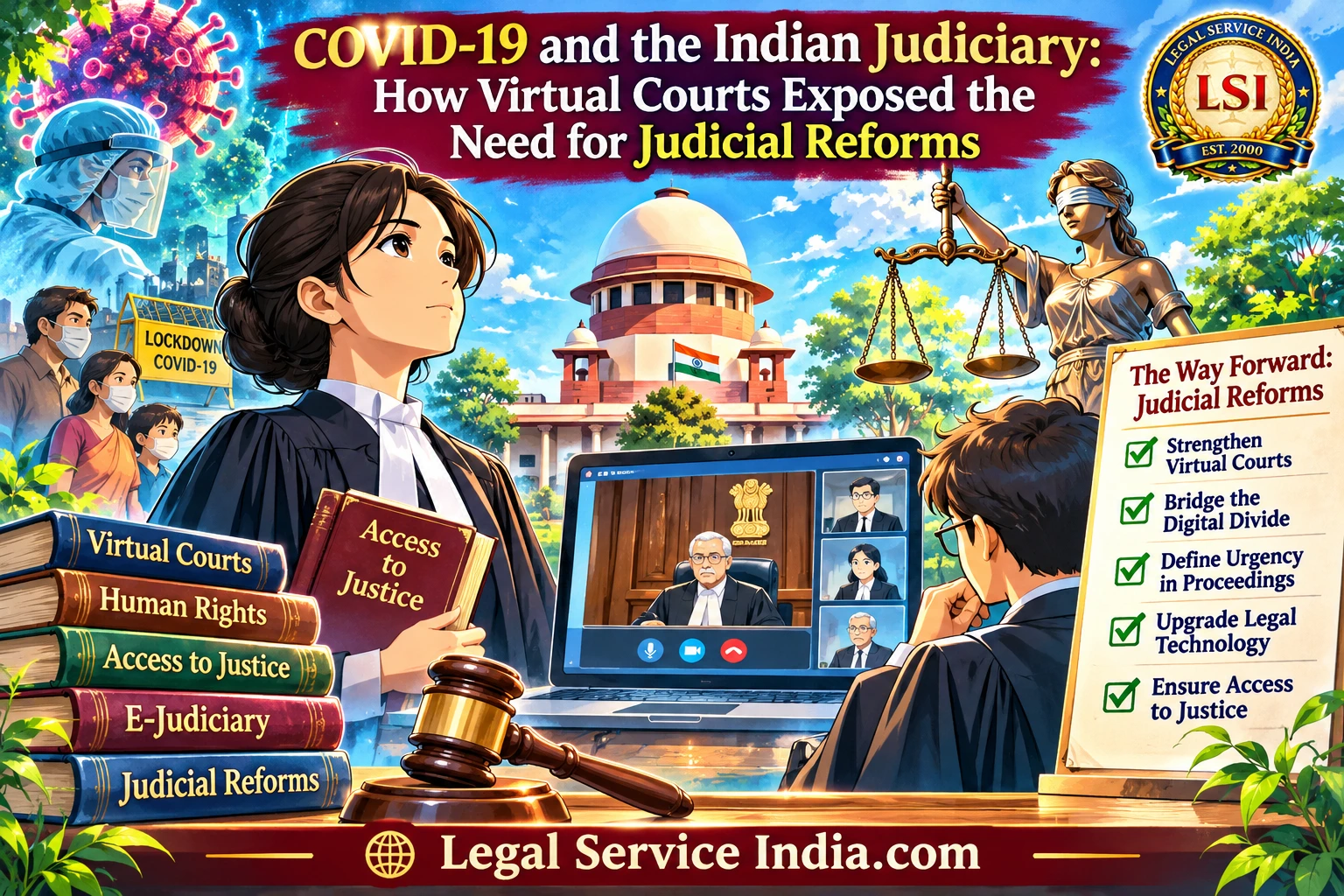
Abstract
In December 2019, a COVID (Corona Virus Disease) virus was discovered in the city of Wuhan, China. Being a term, it was primarily unknown to the majority part of the world until it became a menace and eventually triggered a series of catastrophic events. According to WHO, the total deaths eventually amounted to 1.8 million in the year 2020 and the numbers are still increasing.
A state of quarantine was declared by various countries. The commencement of the global quarantine eventually triggered a nationwide lockdown which was followed by a halt in the legal proceedings of various courts throughout the nation, due to the spread of this contagious disease. Consequently, the anticipated suspension of economic activities became the potential ground for the downfall of the national economy hence causing a surge in the annual turnover rates within the workfolk of this country. Subsequently, it added to the problem of various economic constraints as well.
Several media sources reported a rise in criminal cases by as much as 63% by mid-2021, the lack of a placid legal system had turned out to be a significant concern among the masses. In response to this, the Government introduced a virtual platform for the same through the vibrant recommendations of the 103rd Parliamentary Standing Committee, however, they failed to address the obsolete nature of technology within the legal system and the country as a whole.
Moreover, the factors specifying the parameters of what constitutes urgency was left undefined; hence, it entailed a subjective nature to the concerned code widely depending on the assessment of the presiding judge. This paper seeks to research various gaps in the legal system that had crept out in implementing various principles during this period and suggest remedies that can be adopted to rectify such limitations.
Introduction
At his best, man is the noblest of all animals; separated from law and justice, he is the worst.~ Aristotle
In the landmark judgment of Hussainara Khatoon v. Home Secretary, State of Bihar1, the Court emphasized the importance of Article 39A about the concept of justice, it stated “… legal service is an inalienable element of reasonable, fair and just procedure for without it a person suffering from economic or other disabilities would be deprived of the opportunity for securing justice. Therefore, the right to free legal service is an essential ingredient of ‘reasonable, fair and just procedure for a person accused of, an offense and it must be held implicit in the guarantee of Article 21…”
The Concept of Justice and Natural Jurisprudence
The advent of justice has always been questioned in various ways, from the commencement of law as a concept, it has lured several philosophers and intellectuals from around the world to question the outset of opinions on this aspect. According to the conception of Natural Jurisprudence, the power of laws is only accessible through human reasoning and not just the whims and fancies of jurists; the law was made to perpetuate peace and harmony in society, so long for gaining a dominant hand on certain individuals. Such prolonged philosophies in law were backed by the inception of Human rights through the Universal Declaration of Human Rights (UDHR) in 1948. These rights are undeniable nature rights that are indispensable for upholding human dignity and respect, the significance of such entities is very crucial in the life of a citizen of a country and to the very functioning of the society as a whole.1
Human Rights and the Challenges to Human Dignity
Human rights are always under pressure, consequently exerted on two vast levels, namely, the primary being the level where such laws are direct means of exacting morality and the secondary being rights that are possessed by every individual in consonance to the societal reasoning of humanity.2 The causes of such pressure are not quite anonymous too, while some might consider it as a “difference of opinions”, however, terms such as ignorance, negligence, ghettoization, impulse to dominate, illegitimate self-preference, scare resources, and so on have been so common that it hinders the practice of adhering to demands of humanity.
COVID-19 and the Impact on Human Rights
In the year 2020, the world faced an unprecedented threat known as COVID-19, which evenly tested the ambit of Human Rights. Several concerns were raised as to restricting the enjoyment of such rights and the war rhetoric that accompanies them retains the potential of opening a passage to the abuse of emergency regulations and a significant overreach of executive powers.
COVID-19 and the Transformation of Judicial Proceedings
“Nous somme en guerre”, a statement proclaimed by French President Emmanuel Macron to highlight the aggressive series of steps that were taken by the government to curtail the impact of COVID-19 in the country. The prominence of the pandemic had threatened the fundamental rights of right to life and right to health, the outbreak of this virus had inculcated the measure of shifting the legal system into internet-based platforms, the judicial proceedings were now virtual, the summon were sent through emails and the filing procedures were now dependent on government apps provided by National Informatics Centre.
An Overview of the Indian Judiciary
Structural Challenges Facing the Indian Judiciary
At the risk of stating something exceptionally evident, the Indian judiciary is in trouble. From its multi-structural levels to its progress and pace it can be considered a doleful underperformer. Ranging from issues as evident as the number of judges available to several courts functioning or the quick clearance of cases by them. On average we have between 10 to 15 judges per million people and our judge is to the general population presently the lowest in the world.3
Judicial Pendency and Case Backlog in India
For instance, in 2014, the total number of pending cases all over India was surprisingly over 30 million.4 at the current pace and strength, if judicial officials decide to tackle this mammoth task of solving all the cases pending over the country, Andhra Pradesh High Court Judge V.V. Rao estimated that it would take the judiciary a whopping 320 years to clear the backlog.
A while back, Delhi Chief Justice A.P. Shah acknowledged that the Delhi High Court was lagging by approximately 466 years; in an attempt to clean up its caseload, the court reduced the average time spent hearing a case to a little over five minutes.5
For instance there is no surprise that a variety of legal proceedings take place in the form of family heirlooms, with the families and grand families of the litigants loyally continuing to fight for their family’s cause long after the real petitioners are dead and gone.
Judicial Reforms and the Need for Systemic Change
While complex in nature and size, none of these difficulties are new. Starting with the pre-Independence-era Rankin Committee in the 1900s, there has been a never-ending establishment of committees, reform commissions, symposiums, and reports, all constituted to reform and evolve the Indian judicial system.
Undoubtedly there is no shortage of concepts when it comes to increasing the judiciary’s effectiveness, together with such noticeable measures as appointing more judges and constructing new courts. The question that persists is why aren’t these ideas and concepts not yet executed?
Financial Constraints and Judicial Infrastructure
The most apparent answer is money. India spends less than 1 percent of its GDP on its judicial system, which is remotely less than that in other democracies6. The judiciary itself raises more than half of trivial sums through court fees and fines.
Separation of Powers and Judicial Independence
Another is the set of checks and balances placed on the judiciary by the executive and the legislature. Alexander Hamilton wrote in the Federalist Papers:
“The judiciary, on the contrary, does not influence either the sword or the purse; no direction either of the strength or the wealth of the society; and can take no active resolution whatever. It may truly be said to have neither FORCE nor WILL, but merely judgment; and must ultimately depend upon the aid of the executive arm even for the efficacy of its judgments”.
Executive Accountability and Judicial Delay
Although this was introduced to ensure an equal distribution of power, these restrictions do have a significant impact on the functioning of the judicial system. So consider that in 2007, the then chief justice of India K.G. Balakrishnan, set the liability for the slow pace of India’s judicial system directly at the hands of the government, saying, “The main cause for the judicial delay lies not so much with the judiciary as with the executive and administrative wing of the government8.
Fast-Track Courts and the Challenges of Judicial Efficiency
At this stage, the hurdles faced by the Indian judiciary are deeply rooted to be solved by merely investing in the financial and monetary aspects of the structure to appoint more judges or building more courts of law. Lately, we have seen the rise of fast-track courts in a bid to accelerate the process of closing cases and provide justice, but even they have proved to be somewhat slow because of the backlog the judiciary is facing.
It is difficult in every way to think of an aspect of Indian society where everyone accepts their composition and other’s beliefs, hence the standard solutions simply will not work.
COVID-19 & The Indian Judiciary
Justice Delayed Is Justice Denied: The Indian Judicial System
“Justice Delayed is Justice Denied” quoted by the former British statesman and Prime minister of the United Kingdom, William E. Gladstone, specifies the prominence of justice for the grieving party and how it is futile if justice is not delivered in time, a quote which was relevant even during the time it was said and which is deemed as relevant to this day in our legal society.
Pendency of Cases in India Before COVID-19
In contemporary times, there are about 4 cr pending cases in India summing up all the cases existing in the Supreme Court, High Court, District Courts, and the Subordinate courts according to written statements submitted by the Ministry of Law and Justice in Parliament and the count increases each day in every part of the nation.
Cases can be of various degrees and each case needs proper consideration and examination before the court carries out its final decree, which can prove to be time-consuming and makes the injured party wait for a long time to achieve its respective remedies, which creates a deficit as the cases filed and cases solved ratio is very vast and broad, a major loophole in the judicial system of India, something which was exacerbated by the recent COVID-19 outbreak in 2020 which affected judicial functioning adversely.
Impact of COVID-19 on the Functioning of Indian Courts
The Supreme court announced that from the 16th of march, 2020, the SC would only be hearing urgent matters and postponed several case hearings accordingly, the same was applied to other lower courts.
The Supreme Court implemented limitations on the people allowed in the courtroom. Only the lawyers acting on the matter were allowed to be present in the courtroom with just one litigant at a time.
Thermal screenings were planted on all entrances and any individual found with a high body temperature was denied entry into the courtroom, irrespective of their bond with the litigating parties.
Audiences were not allowed to visit courts for their safety and eventually offline courts were shut down and switched to online proceedings, thus they introduced Virtual Courts.
Introduction of Virtual Courts in India
What Is a Virtual Court?
A Virtual Court is a type of online court aimed at performing its adjudication of the case online and not in a courtroom.
It is the same as a physical courtroom, where all the necessary parties are present such as the judges, advocates, witnesses, and litigants at the time of the hearing taking place, which is deemed imperative for the progress of the case.
COVID-19 Lockdown and the Limitation Act, 1963
Due to the courtrooms being shut down for a long period, a suo-moto writ petition was filed in the interest of the pending suit/case filing parties, which stated that the Lockdown/Suspension of work of courts shall be treated as “closure” according to the Section 4 of the Limitation Act. 1963 thus disabling the limitation.
The Indian Judiciary’s Response During the Pandemic
The Judicial body left no stone unturned to ensure that public health is not compromised and cases are solved with equal responsibility and effect as they did before the pandemic.
Advantages and Disadvantages of Virtual Courts
Though the virtual and online courts had their perks such as more accessibility to those who can’t actively participate in physical Courts and have proven to be more affordable compared to offline courts, it has limitations that are too tough to just overlook.
Digital Divide and Accessibility in Rural India
The core problem is the rural regions, the Litigants who reside in the remote and rural regions of India lack the basic infrastructure facilities and thus don’t have access to a proper internet connection, which is deemed necessary to participate in the virtual meetings.
The continuous connection issues discourage the litigants to be participative and attending their hearings, thus postponing the hearings several times due to the absence of either plaintiff or defendant.
Cybersecurity and Data Breach Concerns
The process of filing litigation proves to be plenty complex as there is always a risk of data breach and hack, thus the tax filer has to put their faith in the security of their internet connection, the software, the hard disk with data, etc.
But the security breach risk still exists, thus security is one of the biggest concerns that come with filing.
Challenges Associated With E-Filing
Certain applications and software are E-fling seem feasible for trained professionals but the same software is not taught everywhere and hence can be complicated to use for civil suits for a commoner.
Financial Cost of Digitalising the Judiciary
The process of transforming the judiciary system into a virtual model has proved itself to be quite expensive. Huge costs were incurred in digitalizing the subject matters of the legal system and implementing advanced technology.
Other Major Problems in the Indian Judicial System
There are more predominant and larger causes of the lag in the judicial system other than the unforeseen pandemic, mainly Pendency of cases, Corruption between official bodies, Lack of transparency in regards to the appointment of judges, Lack of evidence due to constant tempering and influence from the executive and legislative bodies even though they all claim to be independent of each other’s functioning.
Impact of COVID-19 Lockdown on Case Disposal
There was a decline in cases after the pandemic boomed in India, which means that the crime rates in India fell due to the strict lockdowns and implementations, but the lockdown also impacted the court proceedings.
With only limited benches presiding over select specific matters daily, numerous cases pending before the supreme court were postponed to taken an action, depending on the degree of the cases.
This creates turmoil for the grieving parties as they’ll have to wait longer to get a final decree.
Reduction in Cases Disposed of During 2020
Several steps were taken to ensure the safety of the lawyers, litigants, and other court members which affected the normal functioning of the courts and hence it reduced the number of cases that were disposed of in 2020 (A case is disposed of when the final decree/order has been passed by the hon’ble court).
Compared to the 2020 recording, the average no. Of cases disposed of per month was 13.25 lakh in 2019 while it was just 35,169 cases the former year, a major blow to the judicial progress.
Restricted Courtroom Functioning and Delayed Hearings
The highly restrictive functioning of Courtrooms is also viewed as a major snag for the timed disposal of cases, as the litigants barely get any access to the courthouses.
Impact on Tribunals and the National Green Tribunal
The proceedings at several tribunals have come to a sudden halt during the lockdown despite these judicial bodies being provided with video conferencing resources, e.g. The National Green Tribunal’s video conferencing stopped functioning after the lockdown, for which the public will have to pay a high price as the NGT had stayed to work on some key government-funded projects.
Delay in Judicial Appointments
Numerous judicial appointments were due because of the outbreak, and the process of appointment of judges had been highly impacted.
Return to Physical Court Proceedings After COVID-19
As of lately, after a nearly 2-year holiday, the judiciary is going back to physical court proceedings which are assisting in the increase of the case disposals compared to the previous years.
The restrictions have been cut down and are altered and reverted to depending on the outbreak’s spreading.
The public finds physical proceedings cases more convenient and the courtrooms are finally at their disposal.
Ubi Jus Ibi Remedium
With the advent of Virtual Courts to the reports of the Standing Committee, many discrepancies had crept in between this significant mode of the judicial process. The whole idea of credibility had come to a standstill, the emotional front of witnesses and the accused were curtailed by mere transmission issues. The risk of tampering had also risen, as in a virtual courtroom setting, it was hard to comprehend if they are being coached via text messages or some other means. Hence, this paper establishes the following points to be considered for a better implementation of virtual courts in the country.
Recommendations for Better Implementation of Virtual Courts
Hence, the following measures should be considered:
1. Facilitate Connectivity
The issue of digital split has been grappling with our nation since the very inception of development. Internet and its usage have made itself to be a need in such times, however, only a significant amount of people are equipped with such technologies and are still unaware of the existence of virtual courts; hence leading to the consequent failure of justice. Therefore, the appropriate authorities should make sure that the citizens should not face these hindrances by way of training the appropriate local authorities, to ensure that the locals have a helping hand, when in doubt.
2. Transmission Aids
Virtual Courts are dependent completely on the means of connectivity on both ends, while the judges could afford a proper connection, it is unlikely that each of the advocates or any significant individual might have a similar privilege as well. In most cases at E-courts, the honorable judges are unable to make out a clear rationale due to various transmission issues, it is a fact that a lenient gap of a single word has the potential to alter the value of the entire judgmental context.
Henceforth, the appropriate authorities are to take care of such hindrances; as far as connectivity issues are concerned, any significant individual, relevant to the case-in-hand could be given temporary aid until the subject matter of a particular case has been duly taken care of, moreover, the provision of requesting such aid could be granted to all the parties of a case.
3. Establishment of Regulatory Authorities
With the courts going virtual, it gives birth to an entirely different dimension of threats called Cyber Crimes9. With several sophisticated crimes inculcating within the country, there lies a potential for these uncertainties to creep in between the virtual judicial proceedings. Therefore, there should be a proper mechanism for such crimes to be prevented, with the introduction of various regulations within the ambit of the Information Technology Act and along with some consequent punishments for the same
Conclusion
To summarize, E-courts or semi-virtual courts play a very large part in the working of the judiciary right now. By the means of information and communication technology (ICTs) and the internet, it
Cybercrime and Virtual Judicial Proceedings
9 Cybercrime is a crime where a computer or a cell phone is used with the help of a working internet as a tool to commit an offense. A cybercriminal may use a device as explained or something similar so that he/ she can access a user’s bank details, or government details, disable equipment or even defame certain people or companies. The one that’s trying to harm the other or what leads to the commission of cybercrimes may use viruses, malware, or DoS attacks to do certain crimes such as phishing, identity theft, hacking, cyber stalk, and online scams, and prohibited/ illegal content provides a vast field of opportunities to expand and grow. ↩
Courts can use this platform to share daily information by various means such as its website and also use it to communicate with people on a personal level such as their WhatsApp messenger and SMS. More than E-courts we now need reforms to transform and evolve. However, this won’t be enough.
The kind of society that we live in is taking a dynamic and ever-changing form more than a static and stable form. Every day we are facing new issues on so many new frontiers. The need of the hour is not just E-courts but also the introduction of E-judiciary.
The Need for E-Judiciary
E-judiciary comprises not only filing the cases online but also contains among many things, opportunities and possibilities for online interaction between the judges and advocates, speedy online proceedings, online examination and cross-examination of witnesses, and finally delivery of judgments.
Written By:
- Sashwat Gupta – United World School Of Law, Karnavati University, Gandhinagar, Gujarat, India &
- Rishabh Sharma – United World School Of Law, Karnavati University, Gandhinagar, Gujarat, India

