





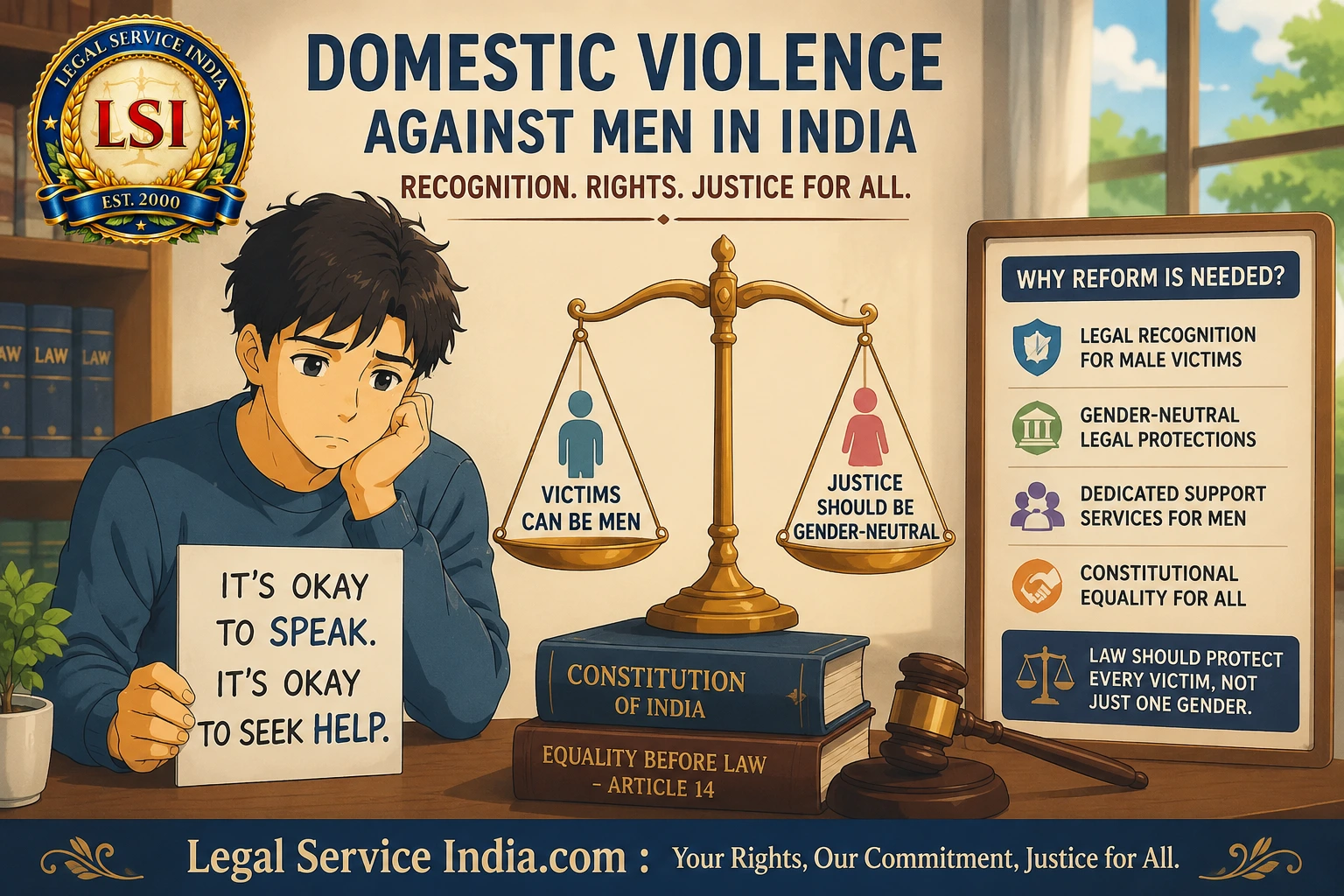
Introduction
Domestic violence law in India has developed within a gender-specific framework that primarily recognises women as victims and men as perpetrators1. This approach emerged from deeply rooted patriarchal structures, unequal distribution of power within households2, and economic dependency that historically placed women in vulnerable positions. For a long period, domestic violence was treated as a private matter, beyond strict legal scrutiny, allowing patterns of abuse to persist without meaningful accountability.
Over time, legal and social awareness evolved, leading to recognition of domestic violence as a serious issue requiring state intervention. Legislative developments such as the Protection of Women from Domestic Violence Act, 2005, marked a significant shift by expanding the definition of abuse beyond physical violence to include emotional, psychological, and economic harm. These changes were essential in addressing structural inequality and providing effective remedies to victims.
However, despite these progressive developments, the legal framework has remained explicitly gender-specific. This has resulted in a system where victimhood is largely associated with women, while the experiences of male victims remain insufficiently recognised. The absence of recognition does not imply the absence of harm; rather, it reflects a gap between legal frameworks and lived realities.
1.1 Conceptual Understanding of Domestic Violence
Domestic violence is best understood not as isolated incidents of physical harm but as a sustained pattern of behaviour aimed at establishing control within a relationship. It includes physical violence, emotional manipulation3, psychological coercion, and economic restriction. Such patterns are often cumulative and continuous, gradually undermining the autonomy and dignity of the victim.
This broader understanding is crucial because it highlights that domestic violence is not inherently linked to any particular gender. While statistical data often reflects higher reporting of violence against women, it does not fully capture the extent of abuse experienced by men, particularly due to underreporting and lack of institutional support. Recognising domestic violence as a pattern of control rather than isolated acts is essential for evaluating whether legal frameworks adequately address the full spectrum of abuse.
Key Elements of Domestic Violence
| Form of Abuse | Description |
|---|---|
| Physical Violence | Acts causing bodily injury, pain, or physical suffering. |
| Emotional Manipulation | Conduct intended to undermine self-worth and emotional stability. |
| Psychological Coercion | Threats, intimidation, or controlling behaviour affecting mental well-being. |
| Economic Restriction | Limiting access to financial resources and economic independence. |
1.2 Men as Unrecognised Victims
Men who experience domestic violence often remain unrecognised within both social and legal systems. Cultural expectations surrounding masculinity portray men as strong, emotionally restrained, and dominant, leaving little space for vulnerability. As a result, men experiencing abuse frequently avoid reporting due to fear of ridicule, disbelief, or social stigma.
In addition to social barriers, legal limitations further contribute to this invisibility. Existing statutory frameworks do not provide structured remedies for male victims of domestic violence. In some situations, men may also hesitate to approach legal institutions due to fear of counter-allegations or procedural disadvantages. The absence of recognition is therefore not merely social but has direct legal consequences.
Challenges Faced by Male Victims
- Fear of social stigma and ridicule.
- Cultural expectations linked to masculinity.
- Lack of dedicated legal remedies.
- Fear of counter-allegations.
- Limited institutional support mechanisms.
- Underreporting due to disbelief and societal perceptions.
1.3 Gender Stereotyping and Legal Limitations
The legal framework governing domestic violence in India reflects a gender-specific approach that assumes a one-directional pattern of abuse. While laws designed to protect women serve an important and necessary function, they do not extend equivalent recognition to male victims. Institutional mechanisms such as shelters, helplines, and counselling services are also predominantly designed for women, reinforcing the perception that domestic violence is a gender-specific issue.
From a constitutional perspective, this raises important questions regarding equality before law and equal protection4. If individuals experiencing similar forms of harm are excluded from protection solely on the basis of gender, it challenges the principle that law should respond to harm rather than identity. At the same time, it is important to acknowledge that women continue to face significant levels of domestic violence. The objective, therefore, is not to weaken existing protections but to examine whether the framework can be expanded to include all victims.
Legal Framework Analysis
| Aspect | Current Position |
|---|---|
| Victim Recognition | Primarily women-centric. |
| Legal Remedies | Structured remedies available mainly for women. |
| Shelters and Support Services | Predominantly designed for women. |
| Constitutional Concern | Questions relating to equality before law and equal protection. |
1.4 Scope and Approach of the Study
This study adopts a structured approach to examine domestic violence against men within the Indian legal system. It begins with a conceptual understanding of domestic violence, followed by an analysis of statutory provisions and judicial interpretations. The study also incorporates comparative perspectives to identify alternative frameworks and concludes with reform-orientated recommendations.
While recognising that gender-specific laws were enacted to address genuine and widespread violence against women, the analysis remains focused on evaluating whether evolving social realities require a more inclusive legal framework. The study maintains an analytical perspective aimed at examining gaps in legal recognition without undermining existing protections.
Research Framework
- Conceptual understanding of domestic violence.
- Examination of statutory provisions.
- Analysis of judicial interpretations.
- Comparative legal perspectives.
- Assessment of legal gaps.
- Reform-orientated recommendations.
1.5 Significance of the Study
The significance of this study lies in addressing the gap between lived experiences and formal legal recognition. A legal system that fails to acknowledge certain categories of victims risks undermining its credibility and effectiveness. Recognising domestic violence as a human issue rather than a gender-restricted phenomenon is essential for ensuring fairness, inclusivity, and trust in legal institutions.
Importance of the Study
- Addresses gaps in legal recognition.
- Examines inclusivity within domestic violence laws.
- Promotes fairness and equal access to justice.
- Strengthens trust in legal institutions.
- Contributes to discussions on legal reform.
1.6 Central Thesis
This study argues that domestic violence should be understood as a violation of dignity5 and autonomy rather than a gender-defined phenomenon. While India’s existing legal framework is historically justified and constitutionally permissible, it is structurally incomplete as it excludes male and non-female victims.
This exclusion creates a disconnect between formal equality and substantive justice. The study therefore contends that reform is necessary to ensure that legal protection is based on the existence of harm rather than the identity of the victim.
Core Arguments of the Thesis
- Domestic violence is fundamentally a violation of dignity and autonomy.
- Protection should be linked to harm suffered rather than gender identity.
- Current legal protections are historically justified but structurally limited.
- Formal equality and substantive justice require broader recognition of victims.
- Legal reform should focus on inclusivity without diluting existing protections.
Recognising Domestic Violence Against Men: Its Scope and Social Aspects
Domestic violence, at its core, refers to the misuse of power and control within intimate or family relationships.⁶. In India, discussions around domestic abuse have historically focused on women due to documented patterns of gender-based violence. However, this focus has resulted in limited attention to the experiences of men, whose victimisation often remains underreported, misunderstood, and socially stigmatised.
A meaningful understanding of this issue requires examining its legal, social, institutional, and psychological dimensions. Male victimhood must be situated within broader discussions of equality, justice, and access to remedies in order to fully appreciate the complexity of the problem.
2.1 Types and Patterns of Abuse Against Men
Domestic violence against men does not always manifest through visible physical harm. In many cases, it involves subtle but persistent patterns of control that operate over time. These forms of abuse often go unnoticed due to prevailing stereotypes about masculinity.
One of the most significant forms is psychological dominance and coercive control. This may include isolating the victim from family or friends, monitoring personal communications, repeated accusations, threats to reputation, and emotional manipulation involving children or relatives.
Such behaviour can create a sense of helplessness in the victim. Over time, individuals may begin to feel incapable of resisting or escaping the situation. This condition is often described in psychological terms as learned helplessness, where repeated exposure to control leads to reduced capacity for action.
Common Forms of Abuse Against Men
- Psychological dominance and coercive control
- Isolation from family and social networks
- Monitoring of personal communications
- Threats to reputation and social standing
- Emotional manipulation involving children or relatives
- Economic control and financial dependency
- Legal and procedural pressure during disputes
Another important dimension is legal and procedural pressure. In certain situations, legal provisions designed to protect women may be perceived as being used in a way that places men at a disadvantage⁷ during disputes. This can involve prolonged legal proceedings, social stigma, and reputational harm even before any findings are established.
Economic control also plays a significant role. This may involve restricting access to financial resources, interfering with employment, or placing excessive financial demands. Such conditions can create long-term dependency and instability for the victim.
In cases involving children, some individuals report situations where relationships between parent and child are disrupted. This may involve manipulation or influence that affects the child’s perception of one parent, leading to emotional distress and loss of meaningful contact.
2.2 Data Gaps and Institutional Invisibility
One of the major challenges in addressing domestic violence against men is the absence of systematic data.⁸. National surveys and official statistics primarily focus on violence against women, which, while important, leaves male victimisation largely undocumented.
This lack of data creates a structural problem. Without reliable information, it becomes difficult to assess the scale of the issue, allocate resources, or design appropriate policies. As a result, the problem remains outside mainstream policy discussions.
Independent organisations have attempted to collect data through self-reported surveys. However, these efforts often lack official recognition, limiting their influence on policy-making. The absence of empirical research further restricts academic understanding of the issue.
Key Challenges Caused by Data Gaps
- Difficulty in measuring the true scale of male victimization
- Limited policy development and resource allocation
- Restricted academic and empirical research
- Reduced institutional recognition of male victims
- Lack of evidence-based support services
Figure 19: Stats on Suicides – According to the graph, men make up the majority of suicide victims in India, and a significant portion of these instances are connected to issues inside the family. This implies that men’s mental health may be greatly impacted by interpersonal and domestic stress in households. The data shows a robust association between family conflict and male discomfort, even though not all such cases directly reflect domestic abuse. In larger conversations about mental health and family-related suicides, it also emphasises the necessity of looking at domestic violence against men as a contributing but underappreciated component.
2.3 Social Norms and Masculinity
Social expectations surrounding masculinity play a critical role in shaping responses to domestic violence against men. Traditional norms often portray men as physically strong, emotionally controlled, and socially dominant.
These expectations create barriers to acknowledging vulnerability. When men experience abuse, they may hesitate to report it due to fear of being perceived as weak or incapable. In many cases, their experiences are dismissed or trivialised.
Stigma operates at multiple levels. Within families, individuals may be encouraged to tolerate abuse rather than seek legal recourse. At the community level, concerns about social reputation may discourage open discussion. Institutional responses may also reflect bias, leading to dismissal of complaints.
Social Barriers to Reporting Abuse
- Fear of being perceived as weak
- Concerns regarding social reputation
- Family pressure to remain silent
- Community stigma surrounding male victimhood
- Institutional bias and lack of recognition
2.4 Impact on Mental Health
Domestic violence has significant psychological consequences. Prolonged exposure to abuse can lead to anxiety, depression¹⁰, and trauma-related conditions. Individuals may also experience reduced self-confidence and emotional instability.
In severe cases, victims may develop coping mechanisms that are harmful, including substance dependency or withdrawal from social interactions. The lack of targeted support systems further aggravates these conditions.
In India, there are limited counselling frameworks specifically designed for male victims of domestic violence. This absence of support contributes to isolation and delays recovery.
Psychological Effects of Domestic Violence
- Anxiety disorders
- Depression
- Trauma-related conditions
- Reduced self-confidence
- Emotional instability
- Substance dependency
- Social withdrawal and isolation
2.5 Legal and Institutional Challenges
The legal framework in India primarily provides civil remedies for women under specific domestic violence laws. While these provisions serve an important protective function, they do not extend equivalent recognition to male victims.
This creates a situation where men must rely on general legal provisions that may not adequately capture the relational nature of domestic abuse. As a result, access to justice becomes uneven.
Absence of Gender-Neutral Victim Reporting in NCRB Reports (2020–2023)
| Year | Category | Female Victims Reported | Male Victims Reported | Gender-Neutral Option |
|---|---|---|---|---|
| 2020 | Domestic Violence | 55,219 | Not Reported | No |
| 2021 | Cruelty by Spouse | 56,715 | Not Reported | No |
| 2022 | Domestic Violence | 57,028 | Not Reported | No |
| 2023 | Domestic Violence | 58,791 | Not Reported | No |
Table 111: Absence of Gender-Neutral Victim Reporting in NCRB Reports (2020–2023) – According to the data, male victims are labelled as “Not Reported”; however, female victims are constantly reported. Rather than a lack of cases, this indicates a shortcoming in the reporting mechanism. Male victimisation is therefore statistically invisible, which leads to gaps in the creation of policies and legal acknowledgement.
From a constitutional perspective, this raises questions about equality before law and equal protection. As interpretations of substantive equality evolve, there is increasing discussion on whether existing frameworks should be reexamined.¹²
At the same time, any discussion on reform must carefully consider the need to preserve protections for women who continue to face significant levels of violence. The challenge lies in balancing inclusion with protection.
Major Legal Concerns
- Lack of specific legal recognition for male victims
- Dependence on general legal remedies
- Limited access to victim-specific protections
- Questions regarding equality before law
- Need to balance inclusion with existing protections
2.6 Role of Civil Society
Civil society organisations have attempted to address the gap by providing support services, legal awareness, and advocacy for reform. These initiatives play an important role in highlighting the issue and offering assistance to victims.
However, such organisations often face limited institutional support and public resistance. Despite this, they contribute to ongoing discussions on expanding legal recognition and improving access to justice.
Contributions of Civil Society Organizations
- Providing support services to victims
- Creating legal awareness
- Advocating policy reforms
- Encouraging public discussion
- Promoting access to justice
2.7 Broader Social Consequences
Ignoring male victimisation has wider implications. It can reduce public trust in legal institutions, create polarised debates, and leave psychological harm unaddressed within families and communities.
A system that appears selective in recognising victims risks losing credibility. Inclusive approaches are therefore essential for maintaining confidence in the justice system.
Societal Impact of Underrecognition
- Reduced trust in legal institutions
- Polarized public discourse
- Unaddressed psychological harm
- Weakening of family relationships
- Reduced confidence in justice delivery mechanisms
2.8 Towards Inclusive Recognition
Recognising domestic violence as a human issue rather than a gender-specific problem is essential for meaningful reform. This does not imply ignoring existing inequalities but rather expanding the framework to include all victims.
Possible steps include developing gender-neutral legal provisions, improving training for law enforcement and the judiciary, expanding support services, and incorporating data on male victimisation into official surveys.
Recommended Reforms
- Develop gender-neutral legal provisions
- Improve police and judicial training
- Expand counselling and support services
- Include male victimization in official surveys
- Promote evidence-based policy development
- Increase public awareness and sensitivity
Ultimately, a balanced approach requires acknowledging different forms of vulnerability while ensuring that protection mechanisms remain effective and accessible to all individuals.
Despite being primarily social and psychological in character, the abuse patterns mentioned above create serious legal issues with regard to equality before the law and access to remedies. When legislative restrictions prevent some victims from seeking protection, the problem moves beyond sociological analysis and into the field of constitutional examination, especially under Article 14.
India’s Legal System: A Gender-Based View
India’s domestic violence framework has developed within a socio-legal context that recognises women as historically disadvantaged within family structures. As a result, legislative measures have primarily focused on protecting women from abuse occurring in domestic relationships. While this approach has been effective in addressing systemic gender-based violence, it has simultaneously excluded male victims from legal protection.
This chapter examines the statutory framework governing domestic violence in India, focusing on the gender-specific nature of key laws and evaluating their constitutional implications.
3.1 The Protection Of Women From Domestic Violence Act, 2005
A) Scope and Legislative Intent
The Protection of Women from Domestic Violence Act introduced a significant shift by providing civil remedies in addition to criminal sanctions. It was designed to ensure quick and effective relief to women facing abuse.
The law defines the aggrieved person specifically as a woman14 in a domestic relationship. This reflects a conscious legislative choice to address widespread violence against women. Originally, the respondent was defined as an adult male, reinforcing assumptions about perpetrators, although this was later expanded through judicial interpretation.
The Act provides multiple remedies, including:
- Protection orders
- Residence rights
- Monetary15 relief
- Custody arrangements
- Compensation
It also establishes protection officers and service providers to support victims.
B) Broad Definition of Domestic Violence
Domestic violence is defined in a comprehensive manner, including physical, sexual, emotional, verbal, and economic abuse16. This reflects progressive drafting. However, its application remains restricted to female victims, meaning that men facing similar forms of abuse cannot seek protection under this law.
This structure reflects a one-directional understanding of domestic violence where men are generally seen as perpetrators and women as victims.
C) Exclusion of Male and Same-Sex Victims
The language of the statute excludes:
- Male victims in marriages
- Male partners in live-in relationships
- Individuals in same-sex relationships
Despite constitutional developments recognising diverse identities, the law has not evolved to include these groups.
D) Judicial Expansion Limited but Significant
In Hiral P Harsora v Kusum Narottamdas Harsora17, the Supreme Court removed the restriction limiting respondents to adult males, allowing women to be included as respondents. However, the definition of ‘victim’ remained unchanged, preserving the gender-specific nature of the law.
3.2 Section 86 Of The Bharatiya Nyaya Sanhita 202318
A) Nature of the Offence
Section 86 criminalises cruelty by a husband or his relatives19 towards a wife, including physical and mental abuse, dowry harassment, and conduct leading to suicide. The offence is cognisable, non-bailable, and generally non-compoundable.
The provision addresses serious social issues such as the following:
- Dowry-related violence
- Marital abuse
- Mental cruelty
- Harassment leading to self-harm
These concerns reflect historical realities within Indian society.
B) Criticism and Allegations of Misuse
Courts have acknowledged that misuse of this provision may occur in certain situations but have upheld its validity. Judicial directions have focused on preventing arbitrary arrests while maintaining the law’s objective.
C) Absence of Reciprocal Protection
There is no equivalent provision addressing cruelty against husbands. Men must rely on general criminal laws such as assault or intimidation, which do not adequately capture the ongoing and relational nature of domestic abuse.
3.3 Other Related Provisions And Limitations
| Provision | Key Feature | Limitation |
|---|---|---|
| Dowry Death | Addresses dowry-related fatalities | Remains gender-specific |
| Abetment of Suicide | Gender-neutral provision | Focuses on outcome rather than ongoing abuse |
| Maintenance Laws | Provides financial support | Generally assumes men are providers |
| Procedural Support Systems | Victim assistance mechanisms | Largely unavailable for male victims |
A) Dowry Death
Provisions relating to dowry death presume involvement20 of the husband or his relatives under certain conditions. While necessary to address serious crimes, these provisions remain gender-specific.
B) Abetment of Suicide21
Although this provision is gender neutral, it focuses on the outcome rather than the ongoing pattern of abuse that may lead to such outcomes.
C) Maintenance Provisions
Maintenance laws generally assume that men are financially responsible22 for dependents. While courts may grant maintenance to husbands in exceptional cases, the statutory framework does not formally recognise such situations.
D) Absence of Procedural Support
There are no specific procedural safeguards or institutional support systems designed for male victims. Services such as shelters and helplines are primarily structured for women, contributing to the invisibility of male victimisation.
3.4 Judicial Responses And Their Limits
Courts have occasionally expressed concern regarding misuse and procedural imbalance in matrimonial disputes. However, judicial observations remain limited to individual cases and do not result in structural reform.
Courts interpret law but cannot redesign legislative frameworks. Therefore, meaningful change requires legislative action.
3.5 Constitutional Analysis
A) Article 14: Equality Before Law
Article 14 ensures equality before law23 and equal protection. While gender-based classification may be justified due to historical disadvantage, complete exclusion of male victims raises questions regarding fairness and proportionality.
B) Article 15 (3): Protective Discrimination
The Constitution permits special provisions for women24, but such measures must not reinforce stereotypes. Legal protection should evolve with changing social realities and constitutional values.
The Protection of Women from Domestic Violence Act limits protection to women by classifying victims according to their gender. This categorisation must pass Article 14’s requirement of fair classification even though it is based on the historical disadvantages experienced by women.
This necessitates the existence of:
- An intelligible differentia
- A rational relationship between the classification and the law’s objective
The goal of shielding women from domestic abuse is justifiable, but the total exclusion of male victims who might be in a similar situation in terms of harm calls on the question of whether such exclusion still satisfies the requirement of rational nexus in a contemporary constitutional framework.
3.6 Balancing Competing Realities
While it is important to recognise the higher incidence of violence against women and the need for protective legislation, the law must also adapt to changing social conditions.
Recognition of male victimhood does not weaken women’s protection but expands access to justice. Potential reforms include the following:
- Gender-neutral drafting25
- Inclusive definitions of victims and respondents
- Development of institutional support systems
- Expansion of legal remedies irrespective of gender
- Improved awareness and reporting mechanisms
India’s domestic violence framework reflects historical priorities but creates a gap in addressing male victimisation. Constitutional principles require that access to justice be available to all individuals.
A balanced legal system must combine protective measures with inclusivity, ensuring that dignity and legal remedies are not restricted by gender.
Judicial Reinforcement of Gender-Specific Protection
A. Legislative Intent and Judicial Deference
Indian courts consistently highlight legislative intent when interpreting gender-specific laws. In Indra Sarma v. V.K.V. Sarma, the Supreme Court explicitly stated that the PWDVA was enacted “to provide more effective protection of the rights of women who are victims of violence of any kind occurring within the family”.
This judicial statement emphasises two critical aspects:
- Recognition of structural patriarchy as the basis of domestic violence law.
- Deference to legislative wisdom, refraining from judicial expansion beyond the statutory language.
The Court, in this and subsequent rulings, regarded the gender-specific nature of the PWDVA not as a constitutional anomaly but as a conscious policy decision aimed at addressing social inequality.
| Key Judicial Principle | Explanation |
|---|---|
| Structural Patriarchy | Recognised as the foundation for protective legislation. |
| Legislative Deference | Courts refrain from extending protections beyond statutory intent. |
B. The Hiral Harsora Precedent — Partial Equality
In Hiral P. Harsora v. Kusum Narottamdas Harsora, the Supreme Court invalidated the term “adult male person” from Section 2(q) of the PWDVA. This ruling permitted the filing of complaints against female relatives as respondents.
Significance
- It rectified discrimination concerning perpetrators.
- It guaranteed that mothers-in-law, sisters-in-law, and other female relatives could be held responsible.
- The ruling highlighted that arbitrary gender-based distinctions under Section 2(q) contradicted the equality guarantee provided by Article 14.
Limitation
- The Court deliberately chose not to broaden the definition of “aggrieved person” to encompass men. The ruling reaffirmed that only women are entitled to seek protection under the Act.
- This selective expansion illustrates the judiciary’s readiness to promote equality in identifying perpetrators while showing hesitance to reassess the gender identity of victims.
- The decision also sparked a wider constitutional discussion on whether domestic violence legislation should progress towards a gender-neutral application.
Case Laws and Judicial Trends: An Asymmetrical Approach?
Indian courts have traditionally interpreted domestic violence laws through a gender-protective perspective, emphasising women’s access to justice while restricting the acknowledgement of male victimhood.
Although domestic violence laws such as the Protection of Women from Domestic Violence Act (PWDVA) and Section 86 of the Bharatiya Nyaya Sanhita (BNS) are explicitly gender-focused, the judiciary has played a significant role in interpreting their scope and application. Indian courts have historically taken a protective approach towards women in matrimonial conflicts, reflecting constitutional commitments under Articles 14, 15(3), and 21. However, this protective stance has concurrently led to a limited judicial recognition of male victimhood.
This chapter critically analyses judicial trends, case laws, procedural practices, and reform discussions to evaluate whether the courts have upheld a balanced approach or reinforced statutory asymmetry.
4.1 Judicial Reinforcement of Gender-Specific Protection
A. Legislative Intent and Judicial Deference
Indian courts consistently highlight legislative intent when interpreting gender-specific laws. In Indra Sarma v. V.K.V. Sarma26, the Supreme Court explicitly stated that the PWDVA was enacted “to provide more effective protection of the rights of women who are victims of violence of any kind occurring within the family”.
This judicial statement emphasises two critical aspects:
- Recognition of structural patriarchy as the basis of domestic violence law.
- Deference to legislative wisdom, refraining from judicial expansion beyond the statutory language.
The Court, in this and subsequent rulings, regarded the gender-specific nature of the PWDVA not as a constitutional anomaly but as a conscious policy decision aimed at addressing social inequality.
| Judicial Observation | Implication |
|---|---|
| Recognition of structural patriarchy | Domestic violence laws are viewed as corrective social legislation. |
| Respect for legislative intent | Courts avoid expanding statutory protection beyond the wording adopted by Parliament. |
| Gender-specific framework upheld | PWDVA is treated as a policy response to social inequality rather than a constitutional inconsistency. |
B. The Hiral Harsora Precedent — Partial Equality
In Hiral P. Harsora v. Kusum Narottamdas Harsora27, the Supreme Court invalidated the term “adult male person” from Section 2(q) of the PWDVA. This ruling permitted the filing of complaints against female relatives as respondents.
Significance
- It rectified discrimination concerning perpetrators.
- It guaranteed that mothers-in-law, sisters-in-law, and other female relatives could be held responsible.
- The ruling highlighted that arbitrary gender-based distinctions under Section 2(q) contradicted the equality guarantee provided by Article 14.
| Key Change | Impact |
|---|---|
| Removal of “adult male person” | Expanded the category of respondents under the PWDVA. |
| Inclusion of female relatives | Allowed complaints against mothers-in-law, sisters-in-law, and other female family members. |
| Article 14 scrutiny | Strengthened equality-based review of arbitrary classifications. |
Limitation
- The Court deliberately chose not to broaden the definition of “aggrieved person” to encompass men. The ruling reaffirmed that only women are entitled to seek protection under the Act.
- This selective expansion illustrates the judiciary’s readiness to promote equality in identifying perpetrators while showing hesitance to reassess the gender identity of victims.
- The decision also sparked a wider constitutional discussion on whether domestic violence legislation should progress towards a gender-neutral application.
| Limitation | Judicial Position |
|---|---|
| Definition of “aggrieved person” unchanged | Protection remains restricted to women. |
| No recognition of male victims under PWDVA | Judicial expansion was confined to respondents, not beneficiaries. |
| Continuing constitutional debate | Questions remain regarding the future of gender-neutral domestic violence legislation. |
4.2 Judicial Recognition Of Misuse — But Not Male Victimhood
A persistent issue in matrimonial litigation is the claimed misuse of cruelty provisions.
A. Misuse Observations
In Sushil Kumar Sharma v. Union of India, the Supreme Court recognised that the misuse of Section 498A IPC (now Section 86 BNS) could be considered as “legal terrorism”. Nevertheless, the Court upheld the constitutional validity of the provision, stressing that the misuse of law does not warrant its repeal.
Likewise, in Preeti Gupta v. State of Jharkhand, the court noted the prevalence of exaggerated claims in matrimonial conflicts and recommended that Parliament reassess the practical implementation of the provision.
Consequently, judicial focus is directed towards averting false prosecutions instead of establishing remedies that are gender-neutral.
| Case | Judicial Observation |
|---|---|
| Sushil Kumar Sharma v. Union of India | Misuse is termed as “legal terrorism”, but the law is upheld. |
| Preeti Gupta v. State of Jharkhand | Concern over exaggerated matrimonial allegations. |
4.3 High Court Interventions And Male-Centric Petitions
A. Public Interest Litigation For Neutrality
In Kush Kalra v. Union of India, a public interest litigation aimed to render the PWDVA gender neutral. The Delhi High Court opted not to intervene, asserting that legislative policy intentionally afforded special protection to women due to their vulnerable status.
This case exemplifies the following:
- Judicial restraint regarding legislative policy.
- Hesitance to engage in what is viewed as a socio-political sphere.
B. Individual Male Grievances
In Hari Kishan Sharma v. State NCT of Delhi (2019 SCC OnLine Del 1662), the petitioner claimed emotional abuse from his wife and sought relief under the PWDVA. The Court recommended that he seek remedies through general criminal law.
In Ravi Kumar v. State of Himachal Pradesh ((2010) 4 SCC 476), the court recognised that domestic violence is not solely experienced by women and that men can also endure abuse in intimate relationships.
Likewise, in Krishna Murari v. State of U.P. (2023 SCC OnLine All 223149), the court noted that the misuse of legal provisions can adversely affect innocent men, indirectly acknowledging the potential for male victimisation.
However, these remarks remain limited and have not resulted in any doctrinal changes.
- Compassion without tangible relief.
- Institutional recognition of grievances but lack of statutory backing.
- Male litigants face procedural redirection instead of substantive acknowledgement.
Recent Case: The Atul Subhash Suicide Case
The Atul Subhash suicide case (2024) stands out as one of the most poignant contemporary instances of a man who was reportedly a victim of domestic violence.
Tragically, he took his own life on December 9, 2024. Atul, a 34-year-old Deputy General Manager at a car manufacturing company in Bengaluru, left behind a video exceeding an hour in length, along with a 24-page suicide note that detailed alleged ongoing mental abuse inflicted by his wife, Nikita Singhania, and her family.
He accused them of pressuring him for a ₹3 crore divorce settlement and initiating false legal actions against him.
In response to a complaint lodged by Atul’s brother, the Bengaluru Police filed a First Information Report (FIR) under pertinent sections of the Bharatiya Nyaya Sanhita, including charges of abetment to suicide.
The case garnered significant media and public attention when the accused—comprising his wife, mother-in-law, and brother-in-law—were apprehended and placed in judicial custody.
Key Issues Highlighted By The Case
- Male victims are not legally recognised under the Protection of Women from Domestic Violence Act, 2005.
- Societal reluctance to acknowledge men as potential victims of domestic violence.
- Legal disparities that often leave men without recourse unless a fatality occurs.
Atul’s comprehensive note and video testimony serve as a direct account of systemic failure.
While the judicial system responded following his demise, it raises serious questions about whether preventive legal measures were readily accessible or adequate to safeguard his life.
This tragic incident not only demands gender neutrality in domestic violence legislation but also the establishment of gender-sensitive mental health and legal support programmes to identify and address such distress before it escalates.
Outside the judicial framework, organisations such as the Save Indian Family Foundation and the Men Welfare Trust have recorded numerous instances of male victims experiencing emotional, physical, and economic abuse.
4.4 Same-Sex And Trans-Inclusive Contexts: Judicial Silence
The constitutional landscape underwent a significant transformation with Navtej Singh Johar v. Union of India, which decriminalised consensual same-sex relationships.
Following the Navtej ruling, there were hopes that domestic violence laws would adapt to encompass same-sex partners.
- The PWDVA still defines “aggrieved person” exclusively as a woman.
- No definitive ruling has been made to extend protections to male same-sex partners.
- Transgender victims encounter interpretative uncertainty.
This silence indicates the following:
- The ongoing presence of heteronormative assumptions within family law.
- Judicial reluctance to broaden protections without legislative changes.
4.5 Procedural Bias And Institutional Culture
A. Police Practices
Male complainants reporting domestic abuse often face the following:
- Denial of FIR registration.
- Coercion to reconcile.
- Social stigma.
Police reluctance arises from:
- Concerns about departmental scrutiny.
- The belief that domestic violence is solely a women’s issue.
B. Judicial Attitudes
Courts typically prioritise immediate relief in cases brought by women. When counter-allegations are presented, they are often perceived as defensive tactics rather than separate grievances.
Such trends may result in:
- An imbalance in evidence.
- A disadvantage in procedural matters.
- A perception of systemic bias.
4.6 Perspectives From The Law Commission And Reform Committee
The Law Commission of India, in its 243rd Report, recognised the issues related to the misuse of cruelty provisions but refrained from endorsing gender neutrality.
Similarly, the Justice Malimath Committee proposed procedural safeguards yet did not support the extension of protections to male victims.
- An institutional acknowledgement of procedural inequity.
- A hesitance to confront fundamental gender assumptions.
4.7 The Constitutional Aspect — Equality Versus Protective Discrimination
A. Article 14: Reasonable Classification
Courts maintain gender-specific laws based on the doctrine of reasonable classification.
- The historical disadvantages faced by women.
- The prevalence of gender-based violence.
B. Article 15(3): Special Provisions For Women
Article 15(3) endorses affirmative action for women. However, in Anuj Garg v. Hotel Association of India, the Supreme Court cautioned against protective laws that perpetuate stereotypes.
4.8 Judicial Activism: Opportunities And Constraints
Historically, Indian courts have exhibited transformative activism:
- Advancements in environmental jurisprudence.
- Acknowledgement of privacy as a fundamental right.
- The decriminalisation of homosexuality.
- The expansion of transgender rights.
Reasons For Judicial Caution
- Concerns about undermining women’s protections.
- The political sensitivity surrounding gender matters.
- Deference to established norms.
However, courts maintain constitutional power to
- Provide interpretative guidelines.
- Suggest legislative changes.
- Guide the sensitisation of enforcement agencies.
- Guarantee equitable procedural safeguards for all litigants.
4.9 Structural Consequences Of Judicial Imbalance
- Normative Reinforcement of Gender Roles
Courts implicitly uphold the binary narrative: women as victims, men as offenders. - Limited Jurisprudential Development
The lack of acknowledgement of male victims hinders the advancement of an inclusive domestic violence doctrine. - Perceptions of Procedural Injustice
Public discussions increasingly depict domestic violence law as biased, which undermines trust in institutions. - Marginalization of LGBTQ+ Individuals
The failure to adapt domestic violence protections for same-sex male relationships results in a constitutional void.
4.10 The Path Ahead: Towards Inclusive Judicial Reasoning
A rights-based perspective would necessitate the following:
- Acknowledging domestic violence as a human rights violation, rather than merely a gendered offence.
- Implementing Article 14’s framework of substantive equality.
- Maintaining procedural neutrality in matrimonial disputes.
- Urging Parliament to explore gender-neutral reform models.
Judicial awareness need not compromise women’s rights. On the contrary, it can enhance the justice system by ensuring that remedies are accessible based on vulnerability rather than gender identity.
This illustrates a wider institutional reluctance to acknowledge domestic violence as a gender-neutral concern, leaving male victims in a continuous legal void.
Gender-Neutral Laws in Other Jurisdictions: A Comparative Legal Study
The development of domestic violence laws across different countries shows a clear transition from strictly gender-focused protection toward a broader rights-based and inclusive approach. Earlier legal frameworks were designed mainly to protect women because of deep-rooted social and structural inequalities. However, contemporary systems now increasingly accept that domestic violence is a violation of human rights that can affect any individual, regardless of gender or sexual orientation.
A comparison of jurisdictions such as the United Kingdom, the United States, Canada, Australia, and South Africa demonstrates that inclusive legal systems can exist without weakening protections for historically vulnerable groups. These frameworks offer practical insights for improving India’s domestic violence laws.
5.1 United Kingdom: Gender Neutrality with Institutional Support
The Domestic Abuse Act, 2021, establishes a comprehensive and explicitly gender-neutral legal structure. It provides a wide definition of domestic abuse, covering physical violence, emotional and psychological harm, economic abuse, and coercive or controlling behaviour36. The law applies equally to all individuals, including those in same-sex relationships.
An important strength of the UK model lies in its institutional backing. Government-supported services such as the Men’s Advice Line and the ManKind Initiative37 offer dedicated assistance to male victims through helplines, counselling, and emergency support. This shows that gender-neutral laws can operate effectively alongside targeted support for women without reducing their protection.
The United Kingdom takes a gender-neutral stance that acknowledges everyone as a possible victim, in contrast to India’s domestic violence system, which restricts statutory protection to women under the Protection of Women from Domestic Violence Act, 2005. This model shows that inclusive legal protection can be expanded without compromising specific protections for women.
5.2 United States: Evolution Toward Inclusive Protection
The Violence Against Women Act38, initially introduced as a women-focused law, has gradually evolved into a more inclusive framework through multiple amendments. These changes have extended protection to all victims irrespective of gender39 and have included LGBTQ+ individuals within its scope.
At the state level, protection orders are generally gender-neutral40, and law enforcement procedures are applied equally. Courts in states such as California and New York have increasingly recognized that men can also be victims of domestic abuse. This reflects a shift toward assessing harm rather than relying on identity.
The United States has progressively moved toward an inclusive framework that provides protection regardless of gender, in contrast to India’s gender-specific structure. This change illustrates a more adaptable and flexible legal approach by moving from identity-based protection to harm-based evaluation.
5.3 Canada: Criminal Law Model with Equal Protection
Canada follows a fully gender-neutral approach by addressing domestic violence through general criminal law provisions41. These include offences such as assault, criminal harassment, threats, and unlawful confinement. These laws apply equally to all individuals42.
In addition, provincial systems provide access to protective orders, victim support services, counselling, and rehabilitation programmes. The Canadian model focuses on equality before the law while ensuring due process, allowing recognition of all victims without bias.
Canada uses generic criminal law provisions that are applicable to everyone, in contrast to India’s particular and gender-specific domestic abuse laws. This strategy maintains accountability based on behaviour rather than gender while guaranteeing impartiality in legal protection.
5.4 Australia: Inclusive Legal Framework with Public Advocacy
Domestic violence laws in Australia, including the Family Violence Protection Act, adopt a broad and inclusive definition of abuse. These laws recognise not only physical and emotional harm but also economic control, coercive behaviour, and technology-related abuse43.
Protections extend across various relationships, including married couples, de facto partners, same-sex couples, and family members. Public awareness initiatives such as the One in Three campaign highlight male victimisation and promote wider understanding. Courts in Australia rely on evidence-based evaluation rather than assumptions based on gender.
Australian domestic violence laws embrace a broad and inclusive definition of abuse that encompasses all genders and relationships, in contrast to the current structure in India. This illustrates a legal system that gives the type of harm precedence above presumptions based on identification.
5.5 South Africa: Equality-Based Constitutional Model
South Africa’s Domestic Violence Act, 1998,44 reflects a strong constitutional commitment to equality through a gender-neutral framework. The law allows any individual to seek protection and recognises different forms of abuse across various domestic relationships.
Courts in South Africa consistently interpret domestic violence through the principle of equality44, ensuring that legal protection is available to all individuals. This model holds particular relevance for India due to similar constitutional values.
South Africa’s legal architecture is explicitly based on constitutional equality and takes a gender-neutral stance, in contrast to India’s gender-specific domestic abuse framework. This illustrates how a system can immediately link domestic violence laws with the equal protection and nondiscrimination clauses of the constitution.
5.6 Comparative Themes Across Jurisdictions
Several common themes can be identified across these countries.
| Jurisdiction | Gender-Neutral Law | Recognition of Male Victims | Same-Sex Coverage |
|---|---|---|---|
| India | No | Limited | Limited |
| UK | Yes | Yes | Yes |
| USA | Yes | Yes | Yes |
| Canada | Yes | Yes | Yes |
| Australia | Yes | Yes | Yes |
| South Africa | Yes | Yes | Yes |
Table 2: Comparative Topics in Different Jurisdictions
Common Features of Gender-Neutral Frameworks
- Laws are drafted using gender-neutral language, referring to victims as persons rather than limiting protection to a specific gender.
- There is clear recognition of diverse relationships, including same-sex partnerships.
- Domestic violence is defined broadly to include psychological, economic, and coercive forms of abuse.
- Governments provide institutional support through shelters, helplines, counselling, and legal aid that are accessible to all victims.
- Police and judicial officers receive training to handle cases without bias.
- The inclusion of male victims in official data45 helps in creating evidence-based policies.
5.7 Lessons for India
This comparison reveals a significant gap in India’s current legal framework. While strong protections exist for women, male victims remain excluded from statutory remedies. The law lacks gender-neutral definitions and does not provide structured institutional support for men. Recognition of same-sex domestic violence is also limited.
India can learn from global practices by adopting gender-neutral language, developing inclusive support systems, incorporating male victim data into national surveys, and providing training to reduce institutional bias. Domestic violence should be addressed as a human rights issue rather than being confined to a gender-specific perspective.
Key Reforms India May Consider
- Adopting gender-neutral statutory language.
- Creating inclusive victim-support mechanisms.
- Collecting and publishing data relating to male victims.
- Recognising domestic violence in same-sex relationships.
- Providing specialised training for police and judicial officers.
- Promoting evidence-based policy formulation.
The comparison research makes it abundantly evident that gender-neutral domestic abuse legislation increases access to justice by acknowledging all victims rather than weakening protections for women. On the other hand, India’s current framework is still too narrow, indicating that it has to be changed to conform to changing international and constitutional lessons.
The Argument for Reform: The Requirement for Laws That Are Gender Neutral
Indian domestic violence law was originally structured to protect women due to their disproportionate exposure to abuse within domestic settings. Legislation such as the Protection of Women from Domestic Violence Act, 2005,46 and Section 498A of the Indian Penal Code47 were introduced to address dowry harassment, marital cruelty, and systemic violence faced by women.
Over time, however, this protective framework has developed into a strictly gender-specific legal system, where only women are formally recognised as victims. This results in three significant gaps: exclusion of male victims, exclusion of same-sex relationships, and exclusion of transgender individuals within domestic contexts.
In a modern constitutional framework, the law must respond to harm rather than identity. This raises a fundamental question: should domestic violence laws be limited to women, or should they extend protection to all individuals facing abuse?
6.1 Why Reform Is Necessary
| Key Reason | Issue Identified | Impact |
|---|---|---|
| Constitutional Equality | Exclusion of certain victims | Weakens equal protection under law |
| Male Victim Recognition | No direct legal remedies | Limited access to justice |
| Gender Stereotypes | Assumptions about victimhood | Discourages reporting |
| LGBTQ+ Exclusion | Lack of legal coverage | The protection gap remains |
| Denial of Remedies | No structured support system | Justice becomes inaccessible |
1. Constitutional Principle of Equality
Article 14 guarantees equality before the law48 and equal protection of laws. This requires that the state must not arbitrarily exclude any class of individuals and that any classification must be reasonable and logically connected to the purpose of the law.
Although Article 15(3) permits special provisions for women49, such protection cannot lead to exclusion of others. If individuals such as men or transgender persons experience domestic abuse but lack access to remedies, the principle of equal protection is weakened.
Judicial interpretation has increasingly emphasised substantive equality, which requires the removal of injustice without creating further imbalance. A law that recognises only women as victims rests on assumptions that are not universally accurate.
2. Legal Invisibility of Male Victims
Under the Protection of Women from Domestic Violence Act, the term ‘aggrieved person’ is restricted to women50. Similarly, Section 498A addresses cruelty by husbands or their relatives but does not provide equivalent remedies where a man is subjected to abuse.
This creates practical limitations, including lack of access to protection orders, residence rights, maintenance remedies, and recognition of psychological abuse. Male victims are therefore forced to rely on general criminal law provisions, which fail to capture the relational and continuous nature of domestic violence.
3. Reinforcement of Gender Stereotypes
Gender-specific legislation reinforces stereotypes by assuming that men are always perpetrators and women are always victims. This narrows the understanding of domestic violence and prevents recognition of diverse experiences.
Such assumptions discourage reporting by male victims, increase social stigma, and contribute to silence due to fear of judgement. Law should aim to challenge stereotypes rather than reinforce them.
4. Exclusion of LGBTQ+ Individuals
Despite constitutional developments such as recognition of same-sex relationships and transgender rights, domestic violence law has not expanded accordingly. Individuals in same-sex relationships and transgender persons continue to face legal uncertainty and procedural barriers.
As a result, constitutional recognition of identity has not been matched with adequate protection against domestic abuse.
5. Systemic Denial of Remedies
In the absence of gender-neutral drafting, male victims lack access to structured remedies. There are no dedicated protection mechanisms, limited institutional support, and no formal recognition within the legal framework.
This leads to a situation where justice is not only delayed but often entirely inaccessible.
6.2 Challenges to Reform
1. Societal Perception and Patriarchy
Social expectations often discourage men from expressing vulnerability. Cultural notions of masculinity create barriers to acknowledging victimhood, which reduces reporting and visibility of male abuse.
Public discourse frequently treats male victimisation as uncommon or exaggerated, which further obstructs meaningful reform.
2. Fear of Dilution of Women’s Protection
Concerns exist that gender-neutral laws may weaken the protections available to women. Given the continued prevalence of gender-based violence, these concerns require careful consideration.
However, expanding legal protection does not necessarily reduce existing safeguards. A balanced framework can maintain sensitivity toward women while ensuring inclusivity.
3. Lack of Data
There is limited data on domestic violence against men due to the absence of nationwide surveys and reporting mechanisms. This creates a cycle where lack of data leads to lack of policy focus, which in turn perpetuates invisibility.
4. Fear of Misuse
Concerns regarding misuse of laws such as Section 498A have been acknowledged by courts. However, misuse is not unique to gender-specific laws and should be addressed through procedural safeguards rather than exclusion.
6.3 Recommendations for Reform
- Amend existing laws to use gender-neutral terminology.
- Introduce comprehensive gender-neutral domestic abuse legislation.
- Strengthen institutional support systems.
- Train police and judicial officers.
- Create centralised data collection mechanisms.
- Promote public awareness and educational reforms.
1. Amend Existing Laws
Existing provisions can be amended by replacing gender-specific terms with neutral language. This approach retains the existing legal framework while expanding access to remedies.
2. Enact a Gender-Neutral Law
A comprehensive domestic abuse law can be introduced with broad definitions of abuse and applicability across all genders and relationships. Such a law would provide both civil and criminal remedies.
3. Institutional Infrastructure
Reform must include the development of support systems such as helplines, shelters, counselling services, and legal awareness programmes that are accessible to all victims.
4. Sensitization of Authorities
Training of the police and judiciary is essential to ensure unbiased implementation. This includes understanding diverse victim experiences and avoiding stereotypical assumptions.
5. Data Collection Mechanism
A centralised system for recording and analysing domestic violence cases across genders is necessary for informed policymaking and reform.
6. Societal and Educational Measures
Public awareness campaigns should challenge stereotypes and encourage reporting. Educational reforms should integrate inclusive perspectives into legal and social training. Collaboration with academic and civil society institutions can strengthen data collection and policy development.
6.4 Balancing Protection and Equity
Gender-neutral reform does not negate the disproportionate suffering of women. Instead, it expands legal protection to ensure that all victims receive support based on harm rather than identity.
The goal is to transition from a gender-based framework to a harm-based approach, ensuring fairness and inclusivity within the legal system.
6.5 Arguments Against Gender-Neutral Reform
Even though there is a strong argument for gender-neutral domestic abuse laws, several issues need to be addressed. Critics contend that gender-neutral legislation can reduce the focus on protecting women, who continue to experience disproportionately higher rates of domestic abuse. There is also concern that broadening the law’s application could raise the possibility of abuse.
These worries, however, cannot excuse exclusion. It is possible to create legal frameworks that protect all victims while being mindful of women’s vulnerabilities. Judicial discretion, evidentiary requirements, and procedural protections can address abuse without depriving genuine victims of their rights.
Instead of completely rewriting the Protection of Women from Domestic Violence Act, it would be more practical and useful to make changes to it. The law can maintain its current structure while guaranteeing equality by using gender-neutral terminology and broadening the meaning of “aggrieved person” to include all people. This strategy addresses the fundamental problem of exclusion with the least amount of trouble.
Suggestions For Change And The Conclusion
The idea of a society where gender does not determine hierarchy reflects a vision of equality where identity does not define vulnerability or access to protection. In the Indian legal context, this vision remains incomplete, especially in the area of domestic violence law.
Domestic violence against men in India exists in a complex and often ignored space. It is rarely discussed openly, insufficiently recorded in data, not clearly recognised in law, and lacks institutional support. Although constitutional provisions guarantee equality and dignity, the reality faced by male victims highlights a disconnect between legal ideals and practical implementation.
Limitations Of The Current Legal Framework
The Protection of Women from Domestic Violence Act 2005 and provisions addressing cruelty were introduced to respond to serious and widespread abuse faced by women. These laws were necessary and justified at the time of enactment. However, their gender-specific design has resulted in a rigid framework that excludes other victims, not because of lack of harm but because of the way the law is structured.
Domestic violence is essentially an abuse of power within close relationships. It may take the form of physical harm, emotional manipulation, economic control, coercion, humiliation, or exploitation. These experiences are not limited to any one gender. Despite this, the legal framework often assumes that harm flows in a single direction, which does not fully reflect reality.
| Forms Of Domestic Violence | Examples |
|---|---|
| Physical Harm | Assault, physical injury, threats of violence |
| Emotional Abuse | Manipulation, intimidation, humiliation |
| Economic Control | Financial restrictions, denial of resources |
| Coercive Behaviour | Forced compliance, psychological pressure |
| Exploitation | Abuse of dependency or trust within relationships |
Challenges Faced By Male Victims
Male victims often face both personal trauma and social disbelief. Cultural expectations associated with masculinity discourage acknowledgement of vulnerability. As a result, many cases remain unreported due to fear of ridicule or lack of recognition. The absence of visibility should not be mistaken for the absence of harm.
Judicial decisions have occasionally recognised concerns relating to misuse of gender-specific provisions. However, courts remain limited by statutory language and cannot introduce structural changes on their own. Meaningful reform requires legislative action.
Lessons From Comparative Legal Systems
Comparative legal systems show that inclusive reform is achievable. Several jurisdictions have adopted frameworks that focus on the nature of abuse rather than the identity of the victim. These approaches expand protection without reducing safeguards for women and demonstrate that inclusivity strengthens the legal system.
- Protection is based on the existence of abuse rather than gender.
- Victim support mechanisms are available to all affected individuals.
- Existing safeguards for women remain intact.
- Broader recognition enhances public confidence in the justice system.
Addressing Concerns About Reform
Resistance to reform is often based on concerns that expanding protection may weaken existing safeguards for women. However, legal protection is not diminished by inclusion. Extending recognition to all victims enhances fairness and reinforces confidence in the justice system.
The Constitution establishes equality, dignity, and non-discrimination as core values. When legal frameworks exclude certain victims solely on the basis of gender, these values are not fully realised. Law must evolve alongside changing social realities to remain meaningful.
Need For An Inclusive Approach
An equitable legal system recognises that vulnerability is not fixed but depends on circumstances and relationships. Expanding protection to include all victims does not undermine the recognition of women’s experiences but ensures that justice is not restricted.
Domestic violence law should move toward a model that focuses on harm rather than identity. The key question should be whether abuse has occurred within a domestic relationship, not who the victim is. This approach aligns with constitutional principles and global legal developments.
Key Reform Considerations
- Adopt a gender-inclusive definition of domestic violence.
- Ensure equal access to legal remedies and support services.
- Improve data collection and reporting mechanisms.
- Increase awareness regarding domestic abuse affecting all genders.
- Preserve existing protections while extending recognition to overlooked victims.
- Align domestic violence laws with constitutional principles of equality and dignity.
Conclusion
Justice loses its meaning when it is selective. A legal system that recognises only certain forms of suffering risks reinforcing inequality. Addressing all forms of domestic abuse requires acknowledging uncomfortable realities and adapting legal frameworks accordingly.
India has the opportunity to refine its domestic violence laws to reflect contemporary needs while preserving existing protections. Moving toward an inclusive framework represents progress rather than regression.
Ultimately, a just legal system is measured by its ability to recognise and protect every victim. Domestic violence law must respond to harm in all its forms to uphold the principles of equality, dignity, and justice.
The current gender-specific framework is structurally deficient and needs to be reformed to align with principles of substantive equality, even though it is constitutionally permissible.
Bibliography
Primary Sources
Statutes
| Legislation |
|---|
| The Protection of Women from Domestic Violence Act, 2005 |
| Bharatiya Nyaya Sanhita, 2023 |
| Indian Penal Code, 1860 |
| Code of Criminal Procedure, 1973 |
| Domestic Abuse Act, 2021 (UK) |
| Violence Against Women Act, 1994 (USA) |
| Criminal Code, R.S.C., 1985 (Canada) |
| Family Violence Protection Act, 2008 (Australia) |
| Domestic Violence Act, 1998 (South Africa) |
Cases
- Justice K.S. Puttaswamy v. Union of India, (2017) 10 SCC 1
- Arnesh Kumar v. State of Bihar, (2014) 8 SCC 273
- Hiral P. Harsora v. Kusum Narottamdas Harsora, (2016) 10 SCC 165
- Indra Sarma v. V.K.V. Sarma, (2013) 15 SCC 755
- Sushil Kumar Sharma v. Union of India, (2005) 6 SCC 281
- Preeti Gupta v. State of Jharkhand, (2010) 7 SCC 667
- Kush Kalra v. Union of India, 2016 SCC OnLine Del 10673
- Ravi Kumar v. State of Himachal Pradesh, (2010) 4 SCC 476
- Navtej Singh Johar v. Union of India, (2018) 10 SCC 1
- Anuj Garg v. Hotel Association of India, (2008) 3 SCC 1
- Hari Kishan Sharma v. State (NCT of Delhi), 2019 SCC OnLine Del 1662
- Krishna Murari v. State of U.P., 2023 SCC OnLine All 223149
Secondary Sources
Books and Reports
| Source |
|---|
| Law Commission of India, 243rd Report on Section 498A IPC (2012) |
| Malimath Committee Report on Criminal Justice System (2003) |
| World Health Organization, Understanding and Addressing Violence Against Women (2012) |
| World Health Organization, Violence and Mental Health (2013) |
| World Health Organization, Global Status Report on Violence Prevention (2014) |
| National Crime Records Bureau, Crime in India (Latest Edition) |
Web Sources
- Times of India, ‘Married Men Twice as Likely to Commit Suicide Than Married Women’ (2015)
- IJLMH, ‘Invisible Victims: A Study on Men Facing Domestic Violence in India’
- UK Home Office, Domestic Abuse Act Factsheet (2021)
- National Conference of State Legislatures (USA), Domestic Violence Protection Orders Overview
End-Notes:
- Protection of Women from Domestic Violence Act, 2005.
- Law Commission of India, 243rd Report on Section 498A IPC (2012).
- Protection of Women from Domestic Violence Act, 2005, § 3 (Explanation I).
- Constitution of India, art. 14.
- Justice K.S. Puttaswamy v. Union of India, (2017) 10 SCC 1.
- World Health Organization, Understanding and Addressing Violence Against Women (WHO, 2012).
- Arnesh Kumar v. State of Bihar, (2014) 8 SCC 273.
- National Crime Records Bureau, Crime in India (Ministry of Home Affairs, Government of India, latest available edition).
- “Married Men Twice as Likely to Commit Suicide Than Married Women: Report,” Times of India (July 29, 2015), available at: https://timesofindia.indiatimes.com/india/married-men-twice-as-likely-to-commit-suicide-than-married-women-report/articleshow/48220552.cms
- World Health Organization, Violence and Mental Health (WHO, 2013).
- Law Commission of India, Report No. 243 on Section 498A IPC (2012).
- Save Indian Family Foundation, Reports on Family Law Reforms in India.
- The Protection of Women from Domestic Violence Act, 2005, s. 2(a).
- The Protection of Women from Domestic Violence Act, 2005, ss. 18–22.
- The Protection of Women from Domestic Violence Act, 2005, s. 3.
- Hiral P. Harsora v. Kusum Narottamdas Harsora, (2016) 10 SCC 165.
- Bharatiya Nyaya Sanhita, 2023, s. 86.
- Indian Penal Code, 1860, s. 498A (now reflected in Bharatiya Nyaya Sanhita, 2023).
- Bharatiya Nyaya Sanhita, 2023, s. 80.
- Bharatiya Nyaya Sanhita, 2023, s. 108 (corresponding to IPC, 1860, s. 306).
- Bharatiya Nagarik Suraksha Sanhita, 2023, s. 144 (corresponding to CrPC, 1973, s. 125).
- Constitution of India, art. 14.
- Constitution of India, art. 15(3).
- Law Commission of India, Report No. 243 (2012) on Section 498A IPC.
- Indra Sarma v. V.K.V. Sarma, (2013) 15 SCC 755.
- Hiral P. Harsora v. Kusum Narottamdas Harsora, (2016) 10 SCC 165.
- Sushil Kumar Sharma v. Union of India, (2005) 6 SCC 281.
- Preeti Gupta v. State of Jharkhand, (2010) 7 SCC 667.
- Kush Kalra v. Union of India, 2016 SCC OnLine Del 10673.
- Based on media reports and FIR registered by Bengaluru Police, December 2024.
- Navtej Singh Johar v. Union of India, (2018) 10 SCC 1.
- Committee on Reforms of Criminal Justice System (Malimath Committee Report, 2003).
- Anuj Garg v. Hotel Association of India, (2008) 3 SCC 1.
- Justice K.S. Puttaswamy v. Union of India, (2017) 10 SCC 1.
- Domestic Abuse Act, 2021 (UK), s. 1.
- UK Home Office, Domestic Abuse Act Factsheet (2021); Men’s Advice Line (UK), Official Resources.
- Violence Against Women Act, 1994 (USA), as amended.
- Violence Against Women Reauthorization Act, 2013 (USA).
- National Conference of State Legislatures (USA), Domestic Violence Protection Orders Overview.
- Criminal Code, R.S.C., 1985, c. C-46 (Canada).
- Canadian Charter of Rights and Freedoms, 1982, s. 15.
- Family Violence Protection Act 2008 (Victoria), s. 5.
- Domestic Violence Act 116 of 1998 (South Africa).
- World Health Organization, Global Status Report on Violence Prevention (2014).
- The Protection of Women from Domestic Violence Act, 2005.
- Indian Penal Code, 1860, s. 498A.
- Constitution of India, art. 14.
- Constitution of India, art. 15(3).
- The Protection of Women from Domestic Violence Act, 2005, s. 2(a).
Written By: Vedika Tiwari, University of Allahabad (SSKGDC), Prayagraj.

