Introduction
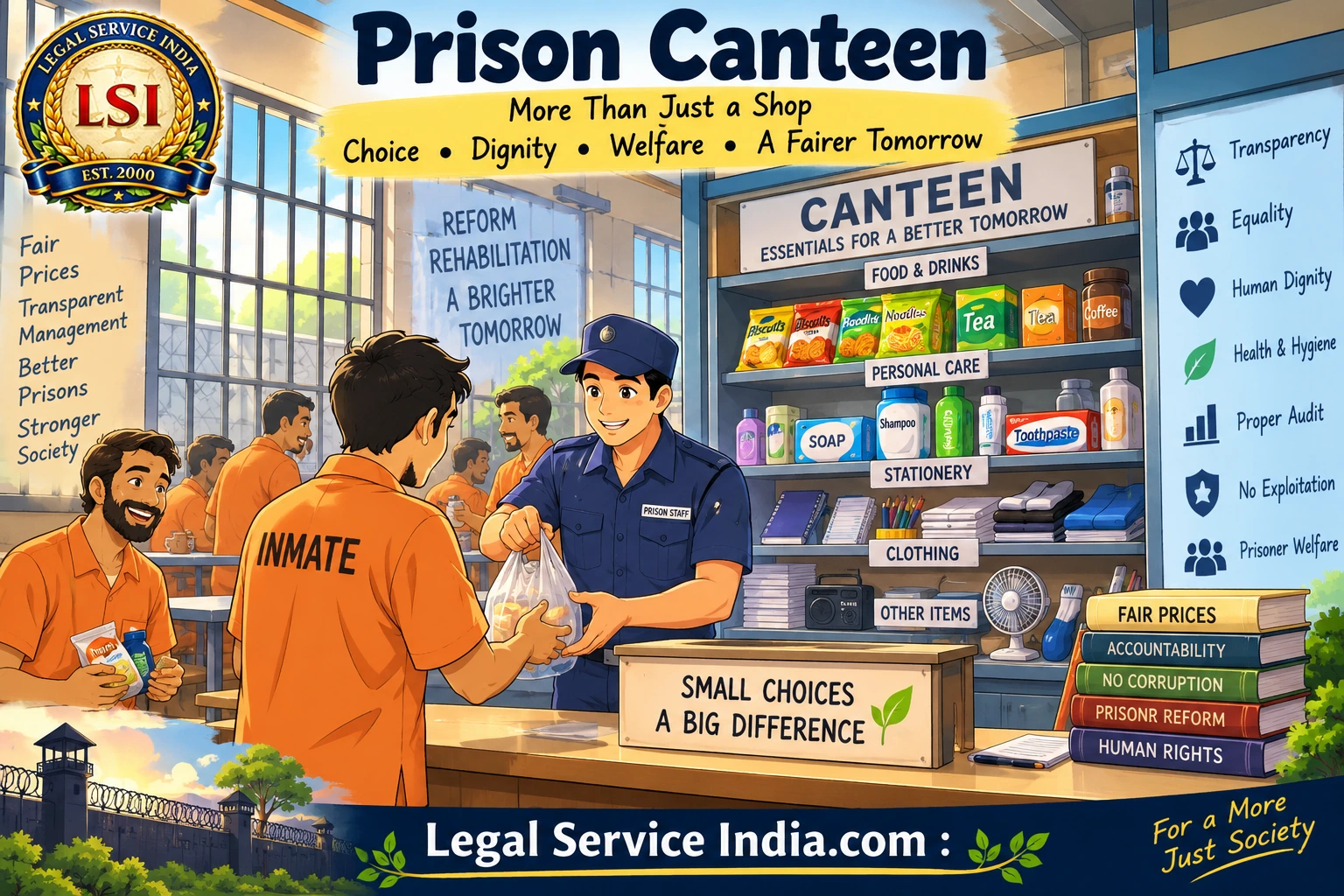
A prison canteen is an internal store where prisoners can buy items that are not normally provided by the prison. It is known as a canteen in India, the United Kingdom and Australia, and as a commissary in the United States. Prisoners may buy food, toiletries, stationery and a few other permitted items.
The canteen may look like a small facility, but it has a major impact on daily life inside prison. For many prisoners, it provides a little choice, comfort and dignity in an otherwise highly controlled environment.
How the Prison Canteen Works
Prisoners are generally not allowed to keep cash with them. Instead, money is maintained in their prison account or deposited by family members and friends. In some prisons, prisoners may also receive a small amount of money for work done inside the prison.
Purchases are made according to prison rules and at fixed intervals. Depending on the prison, prisoners may fill out an order form or use an electronic system. The cost of the goods is deducted from their account, and the items are then supplied to them.
Most prisons also place limits on how much a prisoner can spend. These limits are intended to maintain security and prevent the misuse of money inside the prison.
What Can Prisoners Buy?
The items available vary from one prison to another but commonly include:
- Food and drinks: Biscuits, namkeen, noodles, snacks, tea, coffee, sweets and packaged drinks.
- Personal-care items: Soap, shampoo, toothpaste, sanitary products and other permitted toiletries.
- Stationery: Pens, paper, envelopes and other writing materials.
- Clothing: Socks, undergarments and other approved items.
- Other permitted goods: Radios, fans and certain other comfort items, depending on prison rules.
In India, prison canteens generally provide selected food and daily-use items. Tihar Jail, for example, has used a cashless smart-card system for purchases. Some prison departments also produce biscuits, bakery products and other items through prison industries.
Why the Canteen Is Important
Prison food may not always satisfy every prisoner’s taste or nutritional needs. The canteen therefore allows prisoners to supplement their regular meals with permitted food items.
It also provides something equally important—personal choice. A prisoner has very little control over many aspects of daily life. Being able to choose a biscuit, tea, soap or other permitted item can provide a small but meaningful sense of independence.
Canteen goods may also become part of the informal economy inside prisons. Prisoners sometimes exchange food or other permitted items among themselves. This can create problems when goods are used as a form of informal currency or when stronger prisoners control access to them.
The Problem of Inequality
Not every prisoner has the same financial support. Some receive regular money from their families, while others have no outside support at all.
This can create a two-level system inside prison. Prisoners with financial support may be able to buy additional food, toiletries and comfort items, while poorer prisoners may have to depend entirely on what the prison provides.
For this reason, basic necessities such as adequate food, drinking water, hygiene products, clothing and writing materials should never depend on a prisoner’s ability to pay.
Fair Prices and Transparency
Canteen goods should be sold at reasonable and transparent prices. Prisoners and their families should not be forced to pay excessive prices simply because there is no alternative place to shop.
Prison authorities should regularly review canteen prices, maintain proper accounts and make contracts with suppliers transparent. Any profit earned through the canteen should be properly accounted for and used in accordance with prison rules and public-interest objectives.
Where possible, nutritious food should be given priority over products that are high in sugar, salt and unhealthy fats.
Also Read: AI-Generated Fake Nude Images: Minnesota vs. xAI and the Future of Deepfake Law
The Canteen as a Tool for Reform
A well-managed canteen can contribute to a better prison environment. It can reduce unnecessary tension, provide prisoners with limited personal choice and help them maintain basic standards of hygiene and self-respect.
At the same time, canteen access should not normally be used to deny essential necessities as a punishment. Discipline inside prison should be maintained through lawful and proportionate measures, while basic human needs must continue to be protected.
Problems Facing Prison Canteens
In many prisons, canteens are operated by prisoners themselves under the supervision of the prison superintendent, but without any system of annual auditing of accounts, which often results in misappropriation of income and lack of financial transparency.
Alongside this, canteens face irregular supply chains, shortages of essential items, inflated prices compared to outside markets, and weak quality control, with substandard food and expired goods sometimes sold to inmates.
The daily purchase limit imposed on prisoners also creates inequality, as wealthy inmates frequently exploit poorer prisoners by using their quotas to make extra purchases.
Limited menu options, poor hygiene, and favouritism in distribution further aggravate grievances, making prison canteens a persistent source of corruption, exploitation, and inmate dissatisfaction.
What Should Be Improved?
A fair prison canteen should have:
| Improvement |
|---|
| Reasonable and clearly displayed prices |
| Healthy and nutritious food choices |
| Essential hygiene products at affordable rates |
| Simple and transparent purchasing procedures |
| Strict monitoring to prevent corruption and exploitation |
| Proper records of money received and spent |
| Protection for prisoners who have little or no financial support |
| Regular inspection and grievance mechanisms |
| Annual audit of the canteen account |
Key Case Laws on Prison Canteen Administration
Judicial scrutiny of prison canteens in India has primarily revolved around access, pricing, and inmate funds, viewed through the lens of Article 21 and human dignity.
In L. Muruganantham v. State & Ors. (2025), the Supreme Court clarified that while the State must provide adequate and medically prescribed food, denial of costly or non-essential items through canteens does not violate fundamental rights, as prisons are correctional institutions rather than extensions of civil comforts.
The financial framework sustaining canteen purchases was reinforced in State of Gujarat v. Hon’ble High Court of Gujarat (1998), where equitable wages for incarcerated workers were mandated to preserve their purchasing power for hygiene and supplemental items.
Comparative rulings, such as French v. Owens (1985) in the U.S., and Indian High Court decisions have consistently upheld administrative caps on spending, restrictions on cash, and adoption of cashless smart cards as valid measures to curb extortion and inmate cartels.
Finally, directions in prison reform PILs require that profits from canteen sales be transparently audited and reinvested exclusively into the Prisoners’ Welfare Fund, ensuring accountability and preventing diversion into general state revenues.
Conclusion
The prison canteen is much more than a small shop behind the prison walls. It affects food, hygiene, dignity, equality and the everyday quality of prison life.
When properly managed, the canteen can provide prisoners with limited choice and help them maintain their dignity. When prices are excessive, access is unfair or the system is poorly controlled, it can deepen inequality and create further hardship.
A humane prison system should therefore ensure that the canteen is fair, affordable, transparent and focused on the welfare and rehabilitation of prisoners rather than exploitation.