





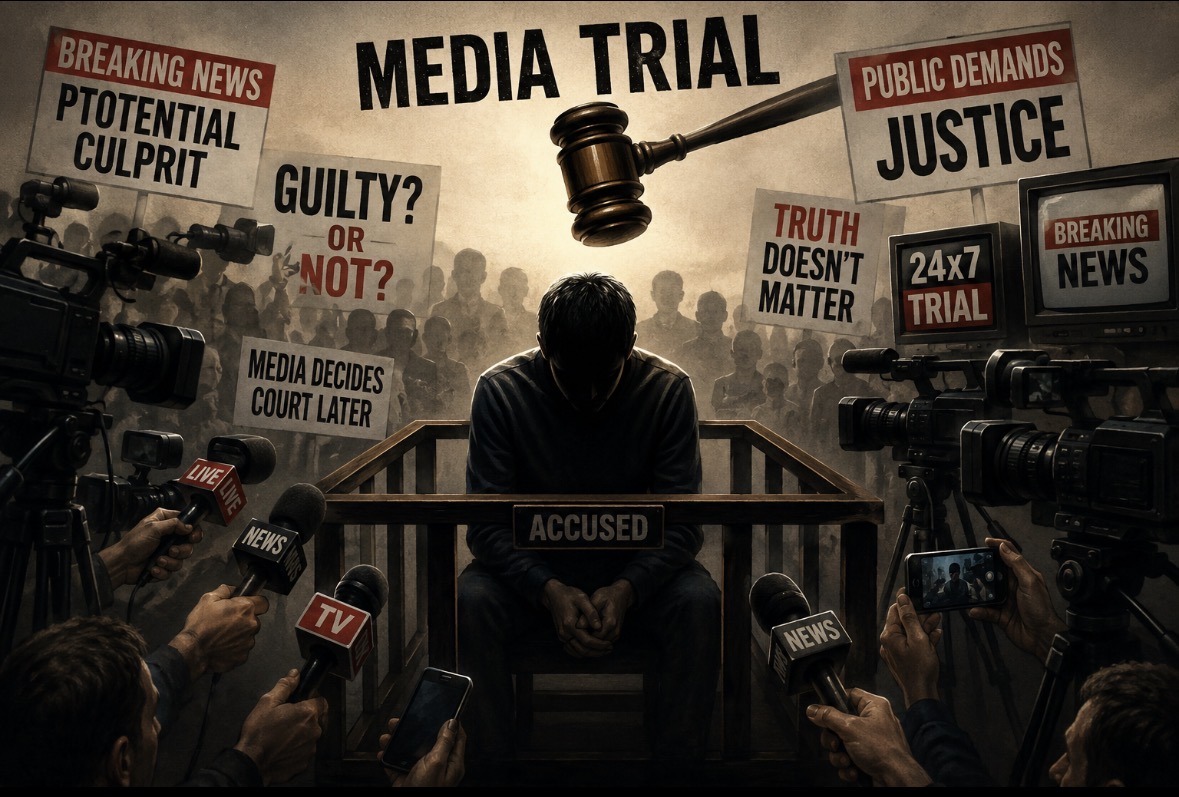
Trial by Media in the Digital Age
“Trial by media” refers to the impact of television, print, and social media coverage on a person’s reputation and on the administration of justice. In the digital age, this has expanded to include viral memes, reels, and commentary that spread within minutes.
The case of Siya Goyal illustrates how public discourse, including memes made about an individual, can quickly shift from reporting to judgment. While freedom of speech under Article 19(1)(a) is fundamental, it must be balanced with the right to dignity and reputation under Article 21.
Legal Framework Governing Media Trial in India
Constitutional Provisions
| Provision | Legal Significance |
|---|---|
| Article 19(1)(a) | Freedom of speech and expression. |
| Article 19(2) | Reasonable restrictions on grounds of defamation, contempt of court, public order, and decency. |
| Article 21 | Right to life with dignity, including the right to reputation and privacy. R. Rajagopal v. State of T.N., (1994) 6 SCC 632. |
Relevant Statutes
- Contempt of Courts Act, 1971: Section 3(2) criminalizes publication that prejudices or interferes with judicial proceedings.
- IT Act, 2000 + IT Rules, 2021: Section 66E (privacy violation), Section 67 (obscene material). Intermediary liability for memes that are defamatory or harassing.
- IPC:
- Section 499 & 500 – Defamation
- Section 504 – Intentional insult
- Section 506 – Criminal intimidation
- Section 354D—Cyber stalking
Supreme Court Judgments on Media Trial
| Case | Principle Laid Down |
|---|---|
| Sahara India Real Estate Corp Ltd. v. SEBI, (2012) 10 SCC 603 | The SC held that “free trial” and “free press” must coexist. Courts can impose “postponement orders” to delay reporting if it prejudices a trial. Media cannot create a parallel trial. |
| R.K. Anand v. Registrar, Delhi High Court, (2009) 8 SCC 106 | SC condemned media sting operations that interfere with judicial process. Emphasized that media must report facts, not pronounce guilt. |
| Nira Radia Case / R. Rajagopal v. State of T.N., (1994) 6 SCC 632 | The right to privacy and reputation are part of Article 21. Even truthful publication can be actionable if it’s not in public interest. |
| Prabha Dutt v. Union of India, (1982) 3 SCC 544 | The press has a right to report but not to interfere with the course of justice. |
The consistent principle: media can report but cannot adjudicate.
Memes and Social Media Commentary: Legal Issues
Memes about Siya Goyal that went viral raise specific concerns:
- Defamation – Sec 499 IPC A meme that imputes conduct harming reputation, made with knowledge, can be defamatory even if in “joke” format. The defense of humor fails if the imputation is clear.
- Right to Privacy & Dignity—Article 21 K.S. Puttaswamy v. Union of India, (2017) 9 SCC 1. Viral memes that ridicule an individual’s appearance, conduct, or personal life can violate dignity.
- Cyber Harassment – The IT Act mass sharing of targeted memes can amount to harassment under IT Rules 2021. Platforms have takedown obligations once flagged.
- Contempt If proceedings are sub judice, memes that assume guilt or influence witnesses can attract contempt under Section 2(c) of the Contempt of Courts Act.
Courts have noted that “virality ≠ legality.” A meme does not get immunity just because it’s shared widely.
Why People Should Not Be Hampered by Media Trial
- Presumption of Innocence Criminal law presumes innocence till proven guilty. Media trials reverse this burden in public opinion.
- Impact on Fair Trial Witnesses, juries, and even judges can be subconsciously influenced. The Sahara case warned against this.
- Psychological Harm Targeted memes and coverage cause reputational damage, mental health impact, and social ostracism. This violates Article 21 dignity.
- Chilling Effect Individuals may avoid public life or legitimate activities due to fear of viral shaming.
The law protects a person’s right to be judged in court, not on Instagram or WhatsApp forwards.
Legal Consequences That Can Arise
Civil
- Suit for damages for defamation.
- Injunction to take down content.
Criminal
- FIR under Sec 499, Section 500 IPC/Section 356 BNS, for defamation.
- Sec 67 IT Act for publishing material that is offensive.
- Sec 66E IT Act for violation of privacy.
- Contempt proceedings if it interferes with ongoing proceedings.
Platform Liability
Under IT Rules 2021, social media intermediaries must remove flagged defamatory/misleading content within 36 hours.
Remedies for Victim
- Legal notice.
- Takedown request.
- Police complaint.
- Writ petition for protection of Article 21 rights.
Conclusion
The case surrounding Siya Goyal and the memes made about her highlights a larger tension in 2026: instant digital commentary vs. due process.
Freedom of expression does not include the freedom to conduct a parallel trial or to reduce a person to a meme. The Supreme Court has repeatedly held that dignity, fair trial, and reputation are constitutional values that must be protected even in the age of viral media. Responsible journalism and responsible posting require the same discipline: report facts, avoid pre-judgment, and remember that behind every trending name is a real person with legal rights.
The remedy is not censorship of all discussion, but accountability—for media houses, platforms, and individual users—so that public discourse informs rather than convicts.
Key Takeaways
The following key takeaways summarize the constitutional principles, statutory provisions, and judicial precedents governing trial by media, freedom of speech, and digital accountability in India.
- Trial by media occurs when television, print, social media, or viral online content influences public opinion about a person before a court delivers its judgment.
- Freedom of speech under Article 19(1)(a) is a fundamental right, but it is subject to reasonable restrictions under Article 19(2) to protect reputation, fair trial, and public order.
- Article 21 of the Constitution protects the right to dignity, privacy, and reputation, making these rights enforceable even in the age of social media.
- The Supreme Court has consistently held that the media can report judicial proceedings but cannot conduct a parallel trial or pronounce someone guilty before a court verdict.
- The Sahara India v. SEBI (2012) judgment recognized the need to balance press freedom with the right to a fair trial and permitted postponement orders in appropriate cases.
- Defamatory memes and viral social media posts can attract civil and criminal liability, including actions for defamation, invasion of privacy, cyber harassment, and contempt of court.
- Virality does not create legal immunity. Widely shared memes or trending posts remain subject to constitutional and statutory limitations.
- Targeted online ridicule may violate an individual’s constitutional right to dignity and privacy, particularly when it causes reputational harm or mental distress.
- Social media intermediaries have legal obligations under the IT Rules, 2021, to remove unlawful or defamatory content after receiving valid notice.
- Victims of media trials may seek legal remedies, including defamation suits, injunctions, takedown requests, police complaints, writ petitions, and contempt proceedings where applicable.
- The Siya Goyal controversy highlights the growing conflict between instant digital commentary and the constitutional principles of due process, fair trial, and the presumption of innocence.
- The rule of law requires that every individual be judged by courts based on evidence—not by television debates, viral memes, Instagram reels, or WhatsApp forwards.
- Responsible journalism and responsible social media use require reporting verified facts while respecting constitutional values, judicial independence, and individual dignity.
- The ultimate constitutional principle is that public discourse should inform citizens, not prejudice judicial proceedings or destroy reputations before a lawful verdict.
Quick Reference Summary
| Topic | Key Point |
|---|---|
| Trial by Media | Public opinion should not replace judicial determination. |
| Article 19(1)(a) | Guarantees freedom of speech and expression. |
| Article 19(2) | Permits reasonable restrictions to protect fair trial, reputation, and public order. |
| Article 21 | Protects dignity, privacy, and reputation. |
| Supreme Court Position | Media may report facts but cannot conduct a parallel trial. |
| Sahara India v. SEBI (2012) | Balanced press freedom with the right to a fair trial. |
| Viral Memes | Can result in defamation, privacy violations, cyber harassment, and contempt proceedings. |
| Social Media Platforms | Must remove unlawful or defamatory content upon valid notice under the IT Rules, 2021. |
| Legal Remedies | Defamation suits, injunctions, takedown requests, police complaints, writ petitions, and contempt actions. |
| Core Constitutional Principle | Justice must be determined by courts based on evidence—not by viral online narratives. |
