





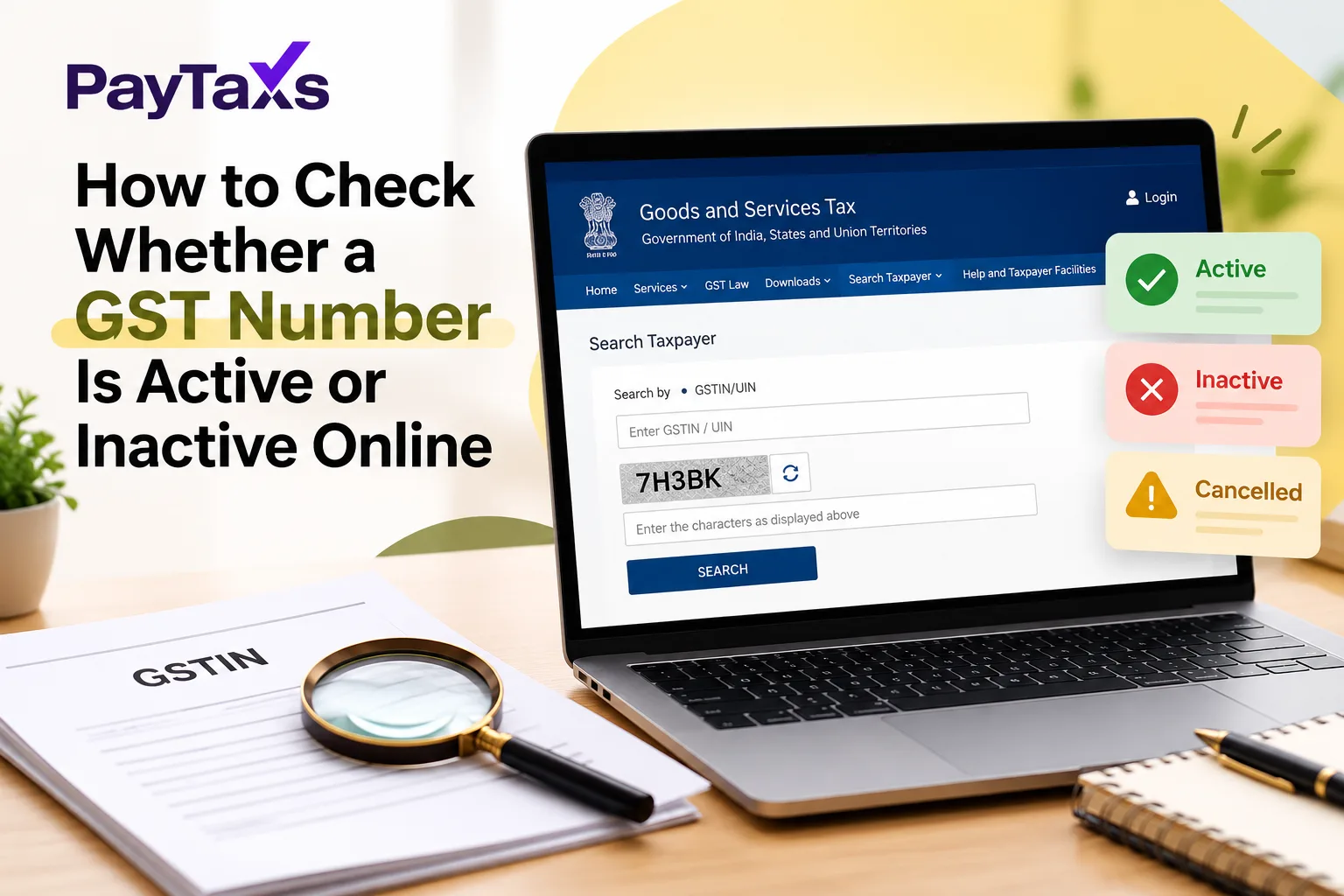
How to Check GST Number Active or Not Online: Step-by-Step Guide
A valid Goods and Services Tax Identification Number (GSTIN) is an important part of doing business in India. Whether a company is onboarding a new supplier, processing a purchase invoice or reviewing its tax records, verifying the other party’s GST registration can help prevent avoidable errors and compliance risks.
However, possessing a GSTIN does not necessarily mean that the registration remains active. A registration may be suspended or cancelled after it was originally issued, making it important to check its current status before relying on it for a business transaction.
The good news is that businesses can verify GST registration details online through the official GST portal without logging into an account.
This guide explains how to check whether a GST number is active or not, what the different registration statuses mean, and why verification matters for businesses and taxpayers.
How to Check GST Number Active or Not Online
The simplest way to verify a GST number is to use the taxpayer search facility on the official GST portal.
The facility allows users to check registration information, including the taxpayer’s legal name, trade name, registration date, principal place of business and current registration status.
Follow these steps to verify a GSTIN.
Step 1: Visit the Official GST Portal
Open the Goods and Services Tax portal.
Step 2: Open the Search Taxpayer Facility
On the portal’s homepage, select the Search Taxpayer option and choose the facility for searching by GSTIN or UIN.
Step 3: Enter the GSTIN
Enter the 15-character GST Identification Number of the business you want to verify. Check the number carefully before proceeding to avoid errors.
Step 4: Complete the Verification Process
Enter the CAPTCHA characters displayed on the screen, if prompted, and submit the search request.
Step 5: Check the Registration Details
The portal will display the available registration information associated with the GSTIN. Examine the registration status, legal name, trade name and other relevant details.
Step 6: Confirm the Business Identity
Compare the information displayed on the portal with the details appearing on the supplier’s invoice, purchase order or other business documents.
If the registration status is active and the business details match, the verification provides a useful indication that the GSTIN is currently registered.
For the latest information, always use the official portal rather than relying exclusively on third-party websites or previously downloaded registration records.
What Does an Active GST Number Mean?
An active GSTIN indicates that the registration is currently shown as active on the GST portal.
This is an important preliminary check when entering into a transaction with a supplier, service provider or other registered taxpayer.
Businesses can use the registration information to confirm whether the GSTIN corresponds to the expected legal entity and whether the registration details are consistent with the documents supplied.
Nevertheless, an active registration should not be treated as a guarantee that every transaction involving the taxpayer is compliant.
Businesses must continue to examine invoices, maintain appropriate records and satisfy the applicable legal requirements governing their transactions and any claim for input tax credit.
What Does an Inactive or Cancelled GST Number Mean?
If a GSTIN does not show an active status, businesses should investigate the reason before proceeding with a transaction.
A registration may appear as suspended, cancelled or otherwise not active, depending on its circumstances and the status recorded on the portal.
These distinctions matter because suspension and cancellation are not necessarily the same.
1. Suspended GST Registration
A suspended GSTIN indicates that the registration has been placed under suspension in accordance with the applicable GST procedures.
Suspension may arise in connection with registration cancellation proceedings or other circumstances recognised under the GST framework.
The taxpayer’s registration status should be checked again after the relevant proceedings or updates have been completed.
Businesses should not automatically treat a suspended GSTIN as an active registration.
2. Cancelled GST Registration
A cancelled GST registration is one for which cancellation has taken effect under the applicable process.
The portal may display the cancellation date, where applicable. This information can help businesses assess the registration’s status in relation to a particular transaction.
If a supplier’s GSTIN appears cancelled, verify the relevant dates and circumstances before determining how the transaction should be treated for tax purposes.
3. Incorrect GSTIN or Mismatched Details
Sometimes, an unsuccessful search results from a typing error or an incorrect GSTIN supplied by the other party.
Differences between the GSTIN, legal name, trade name and invoice details may also indicate that further verification is necessary.
Before drawing conclusions, re-enter the GSTIN carefully and compare the portal’s information with the supplier’s documents.
If the discrepancy persists, request clarification and supporting records from the business concerned.
Why Should Businesses Verify GST Registration Status?
Checking a GSTIN is a straightforward step that can strengthen a business’s internal verification and accounting processes.
Supplier Verification
Before engaging a new supplier, businesses can verify whether the GSTIN provided corresponds to the expected business and whether its registration is active.
This provides an additional check during supplier onboarding and procurement.
Invoice Verification
A GST invoice contains information that should be consistent with the relevant business and registration records.
Verifying the GSTIN can help identify incorrect registration numbers, mismatched business names and other discrepancies before invoices are processed.
Input Tax Credit Compliance
Input tax credit (ITC) is an important consideration for businesses registered under GST.
However, an active GSTIN alone does not establish eligibility to claim input tax credit. The recipient must satisfy the applicable statutory conditions, including the relevant requirements under the Central Goods and Services Tax Act, 2017, and associated rules.
Businesses should therefore examine the invoice, the underlying transaction, the applicable ITC conditions and relevant GST records rather than relying solely on the registration status.
Where necessary, professional advice can help determine whether a particular claim is legally permissible.
Better Accounting and Audit Records
Maintaining accurate supplier information can make GST reconciliations, internal reviews and audits more efficient.
Recording verification results and retaining relevant supporting documents can also help businesses explain the checks performed when reviewing a transaction.
What Other Information Can You Check on the GST Portal?
The GST portal’s taxpayer search facility offers more than a basic registration-status check.
According to the official GST portal’s user guide, users can access several categories of information without logging in.
Depending on the taxpayer’s registration and the information available, these details may include:
- GSTIN or UIN.
- Legal name of the business.
- Trade name.
- Effective date of registration.
- Constitution of the business.
- Principal place of business.
- Date of cancellation, where applicable.
- Available GST return-filing information.
Additional taxpayer information may be available after logging in, subject to the portal’s access arrangements.
The taxpayer search facility can also display suspension-related information where applicable.
For businesses conducting regular supplier checks, reviewing these details can help establish whether the registration information is consistent with the documents provided.
How Can Businesses Make GST Verification More Efficient?
Businesses that process numerous invoices should consider making GSTIN verification a routine part of their accounting and compliance procedures.
The following practices can help.
- Verify new suppliers before onboarding. Check the GSTIN and compare the portal’s information with the supplier’s legal and trade names.
- Review discrepancies promptly. If an invoice contains a different business name or an apparently inactive GSTIN, seek clarification before proceeding.
- Recheck registrations when necessary. A GSTIN’s status may change over time. A previous verification should not be treated as proof of its current status.
- Maintain supporting records. Preserve invoices, supplier details and relevant verification records in accordance with the business’s record-keeping procedures.
- Use official sources for current information. The GST portal should be the primary reference for registration status. Third-party tools may offer convenience, but their information should not replace official verification.
- Seek professional advice where required. Complicated cases involving suspension, cancellation, input tax credit or disputed transactions may require advice from a qualified tax professional.
These measures can help reduce administrative errors while supporting a more reliable approach to GST compliance.
Frequently Asked Questions
1. How Can I Check Whether a GST Number Is Active or Not?
Visit the official GST portal at https://www.gst.gov.in/, open the Search Taxpayer facility, enter the GSTIN or UIN, complete the displayed verification step and review the registration status.
2. Can I Check a GST Number Without Logging In?
Yes. The GST portal allows users to search for taxpayer details by GSTIN or UIN without logging in.
3. What Should I Do If a GSTIN Shows a Suspended Status?
Verify the status and any available effective date on the official portal. Contact the registered taxpayer for clarification and assess the implications for the proposed transaction before proceeding.
4. Does an Active GSTIN Mean I Can Claim Input Tax Credit?
No. An active GSTIN is only one part of the verification process. Input tax credit is subject to the applicable statutory conditions, documentation requirements and other relevant provisions.
5. Can a GST Registration Be Cancelled After It Has Been Issued?
Yes. A GST registration may be cancelled through the applicable legal process. The current status and available cancellation details should be checked on the official portal.
6. What Should I Do If the GST Portal Displays Incorrect Business Details?
Check that the GSTIN has been entered correctly. If the discrepancy remains, ask the taxpayer for clarification and supporting documents. Avoid relying on the disputed information until the issue has been resolved.
7. Is It Sufficient to Check a Supplier’s GSTIN Only Once?
Not necessarily. A previous check reflects the information available at that time. Businesses should reverify registration details when appropriate, particularly before significant transactions or when discrepancies arise.
Conclusion
Knowing how to check whether a GST number is active or not is a practical part of responsible business verification in India.
The official GST portal makes it possible to examine registration status and relevant taxpayer details without logging in. This simple check can help businesses identify discrepancies, maintain accurate records and make more informed decisions before processing transactions.
However, registration verification should form part of a broader compliance process. Businesses must also review invoices, retain supporting documentation and satisfy the applicable legal requirements for transactions and input tax credit claims.
By combining official GSTIN verification with sound accounting practices, businesses can strengthen their compliance procedures and reduce the risk of avoidable errors.
Reference and Further Reading
For additional guidance on checking GST registration status, refer to the following resources:
- Official GST Portal: https://www.gst.gov.in/
- GST Portal User Guide — Search Taxpayer: https://tutorial.gst.gov.in/userguide/taxpayersdashboard/Search_Taxpayer_manual.htm
- PayTaxS — How to Check Whether a GST Number Is Active: https://paytaxs.com/blog/how-to-check-gst-active-or-not
