





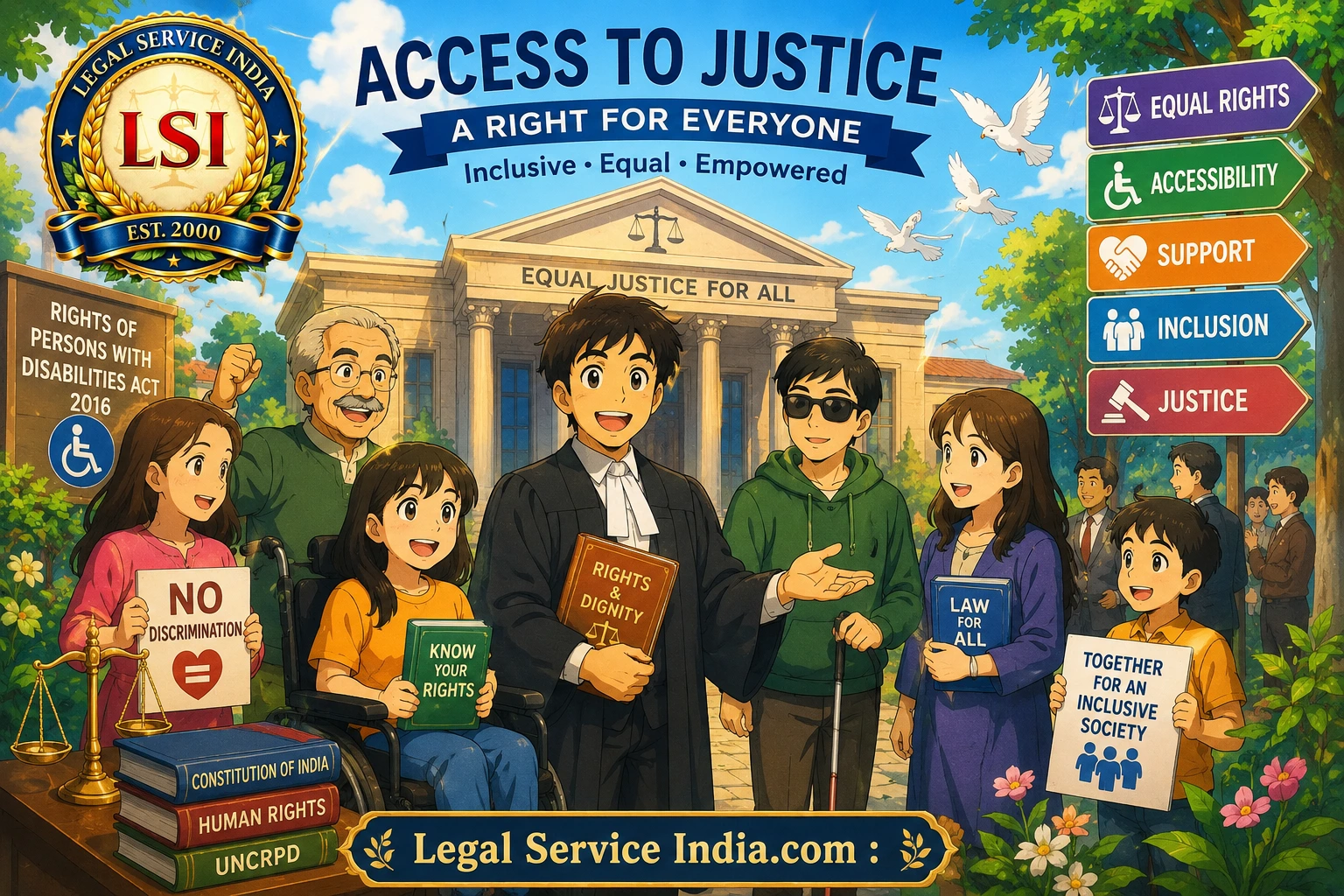
Understanding Disability and Social Inclusion
Disability exists in the human condition. It is a society where prejudice and oppression are directed against an individual’s disability. Persons with disabilities have traditionally been seen as needing protection, charity, and social welfare. Because of their handicap, they face and confront prejudice that is unequal.
They are viewed as having less functional bodies or dependents and are not welcomed in the mainstream. Social, cultural, and attitudinal barriers that prevent them from fully participating in society and from exercising equal rights and opportunities have a negative impact on their life.
Many disabled people are forced to live meaningless lives because they do not receive the proper medical, psychological, legal, and social support. They have also been marginalised in society, either as a result of discrimination that is overt or covert or because of the lower status that is attributed to them by customs and traditions.
For these people, discrimination, marginalisation, and segregation are the norm rather than the exception, and the worst kind of discrimination that they perceive as their grievance is that others do not understand.
Key Challenges Faced by Persons with Disabilities
- Social prejudice and discrimination
- Marginalization and segregation from mainstream society
- Lack of medical, psychological, legal, and social support
- Cultural and attitudinal barriers
- Limited opportunities to exercise equal rights
- Dependence created by societal perceptions and stereotypes
Impact of Disability-Related Barriers
| Barrier Type | Impact on Persons with Disabilities |
|---|---|
| Social Barriers | Exclusion from mainstream participation and opportunities |
| Cultural Barriers | Reinforcement of stereotypes and discriminatory attitudes |
| Attitudinal Barriers | Reduced acceptance and understanding in society |
| Institutional Barriers | Limited access to services, support, and equal opportunities |
Access to Justice as a Fundamental Right
In addition to being a fundamental right in itself, access to justice is also essential in terms of development and poverty reduction, as well as in the protection and enjoyment of all other rights.
For example, “A person with a disability who feels that she or he has been denied the right to work may wish to turn to the justice system to seek a remedy. However, if the justice system fails to accommodate their physical, communication, or other disability-related needs and/or expressly discriminates against her or him, then clearly denial of access to the justice system also results in denial of protection of the right to work.”
Relationship Between Access to Justice and Human Rights
One’s enjoyment of other human rights also impacts one’s ability to access justice. For example, persons with disabilities who have received a quality education will be better placed to understand their rights and make use of the justice system than those who have been deprived of the right to an education.
In this way, as reiterated in other modules of this Toolkit, the human rights of persons with disabilities are indivisible, interdependent, and interconnected.
Importance of an Inclusive Justice System
- Ensures equal access to legal remedies
- Protects the right to work and other fundamental rights
- Provides accommodations for disability-related needs
- Promotes equality before the law
- Reduces discrimination within legal institutions
- Strengthens the protection of all human rights
Interconnection of Human Rights
| Human Right | Connection to Access to Justice |
|---|---|
| Right to Education | Helps individuals understand and assert their legal rights |
| Right to Work | Requires access to legal remedies when discrimination occurs |
| Equality and Non-Discrimination | Ensures fair treatment within the justice system |
| Access to Justice | Acts as a gateway to the protection of all other rights |
International Principles and Guidelines on Access to Justice for Persons with Disabilities
The following principles form the foundation of equal access to justice for persons with disabilities and emphasise the obligation of states to ensure inclusive and non-discriminatory legal systems.
| Principle | Key Guideline |
|---|---|
| Principle 1 | All persons with disabilities have legal capacity, and, therefore, no one shall be denied access to justice on the basis of disability. |
| Principle 2 | Facilities and services must be universally accessible to ensure equal access to justice without discrimination against persons with disabilities. |
| Principle 3 | Persons with disabilities, including children with disabilities, have the right to appropriate procedural accommodations. |
| Principle 4 | Persons with disabilities have the right to access legal notices and information in a timely and accessible manner on an equal basis with others. |
| Principle 5 | Persons with disabilities are entitled to all substantive and procedural safeguards recognised in international law on an equal basis with others, and states must provide the necessary accommodations to guarantee due process. |
| Principle 6 | Persons with disabilities have the right to free or affordable legal assistance. |
| Principle 7 | Persons with disabilities have the right to participate in the administration of justice on an equal basis with others. |
| Principle 8 | Persons with disabilities have the rights to report complaints and initiate legal proceedings concerning human rights violations and crimes, have their complaints investigated and be afforded effective remedies. |
| Principle 9 | Effective and robust monitoring mechanisms play a critical role in supporting access to justice for persons with disabilities. |
| Principle 10 | All those working in the justice system must be provided with awareness-raising and training programmes addressing the rights of persons with disabilities, in particular in the context of access to justice. |
Rights of Persons with Disabilities Act, 2016: India’s Commitment to Accessible Justice
A comprehensive piece of legislation in India, the “Rights of Persons with Disabilities Act, 2016” aims to safeguard the rights and advance the welfare of individuals with disabilities.
It aims to guarantee equal opportunities and access to a range of services for people with disabilities and is consistent with the tenets of the UNCRPD.
It delineates the necessary steps that the government should take to guarantee that individuals with disabilities have efficient access to the legal system.
Government Obligations for Access to Justice
- Guaranteeing equal opportunities for persons with disabilities.
- Ensuring access to a wide range of public services.
- Providing efficient access to the legal system.
- Implementing measures aligned with the principles of the UNCRPD.
- Facilitating meaningful participation in judicial processes.
It is mandatory for the government to guarantee that individuals with disabilities receive suitable accommodations so they can engage in all judicial procedures in an effective manner.
This covers accommodations made during the initial phases of an investigation and other legal actions.
India Towards Inclusive and Accessible Justice
In India, where diversity thrives as the cornerstone of national identity, a strong movement for disability rights is growing, driven by the government’s commitment towards true inclusivity and self-reliance for everyone.
Disability in India: Access to Justice, Rights and Empowerment
According to Census 2011, there are 2.68 crore persons with disabilities in India, which constitutes 2.21 per cent of the total population. Out of these, approximately 1.50 crore are male and 1.18 crore are female.
Disability Statistics in India
| Particulars | Number |
|---|---|
| Total Persons with Disabilities | 2.68 Crore |
| Percentage of Total Population | 2.21% |
| Male Persons with Disabilities | 1.50 Crore |
| Female Persons with Disabilities | 1.18 Crore |
Government Initiatives for Persons with Disabilities
Backed by forward-thinking policies and dynamic programmes, the government ensures that no one is deprived on account of their disability and creates pathways to opportunity and active societal involvement for every individual.
The evolution of disability affairs in India reflects a growing recognition of the rights and potential of persons with disabilities. The establishment of dedicated departments and initiatives exemplifies a commitment to fostering inclusivity, creativity, and resilience within the community.
By providing platforms for showcasing talent and facilitating economic opportunities, these efforts not only empower individuals but also contribute to a more inclusive society where every individual can thrive with dignity.
Understanding Access to Justice for Persons with Disabilities
Access to justice gains an entirely different meaning when it is understood in the light of persons with disabilities. When they’re fighting for recognition as a human being, for them going to court to exercise their substantive rights is a distant dream.
Therefore, understanding the concept of disability, different models of rehabilitation become necessary to understand the need for access to justice.
As per the new meaning of access to justice, the law relating to persons with disabilities is studied with a view of understanding the law creating rights as well as providing a mechanism for protecting the rights.
Legal Framework for Disabilities
Law is different for persons with mental disabilities and persons with physical disabilities; as a result, this module makes the same distinction.
Hence, the right to property and treatment of persons with mental disabilities are discussed separately.
Rehabilitation, Rights and Empowerment
The law of rehabilitation provides for the empowerment of persons with disabilities. It brings in professionalism in the training of trainers.
Similarly, the right to education and the right to employment are also important parts of the study.
Key Rights of Persons with Disabilities
- Right to Education
- Right to Employment
- Right to Property
- Right to Rehabilitation
- Right to Equal Access to Justice
Special Courts and Access to Justice
The new legislation in the pipeline provides for access to justice through special courts as well as through special provisions in ordinary courts.
Accessibility to justice for people with disabilities continues to advance extremely slowly.
All societal classes ought to be cognisant of the challenges encountered by those with impairments.
Role of Legal Institutions
The organisations that make up our legal system, including judges, police officers, and advocates, should prioritise the issues facing people with disabilities and educate themselves on how to create policies that will allow them to deal with them in a way that is comfortable.
- Judges should be sensitised to disability rights issues.
- Police officers should receive disability-inclusive training.
- Advocates should promote accessible legal services.
- Courts should ensure barrier-free access and reasonable accommodation.
Technology and Disability Access to Justice
The development of the value of evidence gathered by a technological technique has been significantly influenced by information technology.
For these individuals, utilising technology can improve their involvement in the administration of justice.
Importance of Technology in Justice Delivery
- Improves accessibility to legal services.
- Facilitates participation in judicial proceedings.
- Enhances the collection and presentation of evidence.
- Promotes inclusive justice mechanisms.
Need for a Stronger Legislative Framework
Such a robust system for people with disabilities needs to be provided by the current legislative structure in our nation.
Therefore, our nation’s system needs to be improved in order to better apply the provisions pertaining to disabled people’s access to justice.
Conclusion: Access to Justice and Disability Rights
The evolution of disability rights in India demonstrates a growing commitment to inclusivity, dignity, and equal opportunity. However, meaningful access to justice for persons with disabilities requires stronger legal frameworks, accessible institutions, trained stakeholders, and effective use of technology. Strengthening these areas will ensure that persons with disabilities can fully exercise their rights and participate equally in society.
Written By: Arnav Mani, BA LLB (Hons) (IIIrd Year) Galgotias University

