





Right to Repair in India: Understanding Consumer Rights, Manufacturer Responsibilities and Legal Remedies
Introduction: When Repairing a Product Becomes More Difficult Than Replacing It
Imagine buying an expensive smartphone only to discover that its battery begins failing within a few months. You approach the authorised service centre, expecting a straightforward repair. Instead, you receive an unexpectedly high quotation. Perhaps the required spare part is unavailable, or you are told that only the manufacturer’s authorised technicians can carry out the repair.
Now imagine a similar situation involving a washing machine, refrigerator, laptop or agricultural machine that your family or business depends on every day.
What should you do? Pay whatever the service centre demands, purchase a replacement or continue using a faulty product?
For many consumers, this is not simply a question of convenience. It is a question of affordability, transparency and fairness.
The growing debate over the Right to Repair in India addresses precisely this problem. Consumers increasingly expect that when they purchase a product, they should have reasonable access to the information, spare parts and repair services needed to maintain it.
The issue also raises important questions about manufacturers’ responsibilities, warranty conditions, independent repair businesses and the remedies available under Indian consumer protection law.
India has taken steps towards promoting repairability and helping consumers access product and service information. However, consumers must understand an important legal distinction: the Right to Repair initiative does not automatically mean that every manufacturer must provide every spare part indefinitely, offer free repairs or permit every repair without restrictions.
The real question is whether consumers have meaningful choices and whether a business’s repair policies comply with its contractual commitments and applicable law.
What Is the Right to Repair in India?
The Right to Repair is a consumer-focused concept that seeks to make it easier to repair and maintain products rather than replace them whenever a component fails.
It generally involves access to essential repair information, compatible spare parts, suitable tools, service manuals and reasonably accessible repair facilities.
The idea is particularly relevant to electronic devices, household appliances, computers, agricultural equipment and other products whose repair costs can significantly affect their overall value.
Consider a smartphone with a damaged charging port. If replacing the component is technically feasible, the consumer would reasonably want to know the repair cost, the availability of genuine parts and whether an independent technician can perform the work safely.
However, if the manufacturer provides no practical repair information, restricts access to essential components or offers only an uneconomical replacement option, the consumer’s freedom of choice may become limited.
The Right to Repair movement seeks to address such barriers.
Does the Right to Repair Mean That All Repairs Must Be Free?
No.
The Right to Repair should not be confused with a universal right to free servicing.
Whether a repair must be provided without charge depends on the applicable warranty, service contract, consumer protection obligations and circumstances of the particular case.
For example, a manufacturing defect covered by a valid warranty may entitle a consumer to seek the remedy promised under the warranty. By contrast, accidental damage occurring after the warranty period will ordinarily raise different questions about payment and responsibility.
Similarly, the concept does not automatically eliminate legitimate safety requirements, intellectual property protections or restrictions necessary to protect a product’s security and reliability.
The objective is to improve repair access, transparency and consumer choice without disregarding legitimate technical and legal considerations.
Why the Right to Repair Matters to Indian Consumers
1. High Repair Costs Can Make Affordable Products Expensive to Own
The actual cost of owning a product extends beyond its purchase price.
Batteries deteriorate, electronic components fail, appliances develop faults and machines require regular maintenance. Over time, these expenses can become a substantial financial burden.
A repair that costs almost as much as a replacement may leave consumers wondering whether the original purchase was worthwhile.
This problem is particularly significant for families that cannot afford to replace expensive appliances or electronic devices whenever a relatively minor component fails.
The Right to Repair in India is therefore closely connected with affordability and the practical value consumers receive from their purchases.
2. Consumers Deserve Clear Information Before Approving Repairs
A service centre should not leave a customer guessing about what is wrong with a product or why a particular repair has been recommended.
Consumers benefit from knowing:
- What fault has been identified.
- Which component requires repair or replacement.
- How much the spare parts and labour will cost.
- Whether a less expensive repair option is available.
- How long the repair is likely to take.
- Whether the proposed work could affect the existing warranty.
- What warranty, if any, will apply to the repaired component.
A written estimate and an understandable explanation can help consumers make informed decisions.
A high quotation, by itself, does not necessarily establish unlawful conduct. Nevertheless, misleading representations, deficient services or other unfair practices may raise legal concerns depending on the facts.
3. Repairability Can Extend Product Life and Reduce Waste
Replacing an entire appliance because one component has failed is not always necessary.
When products are designed and supported in ways that make repairs practical, consumers may be able to extend their useful life and avoid unnecessary expenditure.
Greater repairability can also help reduce electronic waste and encourage more responsible use of resources.
This environmental dimension is important for India, where the increasing use of electronic devices creates a continuing need for effective maintenance, reuse and waste management.
However, repairability must go hand in hand with safety. Improper handling of batteries, electrical systems or other sensitive components can create serious risks.
The objective should be affordable and accessible repairs that remain technically appropriate and safe.
4. Independent Repair Businesses Also Have a Role
Local repair shops often provide valuable services, particularly in areas where authorised service centres are difficult to access.
Reasonable access to spare parts and repair information can help independent technicians serve consumers more effectively.
At the same time, manufacturers have legitimate interests in protecting product security, intellectual property and technical reliability.
A balanced repair ecosystem should address these competing considerations rather than assume that every manufacturer restriction is unfair or that every restriction is justified.
India’s Right to Repair Initiative: What Has the Government Done?
The development of the Right to Repair in India reflects a growing policy interest in consumer choice, product longevity and reducing electronic waste.
The government has taken steps to improve access to repair-related information and promote greater transparency around repairability.
The Right to Repair India Portal
The Department of Consumer Affairs has established the official Right to Repair India portal to help consumers access information about participating manufacturers and their after-sales services.
The portal provides a central point of reference for information such as customer care contacts, warranty and service terms, support arrangements, authorised service networks and other repair-related details, depending on the company and product.
Consumers can visit the official portal here:
Official resource: https://www.righttorepairindia.gov.in/
This initiative can help consumers identify relevant service information without having to search through multiple websites.
It is particularly useful when a customer needs to locate a manufacturer’s support network, understand applicable service conditions or determine where to raise a repair-related query.
However, consumers should not assume that the portal guarantees the availability of every spare part or provides an unrestricted right to undertake every repair. The information available depends on the participating company, product and applicable terms.
The Repairability Index Framework
Another important development is the government’s work on a repairability index framework.
On 4 November 2025, the Press Information Bureau reported that the Department of Consumer Affairs had launched a logo design competition to encourage public participation in the initiative titled Empowering Consumers through Repairability Index.
The government described the initiative as part of its broader efforts to promote informed product choices, improve repairability and reduce electronic waste.
A repairability index can help consumers compare products based on how practical they are to repair. Depending on the framework’s applicable criteria, relevant considerations may include spare-part availability, repair information, service access and the practical difficulty of carrying out repairs.
The underlying policy objective is straightforward: consumers should be better equipped to consider a product’s repairability before purchasing it, rather than discovering its limitations only after something goes wrong.
Important legal distinction: The announcement of a framework or the launch of a public participation initiative should not be interpreted as proof that a comprehensive, universally enforceable Right to Repair has already been established for every product and manufacturer in India. The legal effect of any particular requirement depends on the applicable rules, notifications and implementation measures.
Consumers and businesses should consult official government publications for the latest applicable requirements.
What These Developments Mean for Consumers
The government’s initiatives represent an important policy direction, but consumers should distinguish between improving access to repair information and obtaining a legally enforceable remedy in an individual dispute.
For example, the availability of a manufacturer’s service information may help a customer identify the correct support channel. It does not automatically establish that a particular repair must be free or that a company must replace a product.
Those questions depend on the applicable law, the warranty, the representations made during the sale and the circumstances of the complaint.
The Right to Repair initiative should therefore be understood alongside India’s existing consumer protection framework.
Right to Repair and the Consumer Protection Act, 2019
The Consumer Protection Act, 2019 provides the principal statutory framework for addressing a wide range of consumer disputes in India.
It recognises consumer rights and provides mechanisms for addressing complaints involving defective goods, deficient services, unfair trade practices and other legally recognised grievances.
The Act also establishes a framework for product liability in appropriate cases and provides for the Central Consumer Protection Authority.
However, it is essential to understand that the Consumer Protection Act, 2019 does not automatically convert every expensive repair quotation or refusal to provide a preferred repair option into a legal violation.
A consumer’s entitlement to relief depends on the relevant facts and the applicable legal provisions.
When Can a Repair Dispute Become a Consumer Dispute?
A repair-related complaint may raise a legal issue in circumstances such as the following:
- Defective goods: A product develops a defect that may give rise to a remedy under the applicable law, taking into account the nature of the defect, the purchase terms and the available evidence.
- Deficiency in service: A service provider fails to perform a service in the manner required by the applicable contract or law.
- Unfair trade practice: A business engages in conduct that falls within the statutory definition of an unfair trade practice.
- Misleading representations: A consumer is induced to purchase a product or service through a representation that is misleading in a legally relevant manner.
- Warranty-related disputes: A manufacturer or seller refuses to honour an applicable warranty obligation, despite the consumer meeting the relevant conditions.
Each situation requires a separate assessment. The existence of a repair problem alone does not establish that a consumer has a valid legal claim.
Example: Refusal to Honour a Warranty
Suppose a consumer purchases a washing machine with a valid warranty covering a particular manufacturing defect.
The machine develops that defect during the warranty period. The consumer approaches the authorised service centre, but the company refuses to provide the promised warranty service without identifying an applicable exclusion.
Depending on the warranty terms and evidence, the refusal may give rise to a consumer dispute.
The consumer should preserve the purchase invoice, warranty document, service records and written communication explaining the refusal.
By contrast, if the damage results from accidental misuse expressly excluded by the warranty, the legal position may be different.
The distinction between a legitimate contractual exclusion and an unjustified refusal to honour a commitment is often central to resolving such disputes.
Can a Manufacturer Cancel Your Warranty for Using an Independent Repair Shop?
This is one of the most important questions associated with the Right to Repair in India.
Many consumers hesitate to approach an independent technician because they fear losing all warranty protection. Others assume that they can open, modify or repair any product without affecting a future warranty claim.
Neither assumption is universally correct.
Warranty conditions differ across manufacturers, products and service arrangements. The effect of an independent repair must be assessed in light of the applicable terms, the nature of the work performed and the circumstances of the subsequent claim.
For example, if an unauthorised repair damages a component, the manufacturer may have grounds to dispute a warranty claim relating to that damage, depending on the applicable terms and law.
However, it is important to distinguish a claim affected by repair-related damage from a blanket assumption that every independent repair automatically extinguishes every consumer right.
Consumers should request a clear explanation of the specific warranty condition being relied upon.
What Should You Check Before Authorising an Independent Repair?
Before proceeding, consumers should:
- Read the warranty document and any applicable service contract.
- Ask whether the proposed repair could affect the warranty on the relevant component.
- Confirm whether the technician has suitable expertise and equipment.
- Check whether compatible spare parts are available.
- Obtain a written estimate before authorising the work.
- Keep records of the original fault and the repair undertaken.
For expensive devices or products involving safety-sensitive components, it may be prudent to seek written clarification from the manufacturer before proceeding.
A consumer should make an informed decision rather than rely solely on a general verbal warning that the warranty will become invalid.
What Can You Do If a Manufacturer or Service Centre Refuses to Repair Your Product?
A consumer does not have to accept an unsatisfactory explanation without asking questions. However, the most effective approach is usually to document the problem, understand the contractual position and use the appropriate grievance mechanism.
The following steps can help.
Step 1: Examine the Purchase Invoice and Warranty Conditions
Start by checking the purchase date, warranty period, exclusions and conditions governing repairs.
If you purchased an extended warranty or service package, review that document as well.
Identify whether the reported fault appears to fall within the coverage offered and whether any specific exclusion may apply.
Do not assume that every repair must be free simply because the product is relatively new. Equally, do not assume that the manufacturer can refuse every claim without reference to the applicable terms.
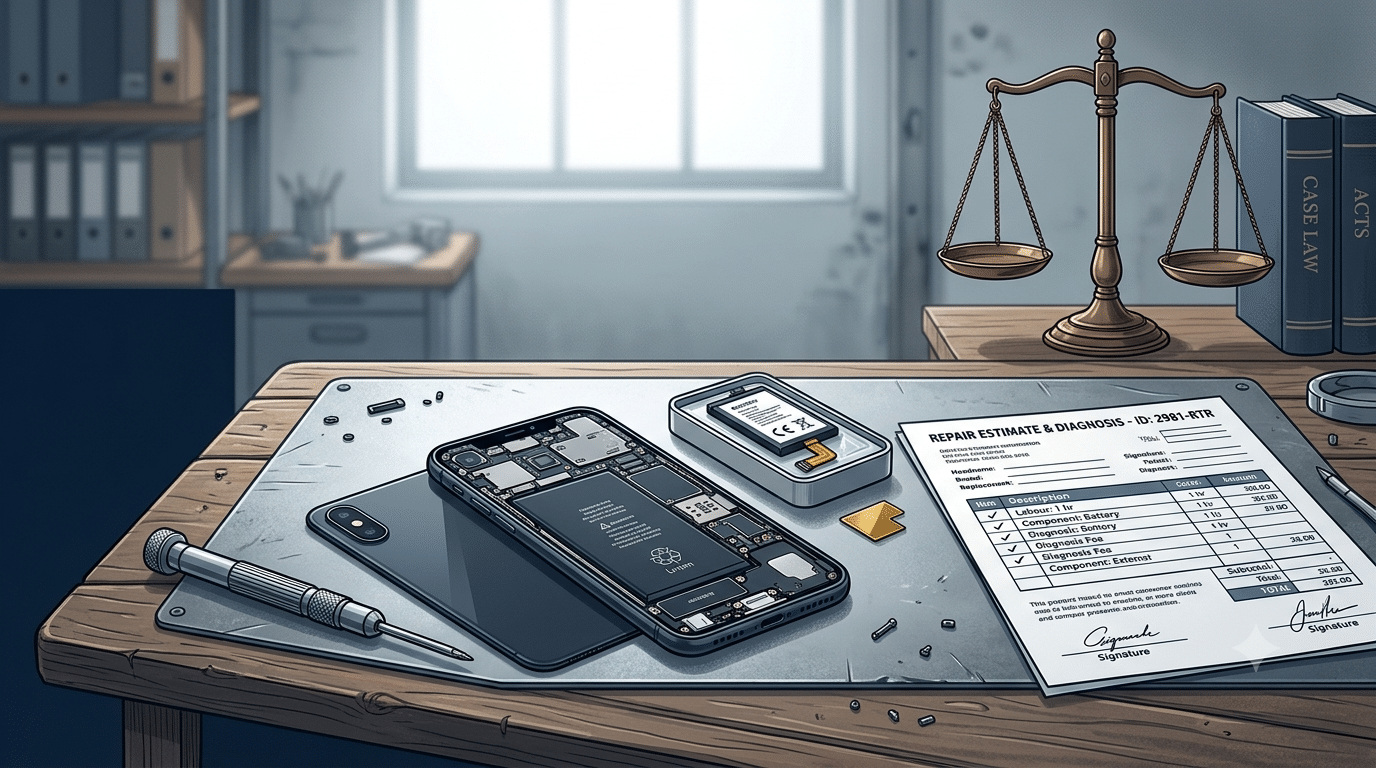
Step 2: Ask for a Written Diagnosis and Itemised Estimate
Request a written explanation of the fault and the proposed solution.
Where appropriate, ask the service centre to separate the cost of spare parts, labour, inspection and other charges.
If the company recommends replacing the entire product rather than repairing it, ask why the existing product cannot reasonably be repaired.
A written explanation will help you compare the available options and assess whether the recommendation is commercially and technically reasonable.
Step 3: Preserve All Relevant Evidence
Keep copies of documents that may help establish what happened.
These may include:
- Purchase invoices and payment receipts.
- Warranty cards and service contracts.
- Service requests and job sheets.
- Written repair estimates and diagnostic reports.
- Photographs or videos showing the fault, where relevant.
- Emails, messages and complaint reference numbers.
- Written reasons given for refusing warranty service.
If you have already paid for a repair, retain the bill and any available record of the work performed.
Good documentation can make a substantial difference if the matter later requires formal consideration.
Step 4: Complain to the Seller or Manufacturer
Write to the seller, manufacturer or relevant service provider, explaining the problem and the remedy you are requesting.
Depending on the circumstances, the request may concern warranty service, correction of an improper charge, repair or replacement of a defective component, or another legally available remedy.
Keep the complaint factual. Explain what happened, identify the relevant warranty or representation and attach supporting documents.
Give the business a reasonable opportunity to respond, while remaining mindful of any applicable legal limitation period.
Step 5: Approach the National Consumer Helpline
If the business does not resolve the grievance, consumers can consider approaching the National Consumer Helpline.
The helpline is operated by the Department of Consumer Affairs and provides a pre-litigation grievance resolution mechanism.
Consumers can access it through the official website:
The helpline’s toll-free number is 1915. Its published operating hours are 8:00 a.m. to 8:00 p.m., except on national holidays.
The official system also provides digital grievance channels, including its web portal and WhatsApp facility.
The National Consumer Helpline can facilitate communication and grievance resolution, but it should not be confused with a consumer commission or treated as a guarantee that the business will agree to the requested remedy.
Step 6: Consider Filing a Complaint Before the Appropriate Consumer Commission
If the dispute remains unresolved, a consumer may consider approaching the appropriate Consumer Disputes Redressal Commission, subject to the applicable legal requirements.
Before filing, consider:
- Whether the facts establish a legally sustainable consumer grievance.
- Which commission has the appropriate jurisdiction.
- Whether the complaint is within the applicable limitation period.
- What documents and evidence support the claim.
- Which remedy is legally available and appropriate.
Depending on the circumstances, the relief sought may include a remedy for defective goods, deficient services or another legally recognised consumer grievance.
The precise relief available depends on the facts, the applicable statutory provisions and the evidence presented.
A complaint should be based on the merits of the dispute, not merely on dissatisfaction with a repair quotation.
Responsibilities of Manufacturers and Authorised Service Centres
The development of a fair repair ecosystem requires responsible conduct from manufacturers, sellers and service providers as well as informed decisions by consumers.
Businesses can reduce disputes by explaining their policies clearly and giving customers enough information to understand their options.
Good practices include the following.
- Transparent warranty conditions: Explain the duration, coverage, exclusions and relevant repair conditions in understandable language.
- Written repair estimates: Tell customers what the proposed work involves and what it will cost before undertaking chargeable repairs.
- Clear technical explanations: Explain why a component needs replacement rather than repair wherever a meaningful explanation can be provided.
- Accessible service information: Make relevant warranty, service and customer support information easy to locate.
- Accurate spare-part information: Communicate availability and expected repair timelines wherever practicable.
- Honest warranty communication: Avoid misleading blanket statements about the consequences of independent repairs.
- Reliable service records: Provide customers with appropriate documentation of inspections, repairs and payments.
- Genuine safety precautions: Explain legitimate technical and safety restrictions rather than leaving customers uncertain about why a particular repair is unavailable.
These practices can improve customer confidence and reduce unnecessary disputes.
A manufacturer that explains the reasons for its repair policy gives consumers a better opportunity to make informed decisions than one that simply insists that they accept a quotation without further explanation.
Right to Repair, Electronic Waste and Sustainable Consumption
The Right to Repair in India also has a wider public significance.
When a product is discarded because a relatively minor component cannot be repaired economically, the loss extends beyond the original purchase price.
The consumer loses the remaining useful life of the product. Repair businesses may lose potential work, and the discarded device may contribute to the growing volume of electronic waste.
Improved repairability can help address these concerns by making maintenance and component replacement more practical.
However, sustainability requires more than encouraging consumers to repair everything at any cost.
Repair work must take account of electrical safety, battery handling, product security and the reliability of replacement components. Some products may be unsafe or uneconomical to repair, while others may require specialised equipment or qualified technicians.
A sensible policy should encourage repair where feasible, promote responsible waste management and preserve legitimate safety protections.
The objective is not to eliminate product replacement altogether. It is to ensure that replacement is not the consumer’s only practical option when a safe, reasonable repair may be available.
What Consumers Should Know Before Buying a Product
The Right to Repair debate is relevant even before a purchase takes place.
Consumers often compare products based on price, appearance, specifications and brand reputation. Repairability deserves similar attention, particularly when purchasing expensive electronics, appliances or equipment intended for long-term use.
Before buying, consider asking the following questions:
- How long is the manufacturer’s warranty?
- What components are covered, and what exclusions apply?
- Are spare parts reasonably available?
- Is there an authorised service centre within practical reach?
- Are repair charges or service terms available for reference?
- Can common components be replaced without replacing the entire product?
- Does the manufacturer provide accessible customer support and repair information?
- What happens if the product develops a fault after the warranty expires?
The answers may help you understand the likely cost of ownership more accurately.
A product with a lower purchase price is not necessarily the more economical choice if its repair options are limited or unusually expensive.
Similarly, a more expensive product may provide better long-term value if it is durable, serviceable and supported by an accessible repair network.
Consumers should assess the available information rather than assume that any particular brand or product will necessarily provide better repair access.
Frequently Asked Questions About the Right to Repair in India
1. Is the Right to Repair legally recognised in India?
India has developed initiatives to promote repairability and improve access to product and after-sales service information. The Department of Consumer Affairs has also worked on a repairability index framework.
However, these developments should not be interpreted as establishing an unrestricted, universally enforceable right to repair every product. The consumer’s legal position depends on the applicable statutory provisions, regulations, warranty conditions and facts of the dispute.
2. Can a manufacturer refuse to repair a product after the warranty expires?
A manufacturer may charge for repairs after the warranty expires, subject to the applicable contractual terms and law. The expiry of a warranty does not, by itself, answer every possible consumer dispute.
If a separate legal obligation, misleading representation or other legally relevant circumstance is involved, the consumer’s position may require further examination.
3. Can I take my smartphone or laptop to an independent repair shop?
Consumers may consider independent repair services, but should first examine the warranty conditions, the technician’s competence and any relevant safety or security requirements.
Whether an independent repair affects a subsequent warranty claim depends on the applicable terms, the nature of the repair and the circumstances of the claim.
4. Can I complain about an excessively high repair charge?
You may raise a grievance with the seller or service provider and seek clarification of the charges. However, a high repair quotation alone does not automatically establish a legal violation.
The relevant questions include whether the charges were properly disclosed, whether the service was deficient, whether a misleading representation was made and whether any applicable contractual or statutory obligation was breached.
5. Where can I complain about a repair-related consumer grievance?
You can initially approach the seller or manufacturer and consider using the National Consumer Helpline at 1915. If the dispute remains unresolved, you may examine whether a complaint before the appropriate Consumer Commission is legally justified.
The appropriate route depends on the nature of the grievance and the remedy sought.
Conclusion: Consumers Need Meaningful Choices, Not Just Ownership
Buying a product should not leave a consumer powerless when it develops a fault.
A smartphone, washing machine, laptop or other appliance may represent a substantial investment. When something goes wrong, consumers should have access to understandable information about the problem, the available repair options and the likely cost.
The Right to Repair in India is an important part of the broader discussion about consumer choice, affordability, product longevity and responsible business practices.
Government initiatives aimed at improving repairability and access to service information are meaningful steps in this direction. At the same time, consumers must understand the limits of those initiatives and the legal remedies available under existing consumer protection law.
For consumers, the practical approach is to read warranty conditions, request written estimates, preserve service records and use the appropriate grievance mechanism when a dispute arises.
For manufacturers and service providers, the responsibility is to communicate honestly, explain repair policies clearly and honour applicable legal and contractual obligations.
Fairness in the marketplace begins with transparency. Consumers should be able to make informed decisions about the products they buy, the repairs they authorise and the money they spend.
Advocate Peesh Chopra’s Perspective
Advocate Peesh Chopra’s perspective: Consumer justice is not confined to courtrooms. It also depends on everyday commercial relationships in which people receive honest information, businesses honour their commitments and consumers can make meaningful choices without facing unnecessary barriers.
Legal Disclaimer
Legal Disclaimer: This article is intended for general legal awareness and informational purposes. It does not constitute legal advice. The availability of a remedy in an individual repair dispute depends on the applicable law, contractual terms, evidence and facts of the case. Readers should consult a qualified legal professional for advice concerning their particular circumstances.
