





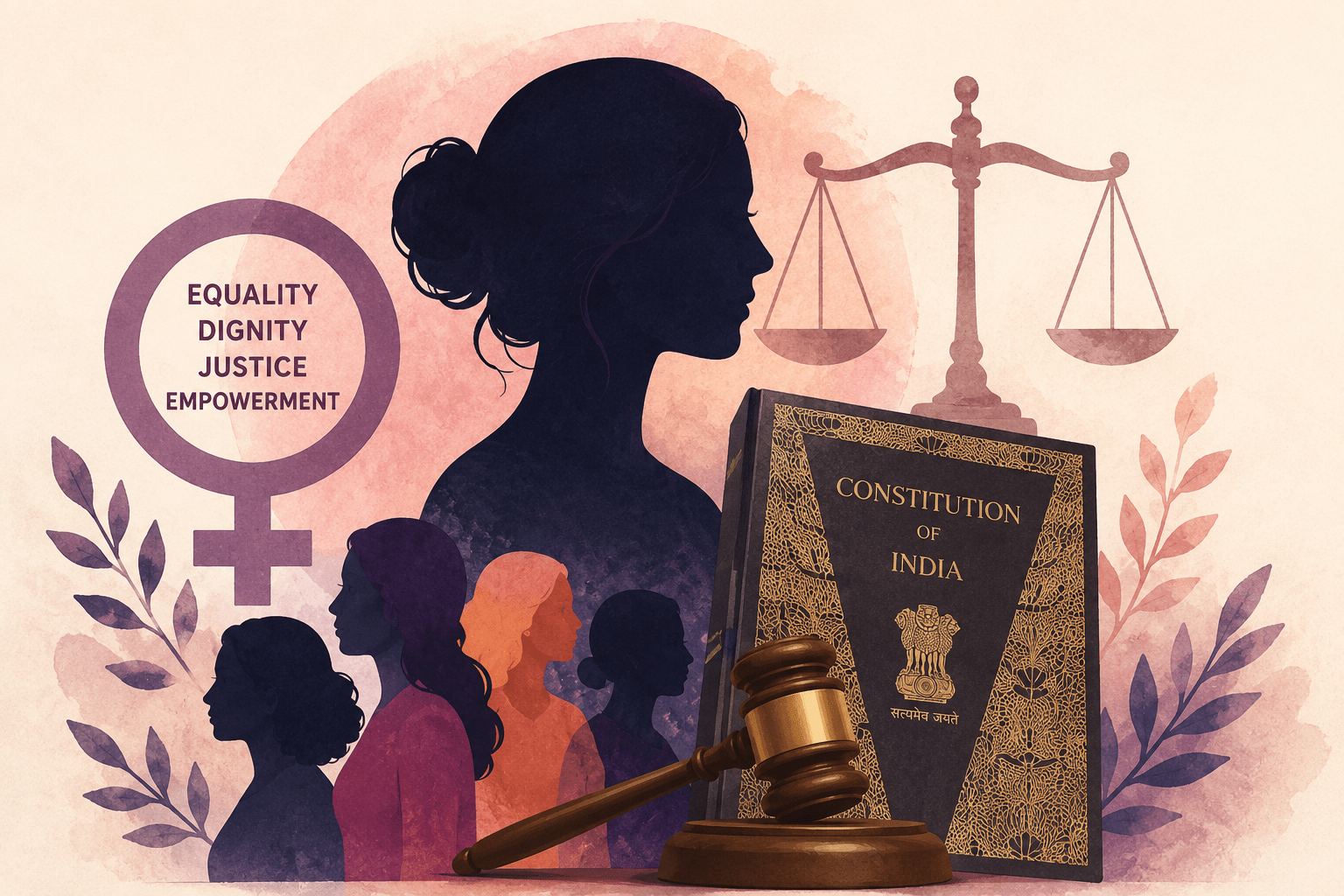
Abstract
This paper examines whether menstrual leave can be constitutionally mandated as an extension of reproductive rights. It argues that while reproductive autonomy provides a normative foundation, menstrual leave is more appropriately situated within the frameworks of dignity, health, and substantive equality. Through a critical analysis of constitutional principles, recent Supreme Court pronouncements, labor realities, and comparative policy models, the paper highlights the inherent trade-offs in menstrual accommodation. It concludes that while menstrual leave may be constitutionally justifiable, a rigid, one-size-fits-all mandate risks generating new forms of inequality, thereby necessitating flexible, decentralized, and context-sensitive solutions.
Key Highlights
- Examines whether menstrual leave can be constitutionally recognized.
- Explores the relationship between reproductive rights and menstrual leave.
- Analyses dignity, health, and substantive equality as constitutional foundations.
- Reviews Supreme Court developments, labor realities, and comparative policy models.
- Evaluates the constitutional and practical implications of mandatory menstrual leave.
Introduction
Menstruation, despite being a natural biological process, continues to be surrounded by stigma and social exclusion in many parts of India. These challenges extend into workplaces and educational institutions, where menstruating individuals may face discomfort, lack of accommodation, and structural disadvantage.
Menstrual leave is commonly understood as a policy that allows individuals to take time off during their menstrual cycle to manage physical or psychological discomfort. While such policies are increasingly discussed, they raise a critical legal question: can menstrual leave be recognized as a constitutional right, particularly as an extension of reproductive autonomy?
This paper argues that menstrual leave cannot be directly derived from reproductive rights. Instead, it must be examined within a broader framework of dignity, health, and substantive equality. The issue is not merely whether menstrual leave should be granted but on what constitutional basis and with what implications.
The urgency of this inquiry has only sharpened with the Supreme Court’s evolving engagement with menstrual health—from its 2023 refusal to mandate menstrual leave to its January 2026 recognition of menstrual health as an incident of the right to life under Article 21—developments that are examined in Part 4 below.
Core Constitutional Questions
- Can menstrual leave be recognized as a constitutional right?
- Does reproductive autonomy provide a sufficient legal basis for menstrual leave?
- Should dignity, health, and substantive equality form the constitutional foundation for menstrual leave?
- How do recent Supreme Court developments influence the constitutional debate?
- Can mandatory menstrual leave create unintended forms of workplace inequality?
Constitutional Framework Discussed
| Constitutional Principle | Relevance to Menstrual Leave |
|---|---|
| Article 21 | Right to life, health, and dignity. |
| Reproductive Rights | Provides the normative foundation for reproductive autonomy. |
| Substantive Equality | Supports accommodation based on actual biological and social disadvantage. |
| Dignity | Recognizes menstruation as a matter of human dignity rather than stigma. |
| Labour Rights | Addresses workplace accommodation and practical implementation challenges. |
Conceptual Distinction: Reproductive Rights vs Menstrual Leave
Reproductive rights are human rights that rest on the recognition of the basic right of all couples and individuals to make free and informed choices about their reproductive lives1. These rights are grounded in privacy, bodily autonomy, and decisional freedom.
Menstruation, by contrast, is not a matter of choice but a recurring physiological condition. Claims relating to menstrual leave therefore do not arise from decisional autonomy but from the need for accommodation in social and workplace structures.
This differentiation is essential to avoid diluting the framework of reproductive rights. Menstrual leave should not be framed as a matter of reproductive autonomy; rather, it is fundamentally a question of occupational equality and reasonable workplace accommodation.
Key Distinction at a Glance
| Reproductive Rights | Menstrual Leave |
|---|---|
| Concern free and informed reproductive choices. | Concerns accommodation for a recurring physiological condition. |
| Grounded in privacy, bodily autonomy, and decisional freedom. | Grounded in workplace equality and reasonable accommodation. |
| Protects reproductive decision-making. | Addresses workplace and social support needs. |
| Focuses on autonomy. | Focuses on occupational equality and inclusion. |
Constitutional Framework
To determine the constitutional basis for menstrual leave, it must be evaluated at the nexus of the right to equality (Article 14), protection against discrimination (Article 15), and the right to a dignified life (Article 21).
Article 21: Right to Life and Dignity
Article 21’s guarantee of the right to life inherently extends to a life of dignity, health, bodily autonomy, and privacy, as extensively affirmed in K.S. Puttaswamy v. Union of India2. While the physical toll of menstruation and related conditions unequivocally impacts an individual’s well-being and invokes these protections, Article 21 does not intrinsically compel the creation of specific statutory entitlements.
Article 14: Substantive Equality
Article 14, through the doctrine of substantive equality, dictates that true parity often requires differential treatment. In this context, menstrual leave represents a reasonable classification based on biological distinctiveness.
Yet, consistent with the foundational principles of substantive equality laid down in State of Kerala v. N.M. Thomas3, such affirmative accommodations must genuinely advance equality of opportunity, ensuring they do not backfire by cementing historical prejudices or creating new forms of discrimination against women.
Article 15(3): Special Provisions for Women
Article 15(3) enables the State to enact special provisions for women; however, such measures must serve as tools for genuine empowerment rather than paternalistic restrictions.
The Supreme Court ruled in Anuj Garg v. Hotel Association of India4 that such accommodations must genuinely empower women and cannot be justified if they are rooted in a paternalism that ultimately restricts their freedoms and opportunities.
Constitutional Principles Summary
| Constitutional Provision | Relevance to Menstrual Leave |
|---|---|
| Article 14 | Supports substantive equality through reasonable classification and affirmative accommodation. |
| Article 15(3) | Permits special provisions for women, provided they promote genuine empowerment rather than paternalism. |
| Article 21 | Protects dignity, health, bodily autonomy, and privacy, though it does not automatically mandate statutory menstrual leave. |
Key Constitutional Takeaways
- Reproductive rights and menstrual leave rest on distinct constitutional foundations.
- Menstrual leave is primarily a workplace accommodation issue rather than a matter of reproductive autonomy.
- Article 14 emphasizes substantive equality through reasonable accommodation.
- Article 15(3) permits affirmative measures that genuinely empower women.
- Article 21 safeguards dignity, health, and bodily autonomy but does not itself create a statutory entitlement to menstrual leave.
Judicial Trajectory: From Policy Deference to Constitutional Recognition
Two recent Supreme Court interventions bear directly on the thesis of this paper and merit close attention, as they mark a shift from judicial reticence to doctrinal recognition—while simultaneously confirming that leave, specifically, remains contested terrain.
Key Judicial Developments at a Glance
| Case | Year | Key Constitutional Position | Impact on Menstrual Leave Debate |
|---|---|---|---|
| Shailendra Mani Tripathi v. Secretary, Ministry of Women and Child Development, Union of India & Ors. | 2023 | Policy matters should ordinarily be decided by the legislature and executive. | Declined to mandate paid menstrual leave. |
| Dr. Jaya Thakur v. Government of India & Ors. | 2026 | Recognized menstrual health and hygiene as part of Article 21, Article 21A, and Article 14. | Strengthened constitutional protection for menstrual dignity without directing menstrual leave. |
Shailendra Mani Tripathi v. Secretary, Ministry of Women and Child Development, Union of India & Ors. (2023)
In Shailendra Mani Tripathi v. Secretary, Ministry of Women and Child Development, Union of India & Ors. (2023)5, a public interest litigation sought a nationwide mandate of paid menstrual leave for working women and female students.
A bench led by the then chief justice of India, D.Y. Chandrachud, declined to issue such a direction, holding that the matter fell squarely within the domain of policy rather than adjudication.
Significantly, the Court observed that a blanket, judicially imposed mandate could deter employers from hiring women altogether and cautioned that poorly designed gender-specific entitlements risk reinforcing — rather than dismantling — the very stereotypes they seek to address.
This judicial hesitation lends direct empirical weight to the stereotyping critique developed in Part 5 and the labor-market concerns discussed in Part 10 below.
Key Takeaways from the 2023 Ruling
- The Court treated menstrual leave as a policy issue rather than a constitutional mandate.
- A judicially imposed nationwide leave policy was considered capable of producing unintended employment consequences.
- The judgment warned against reinforcing gender stereotypes through poorly designed legal entitlements.
- The ruling supports the stereotyping critique discussed in this paper.
Dr Jaya Thakur v. Government of India & Ors. (30 January 2026)
A little over two years later, in Dr. Jaya Thakur v. Government of India & Ors. (30 January 2026)6, a bench of Justices J.B. Pardiwala and R. Mahadevan held that menstrual health and hygiene management is an integral facet of the right to life and dignity under Article 21, read with the right to education under Article 21A and the guarantee of substantive equality under Article 14.
The Court directed all schools — government, aided, and private — to provide free sanitary products, functional gender-segregated toilets, safe disposal mechanisms, and menstrual health education.
Observing that “autonomy can be meaningfully exercised only when girl children have access to functional toilets, adequate menstrual products, availability of water, and hygienic mechanisms for disposal,” the Court squarely located menstrual dignity within Article 21 rather than within reproductive autonomy.
Constitutional Principles Recognised in the 2026 Judgment
- Menstrual health and hygiene form part of the right to life and dignity under Article 21.
- The judgment links menstrual dignity with the right to education under Article 21A.
- It reinforces substantive equality under Article 14.
- The Court focused on menstrual dignity through infrastructure, education, and access rather than reproductive autonomy.
Comparative Analysis of the Two Rulings
Read together, these two rulings vindicate the analytical distinction this paper draws.
The Supreme Court has been unwilling to constitutionalize menstrual leave as a court-mandated entitlement—that remains, in its own words, a matter for the legislature and executive.
Yet it has been willing to root menstrual health and infrastructure firmly within Article 21’s guarantee of a dignified life.
This is precisely the doctrinal architecture proposed here: dignity, health, and substantive equality—not reproductive autonomy—as the constitutional anchor, with the specific instrument of leave left to calibrated policy rather than uniform judicial or legislative command.
Constitutional Position Summary
| Constitutional Question | Supreme Court Position |
|---|---|
| Is paid menstrual leave a constitutional entitlement? | No. The Court considers it a matter for legislative and executive policy. |
| Is menstrual health protected under the Constitution? | Yes. It is recognized as part of dignity, health, education, and substantive equality under Articles 21, 21A, and 14. |
| What constitutional principle forms the foundation? | Dignity, health, and substantive equality rather than reproductive autonomy. |
| Who should determine the framework for menstrual leave? | The legislature and executive through calibrated public policy. |
Stereotyping and Gender Critique
A central risk in advocating for menstrual leave is the potential to inadvertently reinforce harmful gender stereotypes. Too often, workplace culture relies on a “hormone narrative” that falsely equates menstruation with emotional instability or a decline in capability. When policies are built upon these assumptions, they function as “benevolent “sexism”—appearing protective on the surface while actually cementing the idea of women’s inherent incapacity.
Because true constitutional equality cannot coexist with policies rooted in stereotypes, the framing of menstrual leave is critical. It must be strategically designed to accommodate biological realities without validating the systemic biases that continue to disadvantage women—a concern the Supreme Court itself echoed in Tripathi when it warned against pleas that risk portraying menstruation as something that renders women “inferior.”
Key Concerns Related to Gender Stereotyping
- Risk of reinforcing harmful gender stereotypes.
- Workplace reliance on the “hormone narrative.”
- Policies based on assumptions of emotional instability or reduced capability.
- “Benevolent sexism” that appears protective but reinforces inequality.
- The need to balance biological realities with constitutional equality.
- The Supreme Court’s concern in Tripathi regarding portrayals of women as “inferior.”
| Issue | Constitutional Concern |
|---|---|
| Hormone narrative | Creates assumptions of reduced competence. |
| Benevolent sexism | Appears protective while reinforcing stereotypes. |
| Stereotype-based policies | Conflict with the principle of substantive equality. |
| Improper policy framing | May unintentionally legitimize systemic gender bias. |
Labour Reality: Informal Sector, Gig Economy, and Urban-Rural Divide
The efficacy of menstrual leave is intrinsically tied to existing labor paradigms. In India, a significant majority — often estimated at close to 90% — of the workforce is engaged in informal employment. This is reflected in data from the Periodic Labour Force Survey (PLFS)7 and the reports of the International Labour Organization (ILO)8.
In a country where the informal economy dominates—encompassing daily wage earners, domestic help, and agricultural labor—time off directly equates to lost wages. For these precarious workers, traditional leave frameworks are fundamentally incompatible with economic survival.
This precarity is mirrored in the gig economy, which operates outside the traditional employer-employee binary. Platform workers exist in a regulatory grey area devoid of institutional safety nets, making formalized leave mechanisms nearly impossible to enforce.
Compounding this is a stark urban-rural spatial divide; policies modeled on the formal corporate sector fail to translate into agrarian or informal contexts. Consequently, implementing menstrual leave without addressing these structural realities risks creating an exclusionary policy that exclusively benefits a privileged minority, thereby exacerbating existing socioeconomic inequities.
Major Labour Challenges
- Approximately 90% of India’s workforce is employed in the informal sector.
- Loss of work often means an immediate loss of wages.
- Gig workers generally lack employer-provided leave benefits.
- Platform workers operate without comprehensive social security protections.
- Urban-centric policies often fail to address rural and agricultural realities.
- Without structural reforms, menstrual leave may disproportionately benefit only the formal workforce.
Comparison of Workforce Segments
| Workforce Segment | Primary Challenge | Impact on Menstrual Leave Implementation |
|---|---|---|
| Informal Sector | Daily wages and absence of paid leave | Leave often results in immediate income loss. |
| Gig Economy | No traditional employer-employee relationship | Formal leave mechanisms are difficult to enforce. |
| Urban Formal Workforce | Existing organisational leave structures | Policies are comparatively easier to implement. |
| Rural and Agricultural Workforce | Seasonal and informal employment patterns | Corporate-style leave policies may not be practical. |
Key Takeaways
- Menstrual leave policies must avoid reinforcing gender stereotypes.
- Constitutional equality requires policies based on rights rather than assumptions.
- The Supreme Court has cautioned against framing menstruation as evidence of women’s inferiority.
- India’s labor market is dominated by informal employment, creating implementation challenges.
- Gig workers and informal laborers require different policy solutions than the formal corporate sector.
- Ignoring urban-rural and formal-informal divides could increase existing socioeconomic inequalities.
Policy Models: Beyond Leave
Rather than relying solely on menstrual leave, a range of policy models may be considered. Each of these models addresses a specific limitation of leave-based frameworks, yet none provides a complete solution in isolation.
The following table provides a quick comparison of the major policy approaches.
| Policy Model | Primary Objective | Key Advantages | Key Challenges |
|---|---|---|---|
| Flexibility-Based Models | Provide work flexibility during menstruation | Reduces stigma and maintains productivity | Not suitable for every profession or workplace |
| Infrastructure-Based Models | Improve workplace facilities | Promotes dignity, hygiene, and inclusion | Difficult for smaller or informal workplaces |
| Support-Based Models | Offer counselling and medical assistance | Addresses physical and psychological well-being | Implementation and adequacy concerns |
A. Flexibility-Based Models
Work-from-home arrangements and flexible scheduling allow individuals to manage discomfort without taking formal leave. Such approaches reduce stigma and maintain productivity but are not universally applicable.
A 2019 study published in BMJ Open found that approximately 80.7% of individuals reported presenteeism during menstruation, with significant productivity loss.9 On average, presenteeism resulted in a 33% reduction in productivity per day, totalling 8.9 days of lost productivity per year for each person.
- Allows employees to manage menstrual discomfort without taking formal leave.
- Helps reduce workplace stigma.
- Supports continuity of work and productivity.
- May not be feasible in manufacturing, healthcare, retail, or other on-site occupations.
B. Infrastructure-Based Models
Workplace facilities such as rest areas, sanitation infrastructure, and hygienic disposal mechanisms provide on-site accommodation. These measures promote dignity and inclusivity but may be difficult to implement in smaller or informal workplaces.
The use of hygienic menstrual products among women aged 15–24 increased from 57.6% in NFHS-4 to 77.3% in NFHS-510, indicating progress but also highlighting persistent gaps—gaps that the Supreme Court’s directions in Dr. Jaya Thakur now seek to institutionally close, at least within the schooling system.
- Rest areas for employees experiencing menstrual discomfort.
- Improved sanitation infrastructure.
- Safe and hygienic menstrual waste disposal facilities.
- Enhanced workplace dignity and inclusivity.
- Implementation challenges in smaller and informal workplaces.
C. Support-Based Models
Access to counseling services and medical guidance addresses both the physical and psychological dimensions of menstruation. Financial assistance may also help offset costs associated with menstrual health. However, such measures raise concerns regarding adequacy and implementation.
These concerns are particularly significant for transgender men and non-binary individuals who menstruate, as they may face additional psychological distress due to gender dysphoria, stigma, or lack of inclusive healthcare systems. In such contexts, access to sensitive and informed counseling becomes essential, not merely as a support mechanism but as a means of ensuring dignity and inclusion within workplace frameworks.
As recognized in Navtej Singh Johar v. Union of India11, constitutional protections must account for diverse lived experiences and identities. A support framework that fails to consider such realities risks excluding individuals who fall outside traditional gender assumptions.
- Provides professional counseling and medical guidance.
- Addresses both physical and psychological aspects of menstruation.
- May include financial assistance for menstrual health needs.
- Supports transgender men and non-binary individuals who menstruate.
- Promotes dignity, inclusion, and equal constitutional protection.
- Raises important questions regarding implementation and adequacy.
State and Institutional Experiments in India
Even without a national mandate, menstrual accommodation is already developing unevenly and organically across Indian jurisdictions—a pattern that itself supports this paper’s case for a decentralized approach.
Bihar has granted women employees two days of special paid menstrual leave since 1992; Kerala extended menstrual leave to women students in state universities in 2023; and the Sikkim High Court introduced menstrual leave for women employees of its registry.12
In the private sector, companies such as Zomato, Swiggy, and Byju’s have independently adopted paid period-leave policies for staff, without any statutory compulsion.
These scattered, sector- and region-specific initiatives illustrate that meaningful accommodation can precede — and inform — any eventual legislative framework, reinforcing the argument advanced in Part 11 for state- and sector-level flexibility over a uniform national rule.
Key State and Institutional Initiatives
| State/Institution | Initiative | Year |
|---|---|---|
| Bihar | Granted women employees two days of special paid menstrual leave. | 1992 |
| Kerala | Extend menstrual leave to women students in state universities. | 2023 |
| Sikkim High Court | Introduced menstrual leave for women employees of its registry. | Not Specified |
| Zomato | Introduced paid period leave for employees. | Company Policy |
| Swiggy | Introduced paid period leave for employees. | Company Policy |
| Byju’s | Introduced paid period leave for employees. | Company Policy |
Comparative Insight
Comparative experience indicates that legal recognition of menstrual leave does not necessarily ensure effective utilization.
Japan Experience
In Japan, where menstrual leave has been legally recognized for decades, available studies and labor reports indicate that uptake remains low, largely due to workplace stigma and concerns about being perceived as less capable.13
South Korea Experience
In South Korea, Article 73 of the Labor Standards Act entitles women employees to one day of menstrual leave per month on request, yet reports consistently show that actual usage remains low, as women fear the professional and social costs of invoking the entitlement in male-dominated workplaces.14
Spain Experience
Similarly, recent developments in Spain’s legal framework recognizing menstrual-related health leave have generated debate regarding potential employer bias and the risk of reinforcing gender stereotypes, despite the progressive intent of the policy.15
Comparative Analysis
This reflects the tension between progressive legal reform and entrenched workplace perceptions.
These examples illustrate that social stigma, workplace dynamics, and economic considerations continue to influence the exercise of such rights, often limiting their practical effectiveness.
They also suggest that formal legal frameworks must be complemented by broader social and institutional change, without which such policies risk remaining underutilized or counterproductive—a caution the Indian debate would do well to internalize before legislating.
International Comparison at a Glance
| Country | Legal Position | Practical Outcome |
|---|---|---|
| Japan | Menstrual leave has been legally recognized for decades. | Low utilization due to workplace stigma and fear of being perceived as less capable. |
| South Korea | Article 73 of the Labor Standards Act grants one day of menstrual leave per month upon request. | Usage remains low because of professional and social concerns in male-dominated workplaces. |
| Spain | Recognizes menstrual-related health leave. | Debate continues over employer bias and reinforcement of gender stereotypes. |
Key Lessons from Comparative Experience
- Legal recognition alone does not guarantee effective utilization.
- Workplace stigma continues to discourage employees from exercising their rights.
- Social attitudes significantly influence the success of menstrual leave policies.
- Economic and workplace considerations affect practical implementation.
- Institutional reforms should be accompanied by broader cultural and organizational change.
Statutory Baseline: The Maternity Benefit Act, 1961
To ground the theoretical debate, it is useful to contrast proposed menstrual leave with the existing Maternity Benefit Act, 1961.16
While Indian maternity law successfully recognizes biological distinctiveness and guarantees crucial job security during pregnancy, its rigid financial mandate on employers has occasionally discouraged the hiring of women of childbearing age in the private sector.17
Applying a similarly strict, universal mandate for menstrual leave risks replicating this exact unintended consequence — a risk the Supreme Court itself flagged in Tripathi — underscoring the need for more adaptable, less burdensome frameworks.
This highlights how well-intentioned protective measures may produce unintended labor market consequences.
Comparison: Menstrual Leave and Maternity Benefit Framework
| Aspect | Maternity Benefit Act, 1961 | Proposed Menstrual Leave Debate |
|---|---|---|
| Purpose | Protect women during pregnancy and maternity. | Provide accommodation for menstrual health needs. |
| Employer Obligation | Mandatory financial responsibility. | Debate over mandatory versus flexible implementation. |
| Potential Concern | Possible impact on hiring women of childbearing age. | Risk of similar unintended labor market consequences if universally mandated. |
| Policy Consideration | Strong statutory protection. | Need for adaptable and less burdensome frameworks. |
Critical Tensions
The debate surrounding menstrual leave reveals several underlying tensions. These tensions are not isolated but interrelated, collectively shaping the complexity of menstrual accommodation.
The key constitutional, social, and policy challenges associated with menstrual leave are summarized below:
| Key Issue | Challenge |
|---|---|
| Privacy versus Verification | Preventing misuse without compromising dignity and personal autonomy. |
| Policy Tokenism | Ensuring menstrual leave is supported by meaningful workplace reforms. |
| Over-Medicalisation | Avoiding the portrayal of menstruation as an illness requiring routine leave. |
| Standardisation versus Variability | Recognizing that menstrual experiences differ significantly among individuals. |
| Cultural Heterogeneity | Addressing India’s diverse social and workplace realities through flexible policies. |
Privacy Versus Verification
Privacy versus verification: mechanisms designed to prevent misuse may require disclosure of intimate information, thereby undermining autonomy and dignity. Empirical evidence reinforces this concern — one study published in BMJ Open18 found that only 20.1% of individuals disclosed menstruation as the actual reason when taking sick leave, indicating substantial underreporting driven by workplace stigma.
Policy Tokenism
Policy tokenism: menstrual leave, without structural improvements such as sanitation and hygiene facilities, risks becoming symbolic rather than substantive.
Over-Medicalisation
Over-medicalization: framing menstruation primarily as a condition requiring leave may pathologize a natural biological process.
Standardisation Versus Variability
Standardization versus variability: uniform policies may fail to capture the diverse experiences of menstruation, making them both over-inclusive and under-inclusive.
Cultural Heterogeneity
Cultural heterogeneity: India’s diverse social context complicates the formulation of a uniform national policy.
A Decentralised Policy Approach
To navigate these overlapping challenges, policymakers should avoid top-down national mandates. Instead, a decentralized approach—where state labor boards oversee flexible, sector-specific guidelines, in the manner already emerging in Bihar, Kerala, and Sikkim—would allow different industries to adopt accommodations that fit their specific operational and financial realities.
Conclusion
Menstrual leave presents a compelling response to a real and often overlooked form of disadvantage, but its constitutional justification cannot rest on reproductive rights alone. Menstruation is not a matter of choice in the same way that reproductive decision-making is; it is a lived biological reality that may require accommodation, support, and dignity in the workplace. For that reason, the debate must move beyond a narrow rights-based framework and instead be grounded in substantive equality, health, privacy, and humane working conditions—a grounding the Supreme Court has itself now endorsed in Dr. Jaya Thakur, even as it continues to treat leave itself as a policy question in the mold of Tripathi.
At the same time, this paper has shown that menstrual leave is not a perfect remedy. A mandatory leave model may unintentionally reinforce stereotypes, deepen employer bias, exclude informal and gig workers, and overlook the diversity of menstrual experiences. The challenge, therefore, is not simply whether menstrual leave should exist, but how menstrual accommodation should be designed so that it does not create new forms of inequality while trying to remedy old ones. In this sense, every possible solution—leave, flexible work, rest spaces, counseling, or financial support—resolves one problem while raising another.
Key Findings
- Menstrual leave addresses a genuine workplace disadvantage but is not a complete solution.
- Mandatory leave policies may unintentionally reinforce gender stereotypes and hiring bias.
- Informal workers, gig workers, and gender-diverse menstruators may remain excluded without broader reforms.
- Workplace flexibility, infrastructure, and support systems are as important as leave provisions.
- Constitutional protection should be rooted in dignity, health, privacy, and substantive equality.
The Way Forward
The most defensible path is therefore a context-sensitive and layered approach, rather than a rigid one-size-fits-all rule. Menstrual justice should be pursued through a combination of workplace flexibility, infrastructure, support systems, and anti-stereotyping safeguards, with special attention to informal labor, gender-diverse menstruators, and regional inequality. Ultimately, the goal is not to isolate menstruation as a basis for exclusion but to build institutions that accommodate human difference without turning difference itself into disadvantage.
It is therefore submitted that the constitutional question is not whether menstrual leave must be mandated but how menstrual accommodation can be structured—through Article 21’s guarantee of dignity and health, rather than through reproductive autonomy—without reproducing inequality.
Key Takeaways: Is Menstrual Leave a Constitutional Right? Constitutional Analysis of Reproductive Rights and Workplace Equality
The following key takeaways summarize the constitutional, legal, and policy issues surrounding menstrual leave in India.
- Menstrual leave is not presently a constitutional right in India, and the Supreme Court has consistently treated its implementation as a matter of legislative and executive policy rather than judicial mandate.
- The strongest constitutional foundation for menstrual accommodation lies in Articles 14, 15(3), and 21, which collectively protect substantive equality, dignity, health, and bodily autonomy—not reproductive autonomy alone.
- Reproductive rights and menstrual leave are distinct constitutional concepts. Reproductive rights safeguard decisional autonomy, whereas menstrual leave concerns workplace accommodation for a recurring biological condition.
- The Supreme Court’s 2026 judgment in Dr. Jaya Thakur v. Government of India significantly strengthened constitutional protection for menstrual health by recognizing it as part of the right to life, dignity, education, and substantive equality under Articles 21, 21A, and 14.
- The Court’s earlier decision in Shailendra Mani Tripathi declined to mandate paid menstrual leave, cautioning that a blanket policy could unintentionally discourage employers from hiring women and reinforce gender stereotypes.
- A rigid nationwide menstrual leave policy may create unintended consequences, including hiring bias, workplace discrimination, and reinforcement of outdated perceptions regarding women’s capabilities.
- India’s predominantly informal workforce presents major implementation challenges, as millions of informal and gig workers lack paid leave and social security, making a universal leave mandate difficult to enforce equitably.
- Workplace flexibility, improved sanitation infrastructure, counseling, and menstrual health support may often provide more inclusive solutions than mandatory leave alone.
- Experiences from Bihar, Kerala, the Sikkim High Court, and private employers demonstrate that decentralized and sector-specific policies can effectively promote menstrual accommodation without requiring a uniform national mandate.
- International experiences from Japan, South Korea, and Spain show that legal recognition alone does not ensure effective utilization, as workplace stigma and employer perceptions continue to discourage employees from exercising menstrual leave rights.
- The article advocates a context-sensitive and decentralized policy framework, allowing states, industries, and employers to adopt flexible menstrual accommodation measures tailored to their operational realities rather than imposing a one-size-fits-all model.
- The future of menstrual justice in India lies in balancing constitutional dignity, workplace equality, health, privacy, and practical labor realities, ensuring accommodation without creating new forms of inequality or exclusion.
Quick Reference Summary
| Topic | Key Takeaway |
|---|---|
| Constitutional Status | Menstrual leave is currently not recognized as a constitutional right in India. |
| Constitutional Basis | Articles 14, 15(3), and 21 provide the strongest constitutional foundation. |
| Reproductive Rights | Distinct from menstrual leave and workplace accommodation. |
| Supreme Court 2026 | Recognized menstrual health as part of dignity, health, education, and equality. |
| Supreme Court 2023 | Held that paid menstrual leave remains a policy issue rather than a constitutional mandate. |
| Major Challenge | Informal employment and gig work make universal implementation difficult. |
| Alternative Solutions | Flexible work arrangements, workplace infrastructure, counseling, and menstrual health support. |
| Policy Recommendation | Adopt decentralized, flexible, and sector-specific menstrual accommodation policies. |
| Overall Conclusion | Balance dignity, equality, health, privacy, and labor realities while avoiding new forms of discrimination. |
End Notes
- United Nations, Programme of Action of the International Conference on Population and Development (1994), para. 7.3.
- Justice K.S. Puttaswamy v. Union of India, (2017) 10 SCC 1.
- State of Kerala v. N.M. Thomas, (1976) 2 SCC 310.
- Anuj Garg v. Hotel Association of India, (2008) 3 SCC 1.
- Shailendra Mani Tripathi v. Secretary, Ministry of Women and Child Development, Union of India & Ors., W.P. (C) (2023) (Supreme Court of India, order dated 24 February 2023, and subsequent order of March 2024 directing the petitioner to approach the Ministry of Women and Child Development); see also LiveLaw, “Supreme Court Refuses To Entertain Plea Seeking Menstrual Leave, Says Matter Falls In Policy Domain” (2023).
- Dr. Jaya Thakur v. Government of India & Ors., W.P. (C) No. 1000 of 2022 (Supreme Court of India, judgment dated 30 January 2026).
- Ministry of Statistics and Programme Implementation, Periodic Labour Force Survey (PLFS) Annual Report 2022–23 (Government of India, 2023).
- International Labour Organization, Women and Men in the Informal Economy: A Statistical Picture (3rd ed., 2018).
- B. Schoep et al., Productivity Loss Due to Menstruation-Related Symptoms, BMJ Open (2019).
- Ministry of Health and Family Welfare, National Family Health Survey (NFHS-5) (2019–21).
- Navtej Singh Johar v. Union of India, (2018) 10 SCC 1.
- British Safety Council India, “Supreme Court rejects call for paid menstrual leave in India” (2023); Lawgical Shots, “Menstrual Leave Policy in India” (2026).
- Reuters, Japan’s menstrual leave policy sees low uptake due to stigma and lack of pay (2023); see also International Labour Organization reports on workplace gender norms and leave utilization.
- Republic of Korea, Labor Standards Act, Article 73; see also Asia Society, “Menstrual, Maternity, and Menopause Leave: The Work-Life Balance of Women in South Korea and Worldwide” (2023).
- Organic Law 1/2023 of 28 February on Sexual and Reproductive Health and the Voluntary Interruption of Pregnancy (Spain); see also commentary in European labor law analyses on menstrual leave and employer response.
- Maternity Benefit Act, 1961 (India).
- International Labour Organization, Maternity Protection Resource Package (2012); see also World Bank reports on female labor force participation in India.
- B. Schoep et al., Productivity Loss Due to Menstruation-Related Symptoms, BMJ Open (2019).
Written By: Tuhaib Hilal, Lloyd Law College
