





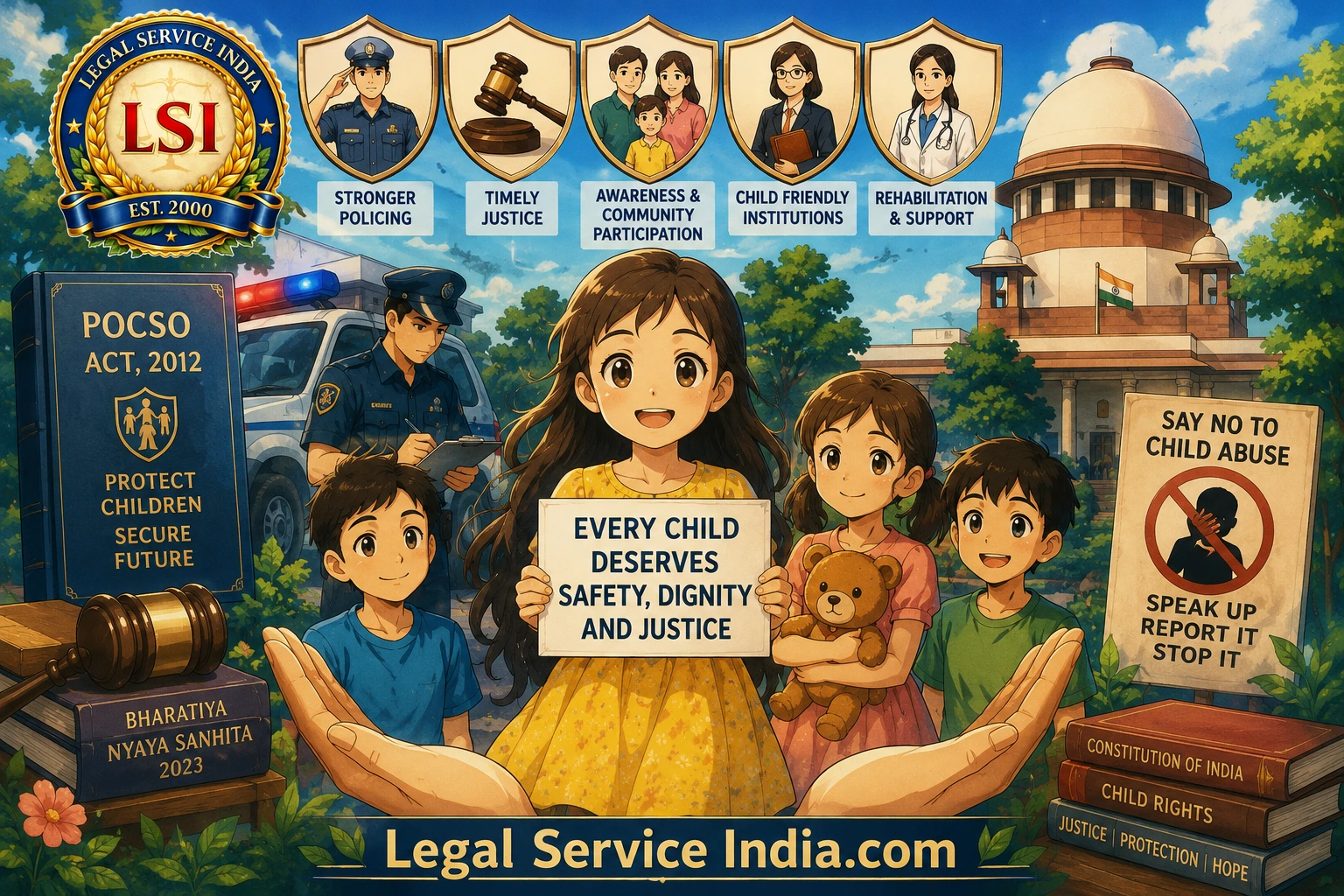
Abstract
Child sexual violence is one of the most serious violations of human rights and continues to pose a significant challenge to the criminal justice system in India. Despite the enactment of comprehensive legislation such as the Protection of Children from Sexual Offences (POCSO) Act, 2012, and the Bharatiya Nyaya Sanhita, 2023, incidents involving the sexual abuse, abduction, and murder of children continue to occur.
This research paper critically examines the effectiveness of Indian laws and law enforcement agencies in preventing sexual violence against children, with particular reference to recent incidents that have highlighted weaknesses in the existing legal and institutional framework.
Research Methodology
The study adopts a doctrinal and analytical research methodology based on constitutional provisions, statutory laws, judicial decisions, government reports, and scholarly literature.
- Constitutional provisions
- Statutory laws
- Judicial decisions
- Government reports
- Scholarly literature
Key Areas of Analysis
It analyses the strengths of the present legal framework while identifying persistent challenges such as underreporting of offences; delays in investigation and trial; inadequate monitoring of repeat offenders; shortage of trained personnel; and socio-cultural barriers that discourage reporting of crimes.
| Strengths Examined | Challenges Identified |
|---|---|
| Existing legal framework | Underreporting of offences |
| Comprehensive child protection laws | Delays in investigation and trial |
| Statutory safeguards | Inadequate monitoring of repeat offenders |
| Institutional mechanisms | Shortage of trained personnel |
| Victim protection measures | Socio-cultural barriers discouraging reporting |
Implementation and Enforcement
The paper further evaluates the role of police accountability, victim protection, forensic investigation, and rehabilitation mechanisms in ensuring effective implementation of child protection laws.
- Police accountability
- Victim protection
- Forensic investigation
- Rehabilitation mechanisms
It argues that while India possesses a robust legislative framework, the success of these laws largely depends upon efficient enforcement, institutional coordination, public awareness, and timely delivery of justice.
Conclusion and Recommendations
The research concludes that legal reforms alone cannot eliminate child sexual violence unless they are supported by stronger preventive measures, improved policing, child-friendly institutions, community participation, and continuous policy reforms.
The study also offers practical recommendations to strengthen child protection mechanisms and enhance the effectiveness of the criminal justice system in safeguarding the rights, dignity, and safety of every child.
Introduction
Children constitute one of the most vulnerable sections of society and are entitled to special care, protection, and opportunities for healthy development. Ensuring their safety is not only a legal obligation of the state but also a moral and social responsibility shared by families, educational institutions, and the community.
However, the increasing incidence of child sexual violence in India has raised serious concerns regarding the effectiveness of existing legal safeguards and the ability of law enforcement agencies to prevent such crimes. Cases involving the abduction, sexual assault, and murder of children continue to shock society, exposing significant gaps between the legal framework and its implementation.
Recognising the need for stronger protection of children, the Indian Parliament enacted the Protection of Children from Sexual Offences (POCSO) Act, 2012, which provides a comprehensive legal framework for addressing sexual offences against children. Subsequently, reforms introduced through the Bharatiya Nyaya Sanhita, 2023, strengthened criminal penalties for serious offences involving minors.
In addition, constitutional provisions such as Articles 14, 15(3), 21, and 39(f) impose a duty upon the State to safeguard the life, dignity, and welfare of every child. Despite these legal developments, the continued occurrence of crimes against children indicates that legislation alone is insufficient unless supported by effective policing, timely investigation, efficient prosecution, and comprehensive rehabilitation mechanisms.
Recent Delhi Child Abduction, Rape and Murder Case
The recent Delhi case involving the alleged abduction, rape, and murder of an eleven-year-old girl has once again drawn national attention to the challenges faced by the criminal justice system in protecting vulnerable children. Allegations that the accused had previously been involved in sexual offences have intensified concerns regarding the monitoring of repeat offenders, police vigilance, and preventive policing.
Similar incidents, including the Kathua case of 2018, demonstrate that failures in enforcement, institutional coordination, and social awareness continue to undermine the effectiveness of child protection laws.
Scope of the Study
This research paper critically examines the extent to which Indian laws and law enforcement agencies have succeeded in preventing sexual violence against children. It analyses the constitutional and statutory framework governing child protection, evaluates the role of investigative agencies and the judiciary, and identifies the practical challenges affecting the implementation of child protection laws.
The study also explores issues relating to police accountability, victim-centric justice, forensic investigation, rehabilitation of victims, and institutional responsibility. By examining relevant legislation, judicial decisions, official reports, and significant case studies, the research seeks to assess whether the existing legal framework adequately fulfils the constitutional promise of ensuring safety, dignity, and justice for every child.
Central Argument of the Study
The study ultimately argues that although India has established a comprehensive legal framework for protecting children from sexual offences, its effectiveness depends upon consistent implementation, institutional efficiency, public awareness, and coordinated preventive measures. Strengthening these areas is essential to creating a child-friendly criminal justice system capable of preventing offences and ensuring meaningful justice for child victims.
Research Objectives
The present study seeks to examine the effectiveness of the legal and institutional framework established for the protection of children against sexual violence in India. The specific objectives of the research are as follows:
| Objective No. | Research Objective |
|---|---|
| 1 | To examine the constitutional and statutory provisions governing the protection of children from sexual offences in India, with particular reference to the Protection of Children from Sexual Offences (POCSO) Act, 2012, and the Bharatiya Nyaya Sanhita, 2023. |
| 2 | To evaluate the effectiveness of Indian laws and law enforcement agencies in preventing sexual violence against children. |
| 3 | To analyse the role and responsibilities of police authorities, investigating agencies, and the judiciary in ensuring the timely investigation, prosecution, and disposal of cases involving child sexual abuse. |
| 4 | To identify the practical challenges that hinder the effective implementation of child protection laws, including underreporting of offences, delays in investigation and trial, inadequate forensic infrastructure, and socio-cultural barriers. |
| 5 | To critically examine the role of victim-centric justice, rehabilitation measures, and child-friendly procedures in safeguarding the rights and dignity of child victims. |
| 6 | To study significant judicial decisions and recent case studies to assess the strengths and shortcomings of the existing legal framework for child protection. |
| 7 | To suggest legal, institutional, and policy reforms aimed at strengthening child protection mechanisms, improving law enforcement practices, and ensuring better prevention of sexual violence against children. |
Key Focus Areas of the Research
- Constitutional safeguards for children.
- Protection of Children from Sexual Offences (POCSO) Act, 2012.
- Bharatiya Nyaya Sanhita, 2023.
- Role of police and investigating agencies.
- Judicial response to child sexual abuse cases.
- Victim-centric justice and rehabilitation.
- Forensic investigation and institutional accountability.
- Case studies and judicial precedents.
- Legal and policy reforms for child protection.
Research Questions
The present study seeks to answer the following research questions:
- To what extent are the constitutional and statutory provisions in India effective in protecting children from sexual violence?
- How effective is the Protection of Children from Sexual Offences (POCSO) Act, 2012, in preventing and addressing child sexual abuse?
- What role do law enforcement agencies play in the prevention, investigation, and prosecution of offences involving child sexual violence?
- What are the major legal, institutional, and socio-cultural challenges that hinder the effective implementation of child protection laws in India?
- Are the existing victim-centric measures, including child-friendly procedures, compensation, rehabilitation, and psychological support, adequate to ensure justice for child victims?
- What lessons can be drawn from significant judicial decisions and recent child sexual violence cases to strengthen India’s child protection framework?
- What legal, administrative, and policy reforms are necessary to improve the effectiveness of Indian laws and law enforcement agencies in preventing sexual violence against children?
Research Question Overview
| Research Area | Focus of the Question |
|---|---|
| Constitutional Protection | Effectiveness of constitutional and statutory safeguards against child sexual violence. |
| POCSO Act, 2012 | Assessment of the effectiveness of the Protection of Children from Sexual Offences (POCSO) Act, 2012. |
| Law Enforcement | Role of investigative and prosecuting agencies in child sexual offence cases. |
| Implementation Challenges | Legal, institutional, and socio-cultural barriers affecting enforcement. |
| Victim-Centric Justice | Adequacy of child-friendly procedures, rehabilitation, compensation, and psychological support. |
| Judicial Developments | Lessons from important judicial decisions and recent child sexual violence cases. |
| Legal Reforms | Necessary legal, administrative, and policy reforms to strengthen child protection. |
Research Hypothesis
A hypothesis is a tentative assumption that guides the direction of research and is tested through the analysis of legal provisions, judicial decisions, and relevant literature. The present study is based on the following hypotheses:
Null Hypothesis (H₀)
Indian laws and law enforcement agencies are effective in preventing sexual violence against children, and the existing legal framework provides adequate protection, timely justice, and effective enforcement to safeguard the rights and dignity of child victims.
Alternative Hypothesis (H₁)
Despite the existence of comprehensive legal provisions such as the Protection of Children from Sexual Offences (POCSO) Act, 2012, and the Bharatiya Nyaya Sanhita, 2023, the effectiveness of Indian laws in preventing sexual violence against children is constrained by deficiencies in implementation, delays in investigation and trial, underreporting of offences, inadequate monitoring of repeat offenders, institutional weaknesses, and socio-cultural barriers. Consequently, significant legal, administrative, and policy reforms are necessary to strengthen child protection and ensure effective enforcement of child rights.
Hypothesis Summary
| Hypothesis | Core Proposition |
|---|---|
| Null Hypothesis (H₀) | Indian laws and law enforcement agencies are effective in preventing sexual violence against children and provide adequate legal protection and justice. |
| Alternative Hypothesis (H₁) | Implementation gaps, institutional deficiencies, procedural delays, underreporting, inadequate monitoring, and socio-cultural barriers limit the effectiveness of child protection laws, thereby necessitating substantial legal, administrative, and policy reforms. |
Research Methodology
The present study adopts a doctrinal and analytical research methodology to examine the effectiveness of Indian laws and law enforcement agencies in preventing sexual violence against children. The research primarily relies on qualitative analysis of legal principles, statutory provisions, judicial decisions, government reports, and scholarly literature relating to child protection and criminal justice.
Research Approach
- Doctrinal research methodology
- Analytical research methodology
- Qualitative analysis of legal principles and statutory provisions
- Examination of judicial decisions, government reports, and scholarly literature
The study is based on both primary and secondary sources of data.
Primary Sources of Data
Primary sources include the Constitution of India, the Protection of Children from Sexual Offences (POCSO) Act, 2012, the Bharatiya Nyaya Sanhita, 2023, the Bharatiya Nagarik Suraksha Sanhita, 2023, and relevant judgements of the Supreme Court and various High Courts. These legal sources have been examined to understand the statutory framework governing the protection of children from sexual offences and the obligations imposed upon law enforcement agencies.
| Primary Source | Purpose in the Study |
|---|---|
| Constitution of India | Constitutional framework relating to child protection |
| Protection of Children from Sexual Offences (POCSO) Act, 2012 | Principal legislation governing child sexual offences |
| Bharatiya Nyaya Sanhita, 2023 | Substantive criminal law provisions |
| Bharatiya Nagarik Suraksha Sanhita, 2023 | Criminal procedure framework |
| Supreme Court and High Court Judgments | Judicial interpretation and legal precedents |
Secondary Sources of Data
Secondary sources comprise textbooks, research articles, law journals, government publications, reports of the National Crime Records Bureau (NCRB), reports of the National Commission for Protection of Child Rights (NCPCR), publications of the Ministry of Women and Child Development, and reports of international organisations such as UNICEF and the World Health Organization. Newspaper reports and authenticated online legal databases have also been referred to for understanding recent developments and case-specific facts.
- Textbooks
- Research articles
- Law journals
- Government publications
- National Crime Records Bureau (NCRB) reports
- National Commission for Protection of Child Rights (NCPCR) reports
- Ministry of Women and Child Development publications
- UNICEF publications
- World Health Organization reports
- Newspaper reports
- Authenticated online legal databases
Case Study Approach
The research further employs a case study approach by analysing significant incidents, including the recent Delhi child rape and murder case and the Kathua case, to evaluate the practical implementation of child protection laws and identify shortcomings in the existing legal and institutional framework.
Analytical Framework
The collected material has been analysed using a descriptive and critical approach to assess the strengths and weaknesses of the current legal system. On the basis of this analysis, the study proposes suitable legal, institutional, and policy recommendations aimed at strengthening child protection mechanisms and improving the effectiveness of the criminal justice system in preventing sexual violence against children.
| Research Component | Description |
|---|---|
| Research Methodology | Doctrinal and analytical |
| Research Nature | Qualitative |
| Primary Sources | Statutes, Constitution, and judicial decisions |
| Secondary Sources | Books, journals, government reports, and international publications |
| Research Technique | Case study, descriptive, and critical analysis |
| Outcome | Recommendations for legal, institutional, and policy reforms |
Scope of the Study
The present study is confined to examining the effectiveness of the legal and institutional framework governing the prevention of sexual violence against children in India. It primarily focuses on the constitutional and statutory provisions relating to child protection, with particular emphasis on the Protection of Children from Sexual Offences (POCSO) Act, 2012, the Bharatiya Nyaya Sanhita, 2023, and other relevant laws that safeguard the rights and dignity of children. The research also examines the role of law enforcement agencies, including the police, prosecution, forensic authorities, and the judiciary, in preventing, investigating, and prosecuting offences involving child sexual abuse.
Primary Focus Areas
- Constitutional and statutory framework for child protection in India.
- Protection of Children from Sexual Offences (POCSO) Act, 2012.
- Bharatiya Nyaya Sanhita, 2023, and other relevant child protection laws.
- Role of police, prosecution, forensic authorities, and the judiciary.
- Prevention, investigation, and prosecution of child sexual abuse offences.
Scope of Legal Analysis
The study analyses significant judicial pronouncements and selected case studies, including the recent Delhi child rape and murder case and the Kathua case, to evaluate the practical implementation of child protection laws and identify existing legal and institutional challenges. Particular attention is given to issues such as police accountability, victim-centric justice, investigation procedures, forensic evidence, rehabilitation of victims, monitoring of repeat offenders, and the effectiveness of child-friendly legal mechanisms.
Key Issues Examined
| Area | Focus of the Study |
|---|---|
| Police Accountability | Assessment of police responsibility in preventing and investigating offences against children. |
| Victim-Centric Justice | Protection of child victims throughout the criminal justice process. |
| Investigation Procedures | Evaluation of investigative practices in child sexual abuse cases. |
| Forensic Evidence | Role and effectiveness of forensic examination in securing justice. |
| Victim Rehabilitation | Legal and institutional support for recovery and reintegration. |
| Repeat Offender Monitoring | Mechanisms for monitoring offenders and preventing repeat crimes. |
| Child-Friendly Legal Mechanisms | Evaluation of procedures designed to protect children during legal proceedings. |
Research Boundaries
The research is limited to the Indian legal system and does not undertake a comprehensive comparative analysis of child protection laws in other jurisdictions, except where limited references are necessary to support the discussion. The study is doctrinal in nature and is based on statutory provisions, judicial decisions, government reports, academic literature, and other reliable secondary sources. It does not involve empirical fieldwork, surveys, or interviews.
Expected Contribution
The findings and recommendations are intended to contribute to the improvement of legal policies, institutional practices, and child protection mechanisms for preventing sexual violence against children in India.
Importance of the Study
The protection of children from sexual violence is a matter of paramount importance in every democratic society, as it directly concerns the fundamental rights, dignity, and overall development of children.
Although India has enacted comprehensive legislation such as the Protection of Children from Sexual Offences (POCSO) Act, 2012, and strengthened its criminal laws through the Bharatiya Nyaya Sanhita, 2023, incidents of child sexual abuse continue to raise serious concerns regarding the effectiveness of the existing legal and institutional framework.
This study is significant because it critically examines whether the current legal mechanisms are capable of preventing such offences and ensuring timely justice for child victims.
Significance of the Research
The research contributes to a better understanding of the constitutional, statutory, and institutional measures designed to safeguard children against sexual violence.
It evaluates the role of law enforcement agencies, the judiciary, forensic authorities, and child protection institutions in implementing these legal safeguards effectively.
By identifying the practical challenges associated with investigation, prosecution, victim rehabilitation, and enforcement, the study highlights the gap between legislative intent and its implementation.
Major Contributions of the Study
- Examines the effectiveness of existing legal mechanisms for preventing child sexual abuse.
- Analyses constitutional, statutory, and institutional safeguards available to protect children.
- Evaluates the functioning of law enforcement agencies, the judiciary, forensic authorities, and child protection institutions.
- Identifies practical challenges in investigation, prosecution, rehabilitation, and enforcement.
- Highlights the gap between legislative intent and practical implementation.
| Area of Analysis | Focus of the Study |
|---|---|
| Legal Framework | Evaluation of the POCSO Act, Bharatiya Nyaya Sanhita, and related child protection laws. |
| Institutional Framework | Assessment of law enforcement agencies, the judiciary, forensic authorities, and child protection institutions. |
| Implementation Challenges | Investigation, prosecution, victim rehabilitation, and enforcement issues. |
| Policy Perspective | Recommendations for strengthening preventive and institutional mechanisms. |
Policy and Practical Relevance
Furthermore, the study is important because it analyses recent case studies and judicial developments to assess the strengths and shortcomings of the criminal justice system.
The findings may assist policymakers, legislators, legal practitioners, law enforcement officials, researchers, and students in understanding the issues surrounding child protection and in formulating effective legal and policy reforms.
The recommendations offered in this research aim to strengthen preventive mechanisms, improve institutional accountability, enhance victim-centric justice, and promote greater public awareness regarding child safety.
Ultimately, the study seeks to contribute to the development of a more effective, responsive, and child-friendly legal system capable of protecting every child from sexual violence and ensuring justice in accordance with constitutional values and the rule of law.
Limitations of the Study
Like any academic research, the present study is subject to certain limitations that may influence the scope and interpretation of its findings.
The research is primarily doctrinal in nature and relies on the analysis of statutory provisions, judicial decisions, government reports, academic literature, and other secondary sources.
As a result, it does not include empirical research methods such as field surveys, interviews, or questionnaires with victims, law enforcement officials, or other stakeholders.
Scope of the Research
The study is confined to the Indian legal system and focuses specifically on the legal and institutional framework relating to the prevention of sexual violence against children.
Therefore, it does not provide a detailed comparative analysis of child protection laws and practices followed in other countries, except where limited references are necessary for contextual understanding.
Research Limitations
- The research is doctrinal and based on secondary sources.
- No field surveys, interviews, or questionnaires have been conducted.
- The study is limited to the Indian legal framework.
- Comparative international analysis is outside the primary scope of the research.
- Official statistics may not fully represent the actual extent of child sexual abuse because many cases remain unreported.
- Selected case studies are based on publicly available information, which may evolve with ongoing investigations or judicial proceedings.
- Regional variations across different States and Union Territories cannot be comprehensively examined within the scope of this study.
| Limitation | Impact on the Study |
|---|---|
| Doctrinal Research | Relies primarily on statutory provisions, judicial decisions, government reports, and academic literature. |
| No Empirical Data | Does not include surveys, interviews, or questionnaires. |
| Indian Legal Focus | Limited comparative analysis with foreign legal systems. |
| Underreporting of Cases | Official statistics may underestimate the actual extent of child sexual abuse. |
| Changing Case Information | Facts relating to selected case studies may change as investigations or judicial proceedings continue. |
| Regional Differences | Variations in implementation across States and Union Territories are beyond the comprehensive scope of this study. |
Overall Assessment
Another limitation is that many cases of child sexual abuse remain unreported due to fear, social stigma, family pressure, and lack of awareness. Consequently, official statistics may not accurately reflect the actual magnitude of the problem.
The study also relies on publicly available information regarding selected case studies, and certain facts may change as investigations, judicial proceedings, or policy developments continue.
Furthermore, the effectiveness of child protection laws and law enforcement agencies may vary across different states and union territories because of differences in administrative capacity, infrastructure, and implementation practices. These regional variations cannot be examined comprehensively within the scope of the present research.
Despite these limitations, the study provides a balanced and critical analysis of the existing legal framework and identifies important issues requiring legal, institutional, and policy reforms to strengthen the protection of children against sexual violence in India.
Literature Review
The issue of child sexual violence has received significant attention from legal scholars, policymakers, researchers, and international organisations over the past two decades. The existing literature demonstrates that while India has strengthened its legal framework through the enactment of the Protection of Children from Sexual Offences (POCSO) Act, 2012, challenges relating to implementation, investigation, prosecution, and victim rehabilitation continue to affect the effectiveness of child protection laws. The literature reviewed for this study highlights both the progress made by the legal system and the persistent gaps that require institutional and policy reforms.
Legal Framework Under the POCSO Act
Several legal scholars have observed that the POCSO Act, 2012, represents a major advancement in child protection laws by providing a comprehensive and child-friendly legal framework for addressing sexual offences against minors. The Act broadens the definition of sexual offences, mandates child-sensitive investigation procedures, protects the identity of victims, and establishes special courts for the speedy disposal of cases.
However, academic studies indicate that procedural delays, inadequate infrastructure, a shortage of trained investigators, and inconsistent implementation often reduce the practical effectiveness of these statutory safeguards.
NCRB Reports and Reporting Trends
Reports published by the National Crime Records Bureau (NCRB) reveal a continuous increase in the registration of offences against children under the POCSO Act. Researchers have interpreted these statistics in two ways:
- The rise in reported cases may indicate growing awareness and improved reporting mechanisms.
- It also reflects the continuing vulnerability of children to sexual violence.
The literature further identifies underreporting as one of the most significant obstacles to effective child protection, as many incidents remain undisclosed because of social stigma, fear of retaliation, family pressure, and lack of awareness regarding legal remedies.
Judicial Approach to Child Protection
Judicial decisions of the Supreme Court of India and various High Courts have consistently emphasised the constitutional obligation of the state to protect children and ensure their right to life, dignity, and personal liberty.
Courts have repeatedly stressed the need for:
- Child-friendly procedures
- Prompt investigation
- Speedy trials
- Victim compensation
- Psychological rehabilitation
Legal commentaries suggest that judicial intervention has played an important role in strengthening the rights of child victims. However, they also acknowledge that judicial directions alone cannot overcome deficiencies in law enforcement and institutional capacity.
International Perspectives on Child Protection
International organisations such as UNICEF and the World Health Organization have also contributed extensively to the literature on child protection. Their reports emphasise that preventing child sexual violence requires a multidisciplinary approach involving:
- Effective legislation
- Quality education
- Community awareness
- Psychological support
- Social welfare measures
- Coordinated institutional responses
These studies underline that criminal punishment alone cannot eliminate child sexual abuse unless preventive strategies are implemented alongside legal reforms.
Lessons from Major Child Sexual Violence Cases
Research on prominent incidents, including the Kathua case and other crimes against children, demonstrates that weaknesses in policing, delayed investigations, inadequate monitoring of repeat offenders, and social attitudes towards victims continue to hinder the effective administration of justice.
These studies recommend:
- Strengthening forensic infrastructure
- Improving police training
- Enhancing victim support services
- Promoting greater public awareness
- Ensuring meaningful implementation of child protection laws
Key Findings from the Literature Review
| Area Reviewed | Major Findings |
|---|---|
| POCSO Act, 2012 | Provides a comprehensive legal framework but faces implementation challenges. |
| NCRB Reports | Increasing case registrations indicate improved reporting as well as continuing child vulnerability. |
| Judicial Decisions | Courts consistently emphasise child-friendly procedures, speedy trials, and rehabilitation. |
| International Studies | Recommend multidisciplinary prevention strategies beyond criminal punishment. |
| Case Studies | Highlight deficiencies in policing, investigations, forensic support, and victim assistance. |
Conclusion of the Literature Review
The review of the available literature indicates that India possesses a comprehensive legal framework for protecting children from sexual violence. Nevertheless, the success of these laws depends largely upon their effective implementation, institutional accountability, timely justice, and active participation by society.
The present study builds upon the existing literature by critically examining recent developments in child protection law, evaluating the effectiveness of law enforcement agencies, and proposing practical legal and policy reforms to strengthen the prevention of sexual violence against children.
Critical Legal Analysis
India has developed a comprehensive legal framework to combat child sexual violence through constitutional guarantees, special legislation, and criminal law reforms. The enactment of the Protection of Children from Sexual Offences (POCSO) Act, 2012, marked a significant milestone in child protection by introducing child-friendly procedures, expanding the definition of sexual offences, and establishing special courts for the speedy disposal of cases. The Bharatiya Nyaya Sanhita, 2023, has further strengthened the criminal justice system by prescribing stringent punishments for offences involving children. These legislative measures demonstrate the state’s commitment to protecting children and fulfilling its constitutional obligation under Articles 14, 15(3), 21, and 39(f) of the Constitution of India.
Key Legislative Framework
| Legal Instrument | Key Contribution |
|---|---|
| Constitution of India | Guarantees equality, dignity, protection of children, and the right to life under Articles 14, 15(3), 21, and 39(f). |
| Protection of Children from Sexual Offences (POCSO) Act, 2012 | Introduced child-friendly procedures, expanded the definition of sexual offences, and established special courts. |
| Bharatiya Nyaya Sanhita, 2023 | Strengthened criminal law by prescribing stringent punishments for offences involving children. |
Implementation Gap Between Law and Enforcement
Despite the existence of a strong legal framework, the practical implementation of these laws remains a matter of concern. One of the most significant shortcomings is the gap between law and enforcement. Although the POCSO Act mandates the prompt registration of complaints, child-friendly investigation, and time-bound trials, many cases continue to experience delays in investigation, collection of forensic evidence, filing of charge sheets, and final adjudication. Such delays not only weaken the prosecution’s case but also prolong the psychological trauma experienced by child victims and their families.
Persistent Problem of Underreporting
Another important issue is the persistent problem of underreporting. Child sexual abuse often occurs within families or among persons known to the victim, making disclosure extremely difficult. Social stigma, fear of retaliation, lack of awareness, and emotional dependence on the offender frequently discourage victims and their families from reporting offences. Consequently, official crime statistics do not fully reflect the actual extent of child sexual violence in India, thereby affecting policy formulation and preventive strategies.
Monitoring Repeat Offenders
The recent Delhi child rape and murder case has exposed another critical weakness in the criminal justice system, namely the monitoring of repeat offenders. Reports indicating that the accused had previously faced criminal cases involving sexual offences raise serious concerns regarding police surveillance, inter-state coordination, and preventive policing. Although criminal law provides severe punishments after the commission of an offence, limited mechanisms exist for effectively monitoring high-risk offenders after their release or during the pendency of criminal proceedings. This deficiency reduces the preventive capacity of the legal system.
Role of Law Enforcement Agencies
The role of law enforcement agencies also requires critical examination. Police officers serve as the first point of contact for victims and therefore play a decisive role in ensuring access to justice. While specialised child welfare police officers and special juvenile police units have improved the sensitivity of investigations in several jurisdictions, inconsistent training, shortage of personnel, inadequate forensic resources, and varying standards of investigation continue to affect the quality of evidence collected in many cases. Effective implementation depends not only on statutory provisions but also on professional competence, accountability, and institutional capacity.
Judicial Intervention and Child Protection
Judicial intervention has substantially strengthened child protection jurisprudence in India. The Supreme Court and various High Courts have consistently interpreted the right to life under Article 21 as including the right to dignity, privacy, and protection from sexual exploitation. Courts have also emphasised victim-friendly procedures, confidentiality of proceedings, compensation, rehabilitation, and speedy disposal of cases. Nevertheless, judicial directions alone cannot compensate for deficiencies in policing, forensic infrastructure, or administrative coordination. Effective child protection requires all institutions within the criminal justice system to function efficiently and in harmony.
Constitutional Obligation of the State
From a constitutional perspective, the state bears a positive obligation to protect children from exploitation and abuse. Failure to implement child protection laws effectively may amount to a violation of constitutional guarantees relating to life, dignity, equality, and protection of childhood. Therefore, the responsibility of the state extends beyond enacting legislation and includes ensuring effective enforcement, preventive mechanisms, victim rehabilitation, and public awareness.
Areas Requiring Strengthening
A critical evaluation of the existing legal framework indicates that India possesses robust legislation capable of addressing child sexual violence. However, the effectiveness of these laws is significantly influenced by their implementation.
The following areas require sustained attention:
- Strengthening police training.
- Improving forensic infrastructure.
- Ensuring timely investigation and trial.
- Enhancing inter-agency coordination.
- Establishing effective mechanisms for monitoring repeat offenders.
- Expanding community awareness programmes.
These measures are essential for translating legislative intent into meaningful protection for children. Thus, while the legal framework is comprehensive in theory, its practical success depends upon consistent enforcement, institutional accountability, and sustained policy reforms.
Case Study – Delhi Child Rape & Murder Case and Kathua Case
The 2026 Mehrauli Roadside Case and the 2018 Kathua Case serve as critical, distressing case studies in Indian criminal jurisprudence, highlighting severe vulnerabilities regarding marginalised children, institutional failures, and the sociopolitical dimension of sexual violence.
Case Study 1: The Mehrauli Roadside Rape-Murder Case (June 2026)
This case highlights the extreme physical insecurity faced by urban pavement dwellers and the role of swift technical surveillance in modern police investigations.
The Incident
In the early morning hours of June 22, 2026, an 11-year-old girl (documented as 10-11 years old in records) was abducted while sleeping next to her family on a footpath near a metro station in Mehrauli, South Delhi. Her family, migrant labourers from Bihar, woke up to her cries of “Papa, save me, but the assailant sped away in a vehicle before they could intercept him.”
The Crime
- The assailant sexually assaulted the child inside his car.
- He strangled her to death.
- Her body was dumped in a secluded, forested patch along the Faridabad-Gurugram border to destroy evidence.
The Investigation
Acting on immediate panic, the Delhi Police deployed 20 specialised teams. By analysing extensive CCTV footage, vehicle GPS logs, and mobile call records, they tracked down the suspect’s car and arrested him within six hours while he was casually dropping off another passenger.
The Perpetrator
The accused was identified as Bashu Kumar Singh (29), an app-based cab driver originating from Bihar who already faced four prior sexual assault charges in his home state.
The Crime Scene Encounter
On June 23, 2026, while in police custody, Singh was taken to Mandi Road to recreate the crime scene. He allegedly snatched a policeman’s service weapon and attempted to flee, forcing the police to shoot him in the leg in self-defence. He was hospitalised and booked under the strict child-protection clauses of the Bharatiya Nyaya Sanhita (BNS) and the POCSO Act.
Summary Table
| Aspect | Details |
|---|---|
| Incident | Abduction of 11-year-old girl from Mehrauli footpath |
| Crime | Sexual assault, strangulation, body dumped in forest |
| Investigation | 20 police teams, CCTV, GPS, mobile records, arrest in 6 hours |
| Perpetrator | Bashu Kumar Singh, cab driver, prior sexual assault charges |
| Crime Scene Encounter | Attempted escape, shot in leg, booked under BNS & POCSO |
Case Study 2: The Kathua Rape and Murder Case (January 2018)
This case remains one of India’s most politically charged trials, illustrating how communal bias, institutional corruption, and systemic conspiracy can target a vulnerable minority child.
The Incident
In January 2018, an 8-year-old girl, Asia Bano, belonging to the nomadic Muslim Bakarwal community, went missing while tending to grazing horses in Rasana village near Kathua, Jammu and Kashmir. Her mutilated body was discovered in a nearby forest a week later.
The Crime
Investigation revealed a pre-planned conspiracy spearheaded by a retired government official, Sanjhi Ram. The young girl was held captive in a local temple, kept heavily drugged, repeatedly gang-raped over several days, and eventually strangled and bludgeoned to death. The broader objective of the crime was to terrorise and force the nomadic Muslim pastoralists out of the Hindu-majority area.
Socio-Political Fallout
The case triggered massive national outrage and severe polarisation. Local right-wing groups and lawyers from the Kathua Bar Association held protests trying to block the police from filing the chargesheet, demanding the case be handed to central agencies.
Judicial Outcome
Due to local volatility, the Supreme Court of India transferred the trial to Pathankot, Punjab, to ensure a fair process. In June 2019, a special court convicted six men:
- Three main conspirators (including Sanjhi Ram and Special Police Officer Deepak Khajuria) were sentenced to life imprisonment.
- Three police officers were sentenced to five years in prison for actively destroying crucial physical evidence (such as washing the victim’s clothes before forensics) to protect the perpetrators.
Comparative Analysis: Key Intersections
| Factor | Mehrauli Case (2026) | Kathua Case (2018) |
|---|---|---|
| 1. Victim Vulnerability | Urban pavement dweller; highly visible but systematically ignored by city safety infrastructure. | Rural nomadic communities are targets of territorial disputes and ethnic polarisation. |
| 2. Motive of Crime | Opportunistic predation targeting an unshielded child sleeping in public. | Targeted communal conspiracy meant to induce migration. |
| 3. Police Response | Rapid Intervention: Deployed technology, GPS, and CCTV to secure an arrest in 6 hours. | Initial Sabotage: Local police officers explicitly aided the cover-up and destroyed evidence. |
| 4. Systemic Failure | Breakdown of employer background screening for cab drivers across state lines. | Exploitation of localised administrative power to terrorise minor communities. |
Structural Takeaways
- The Invisibility of Pavement Children: The 2026 Mehrauli case emphasises that thousands of children living beneath flyovers and on footpaths across Indian metros lack basic structural protection (like a locked door), making those easy targets for nocturnal predators.
- The Danger of Inter-State Data Silos: Perpetrators like Bashu Kumar Singh manage to seek commercial employment in metropolitan transport networks because active criminal records in states like Bihar are not seamlessly linked to commercial background checks in neighbouring regions.
- Weaponisation of Marginalisation: In both cases, the victim’s families lacked social capital, financial resources, or stable housing, meaning the offenders initially operated under the assumption that these crimes would yield minimal institutional resistance.
Findings
The present study reveals that India has established a comprehensive legal framework for the protection of children against sexual violence through constitutional provisions, the Protection of Children from Sexual Offences (POCSO) Act, 2012, the Bharatiya Nyaya Sanhita, 2023, and other related laws. These legal provisions recognise the special vulnerability of children and provide stringent punishments, child-friendly procedures, and safeguards for the protection of victims. However, the effectiveness of these laws largely depends upon their implementation by law enforcement agencies and other institutions responsible for child protection.
Strength of the Legal Framework
| Legal Aspect | Key Finding |
|---|---|
| Constitutional Protection | Provides fundamental safeguards for children’s rights and dignity. |
| POCSO Act, 2012 | Introduces child-friendly procedures, victim protection, and stringent punishments. |
| Bharatiya Nyaya Sanhita, 2023 | Strengthens the criminal law framework relating to offences against children. |
| Implementation | Success depends on effective enforcement by police, prosecution, the judiciary, and child protection institutions. |
Implementation Challenges
The study finds that although the legal framework is robust, significant gaps continue to exist in its practical enforcement. Delays in investigation, inadequate forensic facilities, shortage of trained police personnel, and prolonged judicial proceedings often reduce the effectiveness of criminal justice delivery. These procedural shortcomings adversely affect the timely administration of justice and weaken public confidence in the legal system.
Another important finding is that underreporting remains one of the major challenges in addressing child sexual violence. Many cases are never reported because of fear, social stigma, family pressure, emotional dependence on the offender, and lack of awareness regarding legal remedies. Consequently, official crime statistics may not accurately represent the actual extent of child sexual abuse in the country.
Major Enforcement Gaps
- Delays in investigation.
- Inadequate forensic facilities.
- Shortage of trained police personnel.
- Prolonged judicial proceedings.
- Weak criminal justice delivery.
- Reduced public confidence in the legal system.
Reasons for Underreporting of Child Sexual Violence
- Fear of retaliation.
- Social stigma.
- Family pressure.
- Emotional dependence on the offender.
- Lack of awareness regarding legal remedies.
Importance of Victim-Centric Justice
The research also highlights the importance of victim-centric justice. Although the POCSO Act provides for child-friendly procedures and protection of the identity of victims, the availability of counselling services, psychological rehabilitation, compensation, and long-term support varies considerably across different states and Union Territories. Strengthening rehabilitation mechanisms is therefore essential for ensuring complete justice to child victims.
Lessons from Major Child Sexual Offence Cases
The analysis of the Delhi child rape and murder case and the Kathua case demonstrates that serious offences against children continue to occur despite the existence of stringent criminal laws. These cases reveal weaknesses in preventive policing, monitoring of repeat offenders, institutional coordination, and timely investigation. At the same time, they also illustrate the important role played by forensic evidence, specialised investigation, and judicial intervention in securing justice.
| Observation | Finding |
|---|---|
| Preventive Policing | Weaknesses continue to exist despite strict laws. |
| Institutional Coordination | Improved coordination is necessary for effective child protection. |
| Forensic Investigation | Scientific evidence plays a crucial role in securing convictions. |
| Judicial Intervention | Courts remain essential in ensuring justice for child victims. |
Role of the Judiciary in Child Protection
The study further finds that judicial decisions have consistently reinforced the constitutional rights of children by emphasising dignity, privacy, speedy trial, and victim protection. Nevertheless, judicial intervention alone cannot compensate for deficiencies in policing, forensic infrastructure, and administrative capacity. Effective child protection requires coordinated action among the police, prosecution, judiciary, child welfare authorities, educational institutions, and civil society.
Coordinated Child Protection Framework
- Police.
- Prosecution.
- Judiciary.
- Child welfare authorities.
- Educational institutions.
- Civil society.
Overall Findings and Future Direction
Finally, the research concludes that legal reforms alone are insufficient to eliminate child sexual violence. Sustainable prevention requires a comprehensive approach combining effective law enforcement, public awareness, gender-sensitive education, technological advancement in criminal investigation, community participation, improved forensic infrastructure, and stronger institutional accountability. Only through coordinated legal, social, and administrative efforts can India ensure meaningful protection of children and uphold their constitutional rights to life, dignity, and security.
Key Findings Summary
- India possesses a comprehensive legal framework for protecting children from sexual offences.
- Implementation gaps continue to weaken the effectiveness of these laws.
- Underreporting remains a significant obstacle to justice.
- Victim rehabilitation requires stronger institutional support.
- Major criminal cases reveal continuing weaknesses in prevention and investigation.
- The judiciary has consistently protected children’s constitutional rights.
- Effective child protection requires coordinated efforts among all stakeholders.
- Long-term prevention depends upon legal, social, educational, technological, and administrative reforms.
Suggestions
The findings of the present study indicate that although India has enacted comprehensive legislation for the protection of children against sexual violence, effective implementation remains a major challenge. Therefore, strengthening the existing legal and institutional framework requires a combination of legal reforms, administrative efficiency, and greater public participation. The following suggestions are proposed to enhance the protection of children and improve the effectiveness of the criminal justice system.
Key Recommendations at a Glance
| Recommendation | Primary Objective |
|---|---|
| Specialised police training | Improve child-friendly investigations and reduce secondary victimisation |
| Strengthen forensic infrastructure | Ensure timely scientific evidence and faster convictions |
| Expand Special POCSO Courts | Reduce delays and ensure speedy trials |
| National monitoring mechanism | Track repeat offenders and strengthen preventive policing |
| Child protection awareness programmes | Improve prevention, reporting, and community participation |
| Victim rehabilitation | Provide comprehensive support and compensation |
| Periodic legal review | Ensure laws remain effective and responsive |
i. Specialised Training for Law Enforcement Agencies
Firstly, law enforcement agencies should be provided with specialised and continuous training in handling cases involving child victims. Police officers investigating offences under the Protection of Children from Sexual Offences (POCSO) Act, 2012, should be adequately trained in child psychology, trauma-informed interviewing techniques, evidence collection, and child-friendly investigation procedures. This would improve the quality of investigations while reducing secondary victimisation of children.
- Child psychology training
- Trauma-informed interviewing techniques
- Scientific evidence collection
- Child-friendly investigation procedures
ii. Strengthening Forensic Infrastructure
Secondly, the government should strengthen forensic infrastructure by establishing well-equipped forensic laboratories and ensuring the timely examination of DNA samples and other scientific evidence. Delays in forensic analysis often result in prolonged investigations and weaken criminal prosecutions. Modern forensic technology and skilled personnel are essential for securing timely convictions.
- Establish modern forensic laboratories
- Ensure timely DNA examination
- Improve scientific evidence processing
- Enhance technical expertise through skilled personnel
iii. Effective Functioning of Special POCSO Courts
Thirdly, the effective functioning of special POCSO courts must be ensured by increasing the number of dedicated courts and judicial officers dealing exclusively with offences against children. Speedy trials should be prioritised without compromising the principles of fairness and due process. Periodic monitoring of pending cases would help reduce unnecessary delays in the delivery of justice.
- Increase the number of dedicated Special POCSO Courts
- Appoint additional judicial officers
- Prioritise speedy trials
- Monitor pending cases periodically
iv. Monitoring Repeat Sexual Offenders
Another important recommendation is the creation of an effective monitoring mechanism for repeat sexual offenders. A coordinated national database, accessible to authorised law enforcement agencies, may assist in tracking habitual offenders and improving preventive policing while ensuring compliance with constitutional safeguards and privacy protections. Better coordination among police departments across different states would further strengthen crime prevention.
- Create a coordinated national database
- Track habitual offenders
- Strengthen preventive policing
- Ensure constitutional safeguards and privacy protections
- Improve coordination among police departments across States
Expanding Child Protection and Awareness Programmes
The government should also expand child protection programmes through schools, educational institutions, and community organisations. Age-appropriate awareness programmes on personal safety, good touch and bad touch, cyber safety, and reporting mechanisms should be incorporated into educational curricula. Parents, teachers, and community members should also receive training to identify signs of abuse and respond appropriately.
- Introduce age-appropriate safety education
- Promote awareness of good touch and bad touch
- Strengthen cyber safety education
- Improve reporting mechanisms
- Train parents, teachers, and community members
Victim Rehabilitation and Support Services
Victim rehabilitation requires equal attention alongside criminal prosecution. Every child victim should have access to free legal aid, psychological counselling, medical treatment, educational support, and rehabilitation services. Compensation schemes should be implemented promptly to assist victims and their families in recovering from the physical, emotional, and financial consequences of the offence.
- Free legal aid
- Psychological counselling
- Medical treatment
- Educational support
- Rehabilitation services
- Timely implementation of compensation schemes
Public Awareness and Community Participation
Public awareness campaigns should be strengthened to encourage the reporting of child sexual abuse and to eliminate the stigma associated with such crimes. Community participation, media responsibility, and civil society engagement can play a significant role in creating a safer environment for children and promoting confidence in the justice delivery system.
- Strengthen public awareness campaigns
- Encourage reporting of child sexual abuse
- Reduce social stigma
- Promote responsible media participation
- Encourage civil society engagement
Periodic Review of Child Protection Laws
Finally, periodic review of child protection laws and their implementation should be undertaken by the Government in consultation with legal experts, child rights organisations, law enforcement agencies, and academic institutions. Continuous evaluation of existing policies would help identify implementation gaps and ensure that legal reforms remain responsive to emerging challenges. A coordinated approach involving the legislature, executive, judiciary, educational institutions, families, and society is essential to create a child-friendly justice system capable of preventing sexual violence and safeguarding the constitutional rights, dignity, and welfare of every child.
Summary of Priority Actions
| Priority Area | Expected Outcome |
|---|---|
| Police Capacity Building | Higher quality investigations and child-sensitive policing |
| Forensic Modernisation | Stronger evidence and quicker prosecutions |
| Judicial Strengthening | Reduced pendency and timely justice |
| Offender Monitoring | Improved crime prevention |
| Child Safety Education | Greater awareness and early reporting |
| Victim Rehabilitation | Comprehensive recovery and reintegration |
| Policy Review | Continuous improvement in child protection laws |
Conclusion
The protection of children from sexual violence is one of the most significant responsibilities of a constitutional democracy committed to safeguarding human dignity and fundamental rights.
This study examined the effectiveness of Indian laws and law enforcement agencies in preventing sexual violence against children by analysing constitutional provisions, statutory frameworks, judicial developments, institutional mechanisms, and significant case studies.
The research demonstrates that India has established a strong legal framework through the Protection of Children from Sexual Offences (POCSO) Act, 2012, the Bharatiya Nyaya Sanhita, 2023, and various constitutional safeguards that recognise the special rights and vulnerabilities of children.
Strength of the Legal Framework
Despite these legal advancements, the study finds that the mere existence of stringent laws does not guarantee effective protection.
Persistent challenges continue to affect the effective implementation of child protection laws, including:
- Underreporting of offences
- Delays in investigation and trial
- Inadequate forensic infrastructure
- Shortage of trained personnel
- Weak inter-agency coordination
- Limited victim rehabilitation
The analysis of the Delhi child rape and murder case and the Kathua case clearly illustrates that failures in preventive policing, institutional accountability, and timely intervention can result in devastating consequences despite the availability of comprehensive legal provisions.
Essential Pillars of Child Protection
The research further establishes that child protection requires a balanced approach combining strong legislation with efficient law enforcement, speedy justice, scientific investigation, victim-centred rehabilitation, and active public participation.
| Key Component | Role in Child Protection |
|---|---|
| Strong Legislation | Provides the legal framework for protecting children. |
| Efficient Law Enforcement | Ensures effective investigation and prevention of offences. |
| Speedy Justice | Reduces delays and strengthens public confidence. |
| Scientific Investigation | Improves evidence collection and prosecution. |
| Victim-Centred Rehabilitation | Supports recovery and long-term well-being of child victims. |
| Public Participation | Promotes awareness, reporting, and community responsibility. |
Judicial intervention has played a crucial role in strengthening child rights and ensuring accountability; however, lasting reforms depend upon effective coordination among the legislature, executive, judiciary, police authorities, child welfare institutions, educational organisations, and civil society.
Long-Term Reforms for Preventing Child Sexual Violence
The study concludes that preventing child sexual violence cannot be achieved solely through harsher punishments or stricter criminal laws.
Sustainable change requires addressing the social, institutional, and administrative factors that contribute to such offences.
Greater public awareness, gender-sensitive education, improved policing, technological advancement in criminal investigation, stronger forensic support, and continuous policy evaluations are essential to creating a safer environment for children.
- Greater public awareness
- Gender-sensitive education
- Improved policing
- Technological advancement in criminal investigation
- Stronger forensic support
- Continuous policy evaluations
Final Observations
In conclusion, protecting children is not merely a legal obligation but a collective social responsibility.
A child-friendly justice system founded on constitutional values, effective implementation of laws, institutional accountability, and societal commitment is indispensable for ensuring that every child in India can live with dignity, security, and freedom from fear.
Only through coordinated and sustained efforts can the objective of eliminating sexual violence against children be meaningfully realised and the constitutional promise of justice be fulfilled.
References
- Constitution of India, 1950.
- Protection of Children from Sexual Offences Act, 2012 (Act 32 of 2012).
- Bharatiya Nyaya Sanhita, 2023 (Act 45 of 2023).
- Bharatiya Nagarik Suraksha Sanhita, 2023 (Act 46 of 2023).
- Bharatiya Sakshya Adhiniyam, 2023 (Act 47 of 2023).
- Juvenile Justice (Care and Protection of Children) Act, 2015 (Act 2 of 2016).
- Code of Criminal Procedure, 1973 (relevant provisions applicable before the enactment of the Bharatiya Nagarik Suraksha Sanhita, 2023).
- Indian Penal Code, 1860 (relevant provisions applicable before the enactment of the Bharatiya Nyaya Sanhita, 2023).
- National Crime Records Bureau, Crime in India 2023, Ministry of Home Affairs, Government of India, New Delhi (2024).
URL: https://www.ncrb.gov.in - Ministry of Women and Child Development, Handbook on Protection of Children from Sexual Offences Act, 2012, Government of India, New Delhi (2020).
URL: https://wcd.nic.in - National Commission for Protection of Child Rights, Annual Report 2023–24, Government of India, New Delhi (2024).
URL: https://ncpcr.gov.in - UNICEF India, Child Protection in India, UNICEF, New Delhi (2024).
URL: https://www.unicef.org/india - World Health Organization, Responding to Children and Adolescents Who Have Been Sexually Abused, WHO, Geneva (2017).
URL: https://www.who.int/publications/i/item/9789241550147 - United Nations Children’s Fund (UNICEF), The State of the World’s Children 2021, UNICEF, New York (2021).
URL: https://www.unicef.org/reports/state-worlds-children-2021 - Law Commission of India, 262nd Report on the Death Penalty, Government of India, New Delhi (2015).
URL: https://lawcommissionofindia.nic.in - Sakshi v. Union of India, (2004) 5 SCC 518.
- Independent Thought v. Union of India, (2017) 10 SCC 800.
- Nipun Saxena v. Union of India, (2019) 2 SCC 703.
- Alakh Alok Srivastava v. Union of India, (2018) 17 SCC 291.
- State of Punjab v. Gurmit Singh, (1996) 2 SCC 384.
- Bodhisattwa Gautam v. Subhra Chakraborty, (1996) 1 SCC 490.
- State of Himachal Pradesh v. Sanjay Kumar, (2017) 2 SCC 51.
- Flavia Agnes, Law and Gender Inequality: The Politics of Women’s Rights in India, Oxford University Press, New Delhi (2011).
- K.D. Gaur, Textbook on Indian Penal Code, 8th ed., Universal Law Publishing, New Delhi (2023).
- Vepa P. Sarathi, Constitutional Law of India, 12th ed., Eastern Book Company, Lucknow (2022).
- Paras Diwan, Children and the Law, Allahabad Law Agency, Faridabad (2019).
- The Hindu, “Kathua Rape and Murder Case: Court Convicts Six Accused,” 10 June 2019.
URL: https://www.thehindu.com - The Indian Express, “Delhi Police Arrest Accused in Minor Girl Rape and Murder Case,” June 2026.
URL: https://indianexpress.com - The Times of India, “Growing Concerns over Crimes Against Children in India,” 2024.
URL: https://timesofindia.indiatimes.com - Economic and Political Weekly, “Child Sexual Abuse and Criminal Justice Reforms in India,” Vol. 58, No. 15 (2023).
URL: https://www.epw.in
Written By: Vanshika – Student of BBALLB (Hons), Department of Law, Model Institutes of Engineering and Technology (MIET) Jammu

