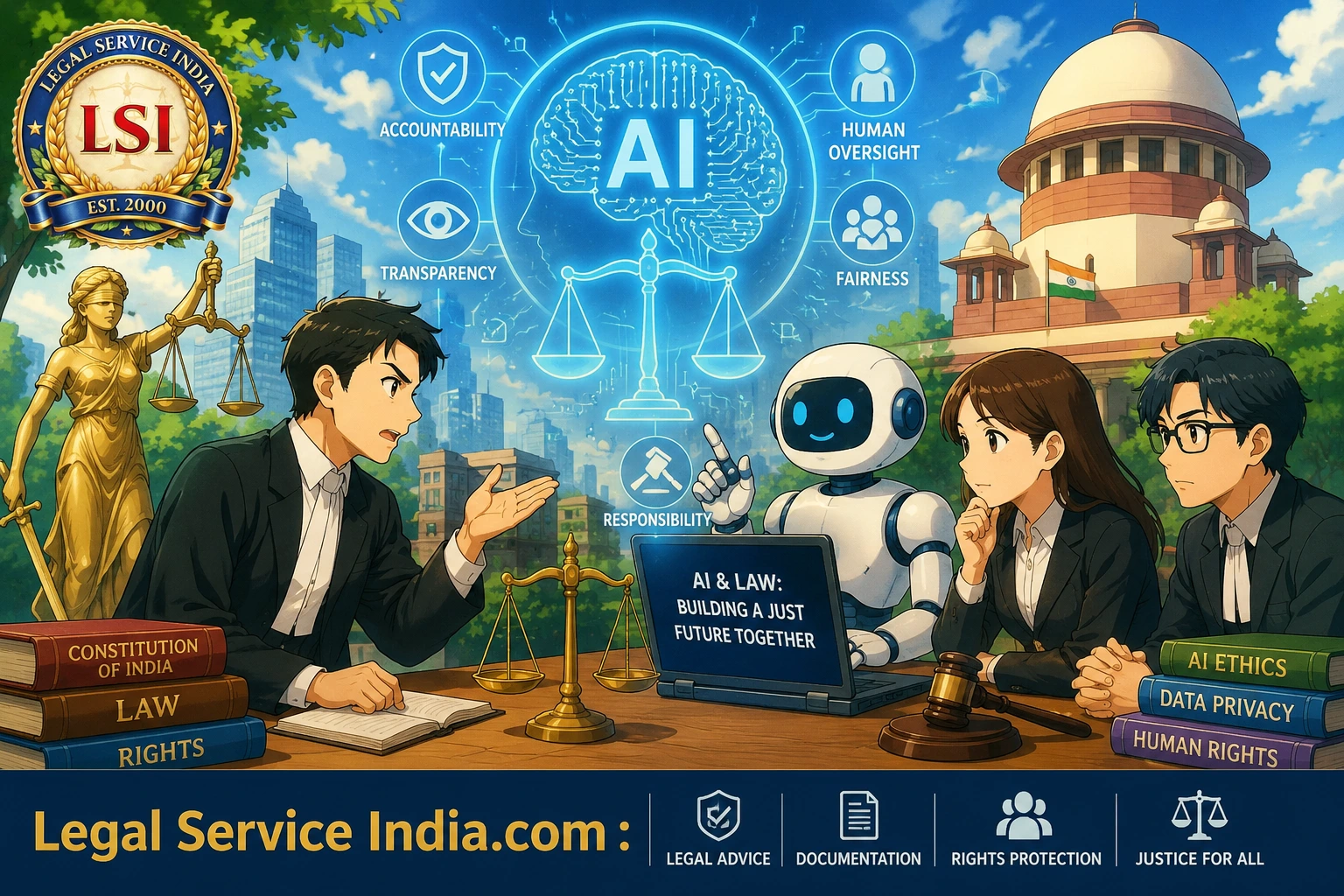
Artificial intelligence is rapidly becoming part of everyday life. AI systems are being used in healthcare, education, finance, policing, recruitment, transportation, and legal services. While these technologies can improve efficiency and decision-making, they also create an important legal question: when an AI system causes harm, who should be held responsible?
Traditional legal systems generally assign responsibility to identifiable human beings or legal entities. AI complicates this approach because an AI system may produce an outcome that was not specifically anticipated by the person or organisation using it. This creates a gap between technological capability and existing concepts of legal accountability.
The Problem of Assigning Responsibility
Consider an AI system used by an organisation to make recommendations or decisions. If the system produces a discriminatory or harmful outcome, several parties could potentially be involved: the developer who designed the system, the company that deployed it, the user who relied upon it, or the organisation that failed to supervise it.
The difficulty is that responsibility cannot automatically be transferred to the AI itself. AI systems do not currently possess legal personality comparable to a human being or corporation. Consequently, the law must determine which human or legal entity had sufficient control, knowledge, or responsibility for the harmful outcome.
Existing Principles of Liability
Traditional principles of negligence provide one possible framework. A claimant generally has to establish elements such as a duty of care, breach, and resulting harm. However, applying these principles to complex AI systems may be difficult when the decision-making process is difficult to understand or when several parties contributed to the system.
Product liability may provide another route where an AI-enabled product is defective. However, determining whether the problem resulted from the product itself, its training data, an update, the way it was deployed, or the user’s actions can be complicated.
Contract law may also become relevant where an AI service is provided under contractual terms. Yet contractual limitations cannot necessarily resolve every question involving harm to third parties.
The Importance of Transparency
One of the major challenges presented by advanced AI systems is the “black box” problem. In some systems, it may be difficult for users to understand why a particular output was generated.
This creates a legal concern because meaningful accountability often requires the ability to explain and investigate decisions. If an affected person cannot determine why an AI system reached a particular conclusion, challenging that decision may become significantly more difficult.
Transparency, therefore, should not merely be considered a technical objective. It can also be connected to procedural fairness, evidence, accountability, and access to legal remedies.
AI and Discrimination
AI systems can reproduce or amplify patterns contained in the data on which they are trained. If historical data contains discriminatory patterns, an automated system may unintentionally reproduce them.
This is particularly significant when AI is used in areas such as recruitment, lending, education, or public administration. A decision that appears technologically neutral may nevertheless have unequal consequences.
The legal challenge is therefore not simply whether an algorithm is technically accurate. It is also whether its deployment complies with principles of equality, non-discrimination, and fairness.
Who Should Be Responsible?
A future legal framework should avoid treating every AI-related incident in exactly the same way. Responsibility should depend on factors such as
who developed the system;
who controlled or deployed it;
whether foreseeable risks were identified;
whether appropriate testing was conducted;
whether adequate human oversight existed;
whether users were warned about limitations; and
whether the system complied with applicable legal requirements.
This approach could allow responsibility to be allocated according to actual involvement and control rather than simply blaming the technology itself.
The Need for Human Oversight
AI should not eliminate human responsibility. Where an AI system is used for decisions that significantly affect people’s rights or opportunities, meaningful human oversight can provide an important safeguard.
Human oversight, however, should be more than simply having a person approve an automated decision. The individual responsible should have sufficient information, authority, and competence to question the system’s output where necessary.
Conclusion
Artificial intelligence presents the legal system with a fundamental challenge: technological autonomy must not become a substitute for legal accountability.
The objective should not necessarily be to create entirely separate laws for every form of AI. Instead, existing principles of negligence, product liability, contract, consumer protection, equality, and fundamental rights can be examined and adapted where necessary.
Ultimately, the central principle should remain simple: the use of technology should not make it impossible for a person who suffers harm to identify responsibility or obtain an effective legal remedy.
As AI becomes increasingly integrated into society, developing clear rules concerning responsibility, transparency, and human oversight will be essential to ensuring that technological innovation develops alongside the rule of law.