





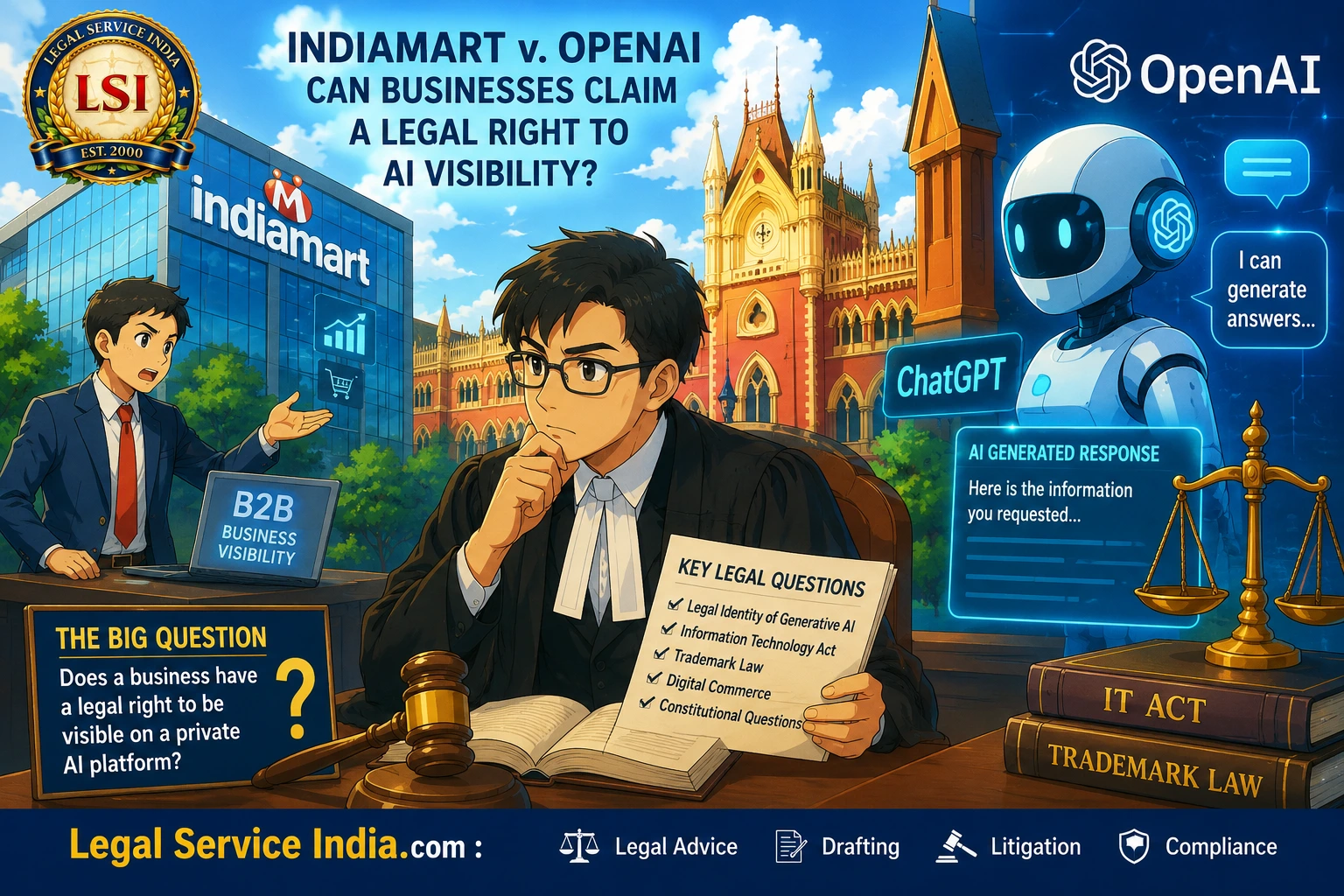
Artificial Intelligence And The Changing Way We Search For Information
The proliferation of artificial intelligence has drastically changed the way we search, process and receive information on the internet. Before this, you typed something in a search engine and used to get a long list of links; then it was your responsibility to find out the right answers by clicking every link and reading every page. But now the time has changed, and people are shifting to AI-powered chatbots such as ChatGPT, which comprehend information and produce responses in a conversational manner.
This change is revolutionary, but not without its consequences. This has gradually started to disrupt established business models, has brought up hard questions and exposed gaps in existing regulatory frameworks.
How AI Is Disrupting Established Digital Business Models
The shift from traditional search engines to AI-powered chatbots is changing how information is discovered and consumed online. Instead of visiting multiple websites, users can increasingly obtain a conversational answer from an AI system.
This transformation has important consequences for businesses that depend on online visibility, search traffic and digital marketplaces. It also raises difficult legal and regulatory questions about how AI platforms operate and whether businesses can claim a legal right to be visible on such platforms.
IndiaMART InterMESH Ltd v. OpenAI Inc. & Ors: The Calcutta High Court Case
Within this unfolding context, a case came before the Calcutta High Court, IndiaMART InterMESH Ltd v. OpenAI Inc. & Ors, wherein the Court gave its order on 20th May, 2026.
This case was a tussle between two powers: the commercial survival of one of India’s biggest B2B marketplaces on one side and the operational independence of the world’s most influential AI platform on the other.
At its centre, the case raised a question that appears simple but is consequential:
Does a business have a legal right to be visible on a private AI platform?
The Central Question: Does A Business Have A Right To AI Visibility?
The dispute raises an important question for businesses operating in the digital economy. Traditional search engines generally provide users with links to websites based on their search systems and ranking mechanisms. AI-powered platforms, however, can process information and generate conversational responses.
This difference creates a new legal and commercial issue. If an AI platform does not display, recommend or otherwise surface a particular business, can that business demand visibility as a matter of legal right?
The question becomes especially significant for businesses whose commercial models depend heavily on online discovery and digital traffic.
Broader Legal Issues Raised By India MART–OpenAI Dispute
This case is not limited to a battle over search ranking. It goes beyond and touches unsettled questions of our digital age, such as the legal identity of generative AI, whether India’s Information Technology Act can regulate AI systems, the limits of trademark law and what digital commerce means under the Constitution.
The major issues raised by the dispute can therefore be understood through the following framework:
| Legal and Digital Issue | Key Question |
|---|---|
| Generative AI | What is the legal identity and status of a generative AI platform? |
| Information Technology Law | Can India’s Information Technology Act regulate AI systems? |
| Trademark Law | What are the limits of trademark protection in AI-generated or AI-mediated responses? |
| Digital Commerce | What legal principles should govern visibility and commercial participation on AI platforms? |
| Constitutional Questions | What does the growth of AI-powered digital commerce mean under the Constitution? |
Legal Identity of Generative AI
The case raises unsettled questions about the legal identity of generative AI. AI platforms are increasingly becoming intermediaries between users and information available on the internet.
This development creates a need to examine how existing legal concepts apply to technologies that do not operate in exactly the same manner as conventional search engines, publishers or marketplaces.
Can the Information Technology Act Regulate AI Systems?
Another important issue concerns whether India’s Information Technology Act can regulate AI systems operating in the rapidly evolving digital environment.
The development of generative AI has created technologies and business models that were not contemplated in the same form when many existing legal frameworks were developed. The dispute therefore highlights the continuing challenge of applying established technology laws to emerging AI systems.
Trademark Law and AI Platforms
The case also touches upon the limits of trademark law in the context of AI-powered platforms. As users increasingly rely on AI-generated responses to discover businesses, products and services, questions may arise regarding how trademarks are displayed, referenced or interpreted within AI-generated information.
These issues demonstrate that the interaction between trademark law and generative AI is likely to become increasingly important in India.
Calcutta High Court Dismisses IndiaMART’s Interim Relief Application
The order of the Calcutta High Court, in which it dismissed IndiaMART’s application for interim relief, is thought provoking and will shape the conversations around AI governance in India ahead.
The decision is significant because it places the commercial interests of a major digital business against the operational independence of a private AI platform. It also brings into focus the broader legal consequences of AI-driven information access.
What The Case Means For AI Governance In India
The IndiaMART–OpenAI dispute illustrates how rapidly AI is changing the relationship between businesses, users and digital platforms.
As AI-powered systems increasingly influence how people discover information, products and services, courts may face more disputes involving:
- AI-generated information and recommendations.
- Business visibility on private AI platforms.
- Digital competition and commercial interests.
- Trademark protection in AI-generated responses.
- The application of existing technology laws to generative AI.
- The constitutional dimensions of digital commerce.
The order therefore represents more than a dispute over online visibility. It reflects a larger transition from traditional search-based internet access to AI-mediated information discovery.
From Search Rankings To AI-Mediated Information
Traditional search placed considerable responsibility on users to evaluate different websites and determine which information was reliable and relevant. Generative AI changes that interaction by presenting information in a conversational format.
This shift may fundamentally affect how businesses build their digital presence. Visibility may increasingly depend not only on traditional search rankings but also on how AI systems interpret, process and present information.
Conclusion: A New Legal Debate For The AI Era
The proliferation of artificial intelligence has created a new digital environment in which traditional concepts of search, visibility, competition and information access are being tested.
The IndiaMART InterMESH Ltd v. OpenAI Inc. & Ors dispute before the Calcutta High Court provides an important context for examining these emerging questions.
At its core, the case asks whether a business can claim a legal entitlement to visibility on a private AI platform. But the implications extend much further. The dispute brings generative AI, information technology law, trademark law, digital commerce and constitutional principles into the same legal conversation.
As AI becomes increasingly central to the way people search for and receive information, these questions are likely to become more significant. The IndiaMART–OpenAI dispute therefore forms part of a broader and still evolving debate about the future of AI governance in India.
Background of the Dispute
The present case is an application for interim relief that was filed by IndiaMART InterMESH Ltd before the Calcutta High Court. IndiaMART InterMESH Ltd. is one of India’s largest business-to-business (B2B) online marketplaces, and it filed a suit seeking protection of its Intellectual Property rights. The company operates as an online platform which connects different buyers and sellers across industries. The company has a number of registered trademarks, and to attract users and to facilitate commercial transactions, it heavily depends on visibility on the internet through search engines and digital intermediaries.
On the other hand, there is OpenAI, a technology company founded in 2015 with an ambitious global goal of developing highly autonomous Artificial General Intelligence (AGI) to benefit society. The case involves ChatGPT, an AI-powered chatbot of OpenAI that provides information to users through conversational responses generated by Large Language Models (LLMs). This growing influence of AI-driven platforms raises important questions about the relationship between artificial intelligence, online visibility and intellectual property rights in the digital era.
Issues Raised Before the Calcutta High Court
The following key legal issues were placed before the Calcutta High Court:
- Does a business have a ‘right to visibility’ on a private AI platform?
- Is ChatGPT an ‘Intermediary’ or an ‘Originator’ under the IT Act, 2000?
- Does OpenAI’s Exclusion of IndiaMART violate constitutional rights?
- Does OpenAI’s Conduct Amount to Trademark Infringement or Dilution?
- Is OpenAI’s Reliance on the USTR Notorious Markets List a Valid Legal Defence?
- Whether IndiaMART satisfied the three tests for interim injunction?
Launch of ChatGPT Search and the Dispute
OpenAI launched ChatGPT in October 2024, a search feature that provides users answers with the links of its related websites. Instead of merely generating responses, ChatGPT search can direct users to online sources based on their queries. OpenAI also incorporated various safeguards, known as “guardrails”, to prevent the platform from promoting illegal activities, counterfeit products, or harmful content. These safeguards help to ensure that the information provided by ChatGPT remains safe and reliable for users.
IndiaMART’s Allegations Against OpenAI
IndiaMART clarified that it has no problem with how ChatGPT collects or processes data however, its grievance was that ChatGPT allegedly excluded IndiaMART from its search results. As per IndiaMART, when users specifically search for products available on IndiaMART, ChatGPT most of the time directs links to individual sellers or suppliers instead of directing to the IndiaMART platform, and on the other side, it provides direct platform links to similar online marketplaces. IndiaMART argued this practice reduced traffic to its website, affected its business, diluted its trademark and amounted to unfair treatment.
When IndiaMART sought answers, OpenAI admitted that they suppressed the platform because it appeared in the U.S. Trade Representative (USTR) Notorious Markets List. IndiaMART strongly responded to this defence, labelling the USTR list a legally non-binding foreign document and exposing the double standard of ChatGPT openly featuring global competitors like DHGate, Pinduoduo, Shopee and Taobao despite their being on the exact same American blacklist.
The legal battle heats up when IndiaMART accuses ChatGPT of violating the Information Technology Act, 2000, and its 2021 IT Rules. IndiaMART contended that ChatGPT is an Intermediary under Section 79, as it functions like a search engine, and selectivity is strictly prohibited as it is discrimination against any business. They also assert that everyday internet users have a fundamental ‘right to know’ that IndiaMART exists. Thus, deliberately wiping their platform from search results is violating core constitutional guarantees, including the right to equality and freedom of trade under Articles 14, 19 and 21 of the Constitution of India. To support its arguments, it referred to the Neptune Assurance Co. Ltd. v. UOI, Press Trust India v. UOI and Neetu Singh v. Telegram Fz LLC cases.
OpenAI Strikes Back: There Is No Legal Right to Be Visible on Our App
OpenAI argued that the claim of IndiaMART was basically based on ‘right to visibility’, which is not recognised under any law or constitution. According to OpenAI, the non-appearance of links to IndiaMART in responses of ChatGPT does not constitute any legal injury. OpenAI also contended before the court that forcing a private AI app to promote specific commercial links would open massive litigation floodgates, completely disrupting how ChatGPT operates.
OpenAI’s Defence: Why ChatGPT Is an ‘Originator’, Not an Intermediary
OpenAI further contended that ChatGPT is not an “intermediary” under the Information Technology Act, 2000 and therefore obligations applicable to intermediaries under IT Rules, 2021 are not binding on it. Instead, it argued that ChatGPT is an “originator” under section 2(1) (za) of the IT Act, because it generates its own responses rather than merely transmitting third-party information. OpenAI also maintained that IndiaMART had failed to establish any claim for trademark infringement, copyright infringement, disparagement, trade libel or injurious falsehood. They also argued to the court that granting of an injunction would completely disrupt OpenAI’s software architecture, relying on the key tech precedents like Google LLC v. DRS Logistics to prove their point.
‘Laissez-Faire’ and the Death of the ‘Good Samaritan’ Rule
OpenAI strongly emphasised that every private business has the freedom to operate its business and operations subject to reasonable legal restrictions. It argued that no law forces a private entity to operate as per the whims and fancies of a third party or to promote another business on its platform. By relying on principles of the free market economy, OpenAI contended that forcing a platform to display specific links would interfere with business autonomy and innovation. The court, turning to classic tort law, reminds us that the law does not recognise a “Good Samaritan” obligation in commerce. In the absence of a signed contract, an explicit statute or a constitutional mandate, no private entity has an affirmative duty to protect or promote the financial interests of its competitors.
Economic Loss and the Absence of a Right to Visibility
OpenAI argued that the loss claimed by IndiaMART was merely an economic loss, meaning a reduction in user traffic that could potentially affect its profits. According to OpenAI, the real grievance was not that it was completely absent from ChatGPT, but that it was not displayed in the manner preferred by IndiaMART. OpenAI contended that no business has a legal right to demand promotion or preferential visibility on another private platform. The court captured the entire dispute in two lines:
“Is IndiaMART reflected and displayed on ChatGPT? Yes. Is IndiaMART reflected and displayed in a manner in which it would like to be reflected and displayed on ChatGPT? NO.”
Court’s View on Private Platform Visibility
The court firmly ruled that no business has a legal right to have its platform promoted by a private competitor. If IndiaMART is unhappy with ChatGPT, it should innovate and build its own competing AI mechanism: “Of the petitioner, By the petitioner and for the petitioner.”
Redefining the Internet: Why ChatGPT Is Not Google
The court also noted that the significance of generative AI is growing day by day and differs from traditional search engines and intermediaries. Unlike Google, which merely hosts or transmits information, generative AI systems use advanced algorithms and probabilistic models to create responses. This development raised important legal questions concerning freedom of speech, business autonomy, platform governance and intellectual property rights.
The court held that OpenAI’s reliance on the USTR Notorious Markets List was a matter of its internal business policy and could not be challenged in these proceedings. As we know, the USTR was not a party to the case, and the list is not legally binding in India; the court found no valid ground to interfere with OpenAI’s decision and rejected IndiaMART’s objection on this issue.
The Court’s View on ChatGPT’s Legal Status
The court observed that determining whether ChatGPT is an intermediary or an originator under the IT Act, 2000, is a complex question that can’t be conclusively decided at the interim stage.
Since the IT Act was enacted long before the emergence of generative AI, its provisions fall short when it comes to addressing modern AI systems. The court noted that this issue would require detailed technical and expert evidence at the final hearing and may ultimately require legislative intervention to specifically regulate the AI platform.
ChatGPT Versus Traditional Search Engines
While traditional search engines merely locate and display existing information available, ChatGPT generates new and synthesised responses using Large Language Models (LLMs).
It can create poems, research material, code and other forms of content, making it more than a passive conduit of information.
For this reason, the court prima facie observed that ChatGPT appears closer to an originator than an intermediary, as it actively creates content rather than simply transmitting information created by others.
Argument: Why ChatGPT May Be an Intermediary
The strong counter-argument also came up, which was acknowledged by the court. That the responses of ChatGPT are generated only after a user provides a prompt, meaning the user supplies the intent while the platform merely executes it.
From this perspective, the user could be viewed as the originator and ChatGPT as an intermediary providing the technological resource.
Even after considering this, the court prima facie leaned towards treating ChatGPT as an originator.
No Violation of Any Legal Right
The court held that even if ChatGPT were assumed to be an intermediary, IndiaMART still had failed to demonstrate the violation of any legal or statutory right.
Mere non-compliance with the IT Rules would not automatically entitle IndiaMART to get relief unless it could establish the infringement of an independent substantive legal right.
The court found no evidence of:
- Trademark infringement
- Copyright infringement
- Disparagement
- Any other actionable wrong
Silence Is Not an Intellectual Property Wrong
The court held that there is absolutely no intellectual property dispute.
For a case to qualify as trademark infringement, deception or trade libel, there must be an active publication that confuses the public.
In this case, ChatGPT is simply remaining silent by omitting links. Silence by itself does not give you the right to sue.
Mentioning a Name Is Not Trademark Dilution
The court clarified that under section 29(4) of the Trademarks Act, trademark dilution requires a competitor to actively use your mark in the course of trade to take unfair advantage.
ChatGPT merely uses the word “IndiaMART” as a reference to identify the company; it is not trademark dilution.
The Court’s Final Decision
The court ultimately dismissed the application of IndiaMART for interim relief. It held that even if OpenAI had violated the IT Rules, such a violation would only affect the availability of safe harbour protection under section 79 of the IT Act and would not, by itself, create a cause of action. IndiaMART was still required to prove the infringement of a separate legal right, which it failed to do.
Applying the principles governing the grant of temporary injunctions under Order XXXIX [Rules 1 and 2 of the Code of Civil Procedure, 1908], the court held that IndiaMART had failed to establish a prima facie case in its favour. The court further found that the balance of convenience weighed in favour of OpenAI, as directing ChatGPT to display IndiaMART’s links in a particular manner would interfere with the platform’s functioning and require continuous judicial supervision.
The court also held that IndiaMART had failed to demonstrate any irreparable injury, as the alleged loss suffered was essentially economic in nature and related to reduced user traffic and potential loss of profits. Such losses, if ultimately proved, could be quantified and compensated through appropriate damages and legal remedies.
Accordingly, finding that all three requirements for the grant of an interim injunction, prima facie case, balance of convenience and irreparable injury, were absent. Therefore, the court dismissed the application for interim relief and directed the parties to proceed with the trial.
Three Requirements for an Interim Injunction
- Prima facie case
- Balance of convenience
- Irreparable injury
The court found that all three requirements were absent in IndiaMART’s application for interim relief.
Critical Analysis
1. The Right to Visibility – A Novel Claim Ahead of Its Time?
The rejection by the court of IndiaMART’s claim for visibility is legally sound. Given the current state of Indian law, no statute, contract, or constitutional provision explicitly guarantees a business the right to appear on a private platform in a preferred manner. Nevertheless, this conclusion is correct today but may not remain satisfactory for long.
As AI platforms like ChatGPT are becoming a main way people find information, algorithmic visibility now carries crucial weight for businesses. If a dominant AI platform can exclude a company from its responses without transparency or recourse, smaller businesses may suffer significant harm. The suggestion of the Court that IndiaMART could build its own AI overlooks the substantial technological and financial barriers involved.
Intermediary vs. Originator – The Question Indian Law Is Not Ready To Answer
Perhaps the most intellectually significant aspect of this judgement is the court’s honest admission that the IT Act, 2000, was simply not designed to deal with generative AI. The binary framework of intermediary versus originator is inadequate when applied to a system like ChatGPT, which neither purely transmits third-party content nor purely creates original content; it does something entirely new. It synthesises, interprets and generates responses based on patterns learned from vast datasets.
The court’s prima facie leaning towards treating ChatGPT as an originator is understandable but carries serious implications. If AI platforms are classified as originator, they escape the due diligence and non-discrimination obligations imposed on intermediaries, creating a regulatory vacuum where AI systems operate with virtually no accountability.
The USTR List Defence – A Double Standard
IndiaMART argued that OpenAI excluded it for appearing in the USTR Notorious Markets List, while continuing to provide links to other listed platforms such as DHGate, Pinduoduo, Shopee and Taobao. Although the court held that the USTR list is not legally binding in India, it did not fully address this apparent inconsistency.
Key Issues Considered in the Court’s Decision
| Legal Issue | Court’s Finding |
|---|---|
| Violation of IT Rules | Would affect safe harbour protection but would not, by itself, create a cause of action. |
| Separate Legal Right | IndiaMART was required to prove infringement of a separate legal right. |
| Prima Facie Case | IndiaMART failed to establish a prima facie case. |
| Balance of Convenience | The balance of convenience favoured OpenAI. |
| Irreparable Injury | The alleged economic loss could be quantified and compensated through damages and other legal remedies. |
| USTR Notorious Markets List | The list was not legally binding in India. |
| Generative AI Classification | The judgement raises the question of whether ChatGPT should be treated as an intermediary or an originator. |
Legal Significance of the Judgement
The court’s decision raises important questions about the application of existing Indian technology law to generative AI platforms. It also highlights the emerging legal debate surrounding algorithmic visibility, platform accountability, intermediary status, and the ability of businesses to seek judicial protection against AI-generated exclusion.
The judgement therefore has significance beyond the immediate dispute between IndiaMART and OpenAI. It brings into focus the difficult question of how Indian law should regulate generative AI platforms whose functions do not fit neatly within the traditional intermediary framework.
Trademark Silence – The Law’s Blind Spot
The court’s ruling that “silence does not amount to trademark infringement” is legally accurate under the existing framework. However, it reveals a critical blind spot in Indian trademark law.
Traditional trademark law was designed to address active misuse, such as unauthorised use, imitation, or false association. It was not intended to deal with a scenario where a dominant platform’s deliberate omission of a business from its responses could cause commercial harm equivalent to active infringement.
As AI-driven platforms gain dominance, the law must evolve to recognise that, in the digital economy, visibility and silence can have significant commercial consequences. Legislative reform extending trademark protection to cover algorithmic exclusion may become necessary in the near future.
Conclusion
The order in IndiaMART v. OpenAI is significant not merely for what it decides, but for what it leaves open. The Calcutta High Court has correctly applied existing law to dismiss a claim that lacked a clear legal foundation. In doing so, however, it has exposed the significant legal vacuum that currently surrounds artificial intelligence in India.
The case makes one thing unmistakably clear: India’s legal framework is not yet equipped to govern the age of generative AI. The IT Act, 2000, the Trade Marks Act, 1999, and even constitutional jurisprudence were built for a different technological era.
As AI platforms increasingly function as gatekeepers of digital commerce, information and visibility, the absence of clear regulatory standards is not just a legal inconvenience but also a systemic risk to businesses, consumers and the broader digital economy.
The Proposed Digital India Act and AI Regulation
The proposed Digital India Act, expected to replace the Information Technology Act, 2000, offers an opportunity for the legislature to address these emerging challenges by defining the legal status of AI platforms, introducing appropriate transparency and accountability and developing a framework suited to the realities of the AI era.
Until then, cases like this will continue to arrive at the courthouse doors, and the courts will continue to answer 21st-century questions with 20th-century tools and frameworks.
Pending Suit And Interim Relief
It is important to note that the Calcutta High Court has only declined to grant interim relief, while the underlying suit, IP-COM/57/2025, remains pending.
The substantive rights and liabilities of the parties have yet to be finally adjudicated. The court’s eventual decision may provide greater clarity on the legal status, responsibilities, and regulatory obligations of AI platforms under Indian law.
Until then, IndiaMART v. OpenAI remains a significant interim development in India’s emerging AI jurisprudence.
References
Statutes
- Information Technology Act, 2000.
- Information Technology (Intermediary Guidelines and Digital Media Ethics Code) Rules, 2021.
- Trade Marks Act, 1999.
- Code of Civil Procedure, 1908.
- Constitution of India.
Cases
- IndiaMART InterMESH Ltd. v. OpenAI Inc. & Ors., 2026 SCC OnLine Cal 5738.
- Neptune Assurance Co. Ltd. v. Union of India, (1973) 1 SCC 310.
- Press Trust of India v. Union of India, (1974) 4 SCC 638.
- Neetu Singh v. Telegram FZ LLC, 2022 SCC OnLine Del 2637.
- Google LLC v. DRS Logistics (P) Ltd., (2023) 4 HCC (Del) 515.

