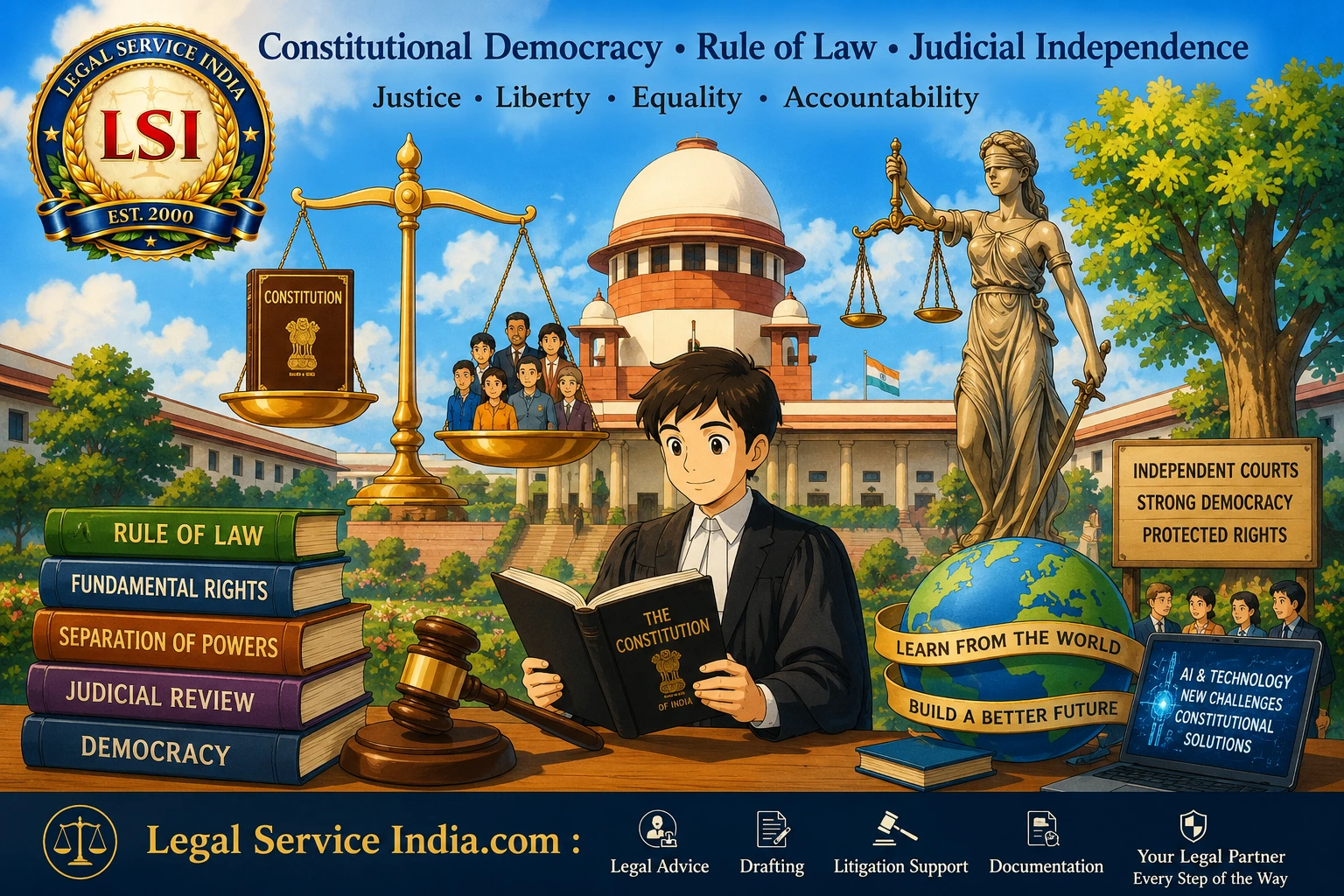
Introduction
Constitutional democracy is one of humanity’s greatest political achievements. It enables governments to exercise power while ensuring that such power remains subject to law, individual liberty, and institutional accountability. Unlike absolute systems of governance, constitutional democracies recognise that no individual, institution, or elected government is above the Constitution. Instead, every exercise of public authority must conform to constitutional principles, judicial oversight, and the rule of law.
Few modern jurists have explained these constitutional ideals with greater clarity than Justice Stephen Breyer, former associate justice of the United States Supreme Court. During an illuminating constitutional conversation at Yale University, Justice Breyer reflected on some of the most fundamental questions confronting every democracy:
Key Constitutional Questions Every Democracy Must Answer
- Why do people obey court judgements?
- What is the true purpose of a constitution?
- Why is judicial independence indispensable?
- How should judges interpret constitutional provisions?
- Can courts learn from constitutional decisions delivered in other countries?
- How should constitutional democracies respond to emerging technologies such as artificial intelligence?
His observations transcend American constitutional law. They speak equally to constitutional democracies across the world, including India, where courts continually balance democratic governance, judicial review, constitutional rights, and institutional accountability.
This guide introduces Justice Breyer’s constitutional philosophy and serves as the central resource for a series of in-depth articles exploring each of these themes in detail.
The Fundamental Principles of Constitutional Democracy
Justice Breyer identified five foundational principles that define every constitutional democracy:
| Core Constitutional Principle | Importance in a Constitutional Democracy |
|---|---|
| Democracy | Ensures government derives its authority from the people. |
| Protection of Human Rights | Safeguards fundamental rights and individual freedoms. |
| Equality | Guarantees equal protection and equal treatment under the law. |
| Separation of Powers | Distributes governmental authority among different institutions to prevent concentration of power. |
| Rule of Law | Ensures that every individual and institution remains subject to the Constitution and the law. |
These principles are not isolated constitutional concepts. Together they form an integrated constitutional framework that ensures governments remain accountable while citizens enjoy meaningful constitutional freedoms.
How the Constitution Protects Democracy
The Constitution does not merely create governments.
- It limits governments.
- It protects liberty.
- It distributes power.
- It provides peaceful mechanisms for resolving political disagreements.
Most importantly, it ensures that constitutional values remain superior to temporary political majorities.
Why the Rule of Law Matters
Perhaps the central message emerging from Justice Breyer’s lecture is the importance of the rule of law.
Societies governed by constitutional law resolve disputes through independent courts rather than violence or political coercion.
The rule of law ensures the following:
- equality before law;
- constitutional accountability;
- judicial protection of rights;
- peaceful resolution of disputes;
- governmental restraint.
| Core Principle | Constitutional Significance |
|---|---|
| Equality Before Law | Ensures every individual is treated equally under the legal system. |
| Constitutional Accountability | Requires governments to act within constitutional limits. |
| Judicial Protection of Rights | Safeguards fundamental rights through independent courts. |
| Peaceful Resolution of Disputes | Promotes legal remedies instead of violence or political coercion. |
| Governmental Restraint | Prevents arbitrary exercise of public power. |
Without the rule of law, democratic elections alone cannot preserve liberty.
Read Our Detailed Guide
➡ The Rule of Law Explained: Why Constitutional Governments Cannot Function Without It
Judicial Independence: The Foundation of Public Confidence
Justice Breyer repeatedly asked one simple yet profound question:
Why do people obey court decisions?
His answer was that courts derive their authority not from military force or political popularity but from public confidence.
Judicial independence enables courts to decide constitutional disputes without political interference.
Public trust enables those decisions to command respect.
Together they sustain constitutional democracy.
Landmark Cases Supporting Judicial Independence
This principle explains the enduring importance of landmark cases such as the following:
- Brown v. Board of Education
- Cooper v. Aaron
Read Our Detailed Guide
➡ Judicial Independence and Public Trust: Why Citizens Obey Court Decisions
Constitutional Interpretation: Originalism or Living Constitution?
One of the most enduring constitutional debates concerns interpretation.
Should judges interpret constitutional provisions exactly as understood centuries ago?
Or should constitutional principles evolve alongside changing societies?
Justice Breyer advocated a pragmatic constitutional philosophy.
He argued that constitutional interpretation should preserve enduring constitutional values while enabling constitutions to address entirely new circumstances—including the Internet, artificial intelligence, and digital privacy.
Major Constitutional Interpretation Approaches
| Approach | Key Focus |
|---|---|
| Originalism | Interprets constitutional provisions according to their original public meaning. |
| Living Constitution | Allows constitutional principles to evolve alongside changing societal needs. |
Read Our Detailed Guide
➡ Originalism vs Living Constitution: Justice Stephen Breyer’s Constitutional Philosophy
Comparative Constitutional Law
Justice Breyer also defended the value of comparative constitutional learning.
Foreign constitutional judgements are not binding.
Nevertheless, courts confronting similar constitutional questions may learn from one another.
This approach promotes better constitutional reasoning while preserving constitutional sovereignty.
India itself exemplifies comparative constitutionalism. The Constitution of India draws inspiration from multiple constitutional traditions while remaining uniquely Indian.
Key Features of Comparative Constitutional Law
- Foreign constitutional judgements are persuasive rather than binding.
- Comparative analysis can strengthen constitutional reasoning.
- Constitutional sovereignty remains fully preserved.
- India’s constitutional framework reflects multiple constitutional traditions adapted to Indian conditions.
Read Our Detailed Guide
➡ Comparative Constitutional Law: Can Indian Courts Learn from Foreign Judgements?
Constitutional Challenges in the Digital Age
Artificial Intelligence, data protection, facial recognition, digital surveillance, social media, and algorithmic decision-making present unprecedented constitutional challenges.
Justice Breyer emphasised that constitutional values remain constant even as technology evolves.
The Constitution must continue protecting liberty, equality, due process, and privacy in the digital era.
Read Our Detailed Guide
➡ Artificial Intelligence, Privacy and the Constitution: Future Challenges for Constitutional Democracies
Lessons for India
Although Justice Breyer spoke primarily about American constitutional law, his observations strongly resonate with Indian constitutional jurisprudence.
India’s constitutional framework reflects many of the same foundational principles:
- Rule of Law
- Judicial Review
- Separation of Powers
- Federalism
- Judicial Independence
- Constitutional Morality
- Fundamental Rights
Landmark Indian Constitutional Decisions
Landmark decisions such as the following:
| Landmark Case | Constitutional Significance |
|---|---|
| Kesavananda Bharati v. State of Kerala | Basic Structure Doctrine |
| Maneka Gandhi v. Union of India | Expansion of Article 21 and Due Process |
| Justice K. S. Puttaswamy v. Union of India | Recognition of Privacy as a Fundamental Right |
Demonstrate how Indian constitutional law has evolved while remaining faithful to its foundational values.
Read Our Detailed Guide
➡ What India Can Learn from Justice Stephen Breyer’s Constitutional Philosophy
Why Justice Breyer’s Ideas Matter Today
Justice Breyer’s constitutional philosophy extends beyond judicial interpretation.
It offers a broader vision of constitutional governance founded upon:
- institutional balance;
- democratic participation;
- judicial restraint;
- constitutional accountability;
- public confidence;
- respect for the rule of law.
His ideas remind us that constitutions succeed not because they eliminate disagreement but because they provide lawful mechanisms for resolving disagreement peacefully.
That insight remains as relevant today as it was when modern constitutional democracies first emerged.
Explore the Complete Constitutional Democracy Series
This guide serves as the central hub for our in-depth constitutional law series:
| Article | Focus Area |
|---|---|
| What Is Constitutional Democracy? Justice Stephen Breyer’s Vision of Democracy and the Rule of Law | Constitutional Democracy |
| The Rule of Law Explained: Why Constitutional Governments Cannot Function Without It | Rule of Law |
| Judicial Independence and Public Trust: Why Citizens Obey Court Decisions | Judicial Independence |
| Originalism vs Living Constitution: Justice Stephen Breyer’s Approach to Constitutional Interpretation | Constitutional Interpretation |
| Comparative Constitutional Law: Can Indian Courts Learn from Foreign Judgements? | Comparative Constitutional Law |
| Artificial Intelligence, Privacy and the Constitution: Future Challenges for Constitutional Democracies | Artificial Intelligence and Privacy |
| What India Can Learn from Justice Stephen Breyer’s Constitutional Philosophy | Indian Constitutional Law |
| Why Constitutional Democracy Still Matters: Justice Stephen Breyer’s Greatest Lessons | Constitutional Governance |
Together, these articles provide a comprehensive exploration of constitutional democracy through the insights of Justice Stephen Breyer while drawing meaningful comparisons with Indian constitutional jurisprudence.
Conclusion
Justice Stephen Breyer’s reflections offer more than an explanation of American constitutional law—they provide a universal framework for understanding how constitutional democracies endure. By emphasising the rule of law, judicial independence, constitutional interpretation, institutional accountability, and civic participation, he reminds us that democracy is sustained not merely by elections but by constitutional values that restrain power and protect liberty. As constitutional democracies confront emerging challenges ranging from artificial intelligence to digital privacy and democratic polarisation, these principles remain indispensable.
Whether viewed through the lens of the United States Constitution or the Constitution of India, the enduring message is the same: a constitution is not simply a legal document; it is a living framework that enables free societies to resolve their deepest disagreements through law rather than force, preserving justice, liberty, and democratic governance for generations to come.